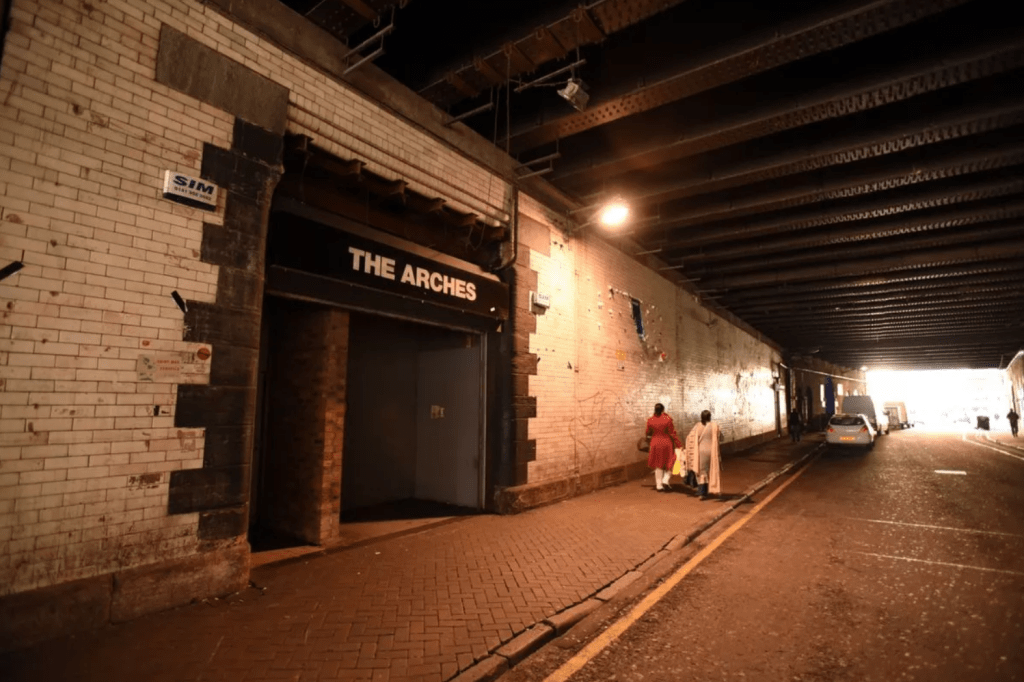
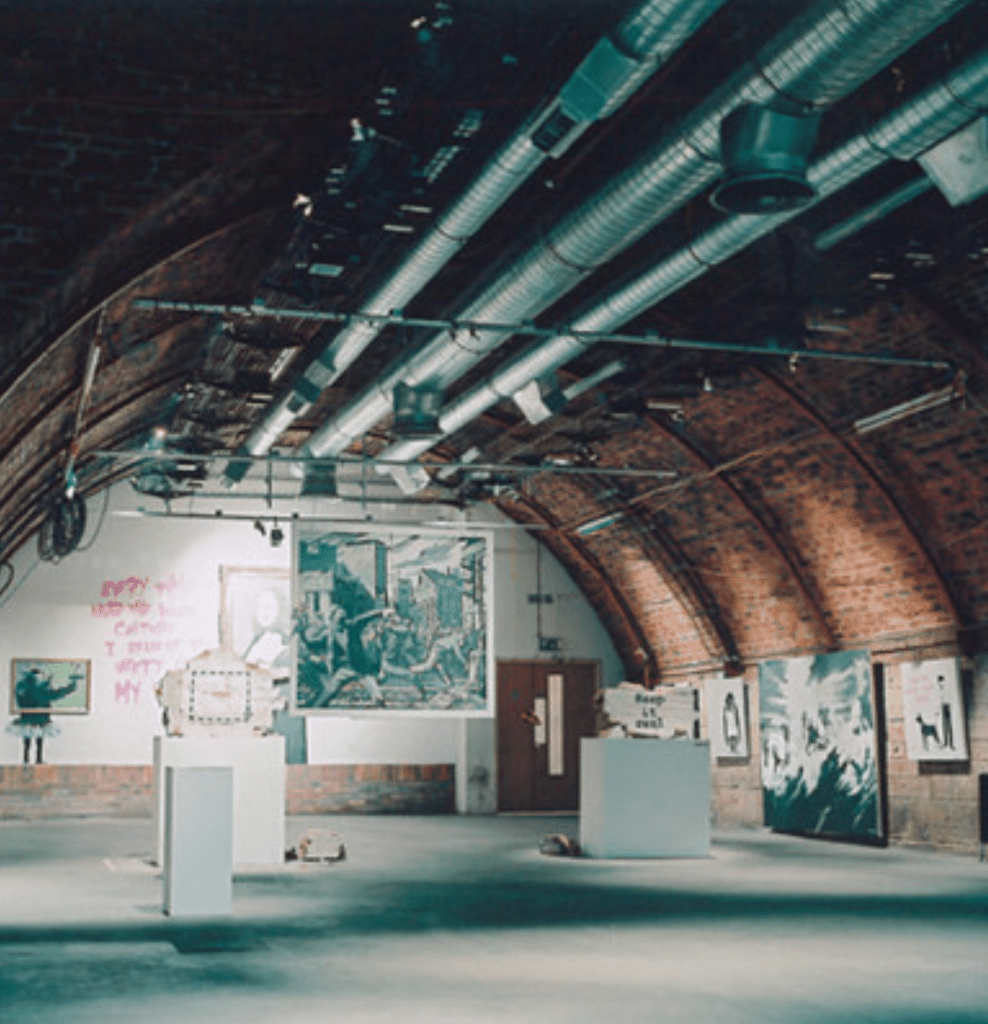
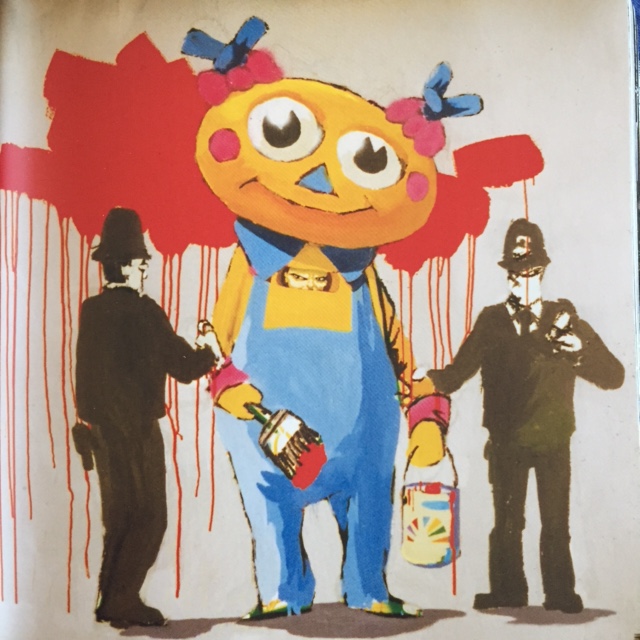
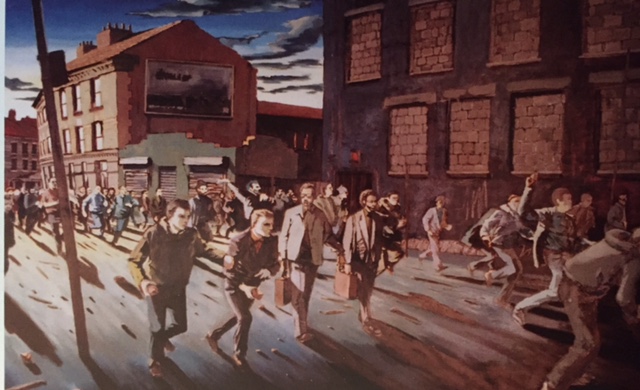
In March 2001, Banksy went to Glasgow to participate in an exhibition at The Arches, a club located under Glasgow Central Railway Station. The organiser and main attraction of the exhibition was anti-art world colleague Jamie Reid. According to several sources, Banksy’s pieces didn’t sell well, and they were taken back to London, where they appeared a few months later at the Cargo Club exhibition. Very little documentation remains.
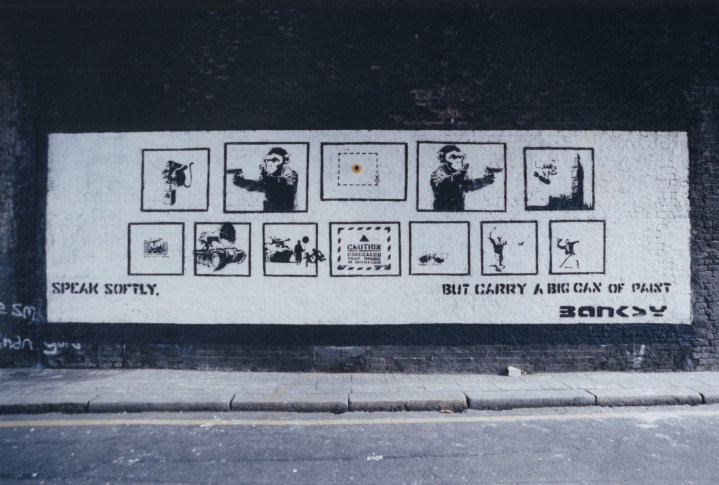
The first exhibition in London took place in a railway underpass on Rivington Street. In Banksy’s own words:
“We came out of a pub one night arguing about how easy it would be to hold an exhibition in London without asking anyone permission. As we walked through a tunnel in Shoreditch someone said – You’re wasting your time, why would you want to paint pictures in a dump like this?”
The official flyer for the Rivington Street exhibition
The exhibition was divided into five sections. This is the main section:
Photo: paulavalerio82 / Flickr
The programme for the first exhibition in London:
Rivington street programme. Source: Juliens
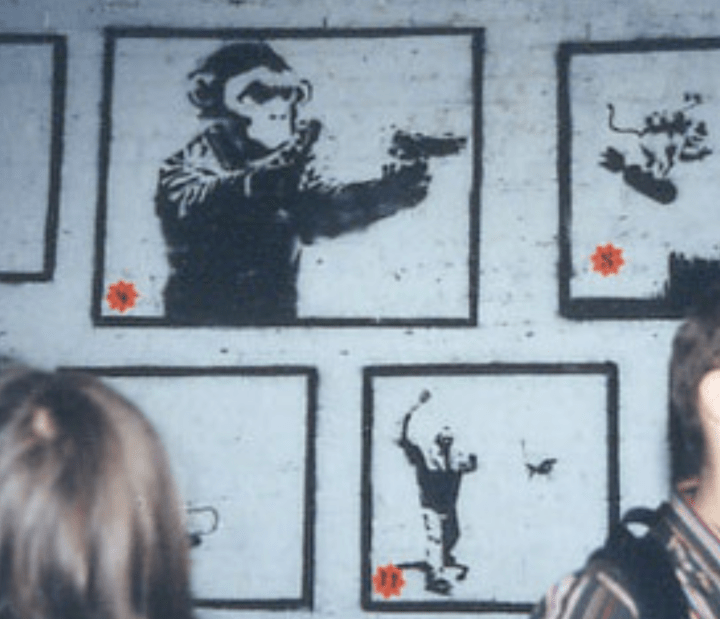
As explained in the program above, all images were available for purchase as stencilled canvases through an ingenious mail order system. Every motive had a number—see the photo below. The interested buyer had to send an email to buyabanksy@hotmail.com and indicate which work they wanted to buy. There were 25 motives available. The canvases came in three sizes: small, £99.99; medium, £159.99; and large, £199.99, each in an edition of 25. The canvases were delivered to the buyer after three weeks.
The motives with the numbers in orange are for mail order. Photo: Paulavalerio82 / FlickrRivington Street, overview
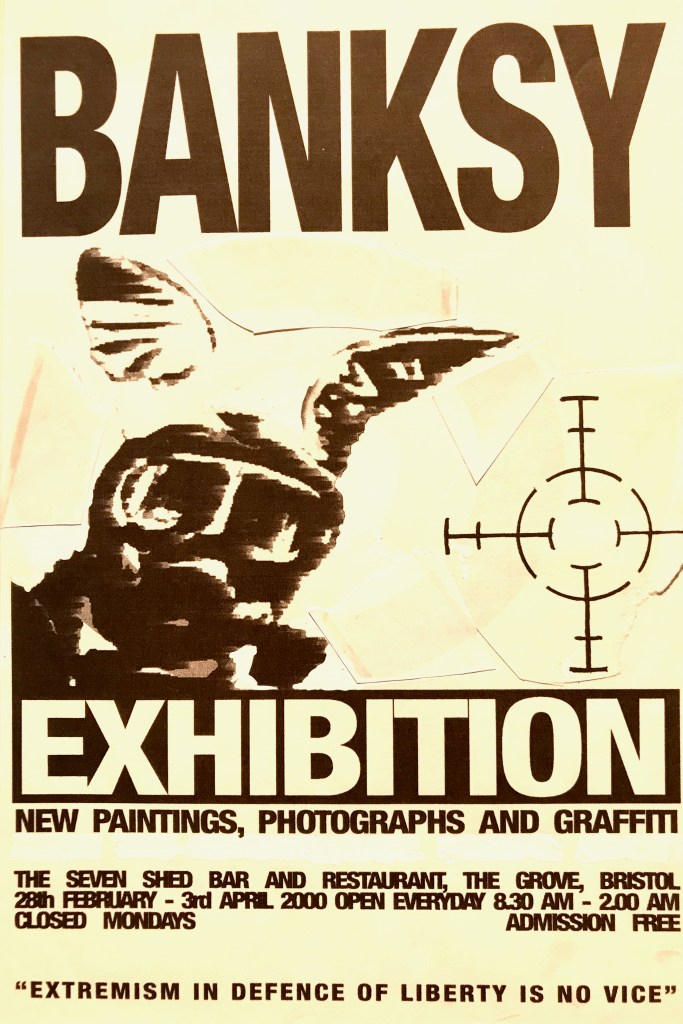
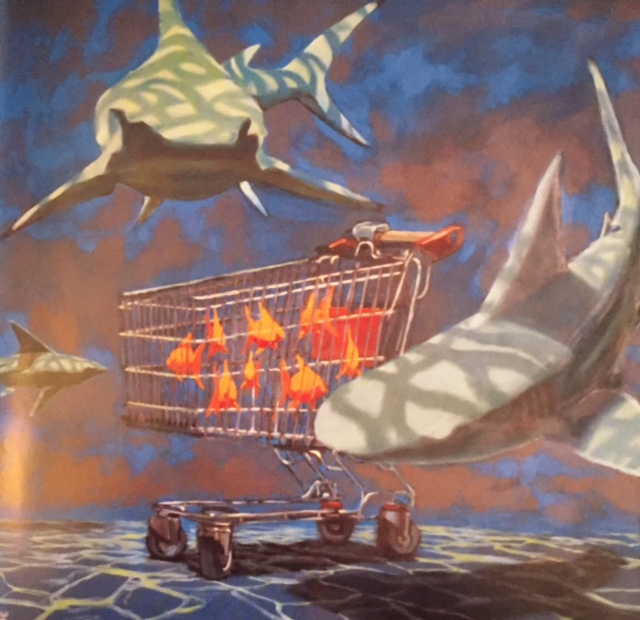
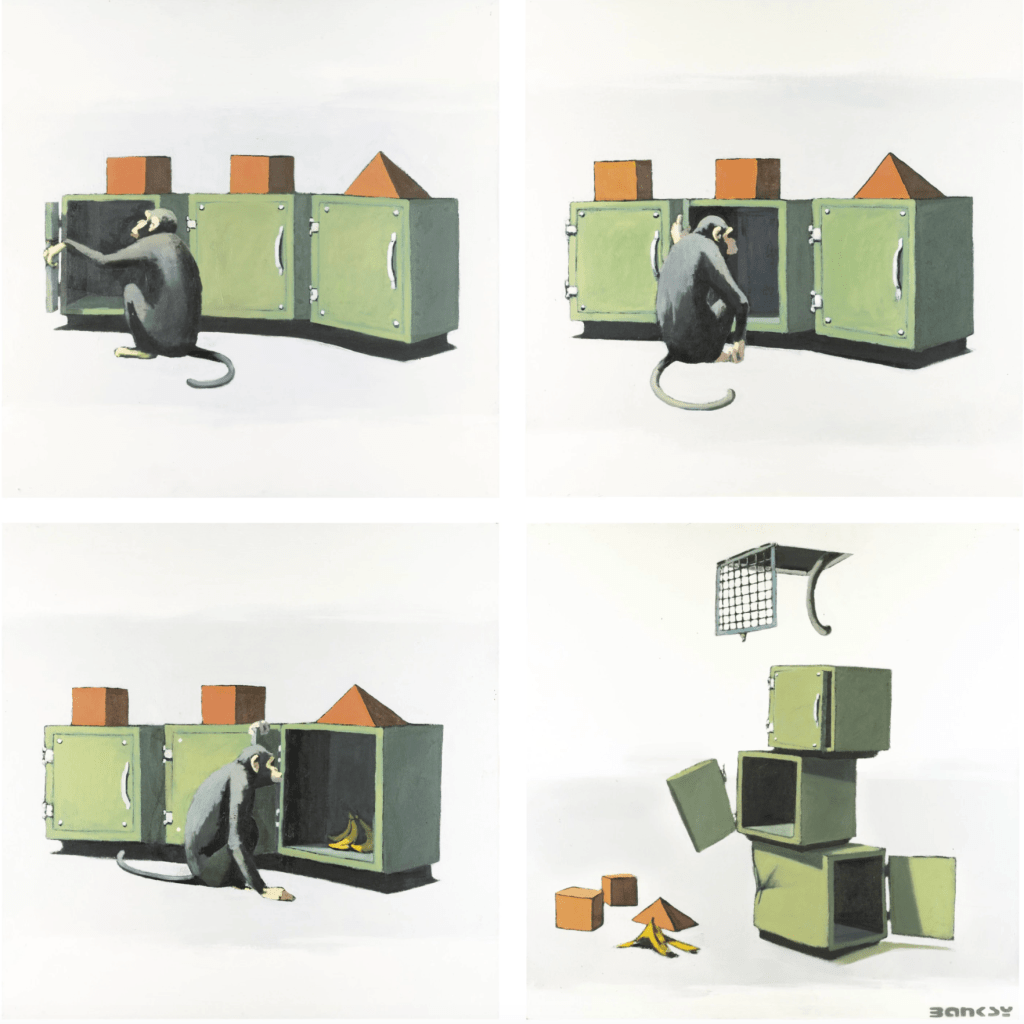
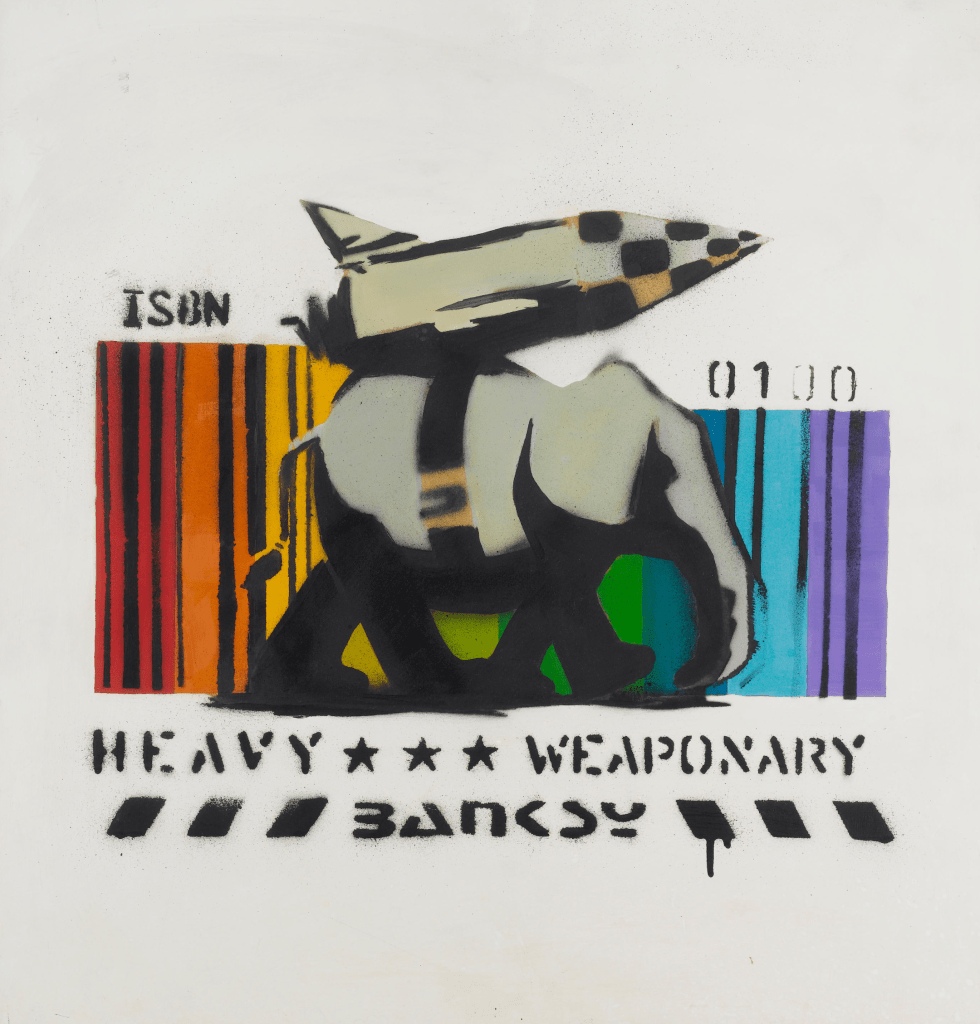
After moving to London in late 1999, Banksy returned to Bristol in February 2000 to open his first regular indoor exhibition at the restaurant Severnshed on The Grove, right behind the docks. Nowadays, the restaurant has changed its name to the Harbour House. The show was a mixture of stencils and acrylic on canvas. There were several remarkable pieces: Simple Intelligence Testing, Sharks, and You Told That Joke Twice.
Official flyer for the Severnshed exhibition.
Overview / Simple Intelligence Testing
Self portrait
Shark with Trolley
Simple Intelligence Testing
You told that joke twice
Love is in the Air (LIITA)
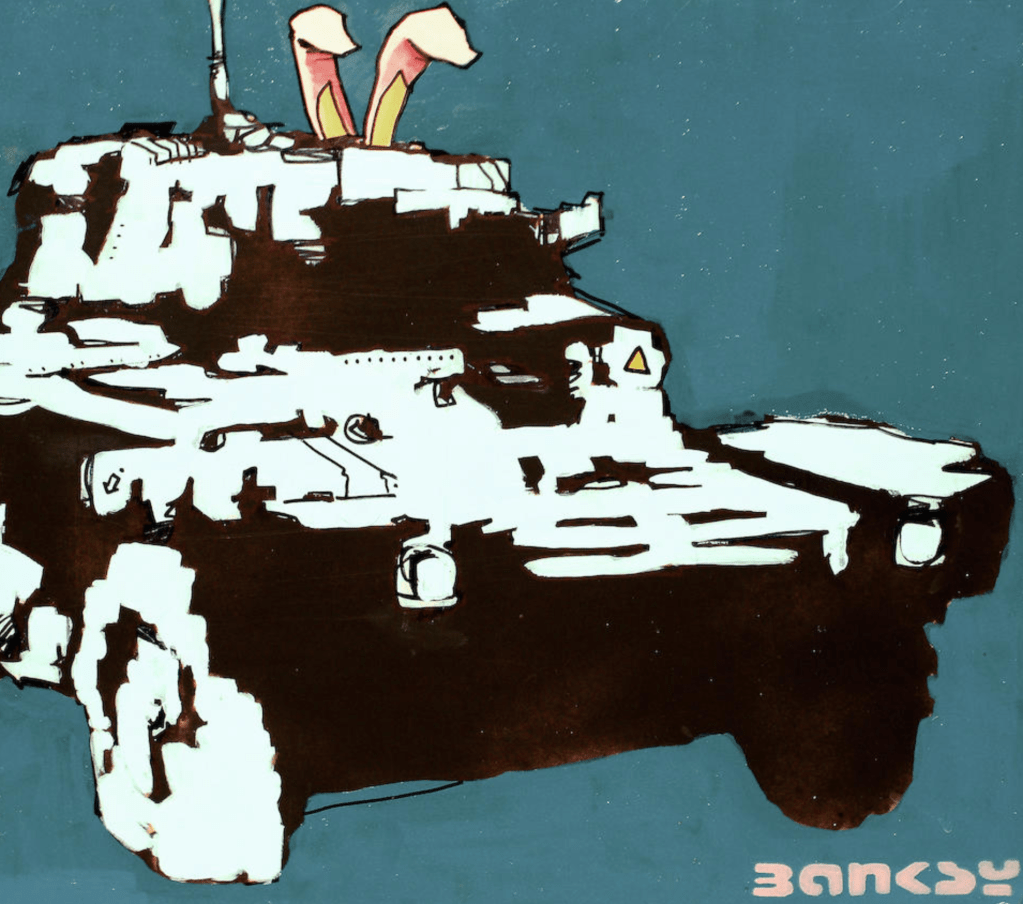
Heavy Weaponry
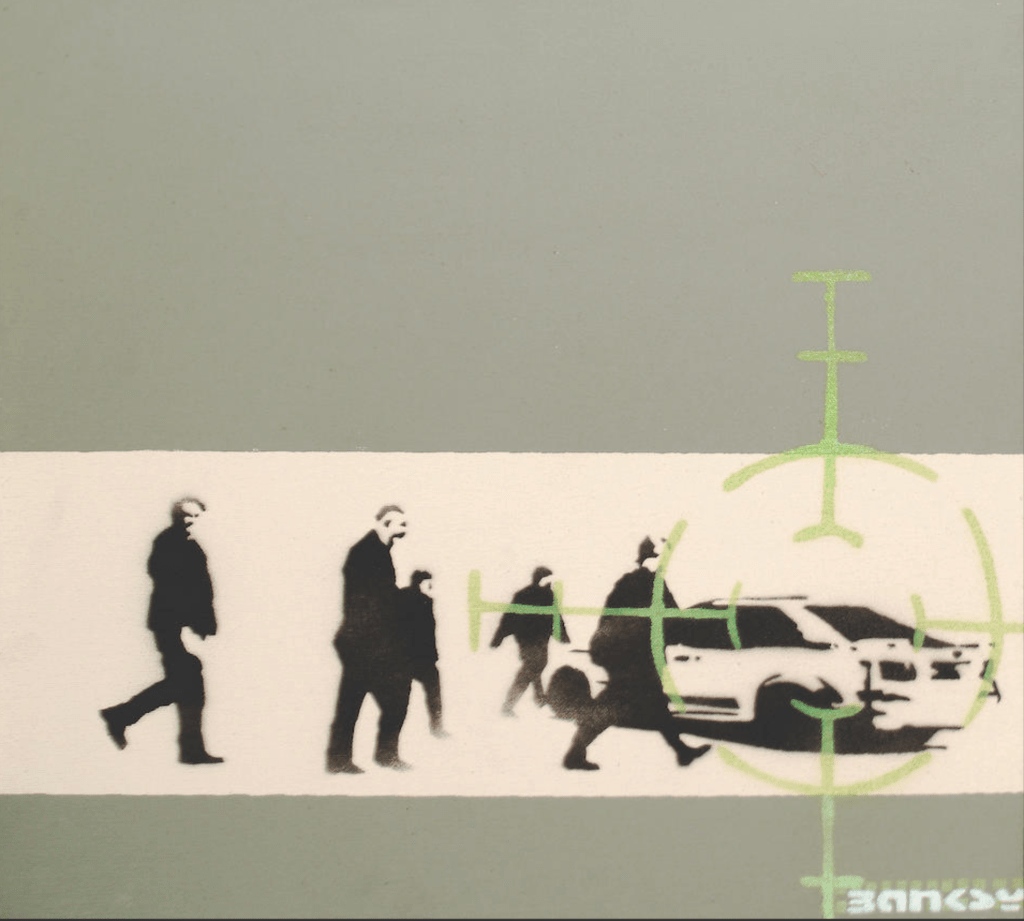
Precision Bombing
Pricelist Severnshed
The prices ranged from £130 to £1,750. All of the pieces were sold.
Banksy’s first non-street art exhibition was called “A Romantic View of Easton”. It was organised by Paul Kelly and took place in a flat in Easton, Bristol. There was an early version of Love is in the Air.
Banksy did an interview with the Knowledge Magazine the same year, where he explained his move into oil on canvas:
“What I’m facing is this compromise between making images that are more beautiful than my graffiti but get seen by less people. I think doing a gallery show would be kind of a step down, both in terms of how many people see your shit and what type of person sees it.”
Here are some of the works Banksy presented at the exhibition in Easton:
Do comunity serviceAn early “Love is in the Air”Portrait of an Artist
Photos: Mark Simmons – Home Sweet Home, Banksy’s Bristol.
THE MILD MILD WEST. BRISTOL 1999
Photo: R.A.
The Mild Mild West is one of Banksy’s most iconic freehand works. Banksy painted it in broad daylight on a building in Stoke Croft, Bristol. It’s a response to several incidents in the late 90s with the Bristol police breaking up rave parties in full riot gear.
CARLTON ARMS, NEW YORK. 1999
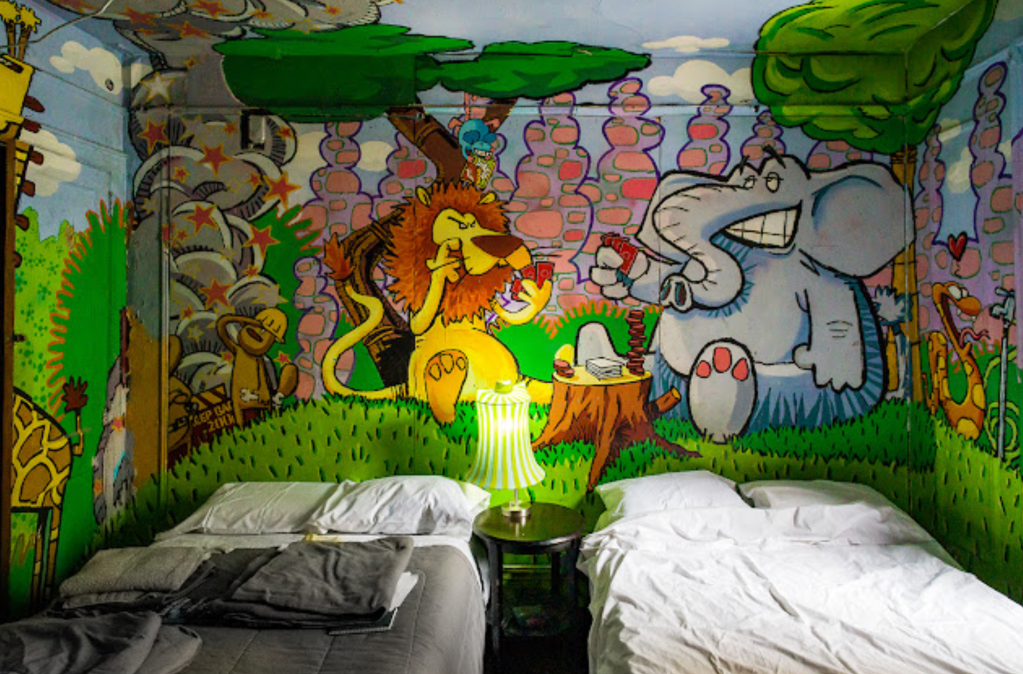
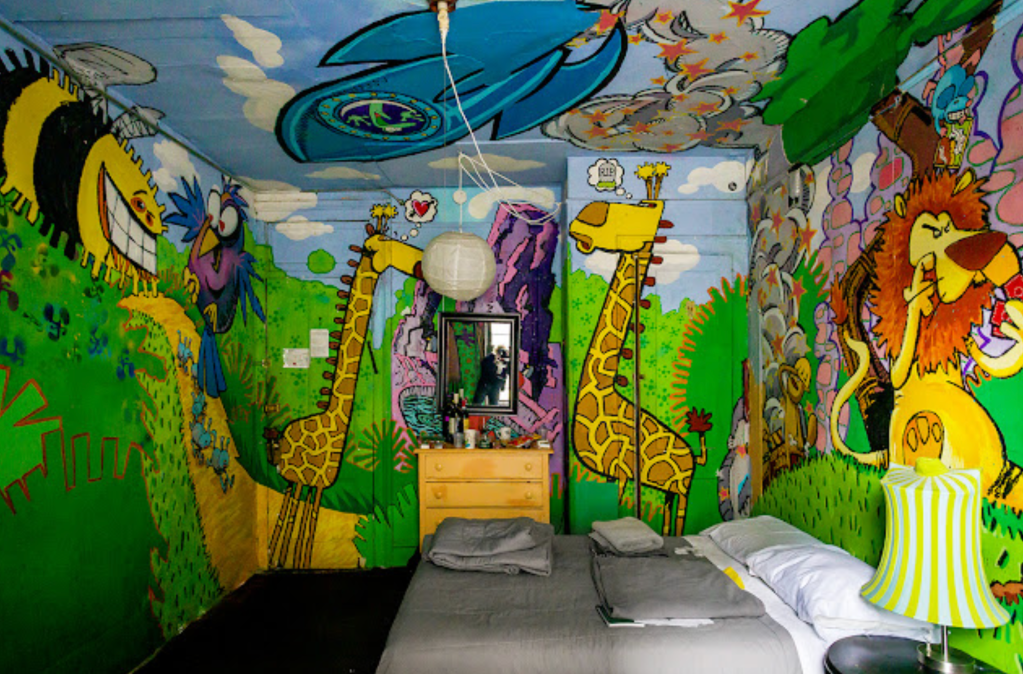
A few months later, Banksy visited New York and the Carlton Arms Hotel on East 25th Street, where he decorated a stairwell and the room 5B.
From the magazine Curbed New York:
“The artists are mostly up-and-comers, but some went on to garner significant acclaim—none more so than Banksy, who decorated a stairwell and room 5B in 1999, years before he became the world’s most famous street artist. His colorful murals of cartoonish animals are a far cry from the satirical monochrome stenciling for which he later became known.
But outside the lobby there’s another early Banksy with more recognizable motifs: a fat cat politician smoking a cigar, a campaign poster of Elvis in Mickey Mouse ears, and a ballot box with a stick of dynamite wedged inside.
One of the managers, Hugo Ariz, says that Banksy—whom he describes as “a very funny, nice, regular kind of guy”—was experimenting with stenciling while at the hotel, and some of his practice stencils lying around somewhere. Ariz recently unearthed a rolled-up canvas that turns out to be a Shadowman painting by Richard Hambleton, the street artist whose sinister figures covered downtown Manhattan in the 1980s. Apparently, the Basquiat and Haring contemporary lived and worked at the hotel for a year; you can spot some of his pieces in the corridors and near the front door.”















 Banksy unofficial