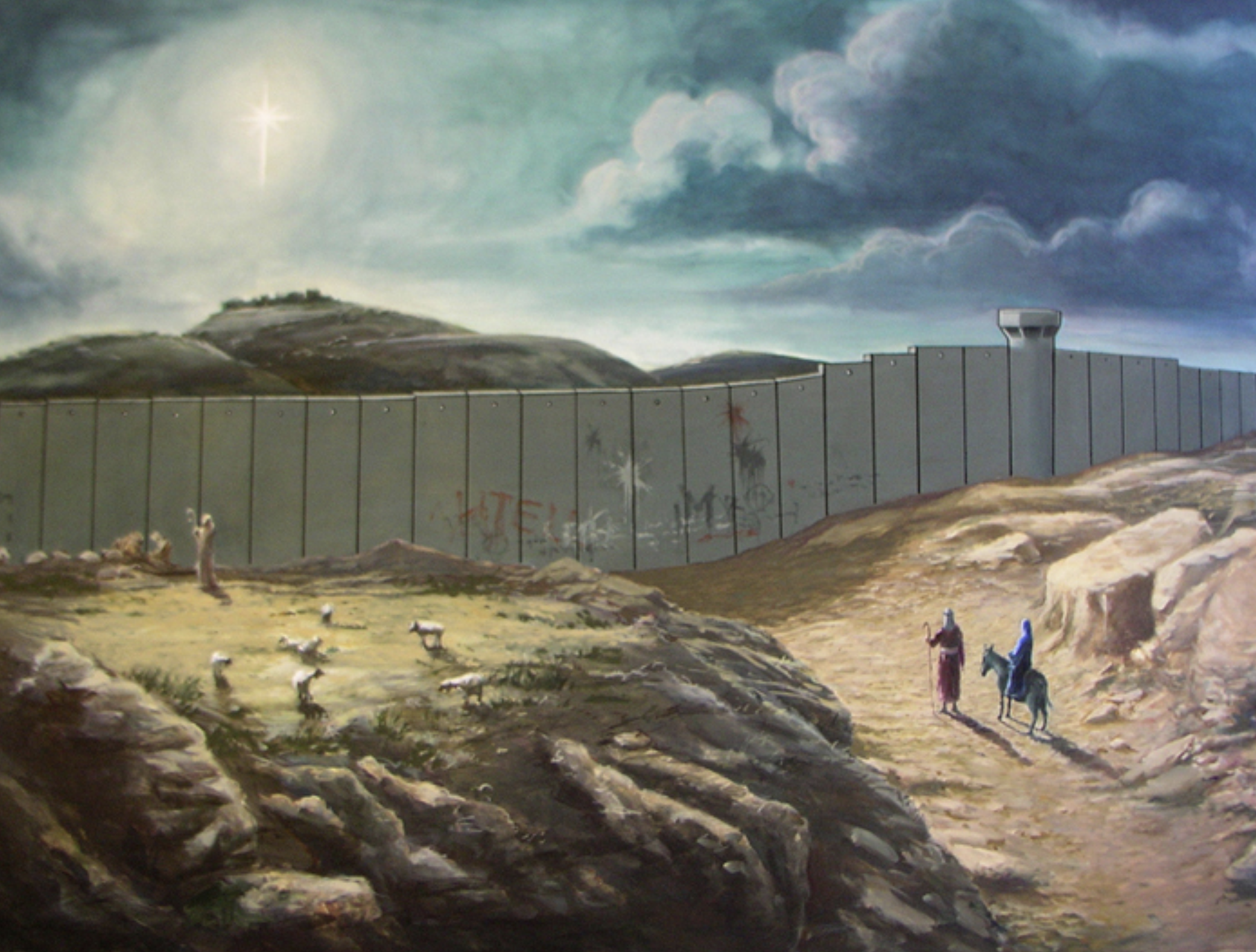
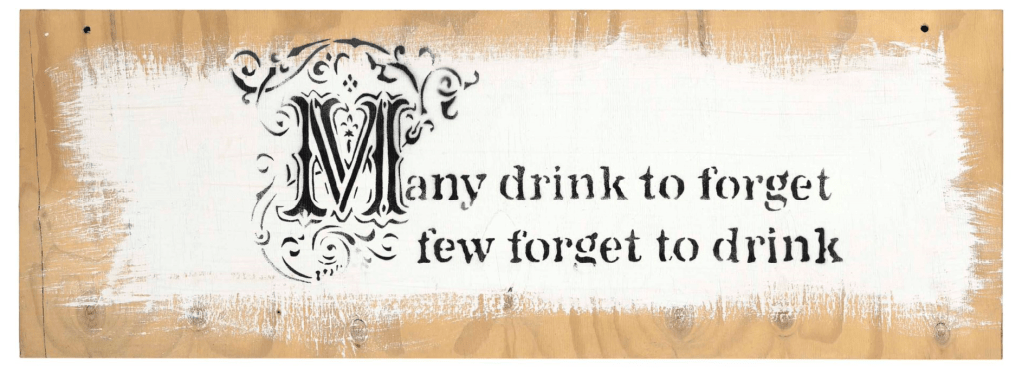
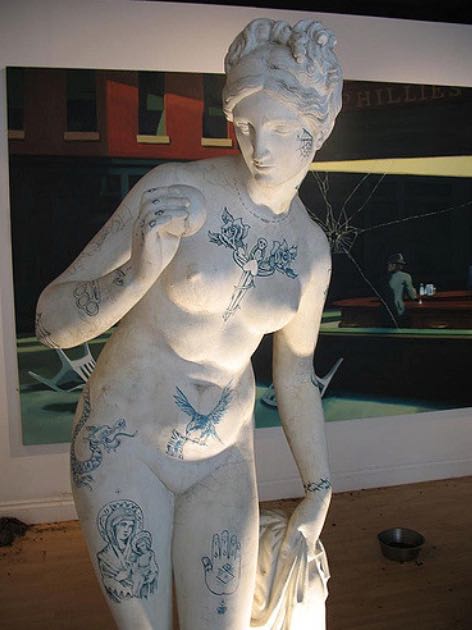
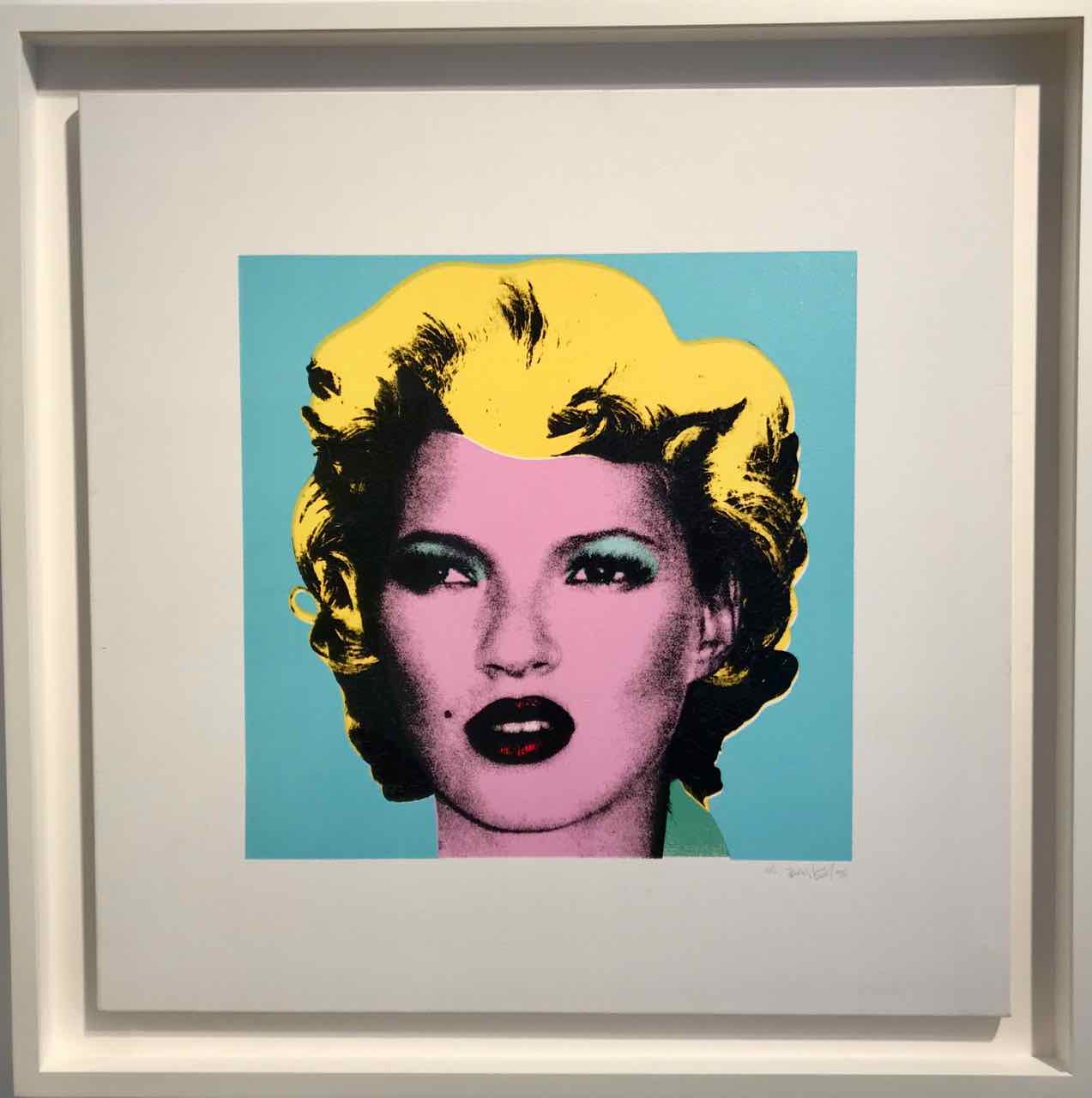
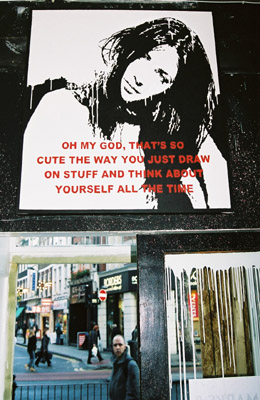
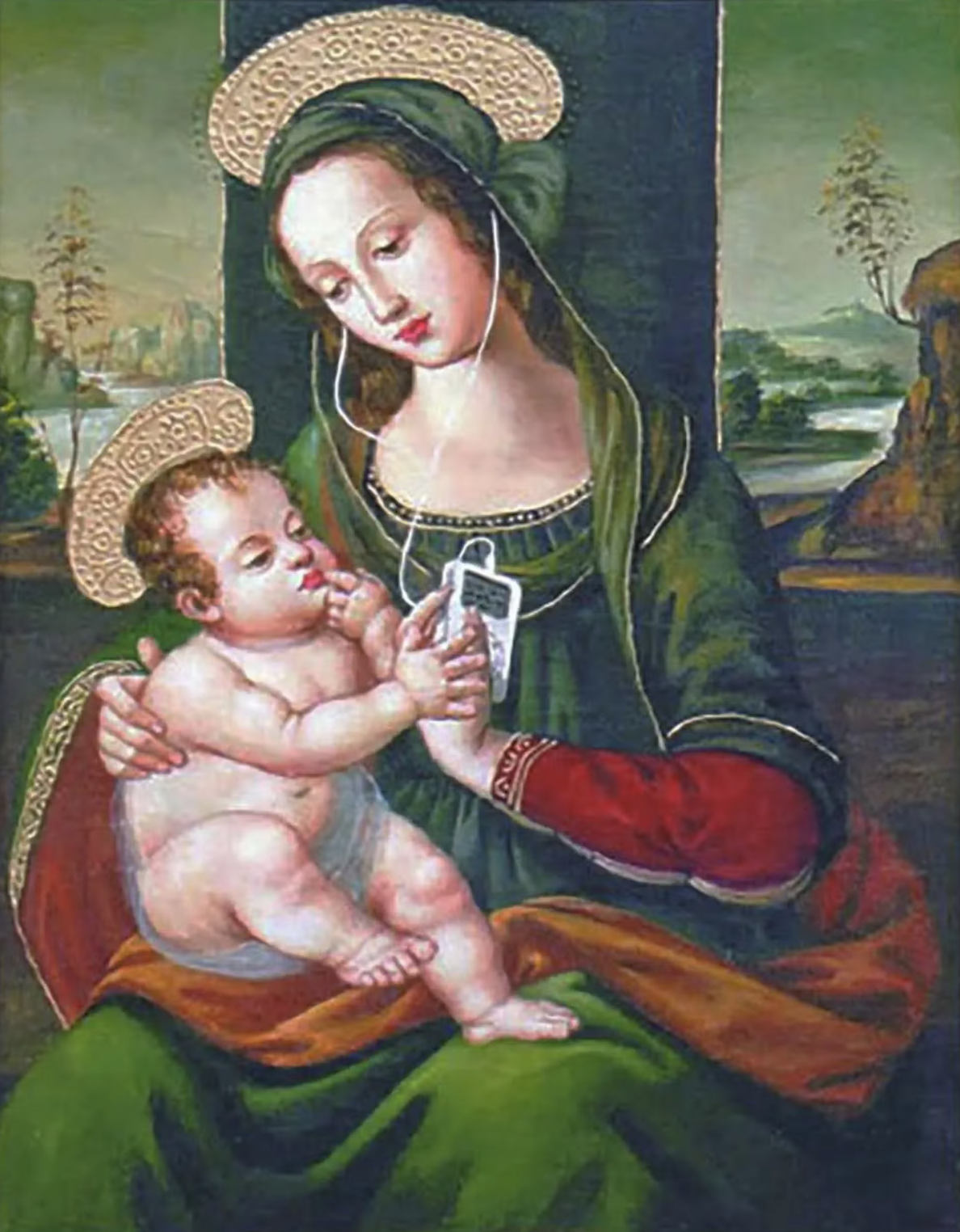
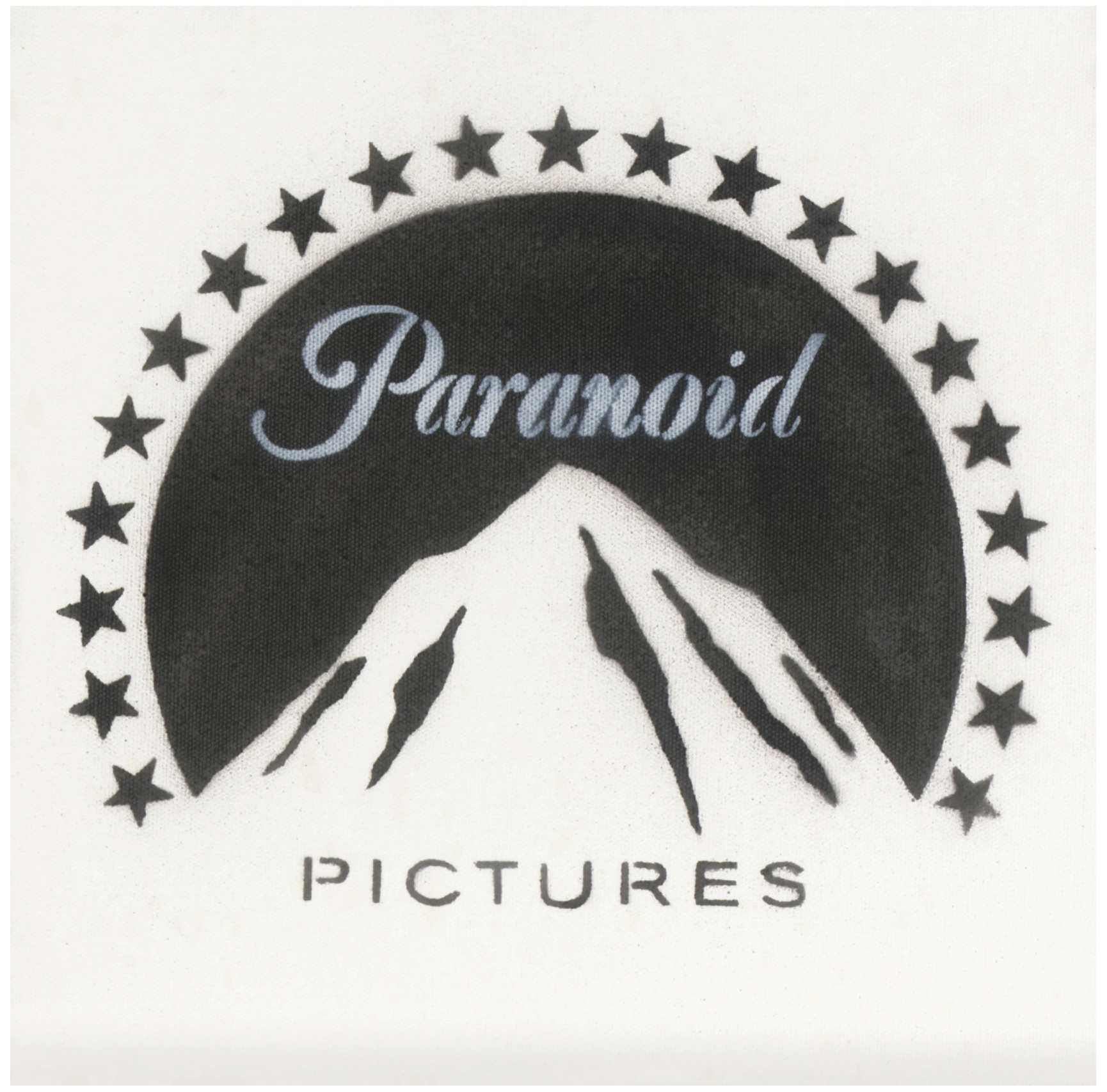
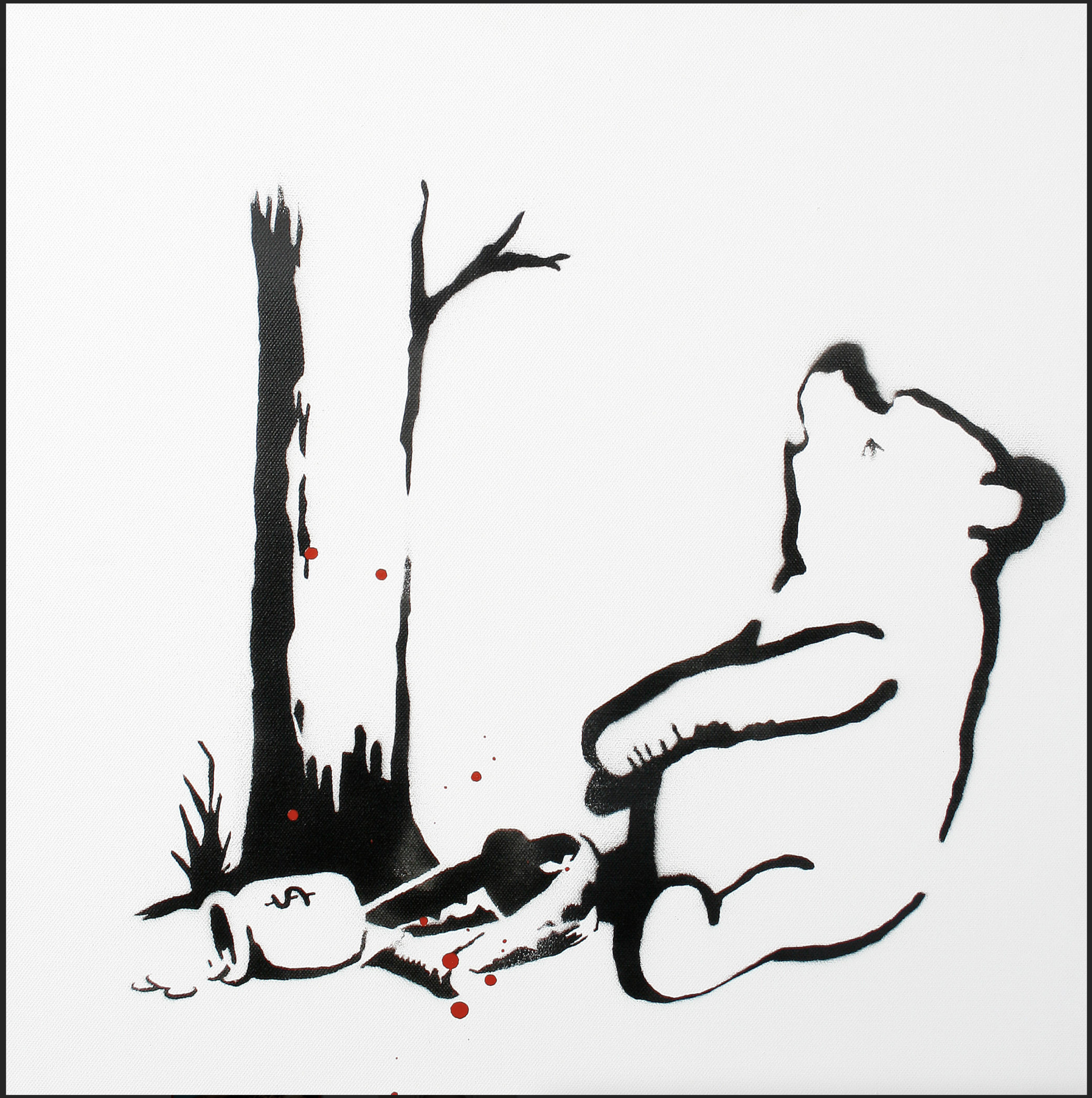
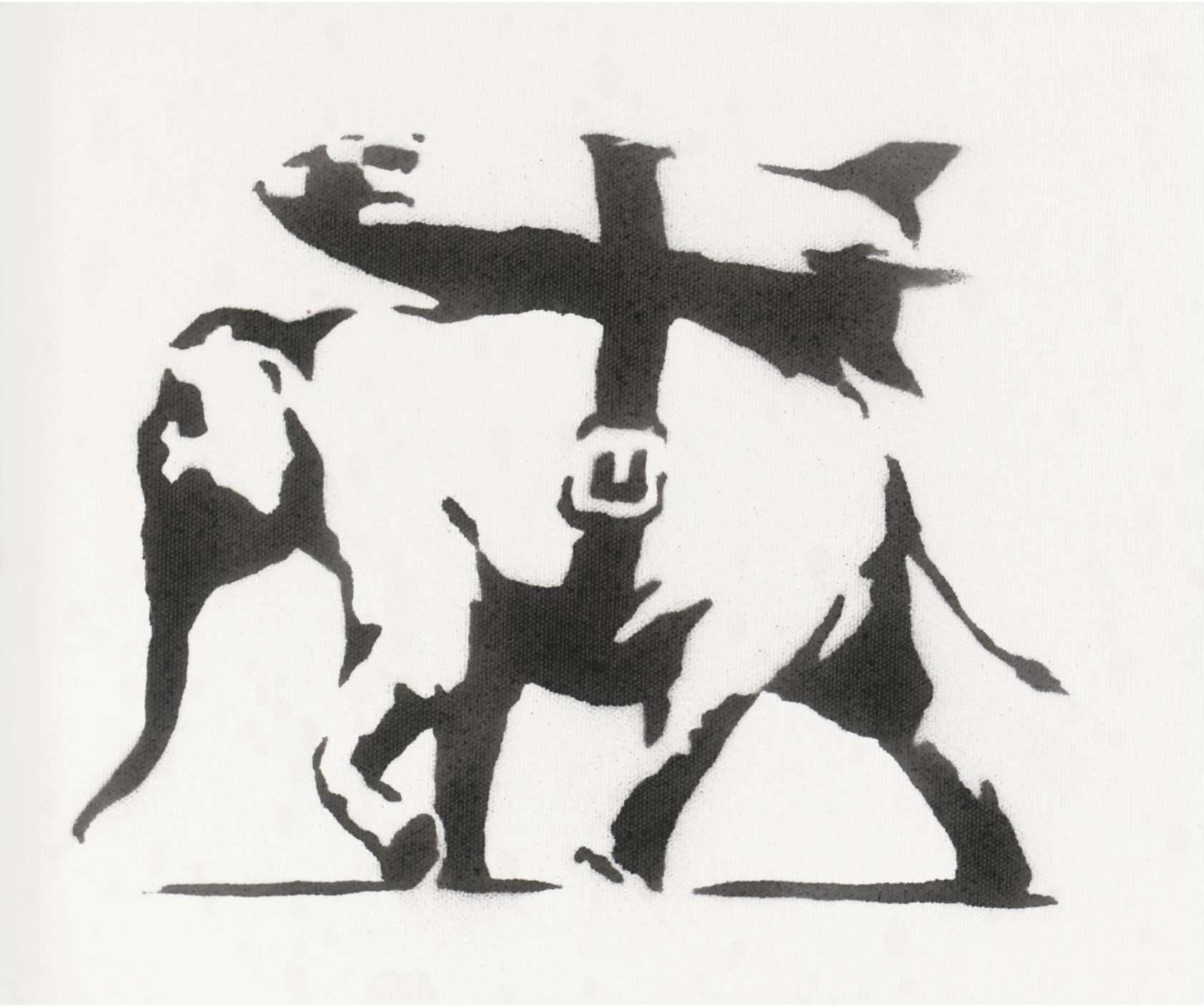
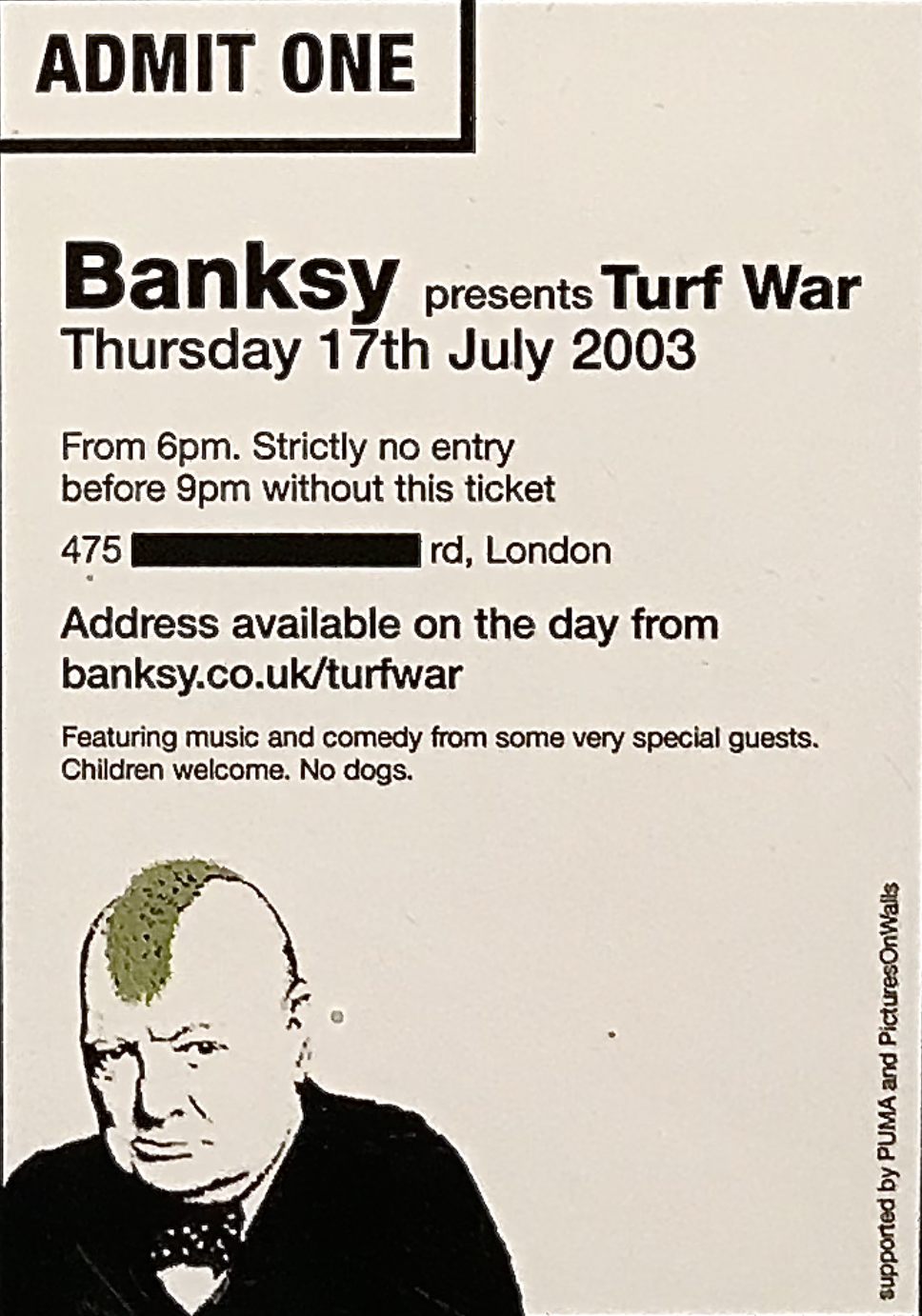
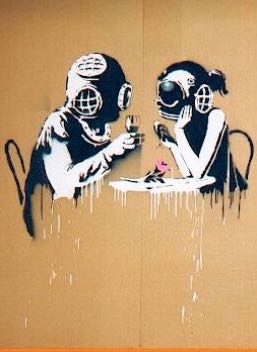
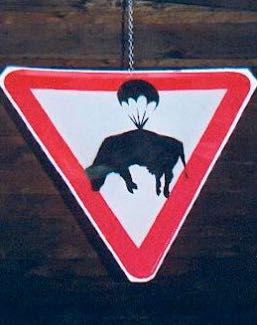
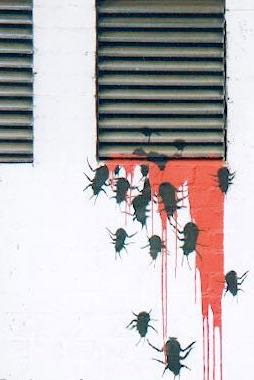
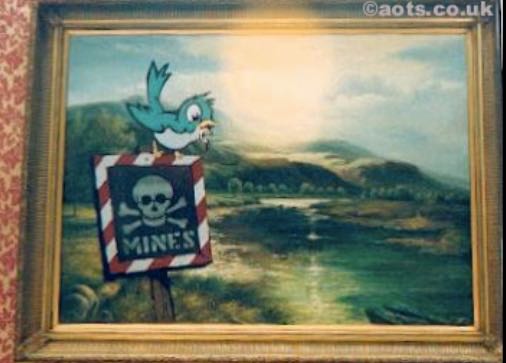
Crude Oils opened on 22 October 2005 at 100 Westbourne Grove in London and was Banksy’s third major exhibition after Severnshed and Turf War in 2003. It featured 20 + versions of classical oil paintings by Van Gogh, Hopper, Warhol, Turner, and Monet. Also present were 200 live rats and some interesting sculptures.
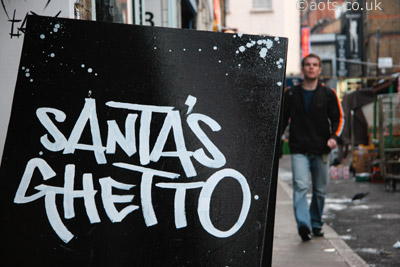
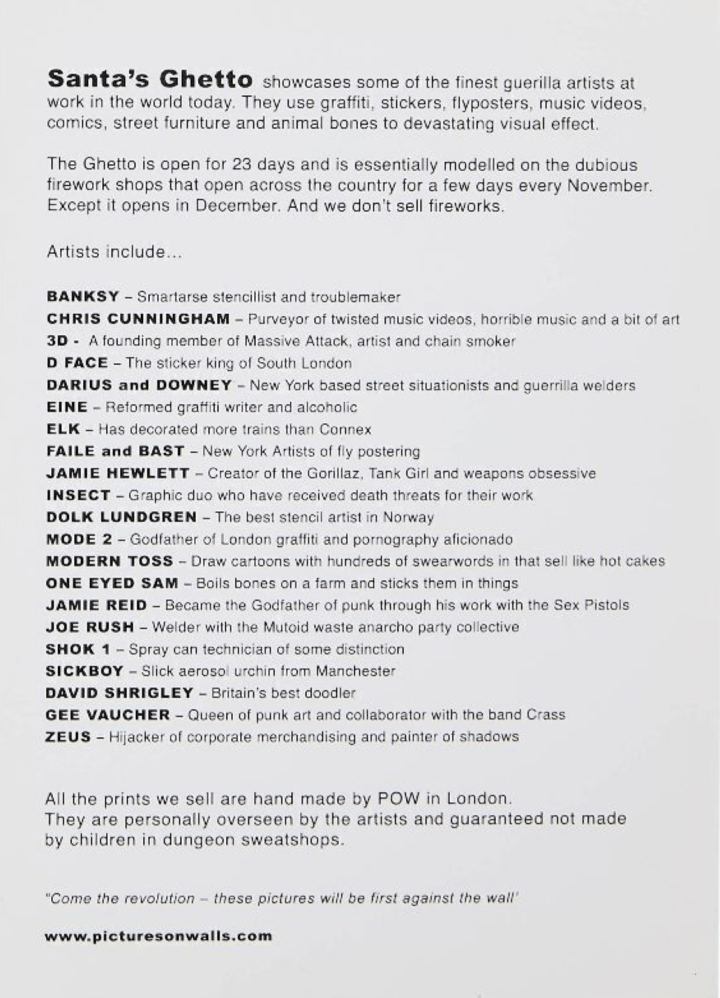
The 2004 Santa’s Ghetto was located in a run-down former porn shop on 121 Charing Cross Road, next to Foyles bookshop in Central London. The pop-up art exhibition opened daily from 10am to 8pm until Christmas Eve.
It contained intriguing new works from all of the artists on Pictures of Walls. Banksy participated with a few modified oils and the first version of Napalm. The counterfeit ten-pound notes featuring Lady Di, also referred to as the Di-Faced tenners, saw the light.
The last of the small black books, Cut It Out, was launched at the exhibition.
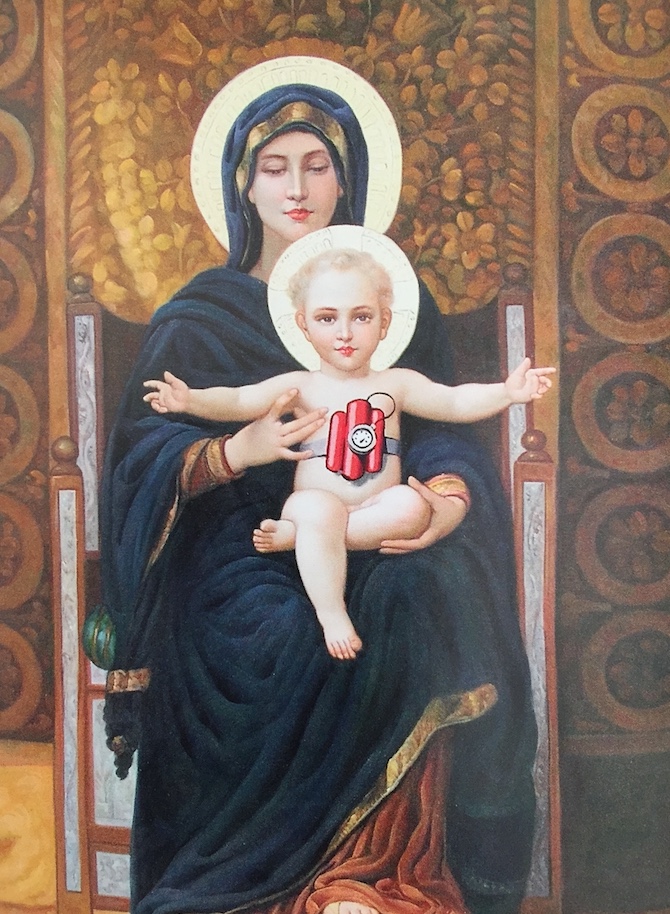
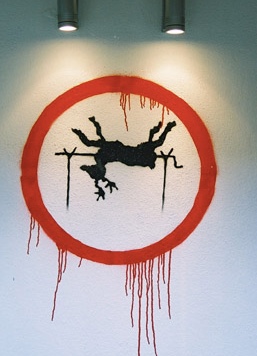
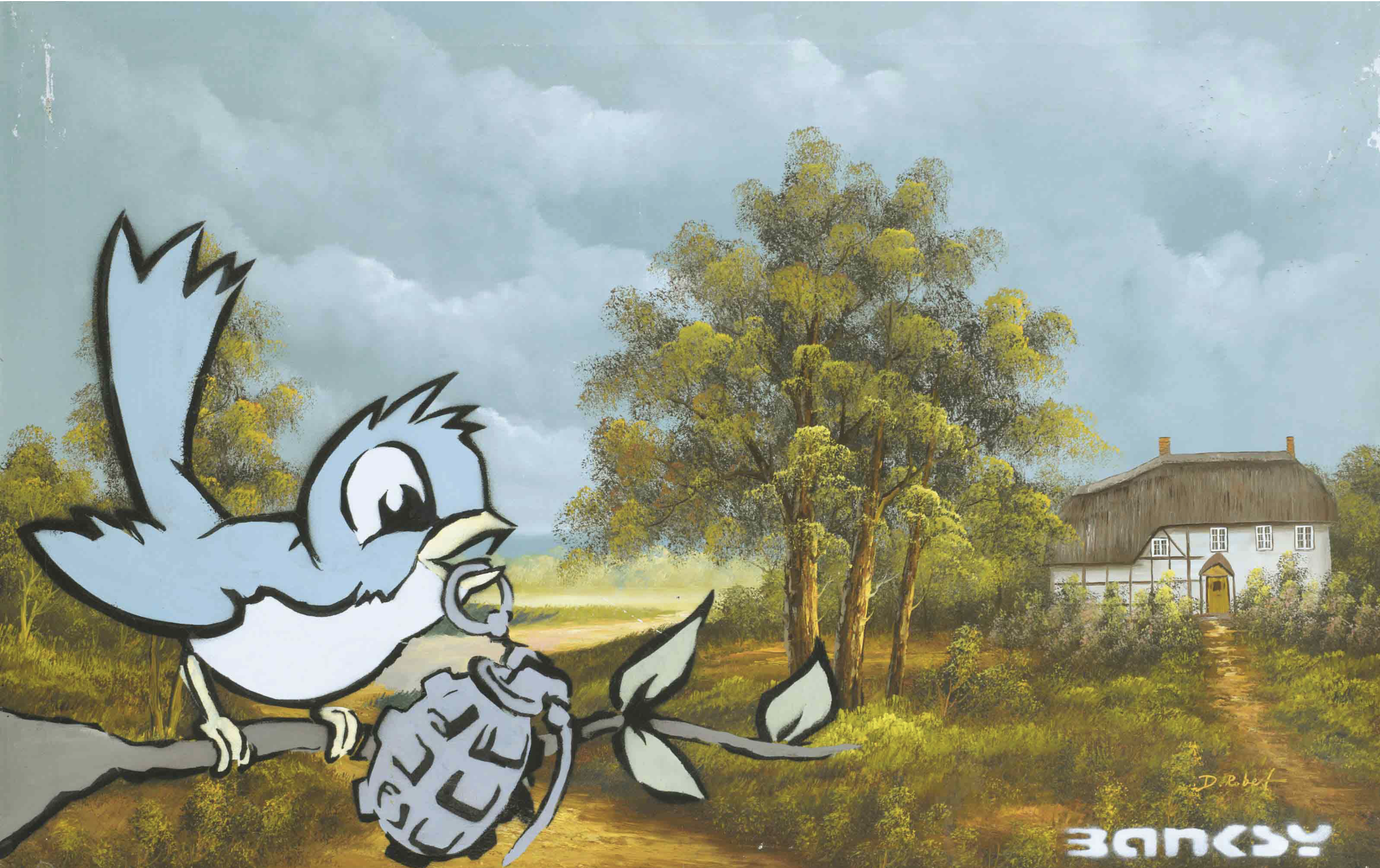
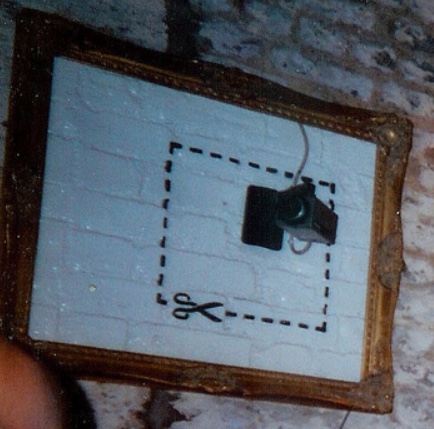
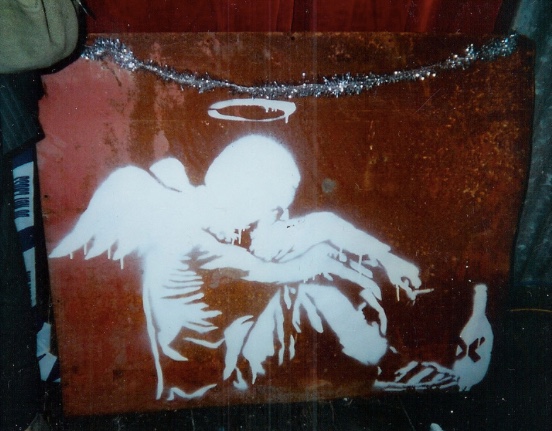
Of particular interest were the modified oil paintings, some of which reappeared the following year at the Crude Oils exhibition. Here, three examples in clockwise order: Silent Night, Congestion Charging, and Countryside CCTV.
Photos: Bonhams and Christies
List of participants – Santa’s Ghetto 04:
THE THIRD BOOK “CUT IT OUT”. DECEMBER 2004
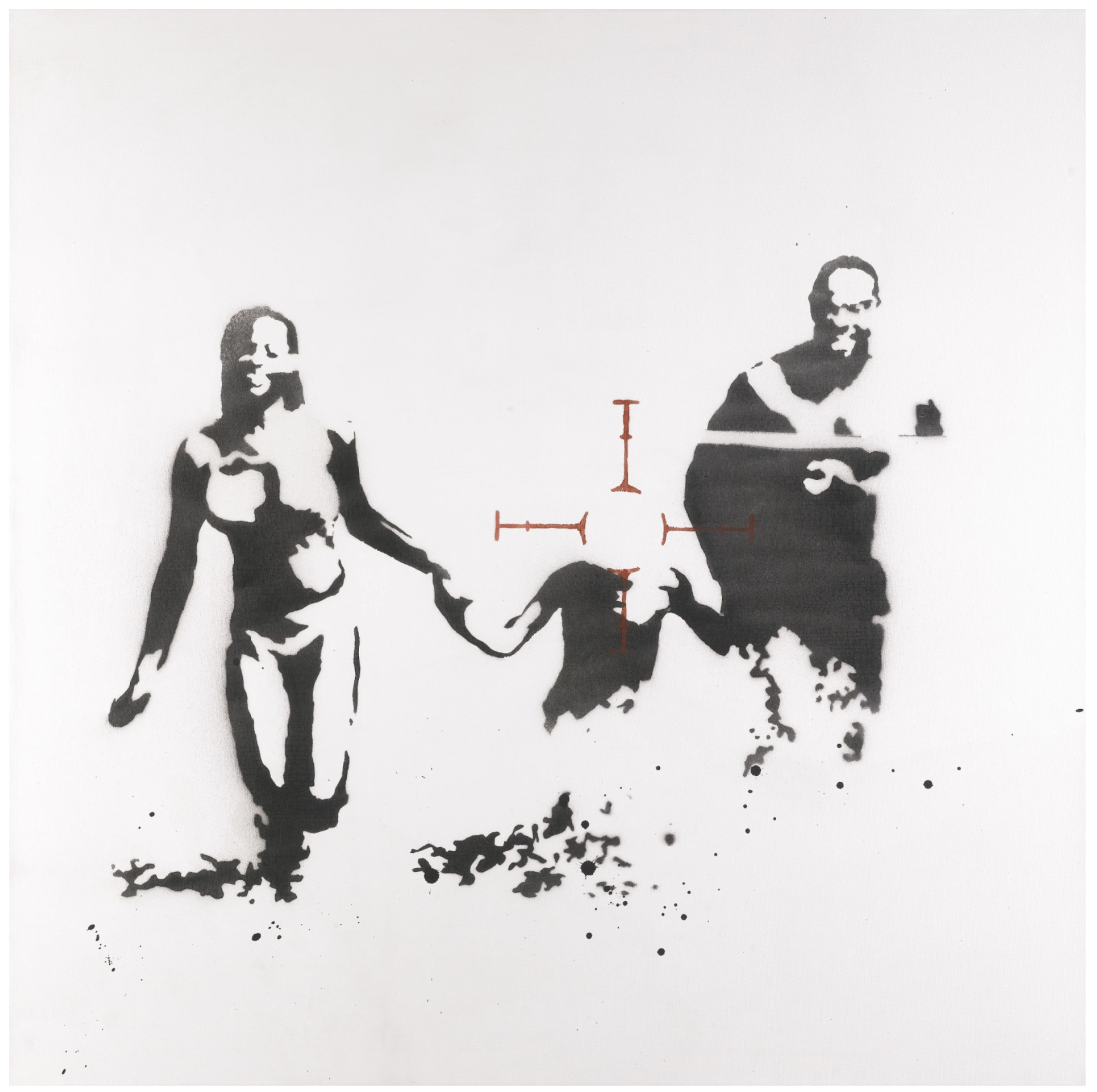
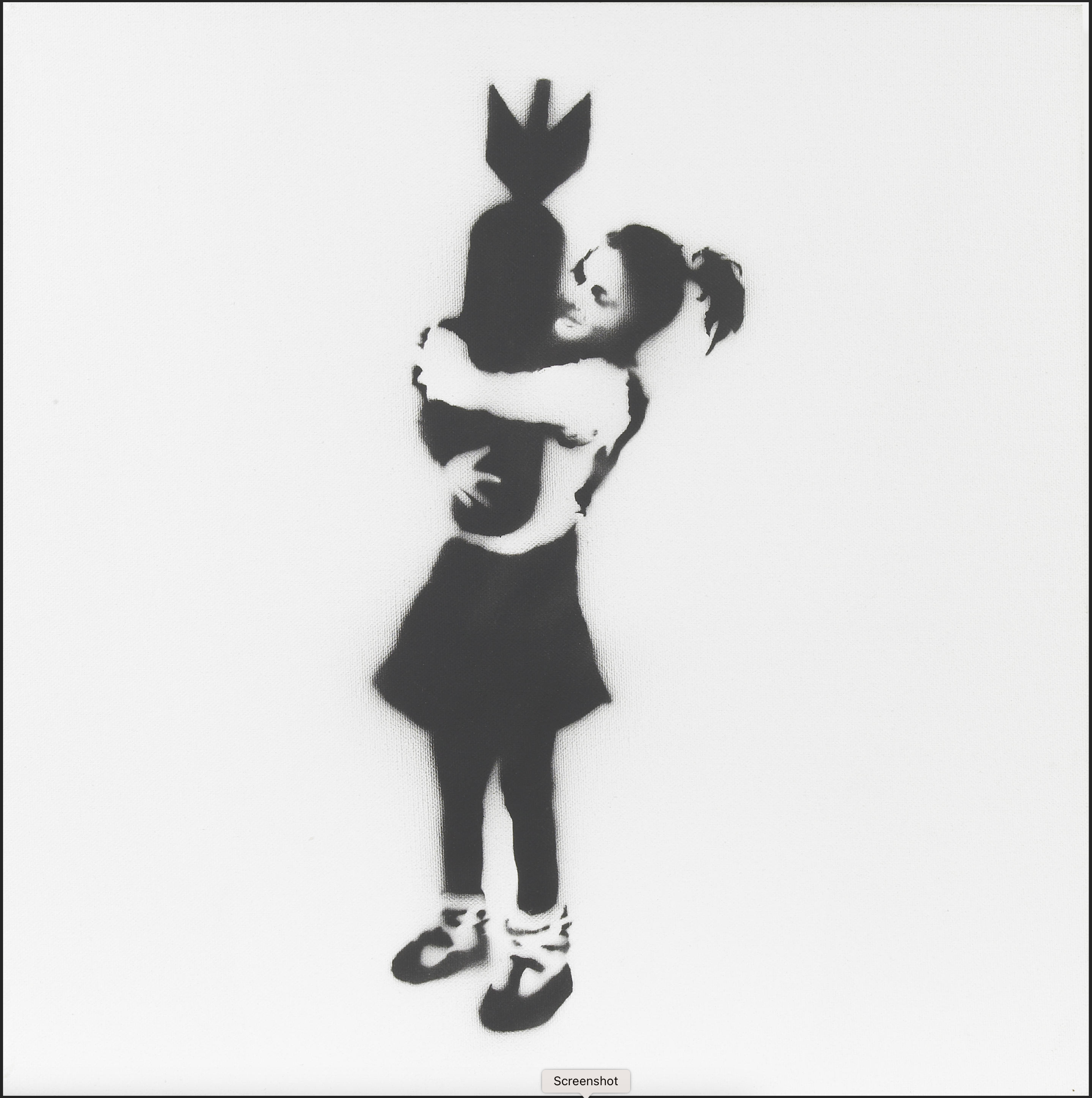
Cut it Out was launched during Santa’s Ghetto 2004 and was the last of the three little black books. It has some interesting street art, loads of rats, and a few lovely canvases. Among them is “Suicide bombers just need a hug” from the Turf War exhibition.
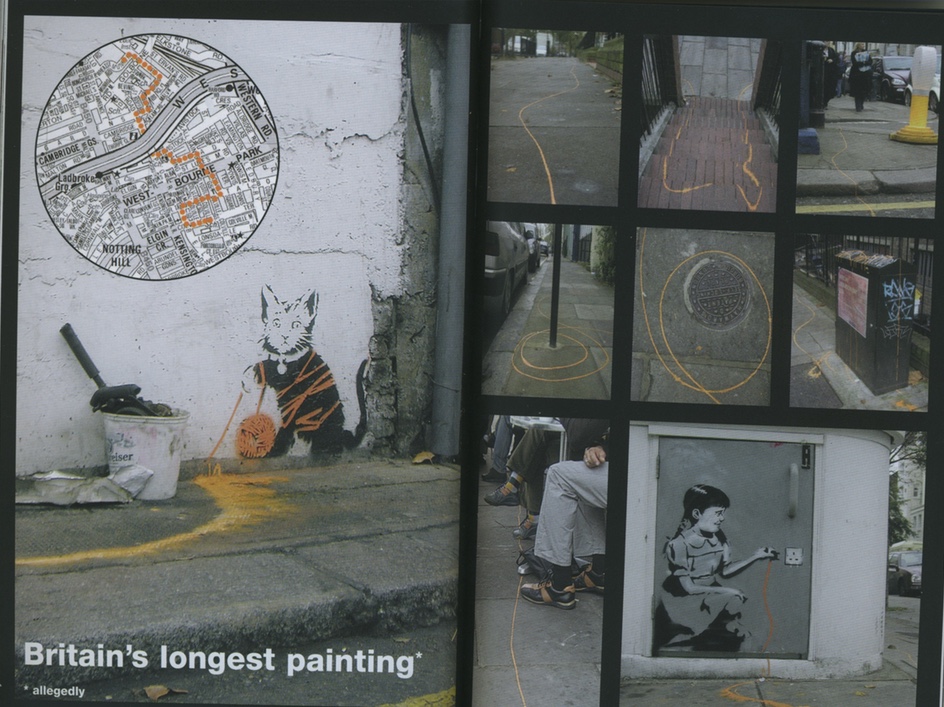
CUT IT OUTThe longest painting in BriitainBig rat in LiverpoolSuicide bombers just need a hug
Santa’s Ghetto 2003 opened on 2 December in an abandoned store just off Carnaby Street in London. It contained work by Banksy, Jamie Hewlett, Mode 2, and 3D, among others. Described by Pictures on Walls as a “festive extravaganza of cheap art and related novelty goods from lowbrow artists and trained vandals”. The launch party attracted Damon Albarn of Blur, and star chef Jamie Oliver.
Photos: Wembley Pairs, Flickr
Multiple canvases
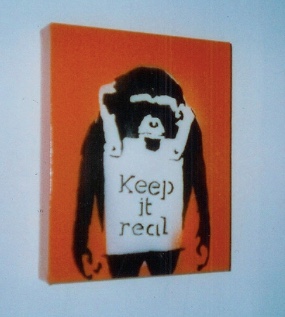
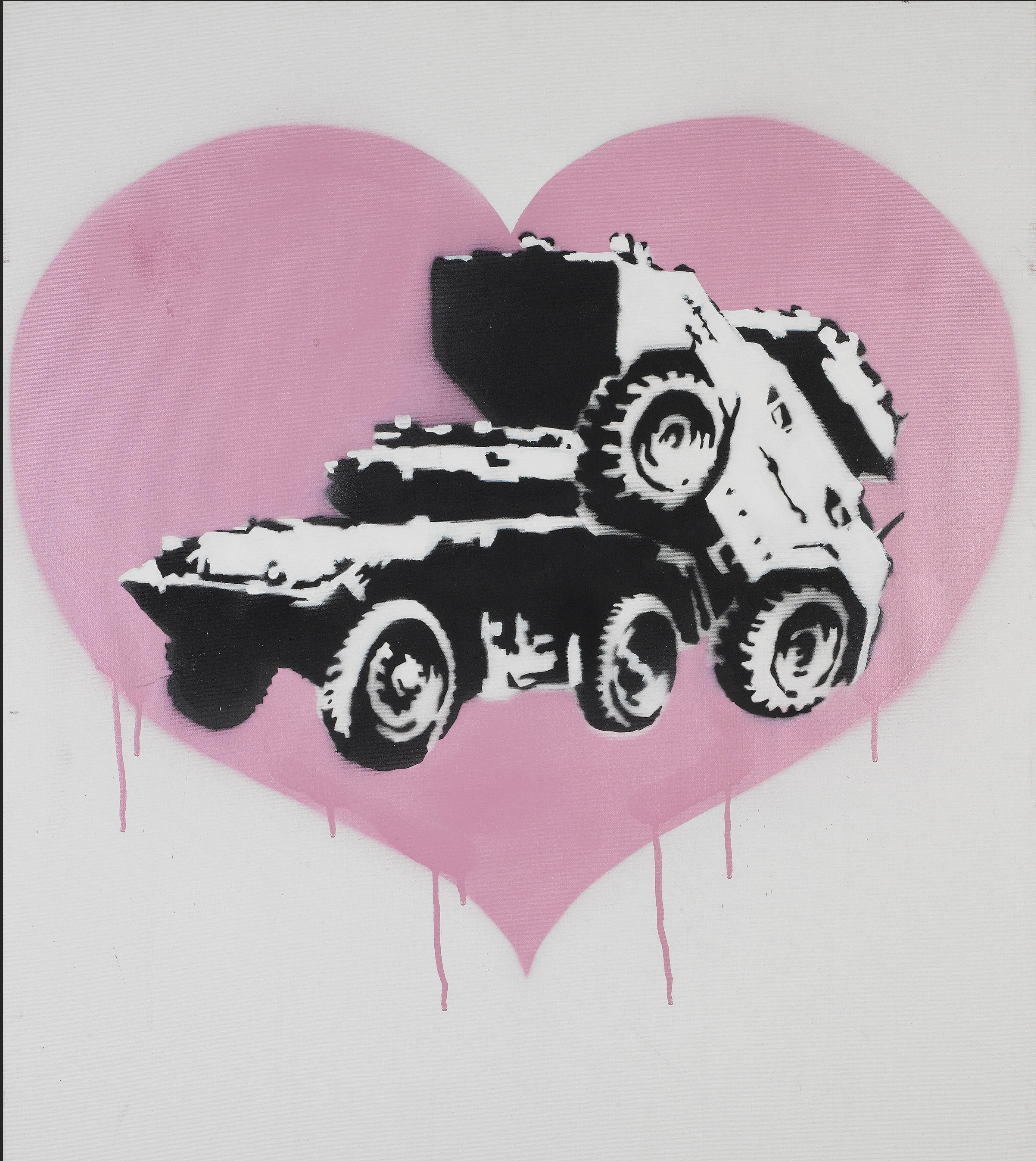
Santa’s Ghetto was a selling exhibition. Banksy sold a lot of canvases, mostly stencilled motifs in editions of 25, so-called ‘multiple canvases’, among them the iconic Girl with Balloon, also in an edition of 25. Some of the canvases that Banksy sold for £ 250 in 2003 now collect over a million pounds on the secondary market.
A few of the multiples sold at Santa’s Ghetto 2003:
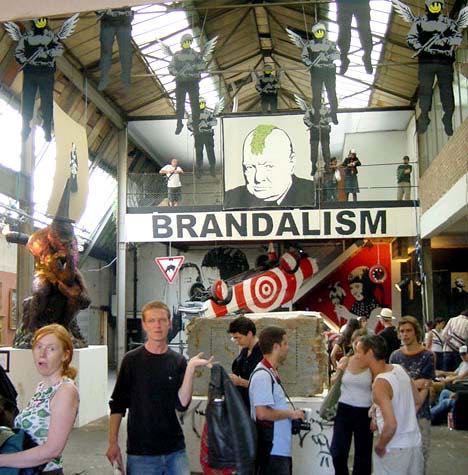
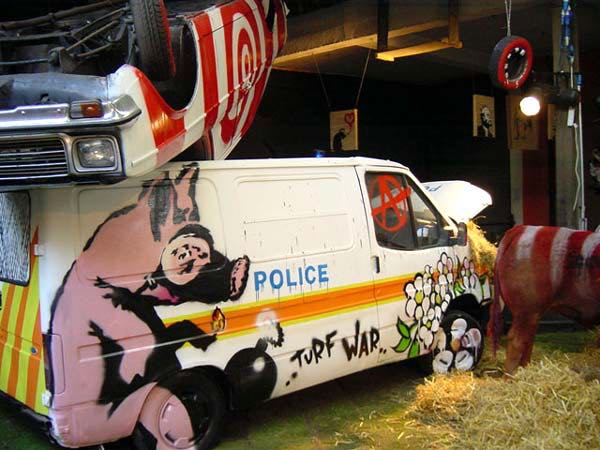
The show opened on 18 July and lasted for three days. Turf War featured a wide range of genres, techniques, and styles. It marked the beginning of a string of brilliant exhibitions with an approximate two-year interval: Turf War in 2003, Crude Oils in 2005, Barely Legal in 2006, Banksy vs. Bristol Museum in 2009, etc. The London art critics called the exhibition one of the most interesting of the year.
Photos: Jonny Baker, Mike Pickard, http://www.artofthestate.co.uk and Benny Goh. The name of the photographer for each photo is visible if you click on the photo.
ITV recorded this interview from the exhibitions—one of the few documented footage of a member of Team Banksy:
BBC Radio also interviewed “the same” Banksy at the Turf War exhibition:
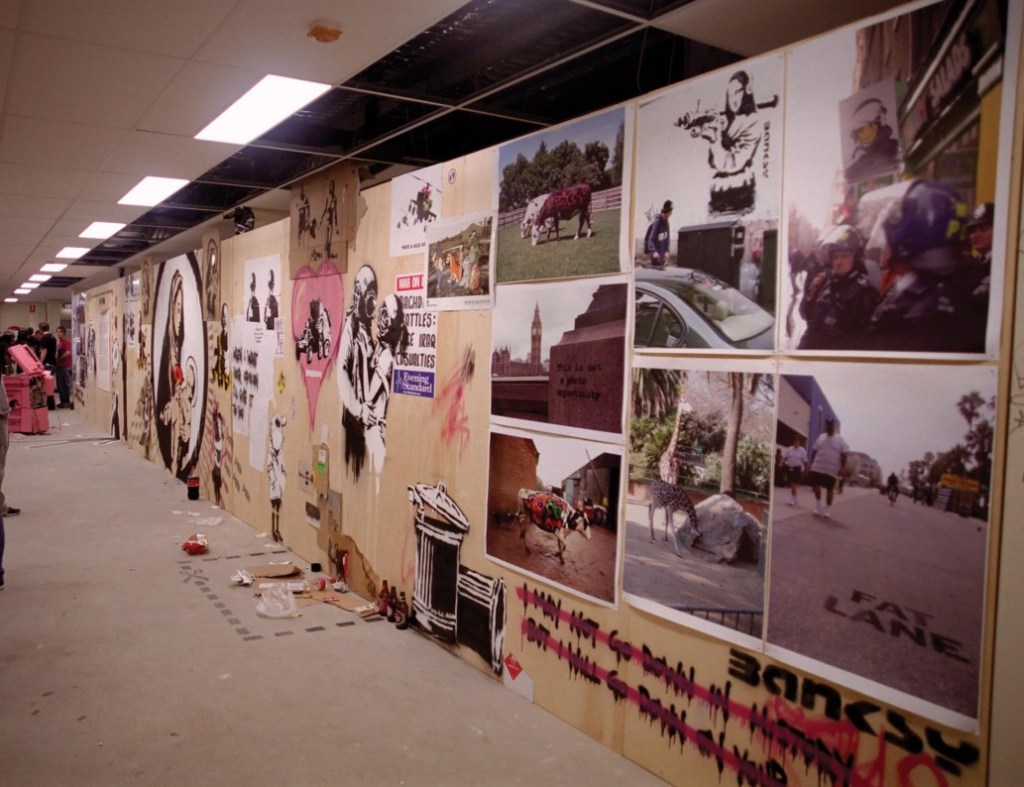
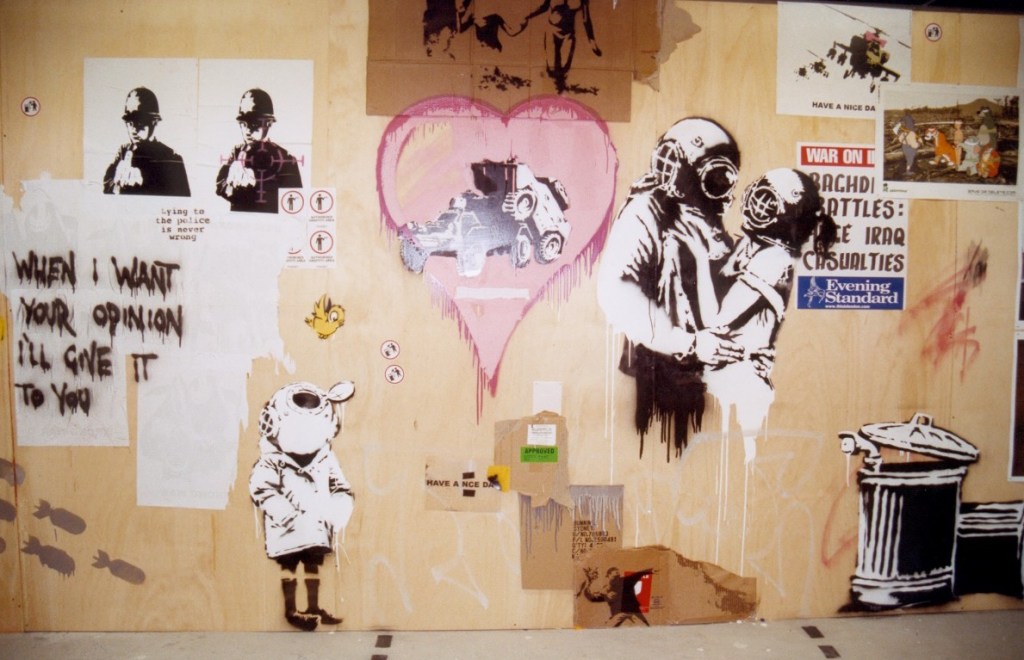
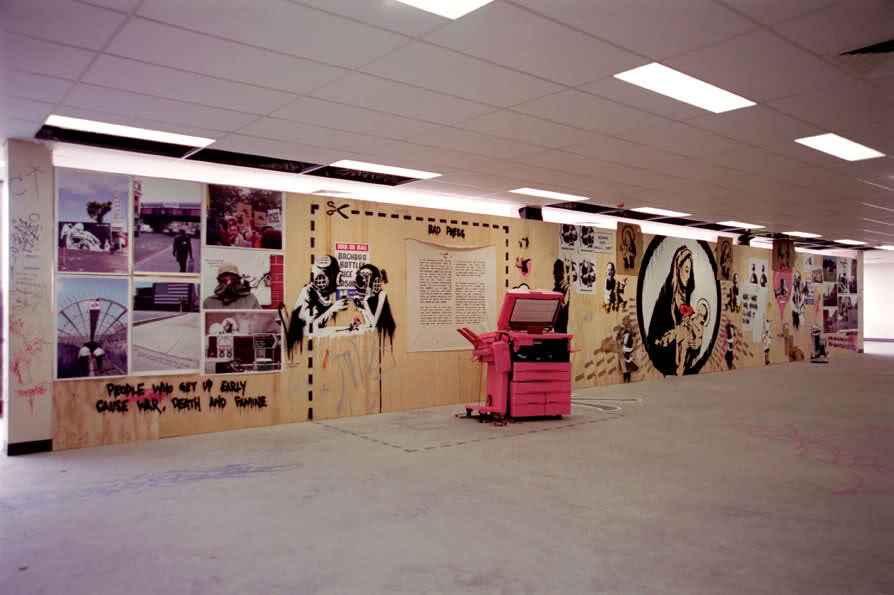
Semipermanent was an annual art festival held in Sydney, Australia. Banksy participated with a 12-metre panel. Melbourne’s Burn Crew, Dmote of Australia, 123Klan of France, and Shepard Fairey also attended.
Santa’s Ghetto was a “squat art concept store” set up at Christmas each year in different locations around London. The Dragons Bar in Shoreditch hosted the first edition. There were only Banksy and Ben Eine artworks.
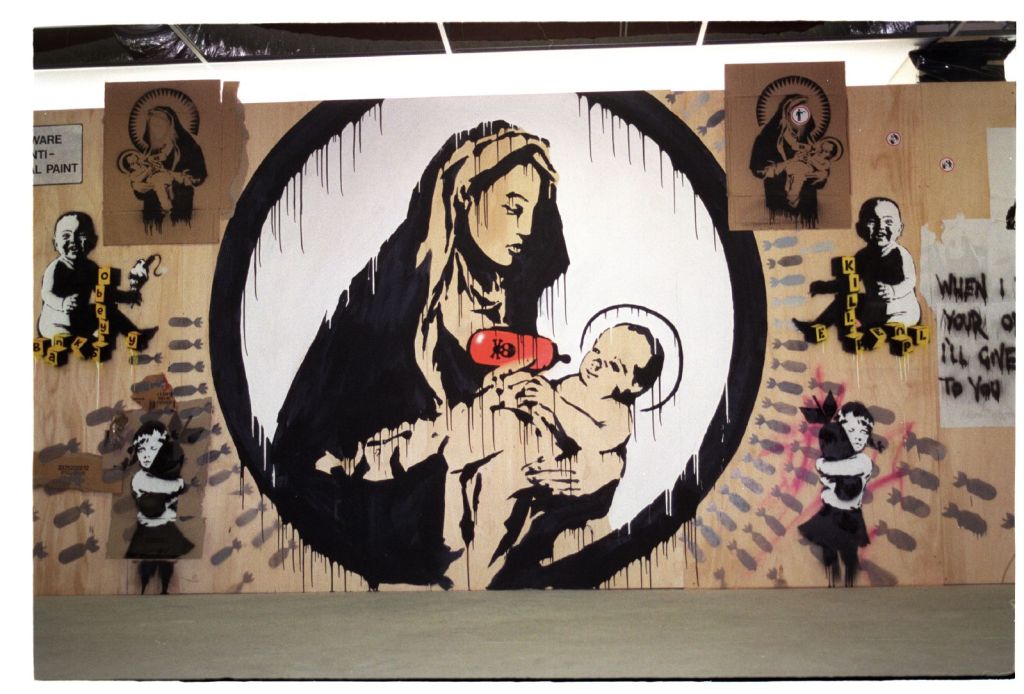
Banksy opened his first Los Angeles exhibition, Existencilism, at the 33 1/3 Gallery on 19 July 2002. The show was sponsored by Puma. The most important piece was a big ‘Stop ESSO’ painted on one of the walls.
19 July 2002 – Opening night Existencilism, Los Angeles. The Stop Esso in the background:
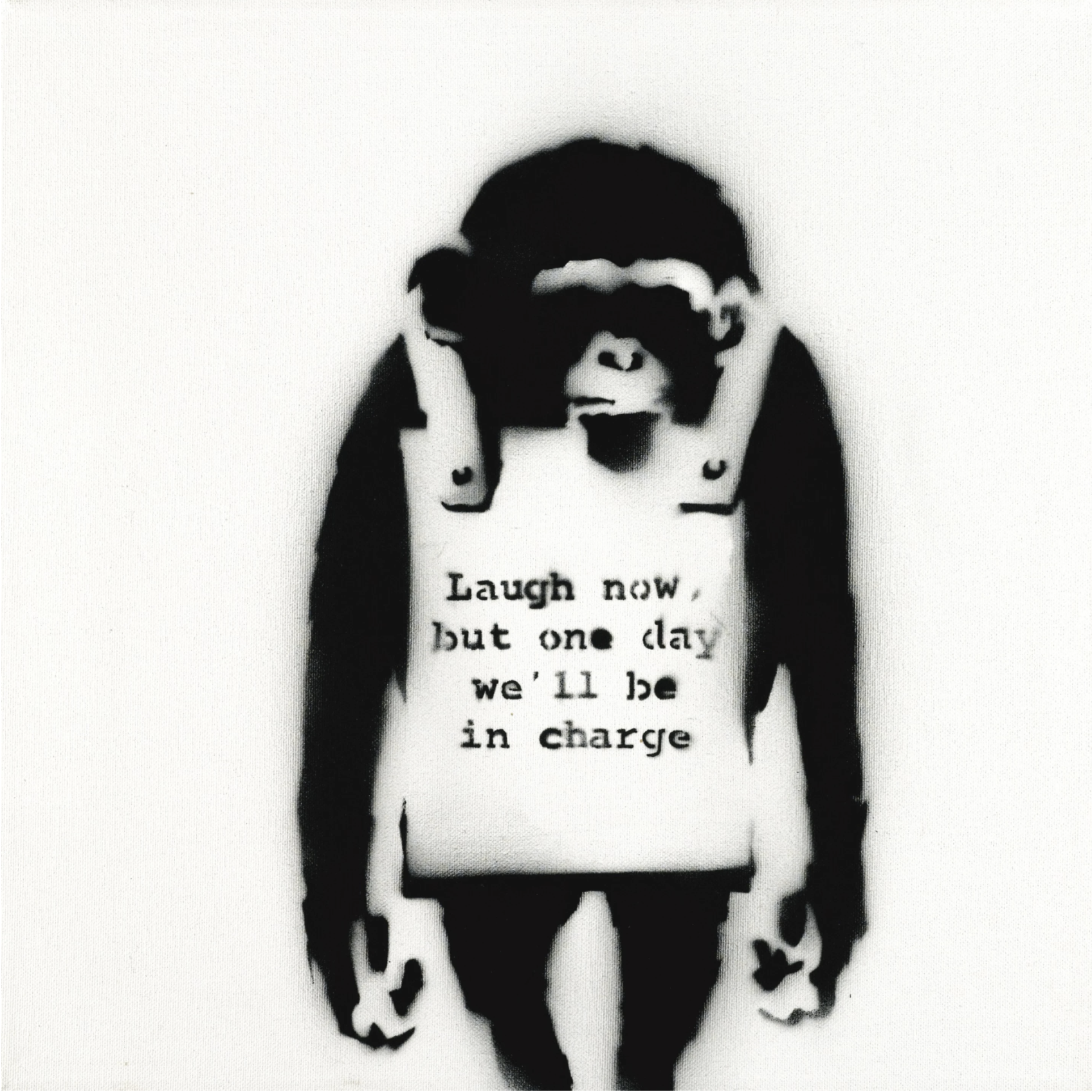
It was a selling exhibition, and Banksy sold quite a few multiple canvases, most of them in an edition of 5 and dated LA 2002 on the stretcher:
Some of the multiple canvases that were sold at Existencilism. Photos: Bonhams and Sotheby’s
EXISTENCILISM IN JAPAN. SEPTEMBER 2002
A month later, Banksy opened a reduced version of the Existencilism exhibition in Japan – Osaka (8-17 September) and Tokyo (13 – 24 September). Among other pieces, a Laugh Now on cardboard with the text in Japanese:
Burning Man is an annual event held in the Black Rock Desert of northwestern Nevada, about 100 miles north-northeast of Reno. It’s not your typical festival—think of it as a temporary city, Black Rock City, built by tens of thousands of participants who gather to celebrate art, community, self-expression, and self-reliance. The event culminates in the burning of a large wooden effigy, “The Man,” on the Saturday night before Labour Day.
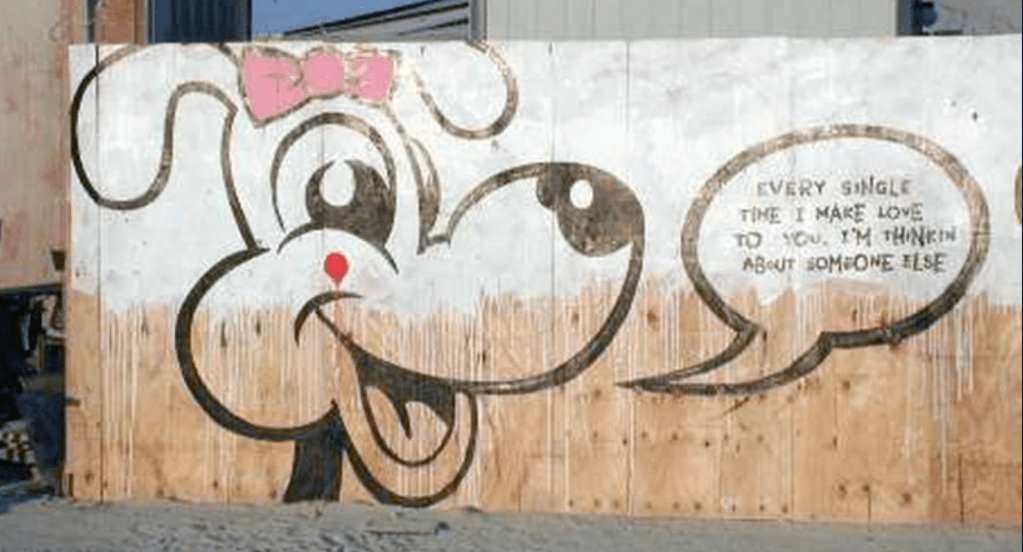
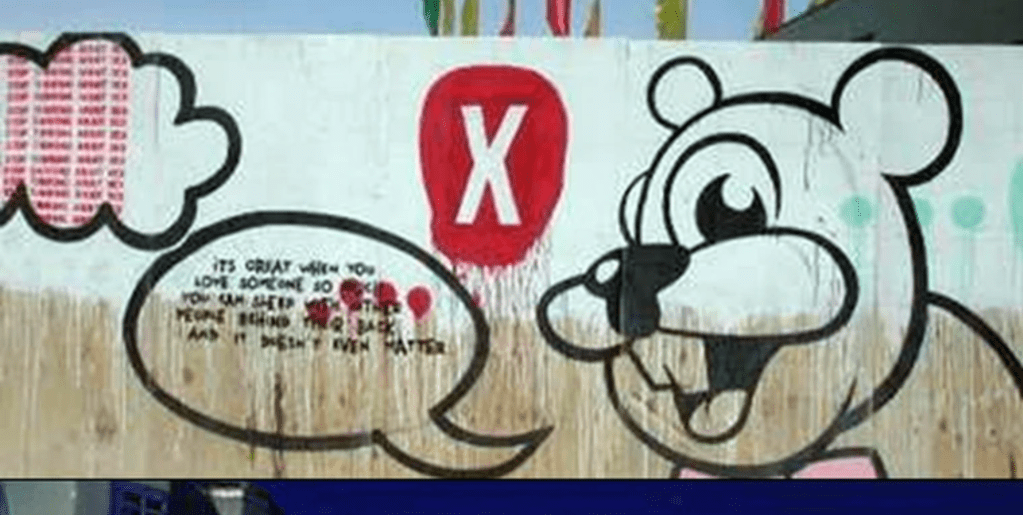
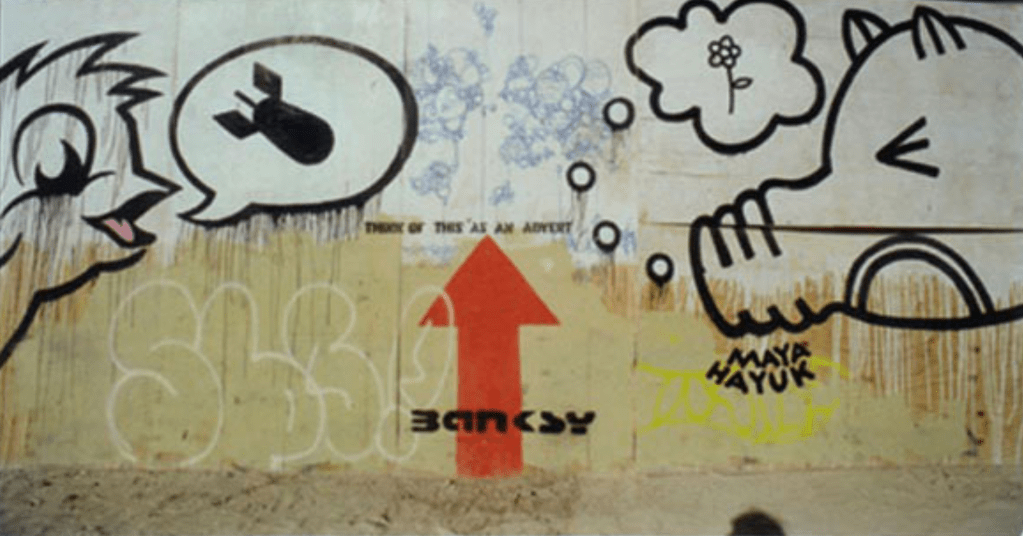
In the 2001 edition of the festival, Banksy had an interesting collaboration with Ukrainian-American artist Maya Hayuk, known for her colourful and abstract graffiti. The collaboration was a comic strip that covered an entire wall right in the middle of the festival area. There are very few photos remaining.
In the summer of 2001, Banksy organised an exhibition at the Cargo Club on Rivington Street. Cargo Club had opened in November 2000 and was built into the railway arches in the same spot as the Rivington Street railway underpass, where Banksy had done his first show in London the year before.
The exhibition featured a lot of the many unsold pieces from the Peace is Tough exhibition in Glasgow earlier that year. It also had various outdoor pieces in the courtyard.
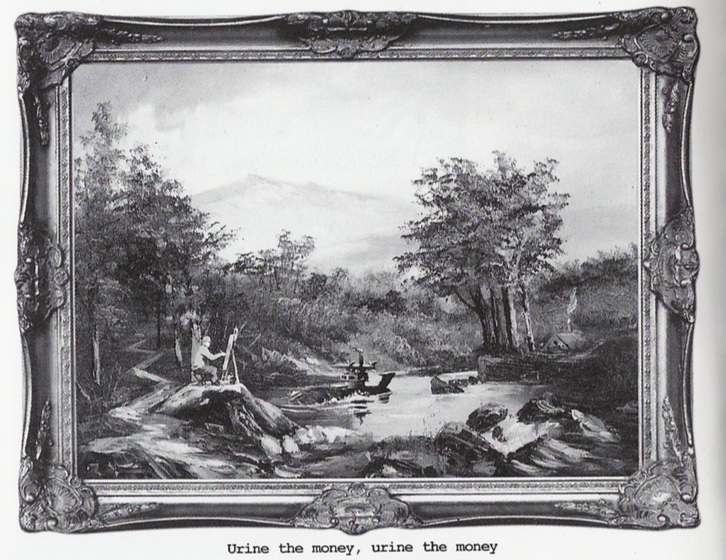
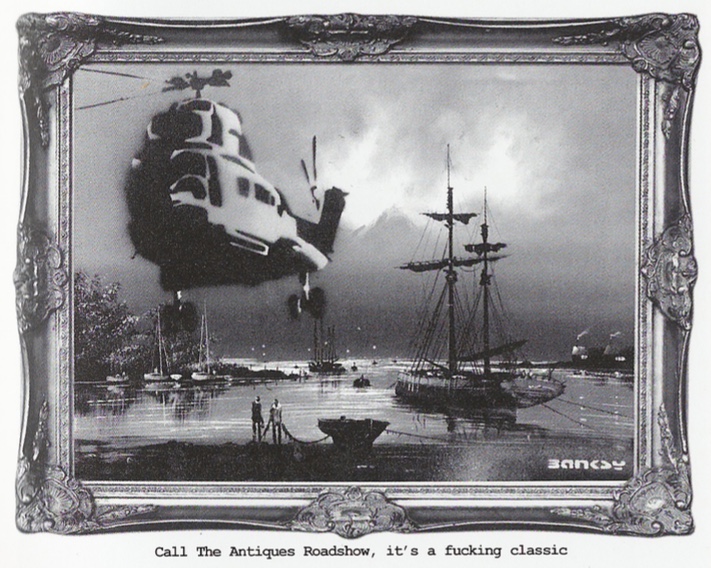
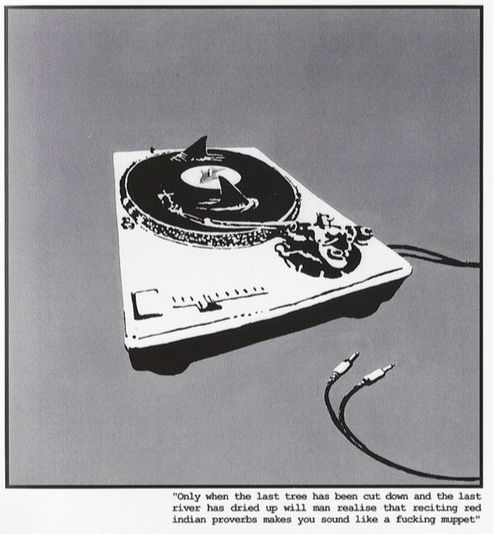
At the same time, Banksy released a book, Banging your head against a brick wall, the first of a series of three small black books in A6 format. It has some surprisingly well-written texts along with images of his most prominent street art and originals. 54 pages in B&W. Some curious highlights:
In March 2001, Banksy went to Glasgow to participate in an exhibition at The Arches, a club located under Glasgow Central Railway Station. The organiser and main attraction of the exhibition was anti-art world colleague Jamie Reid. According to several sources, Banksy’s pieces didn’t sell well, and they were taken back to London, where they appeared a few months later at the Cargo Club exhibition. Very little documentation remains.