The seal was painted at the same abandoned gas station in Midwood, Brooklyn, as the Trump “gentrification” piece. According to locals, both pieces were painted around 10 March. The seal uses the remaining part of the Mobil gas station logo as its ball.
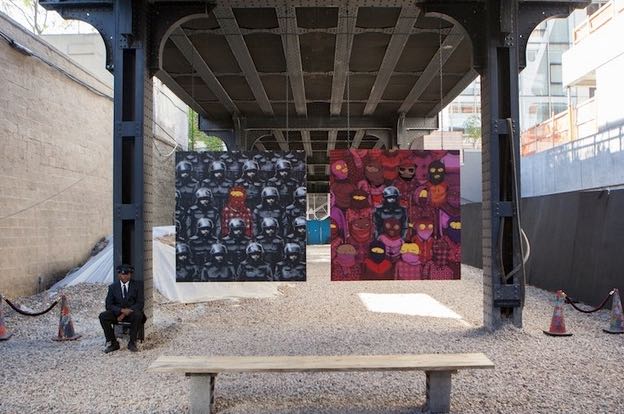
A 22-metre-long mural was unveiled on 15 March in New York in support of jailed Kurdish painter Zehra Doğan. It is a collaboration with New York artist John Tsombikos, a.k.a. BORF. The piece is at the corner of Houston Street and the Bowery. Banksy said in a statement to the New York Times:
“I really feel for her. I’ve painted things much more worthy of a custodial sentence,”
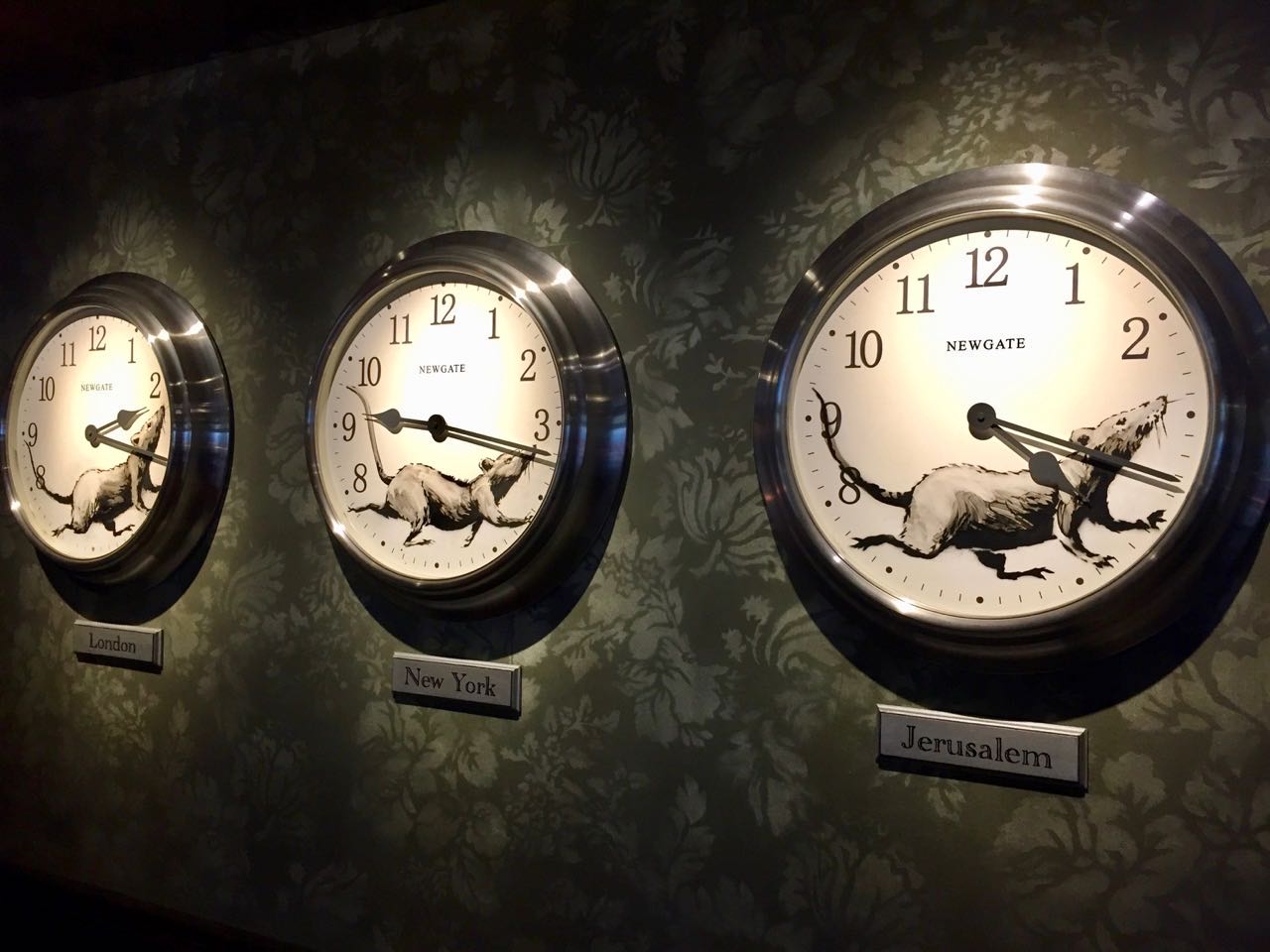
Banksy is back in New York with his first piece since October 2013. It’s a brilliantly executed rat-in-the-clock, a theme that has been used a few times before, most recently at The Walled Off Hotel. The piece can be found on 6th Ave., a few blocks south of the Empire State Building.
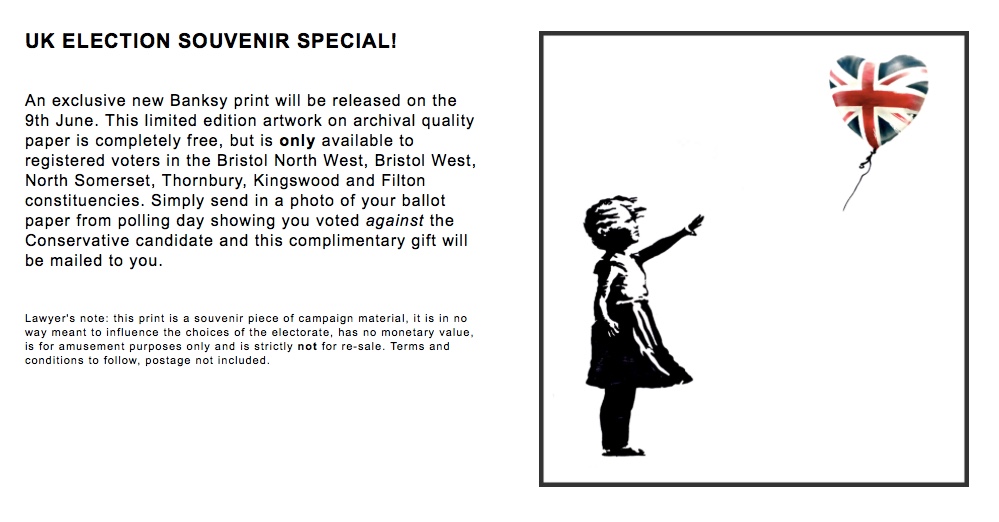
Due to legal issues, Banksy announced this morning on www.banksy.co.uk that he is cancelling the promotion of a free print for voting against the Tories.
On 3 June, Banksy announced a new print release, a version of the iconic Girl with Balloon, only available to registered voters in the Bristol area who vote against the Conservative party. It would have been Banksy’s first regular print release since Choose Your Weapon in 2010.
The Election Souvenir Special announcement on 3 June:
The Election Souvenir Special was cancelled three days after, on 6 June:
Donald Trump’s visit to Bethlehem was announced on Banksy’s Instagram account on 24 May 2017. The picture of the presidential suite and the video clip of the Trump motorcade were removed a week later.
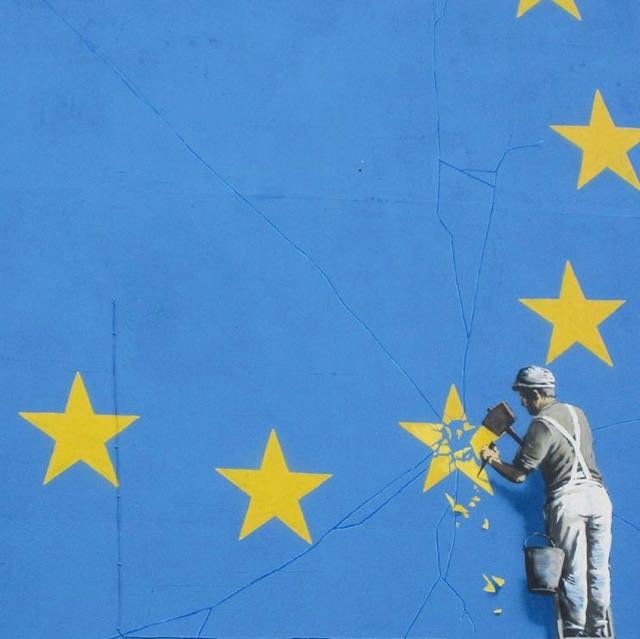
Banksy’s take on Brexit comes at a contentious time for European politics: the UK is currently undergoing a general election that will determine the relationship with or without the EU. At the same time, France is deciding on its European future on the other side of the Channel, only 80 km away. Confirmed by Banksy’s Instagram account on 7 May 2017.
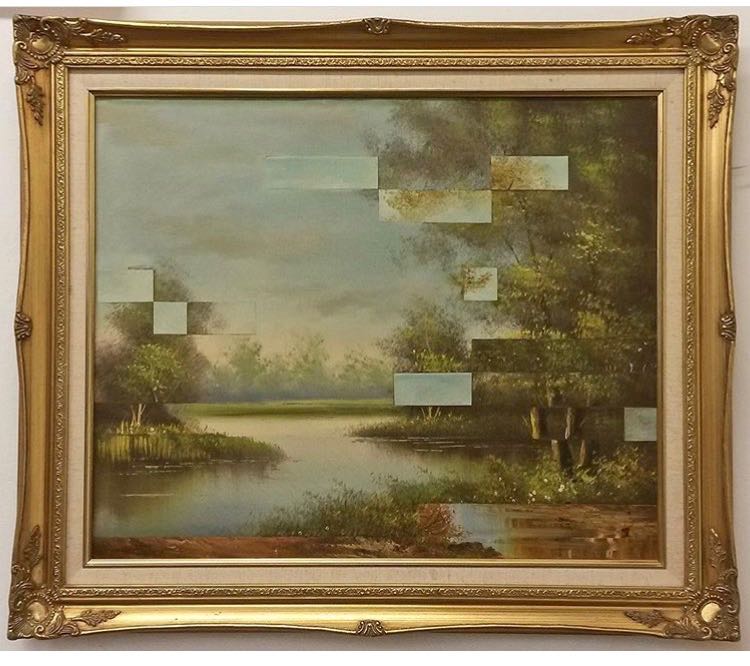
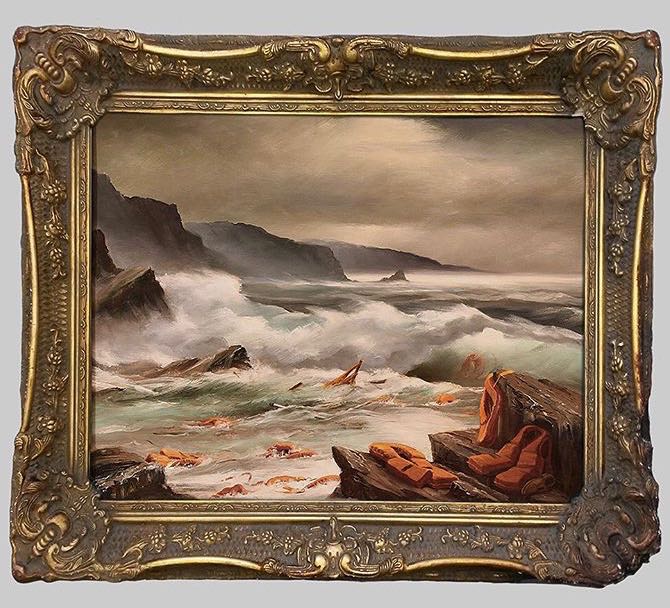
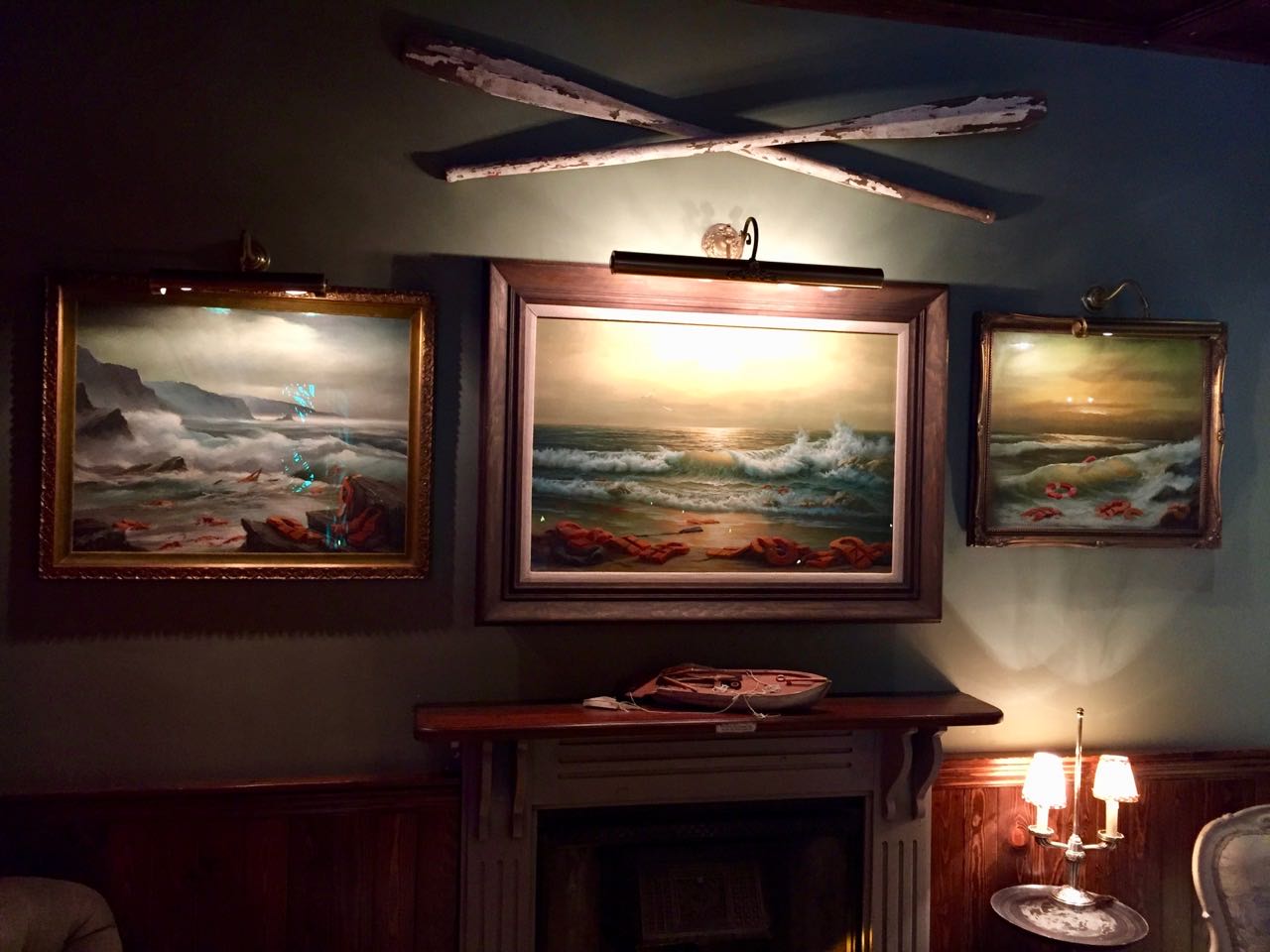
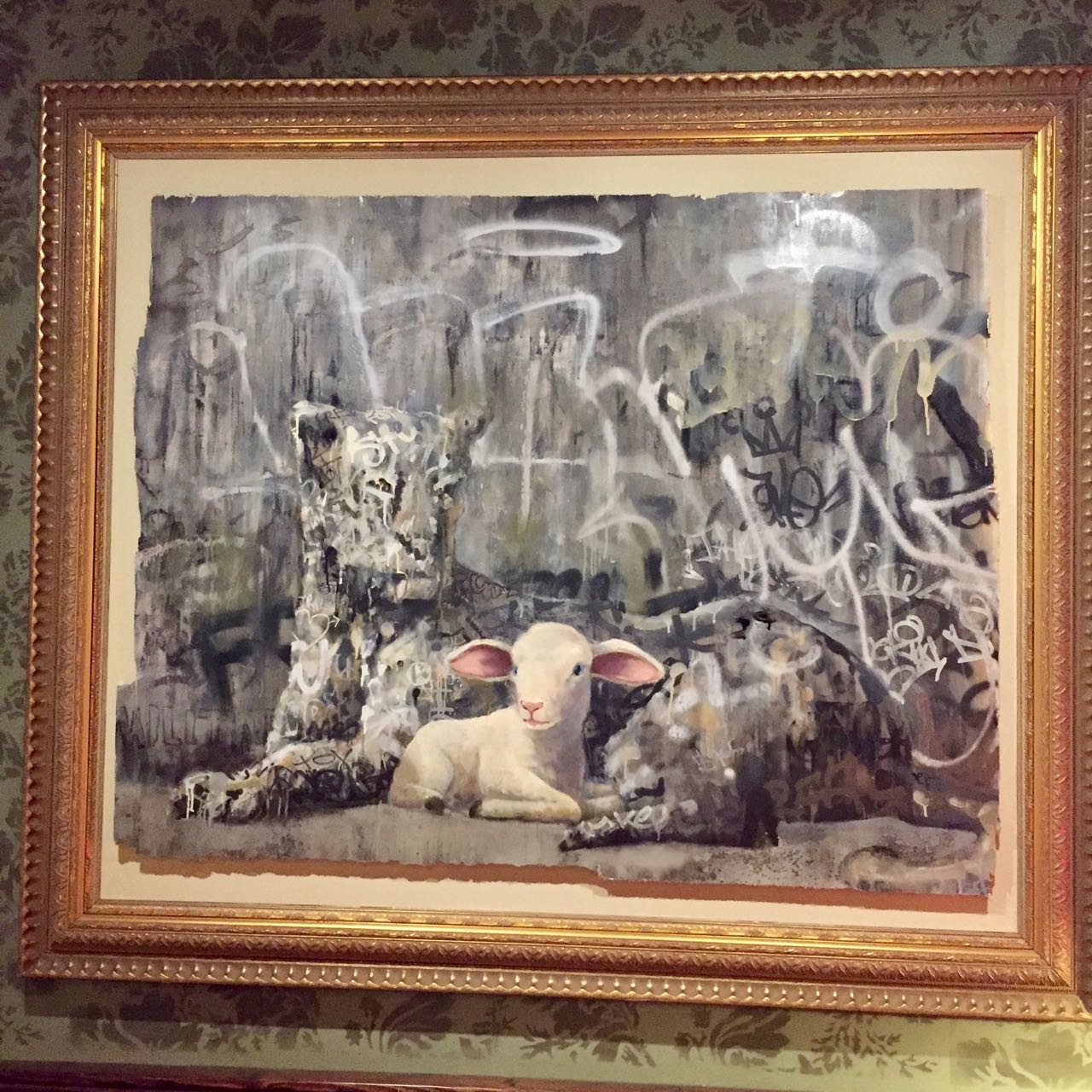
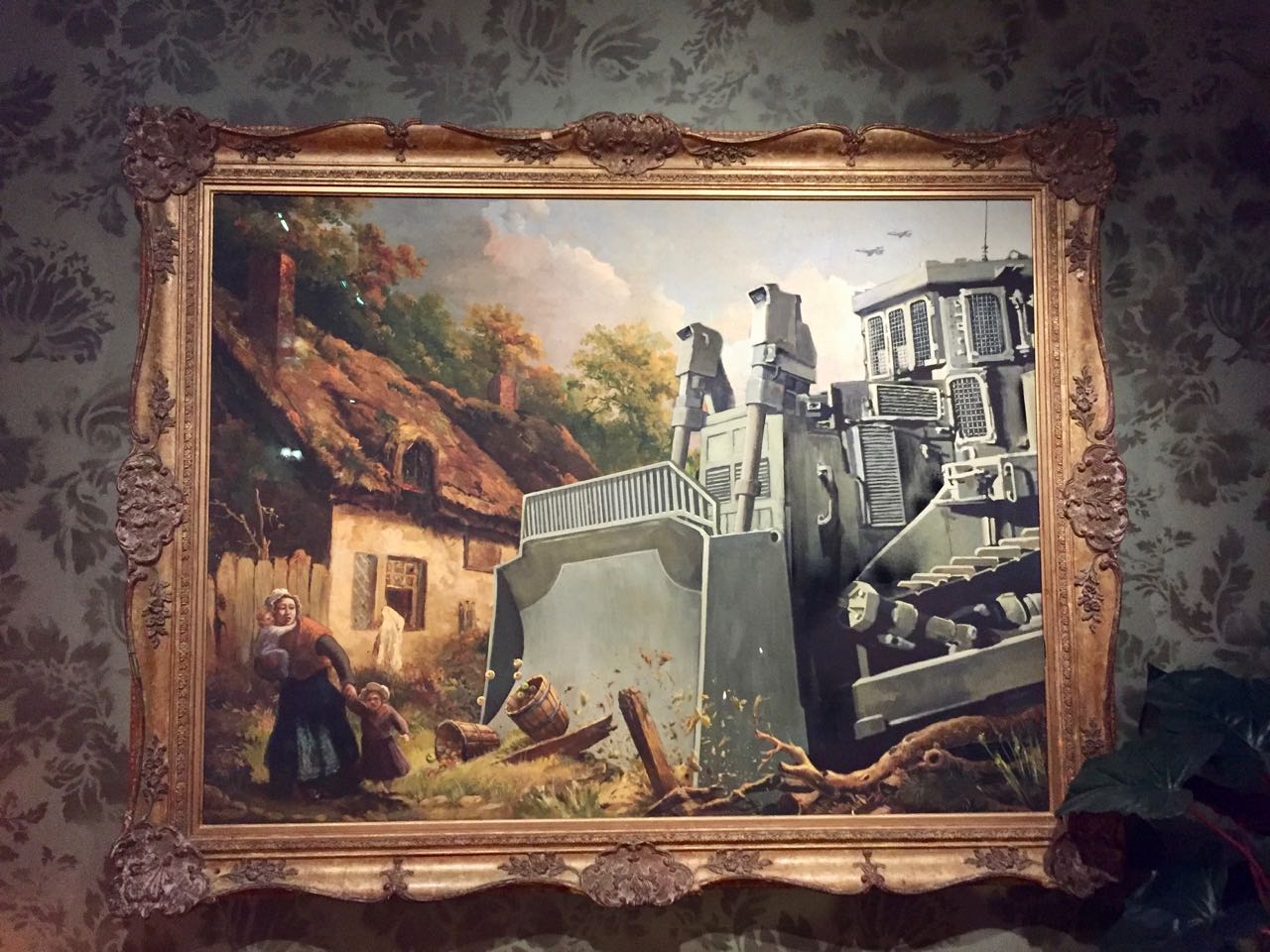
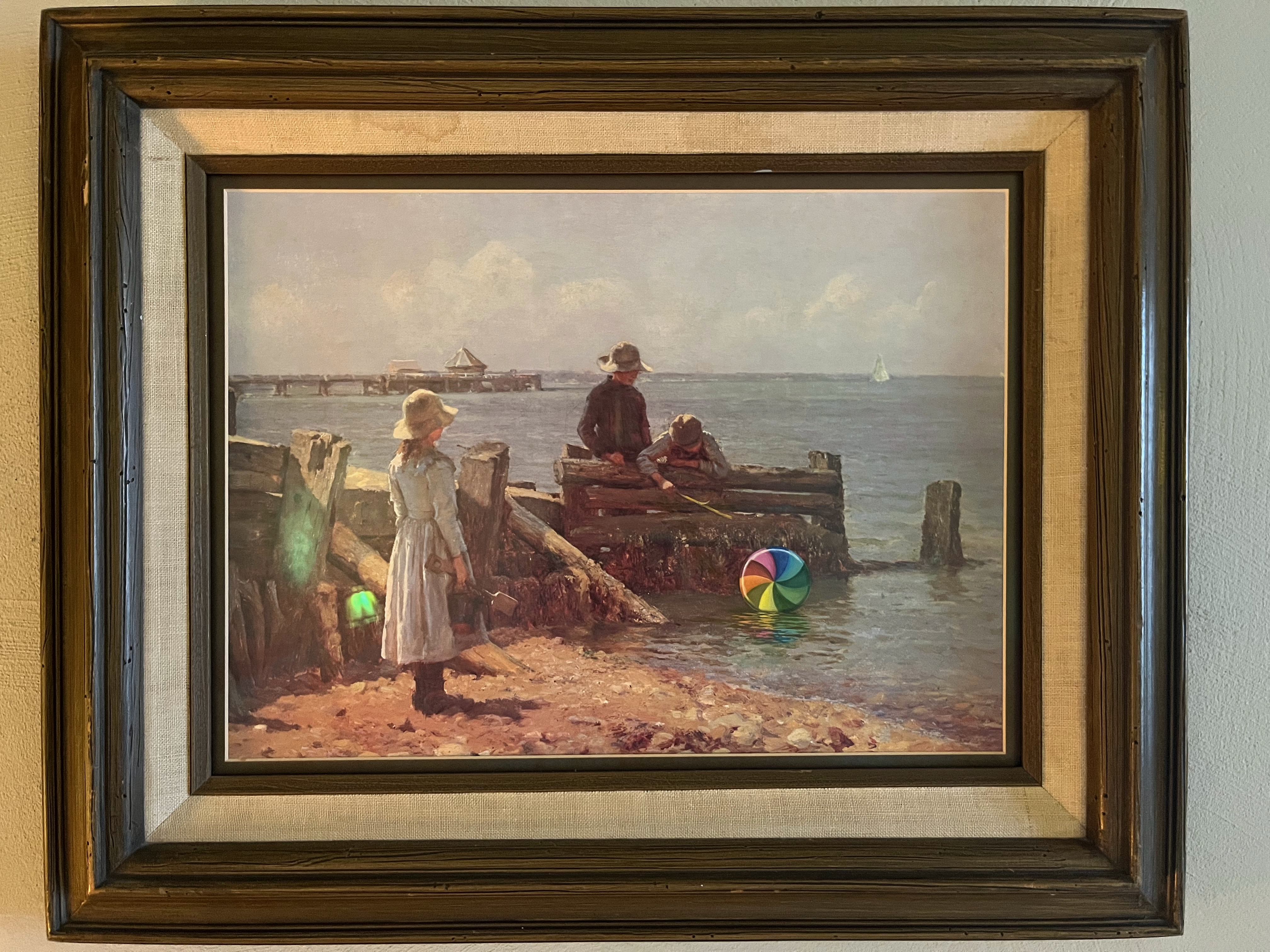
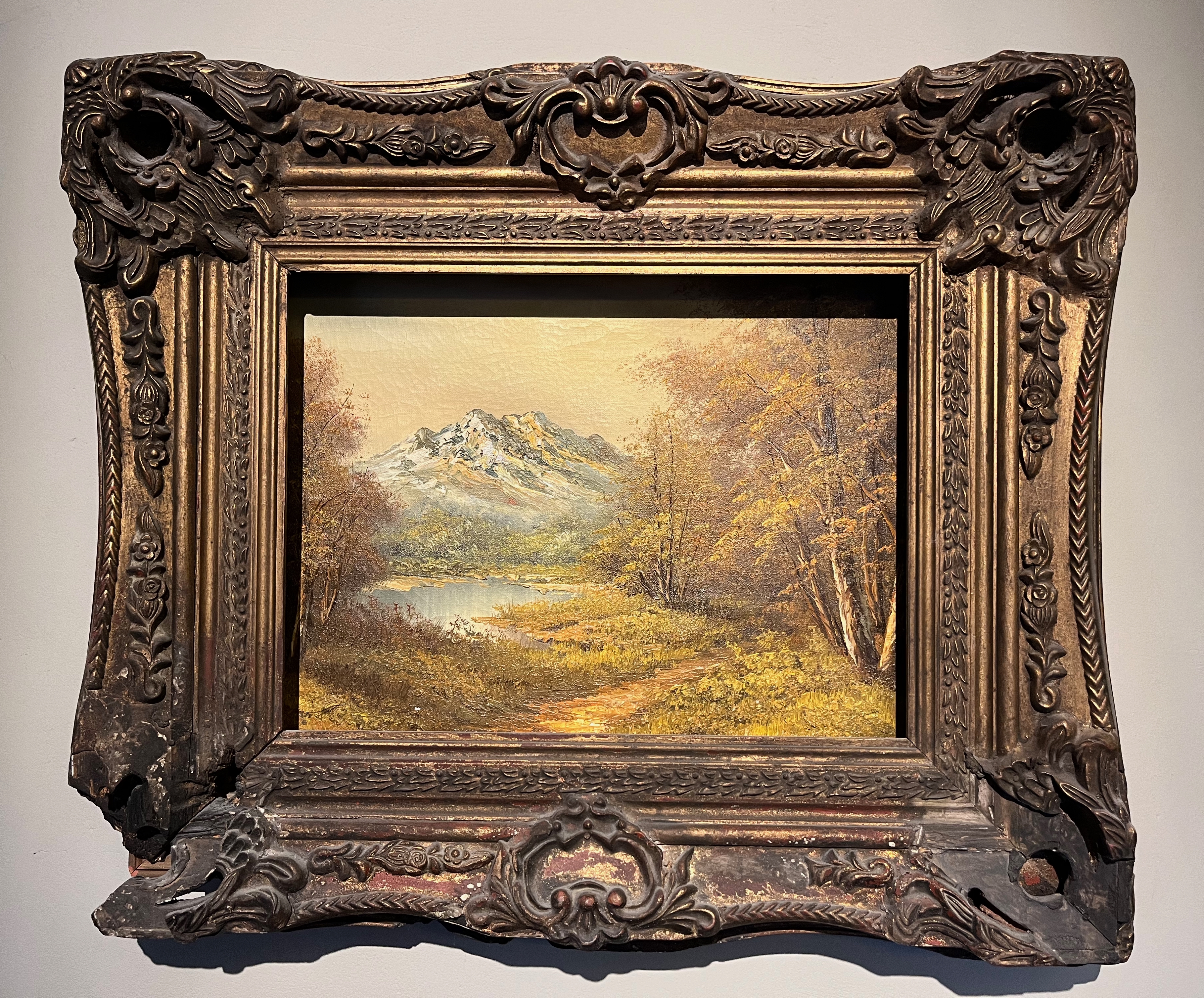
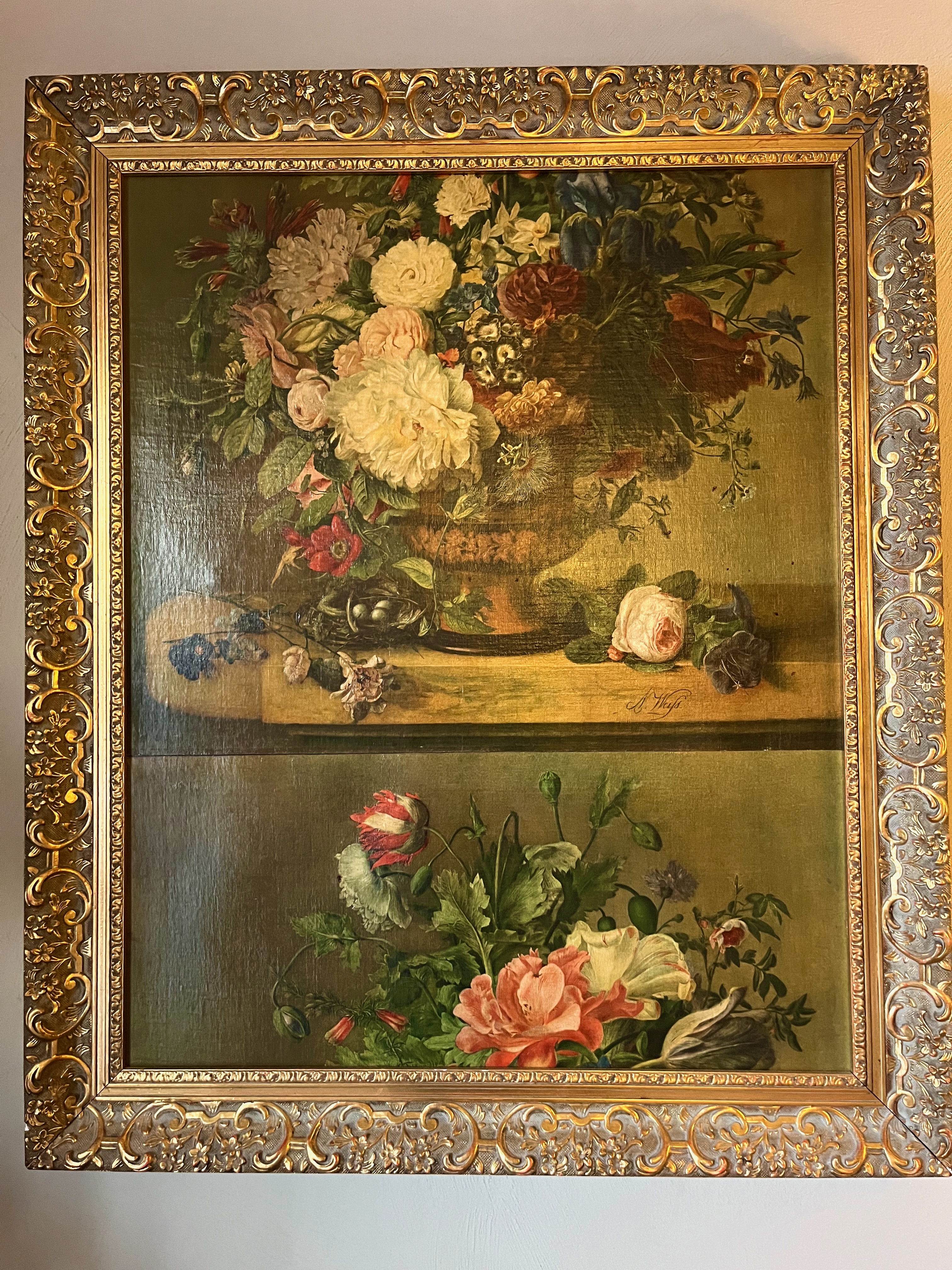
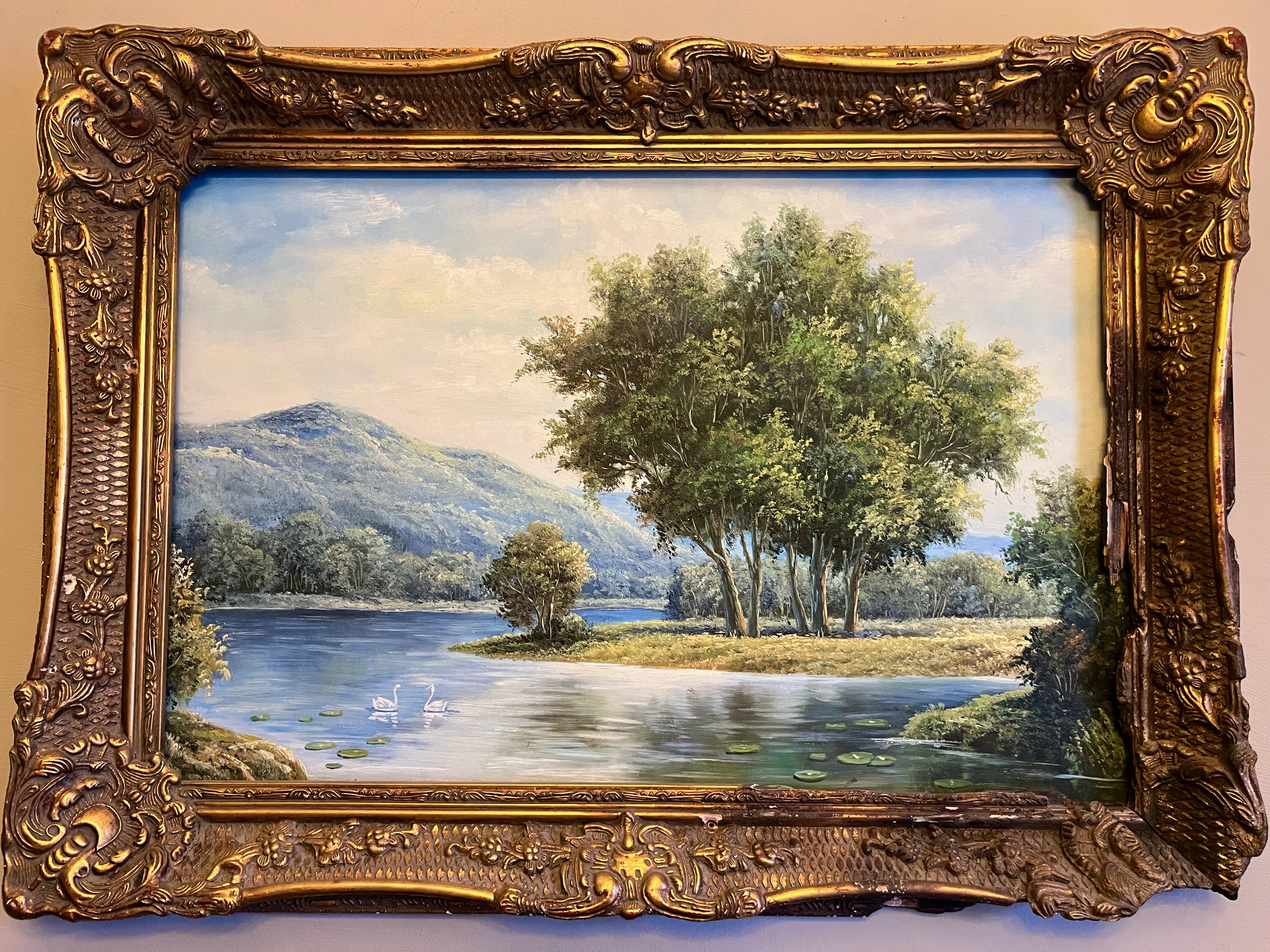
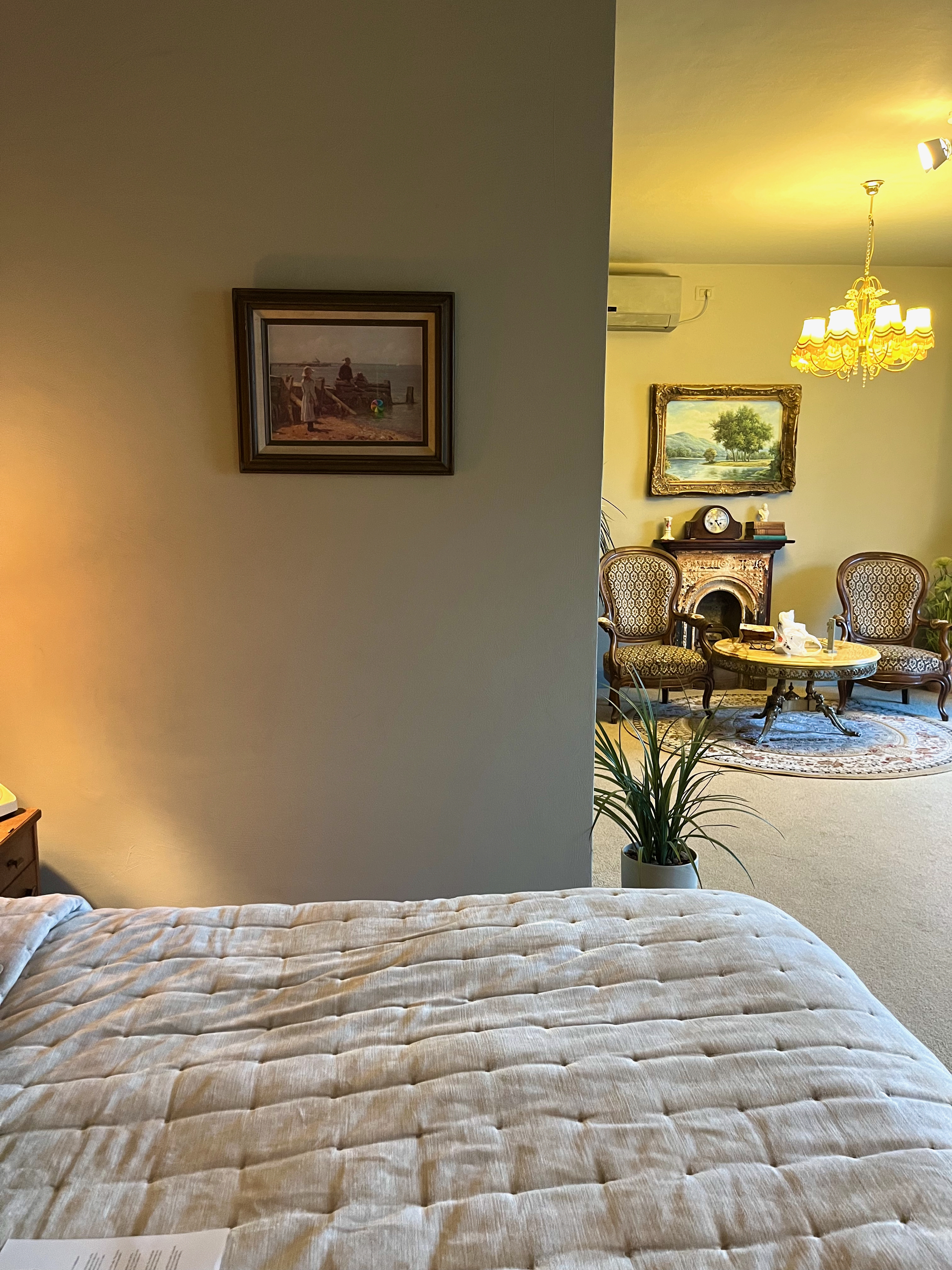
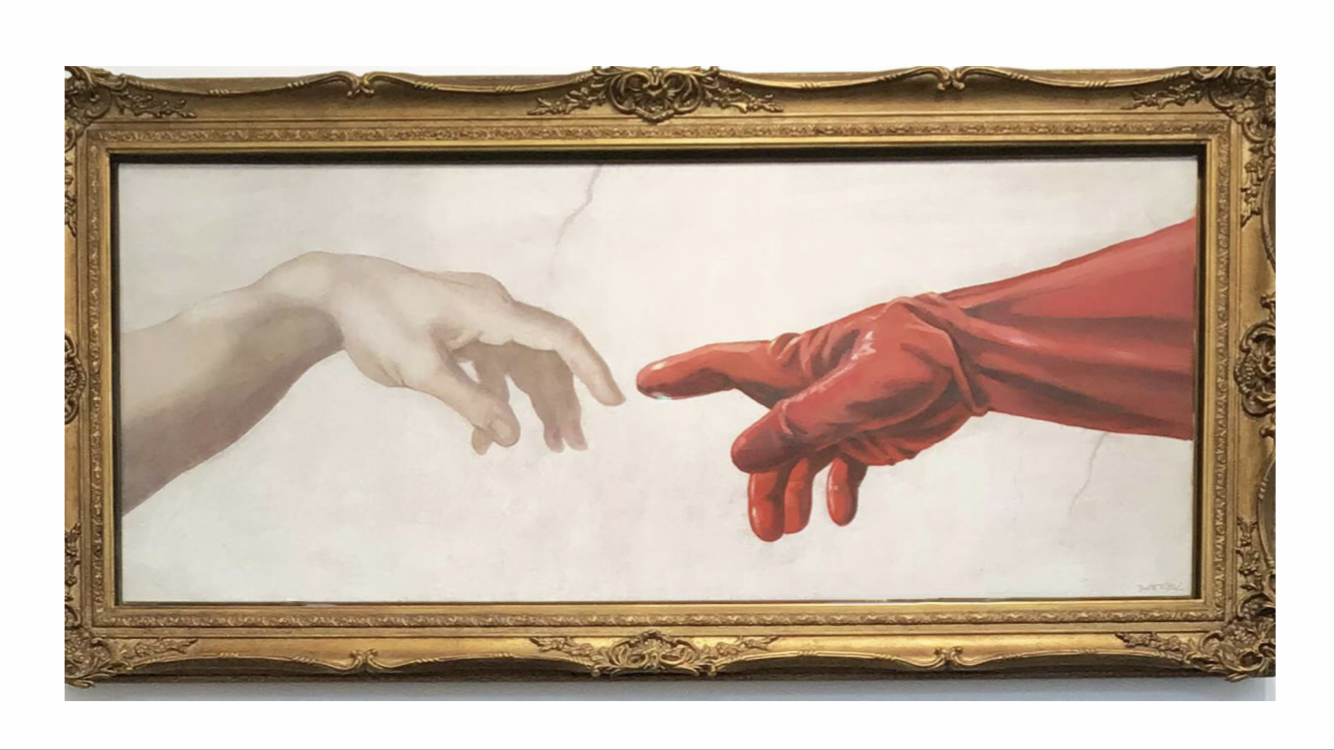
Banksy reactivated his Instagram account in March 2017. Supposedly, because the official website, http://www.banksy.co.uk, is dedicated exclusively to the Walled Off Hotel project. Starting on 20 March, Banksy published five oil paintings, all of which hang in different rooms at the Walled Off Hotel.
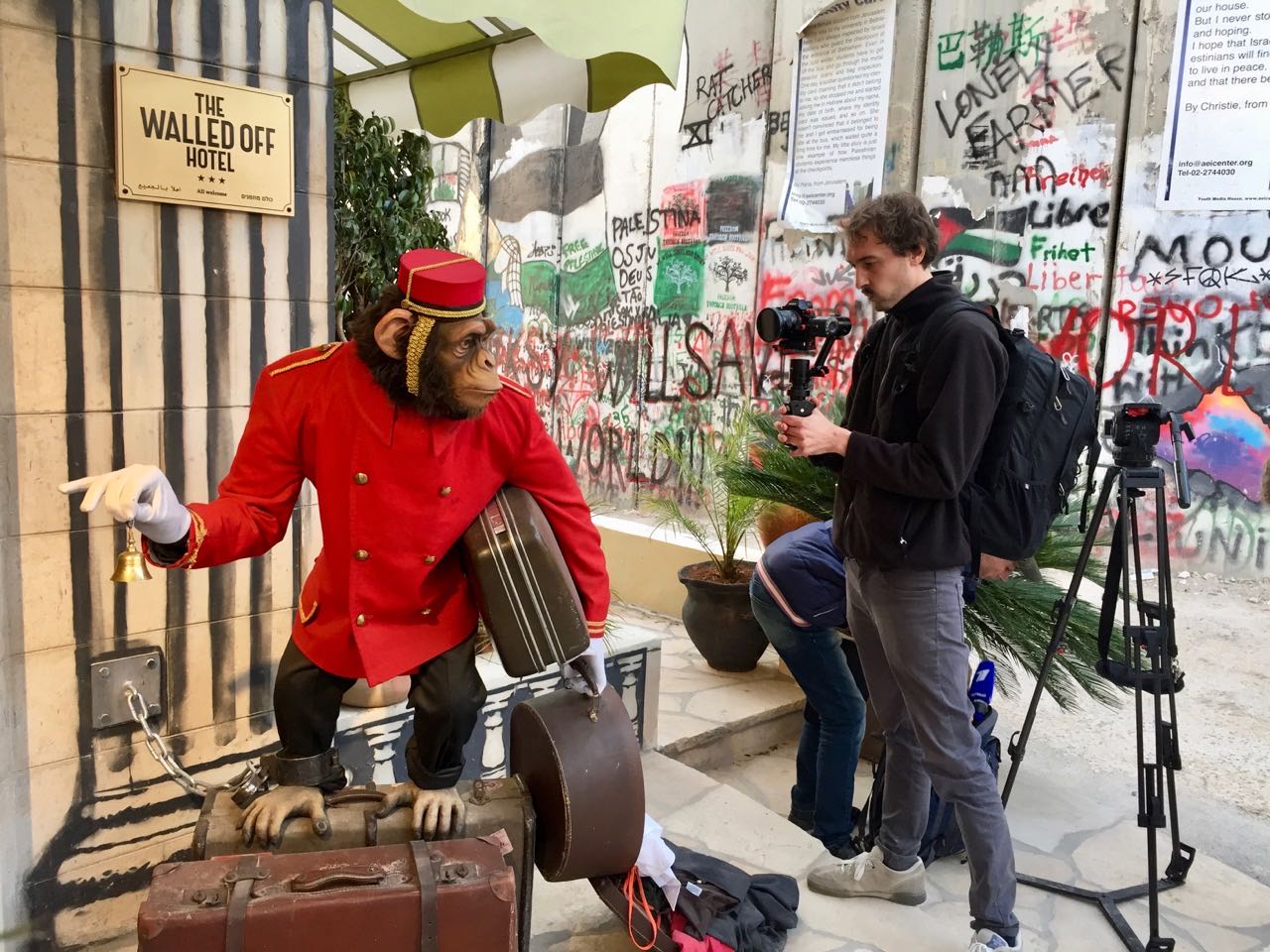
The Walled Off Hotel is the latest big exhibition by Banksy. The unique boutique hotel is a piece of art in itself and effectively mixes art, politics, and tourism. On the ground floor are approximately 15 new Banksy studio pieces and a museum commemorating “a hundred years since the British took control of Palestine and helped kick start a Century of confusion and conflict”.
The hotel is located just a few meters from the Israeli West Bank Barrier, the controversial segregation wall that divides Bethlehem from Jerusalem. Downtown Jerusalem is only 7 km away.
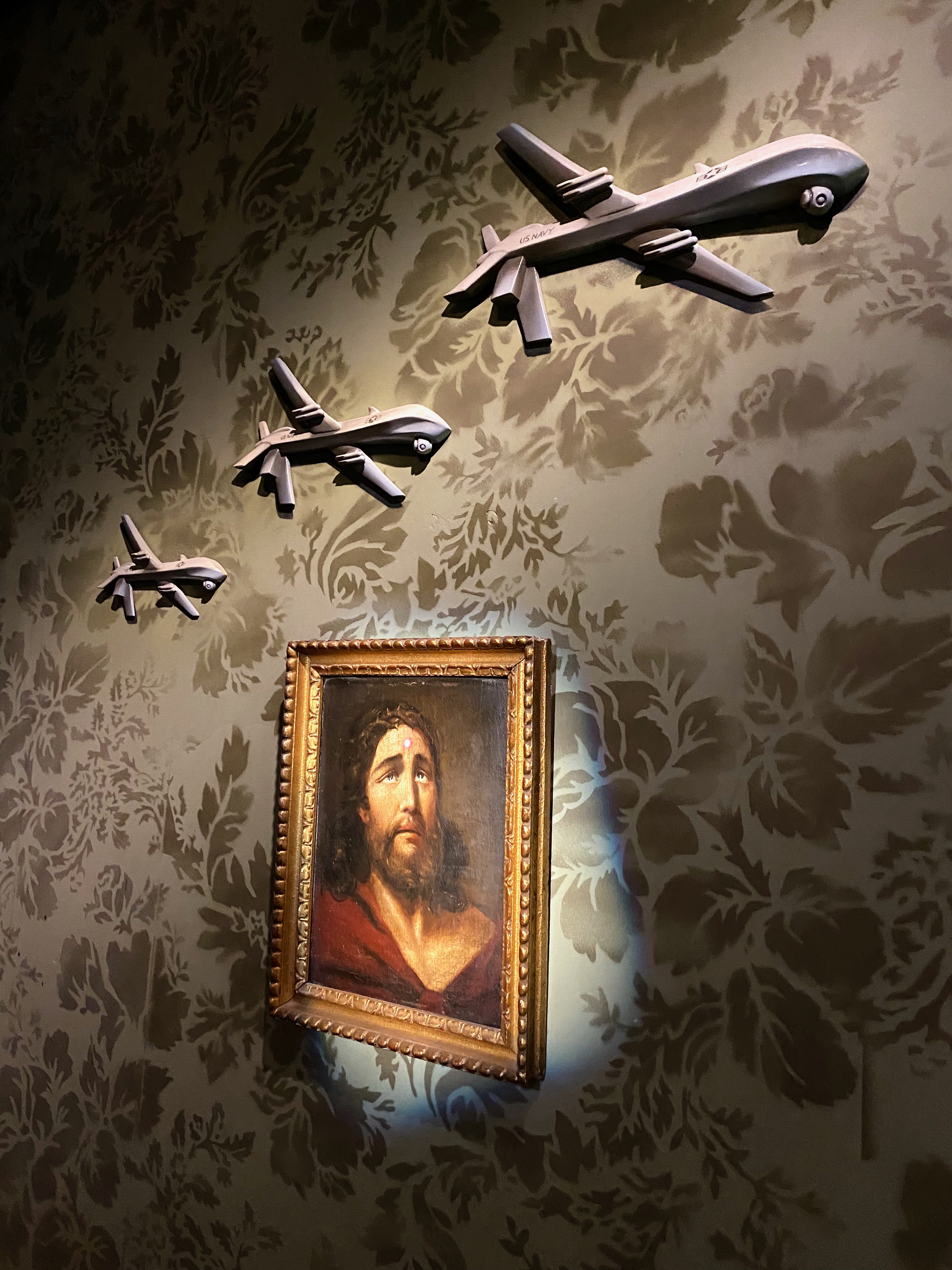
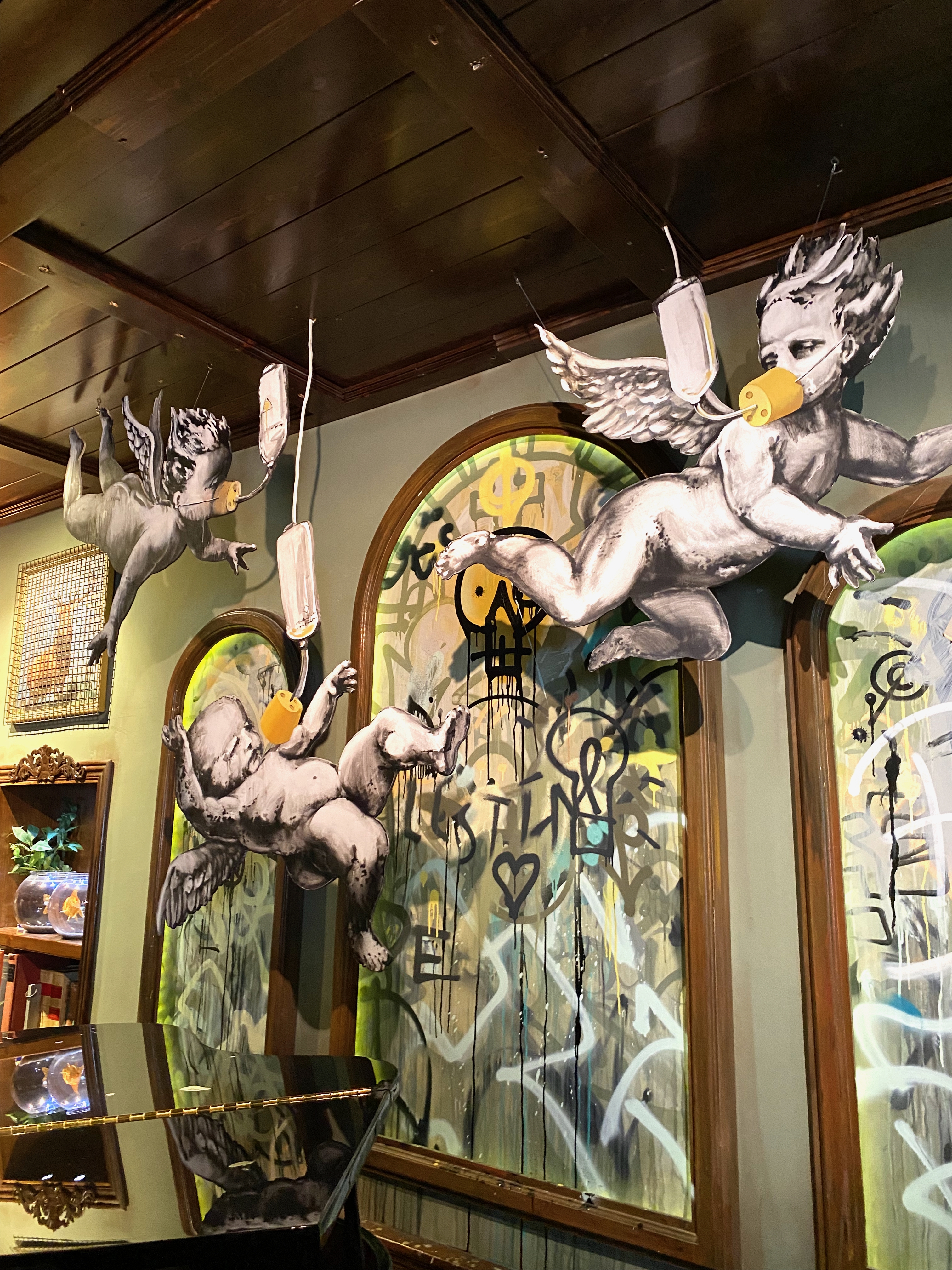
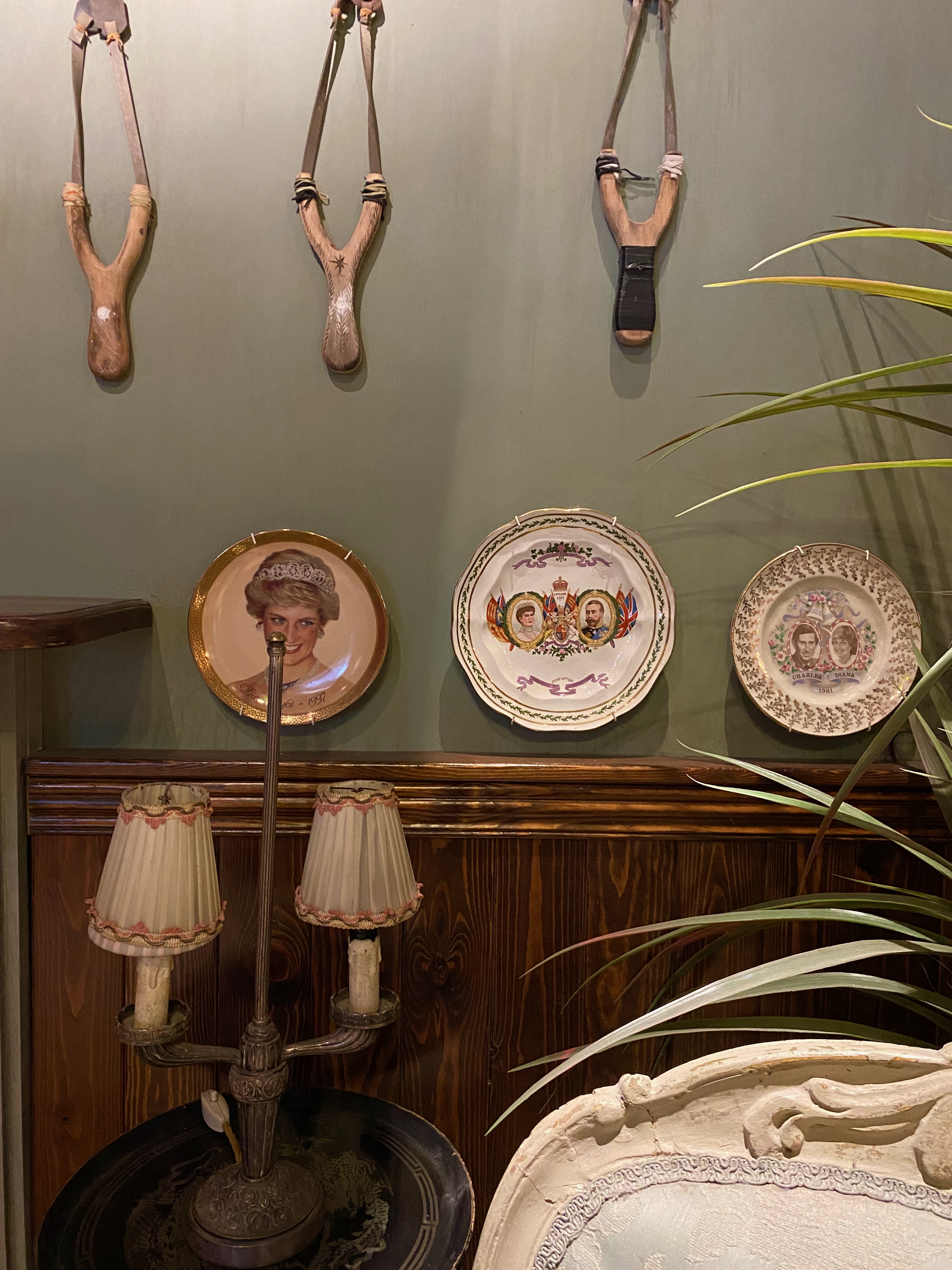
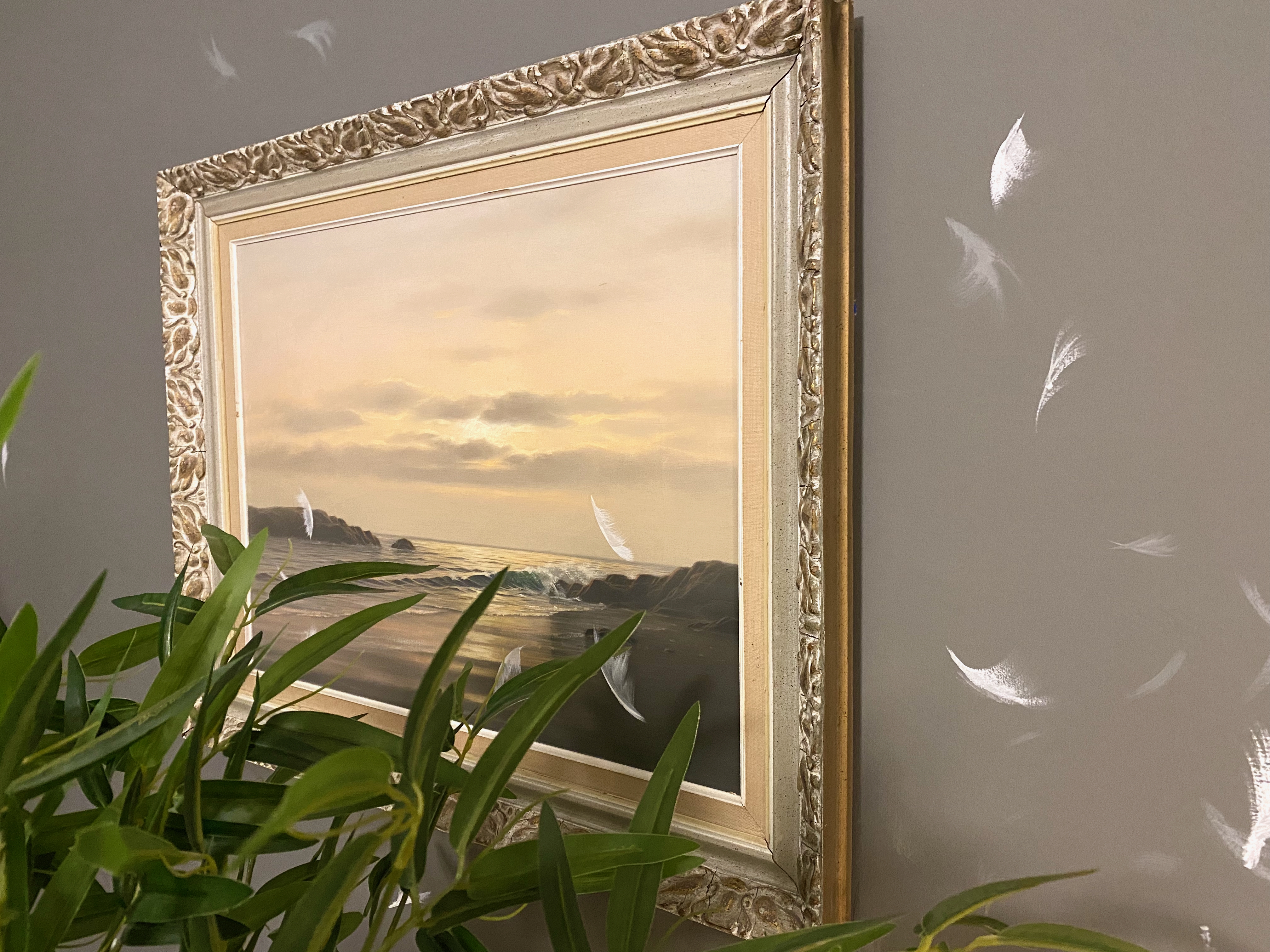
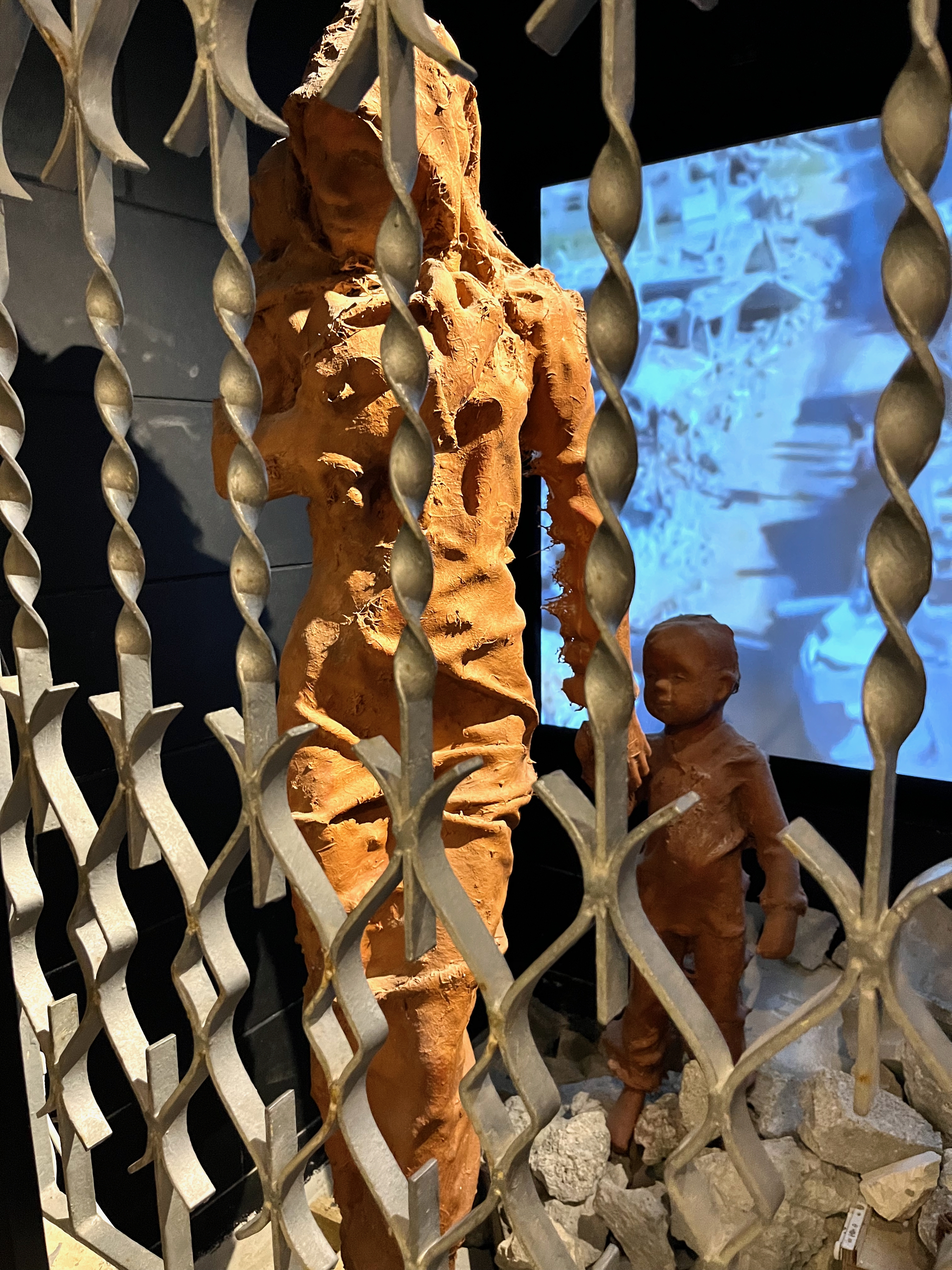
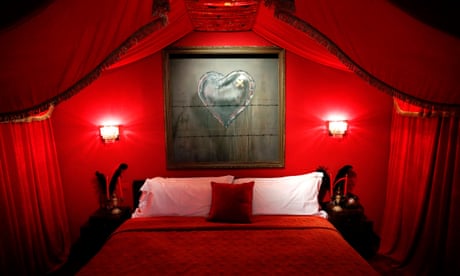
The hotel has ten rooms, including a presidential suite with a bullet-riddled water tank feeding a hot tub, budget bunk-bed rooms sourced from old military barracks, and custom-designed spaces by Banksy and other artists like Sami Musa and Dominique Petrin. The decorative style is colonial, nodding to Britain’s historical role in the region, particularly the 1917 Balfour Declaration, which marked the beginning of British control over Palestine. Everywhere in the hotel, you will find Banksy’s provocative artwork—such as an Israeli soldier and a Palestinian protester engaged in a pillow fight, cherubs wearing gas masks or Jesus Christ being bombed by drones. .
Initially intended as a temporary project to mark the centenary of British involvement in Palestine, the hotel has since become a lasting fixture, attracting nearly 140,000 visitors by 2020. The hotel welcomes visitors from all sides, including Israelis. As of late 2023, it is temporarily closed due to the situation between Gaza and Israel, but its website and booking platforms suggest it may reopen depending on the situation.
It’s easy to get to the hotel. If you arrive at the Tel Aviv airport, take the fast train that goes directly to the new Jerusalem Central Station. From there you can take a bus down Hebron Road to Checkpoint 300. The hotel is only 600 metres from the checkpoint. The exact address is 182 Caritas Street, Bethlehem, Palestine.
Some photos from the ground floor area at Walled Off Hotel:
Photos: R.A.
Some photos from the upper floor area:
Some artworks from different rooms on the upper floor:
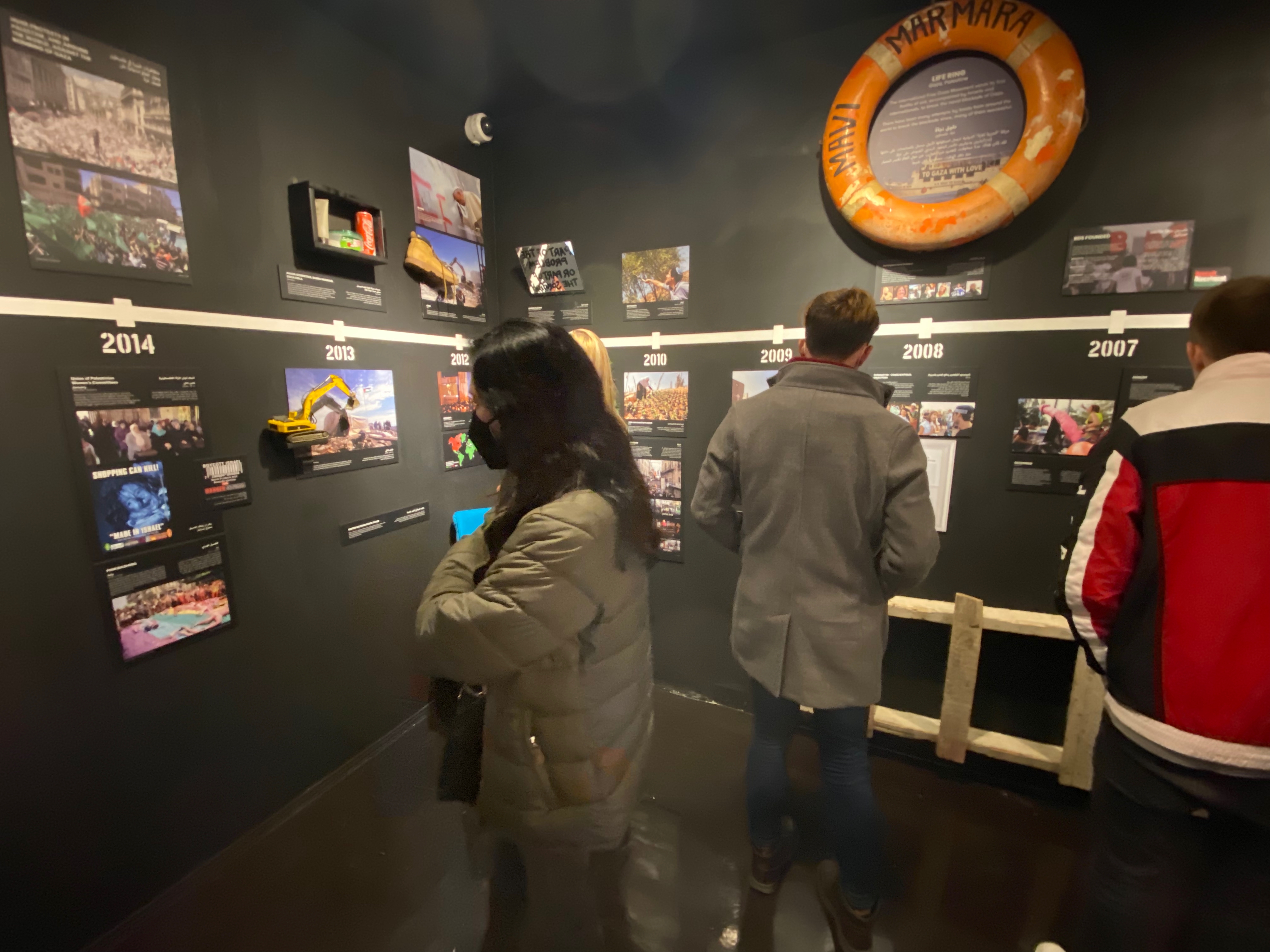
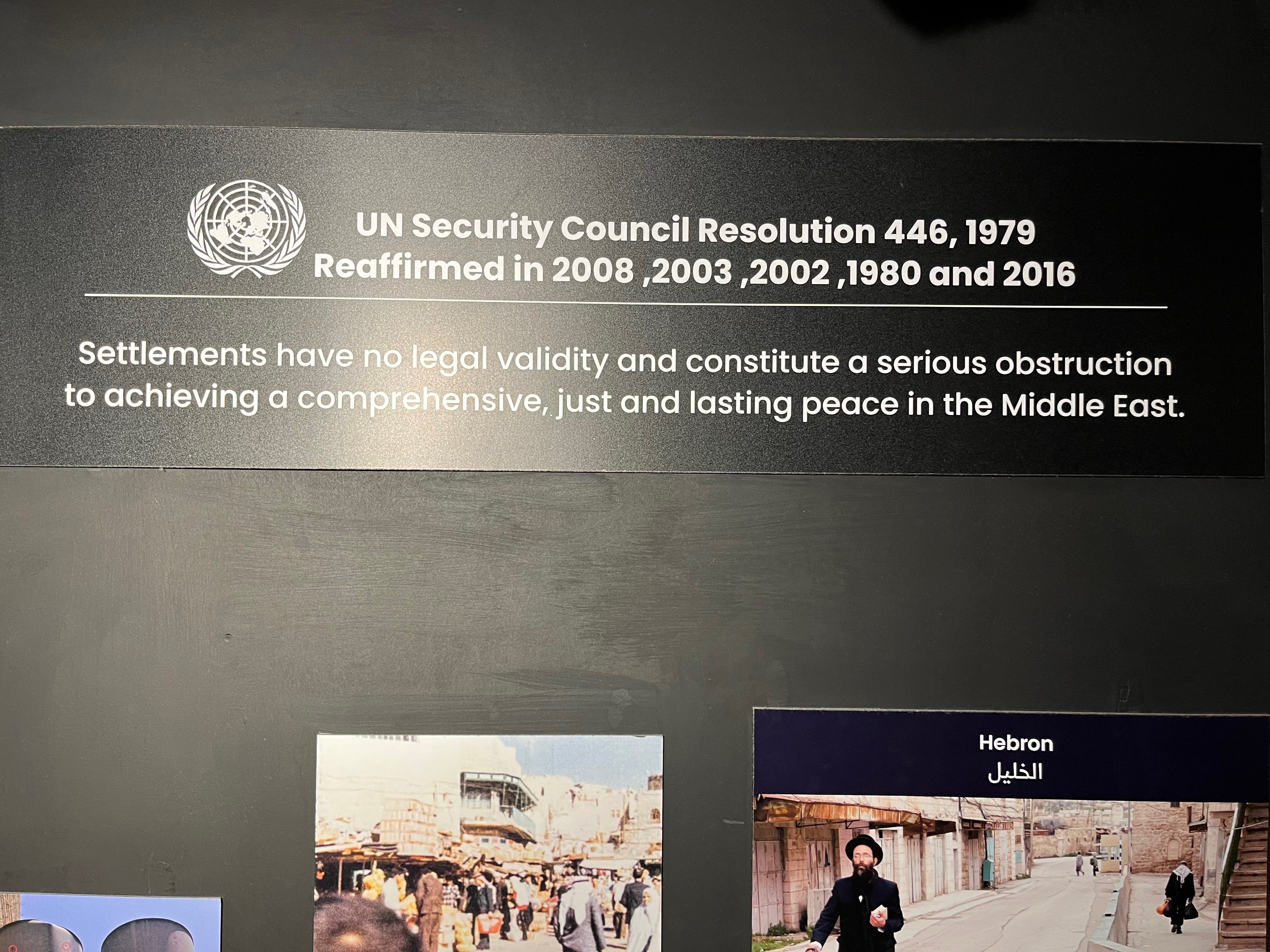
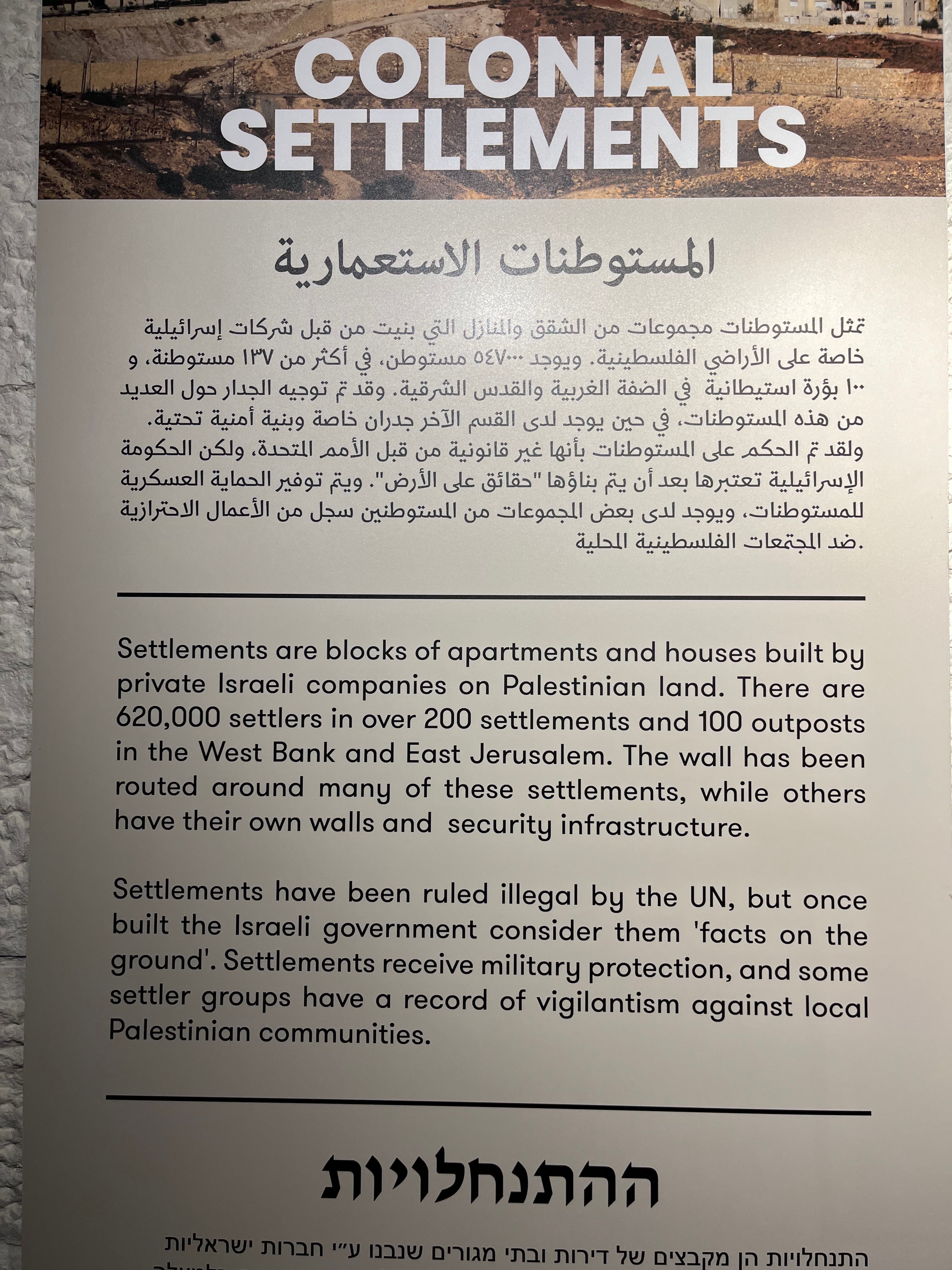
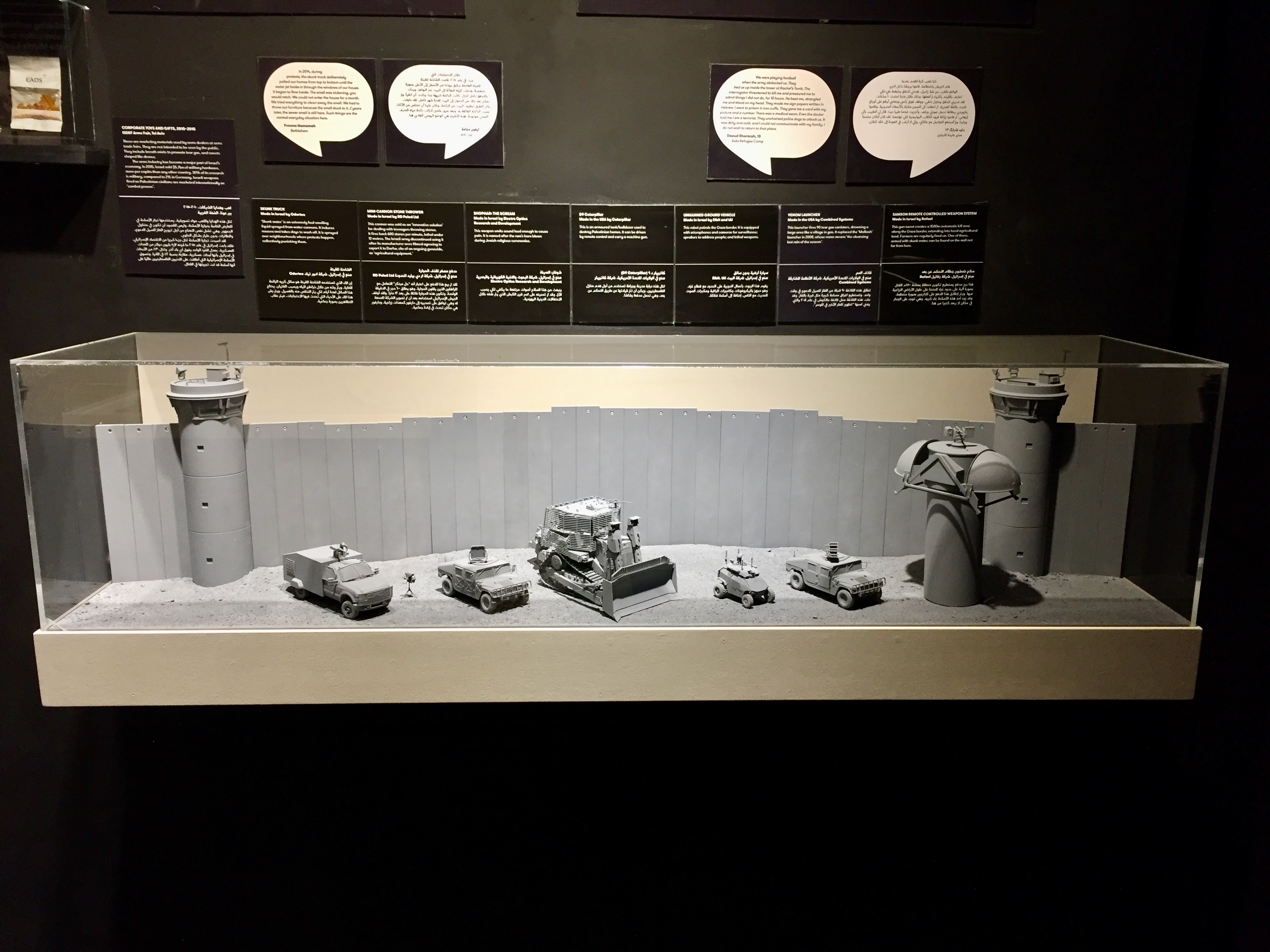
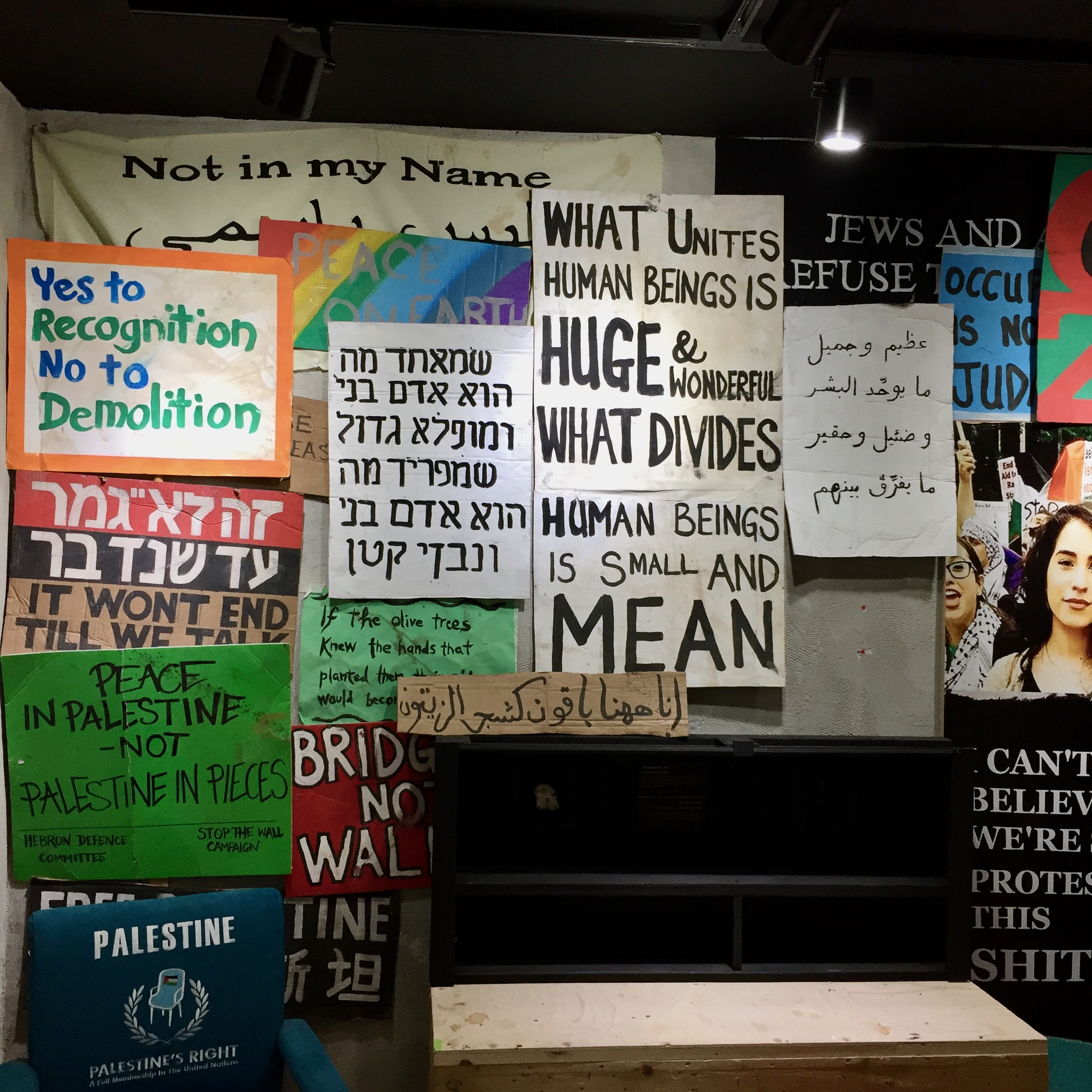
Some photos from the museum of the wall on the ground floor:
The museum on the ground floor is dedicated to the history of the segregation wall. Dr Gavin Grindon from Essex University collaborated in its design. It gives you a very clear picture of what has happened since the occupation started.
The official video clip from the opening of Walled Off Hotel:
Channel 4 did a lengthy feature on the opening of the hotel:
As reported by The Guardian on 3 March 2017:
‘Worst view in the world’: Banksy opens hotel overlooking Bethlehem wall
By Emma Graham Harrison
Exclusive: British artist launches Walled Off hotel in hope of bringing Israeli tourists – and dialogue – to West Bank city
The Walled Off hotel may sound utilitarian, even bleak. Its owner says it has “the worst view of any hotel in the world”, while its 10 rooms get just 25 minutes of direct sunlight a day. But, nestled against the controversial barrier wall separating Israel from the Palestinian territories, the West Bank’s answer to the Waldorf offers travellers something more elusive than any luxury destination.
The lodging in Bethlehem is a hotel, museum, protest and gallery all in one, packed with the artworks and angry brilliance of its owner, British street artist Banksy. From the disconcertingly lavish presidential suite where water splashes from a bullet-strafed watertank into the hot tub, to the bunk-beds in the budget room scavenged from an abandoned army barracks, the hotel is playful and strongly political.
All the rooms look out on to the concrete slabs of the wall and some have views over it to pill boxes and an Israeli settlement – illegal under international law – on the hillside beyond.
“Walls are hot right now, but I was into them long before [Donald] Trump made it cool,” said Banksy in a statement. The artist, who fiercely guards his anonymity, first came to Bethlehem more than a decade ago, leaving a series of paintings on the barrier that have become a tourist destination in their own right. Since then, the town’s pilgrim and sightseeing-based economy has been ravaged by ever-tighter Israeli controls on travel between Israel and the Palestinian territories, so the new hotel is expected to provide a welcome boost in jobs and visitor numbers.
Banksy’s reputation is likely to keep all rooms fully booked, but he wants guests to leave with more than just a selfie. “(It’s) a three-storey cure for fanaticism, with limited car parking,” he added in the statement. The hotel opens to guests on 20 March, with bookings via the website. The team hope Israelis, who rarely see the barrier wall up close or visit Palestinian towns, will be among the guests, even though visiting means breaking the law.
“I would like to invite everyone to come here, invite Israeli civilians to come visit us here,” said manager Wisam Salsaa. “We want them to learn more about us, because when they know us it will break down the stereotypes and things will change.”
Israelis are banned from visiting Bethlehem and its famous sites. And although Banksy has chosen a site officially under Israeli military control – meaning it is legal for Israelis to stay there – all the roads to reach it involve an illegal journey through Palestinian-controlled territory.
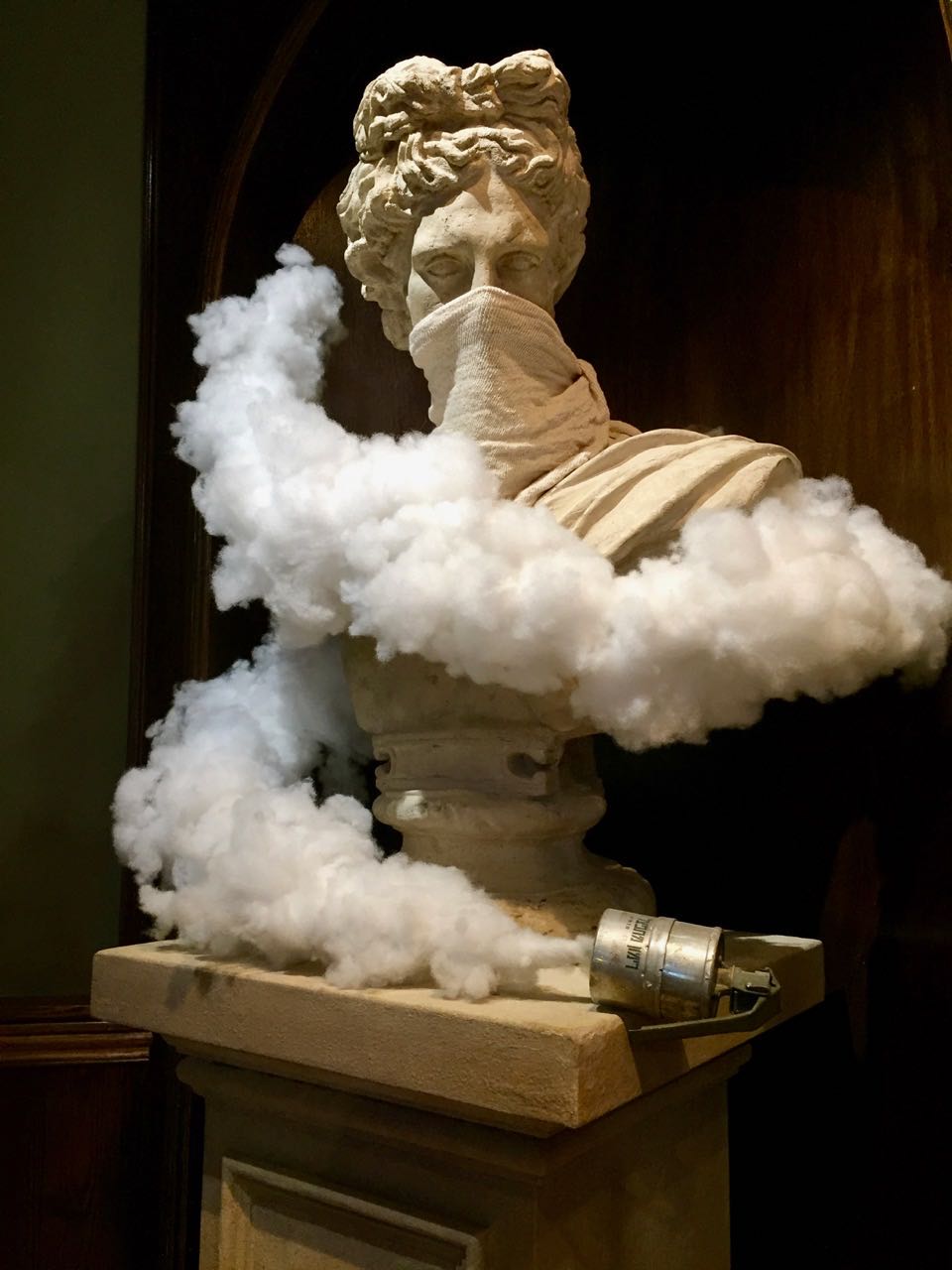
The hotel, a former pottery workshop, has a dystopian colonial theme, a nod to Britain’s role in the region’s history, the reception and tea-room a disconcerting take on a gentlemen’s club where a self-playing piano provides an eerie soundtrack. The fire flickering in the grate glows under a pile of concrete rubble, like a blaze at a bomb site, a classical bust in a niche is wreathed in clouds of gas snaking out of a tear gas canister and, in traditional seascapes, the beaches are littered with life-jackets discarded by refugees.
“It’s exactly 100 years since Britain took control of Palestine and started rearranging the furniture – with chaotic results,” Banksy said. “I don’t know why, but it felt like a good time to reflect on what happens when the United Kingdom makes a huge political decision without fully comprehending the consequences.”
Upstairs, original Banksy artworks decorate several of the rooms. In one, an Israeli soldier and a Palestinian protester thump each other with pillows, the feathers fluttering down towards the real pillows of the bed below. In another, a pack of cheetahs crouch over a zebra-print sofa, where padded entrails snake out of a cushion. The bookshelves are packed with carefully chosen titles – A Room With a View at the end of one, Cage Me a Peacock on another stack. The elevator is walled off, too, the doors jammed half open to show concrete breeze blocks, hung with an “out of service” sign.
A small museum explains the wall, the controls on movement and the troubled history of the region, curated together with Essex University professor Gavin Grindon. “If you are not completely baffled, then you don’t understand,” the presenter of a video history signs off.
Also in the building, part of a plan to promote dialogue, is a gallery showing the work of Palestinian artists. It is the first in Bethlehem, says curator Housni Alkateeb Shehada, and a way for artists, who often find it hard to travel, to reach a wider audience.
He wanted to project art on to the barrier wall which lies just five meters away, but decided in the end that it would be too risky, a reminder of the conflict and restrictions that looms over all the people living in Bethlehem. “We are very afraid,” said Shehada. “We don’t know what is going on there with the soldiers and it is forbidden.”
Banksy dismissed worries that security concerns would keep people away, pointing out that he had packed out a “bemusement park” in an unglamorous English seaside town for weeks.
“My accountant was worried some people will be too scared to travel to the West Bank, but then I remind him – for my last show they spent a whole day in Weston-super-Mare.”
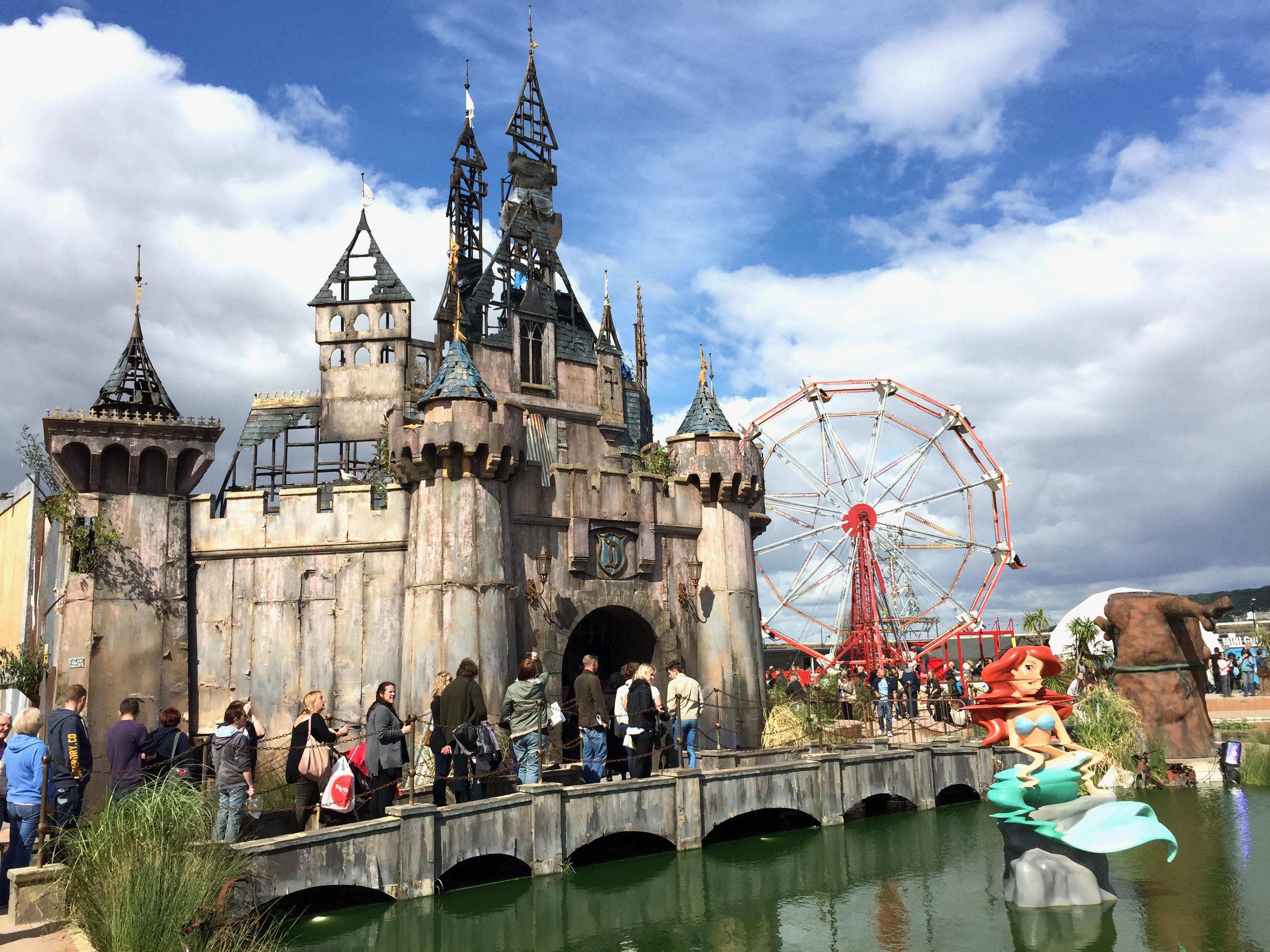
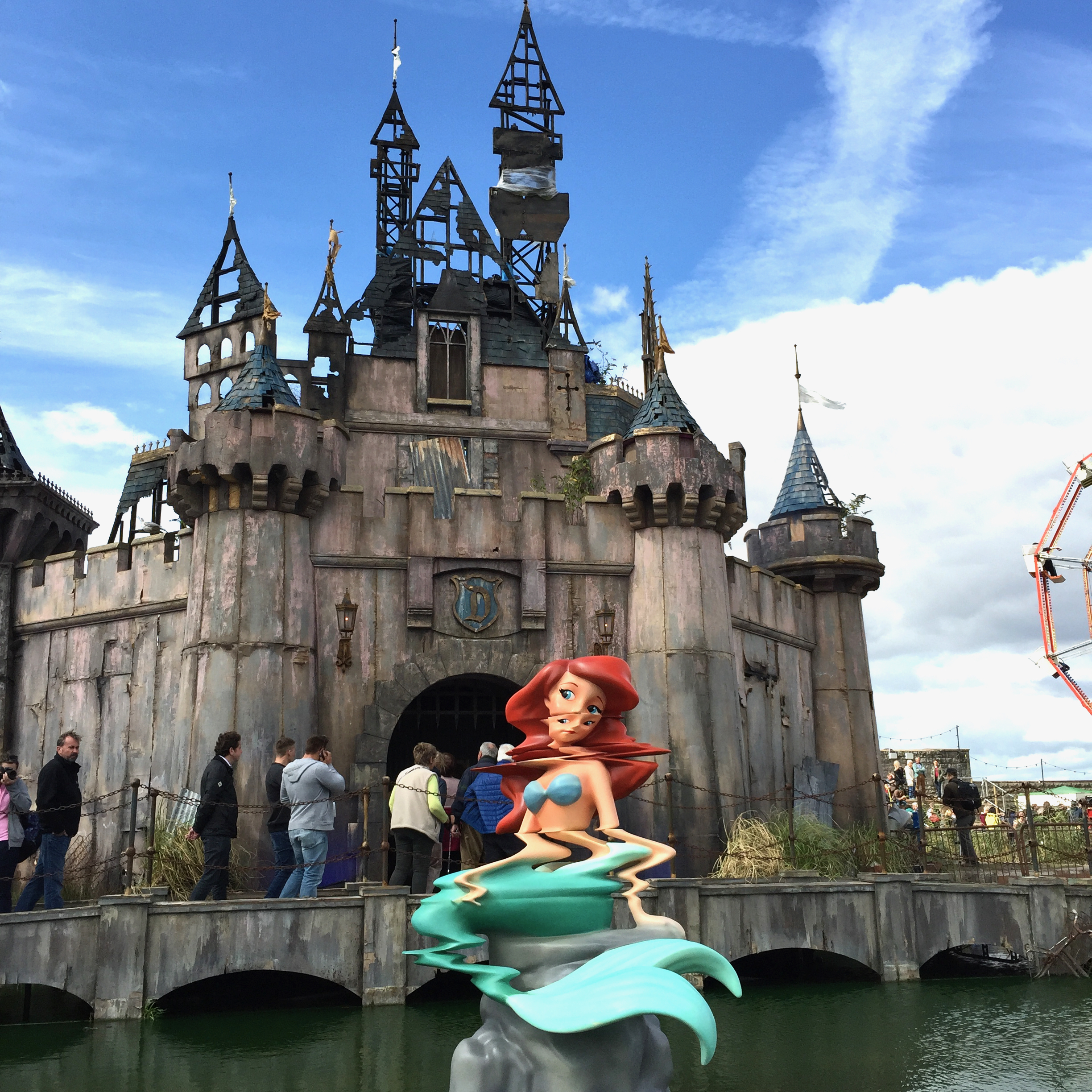
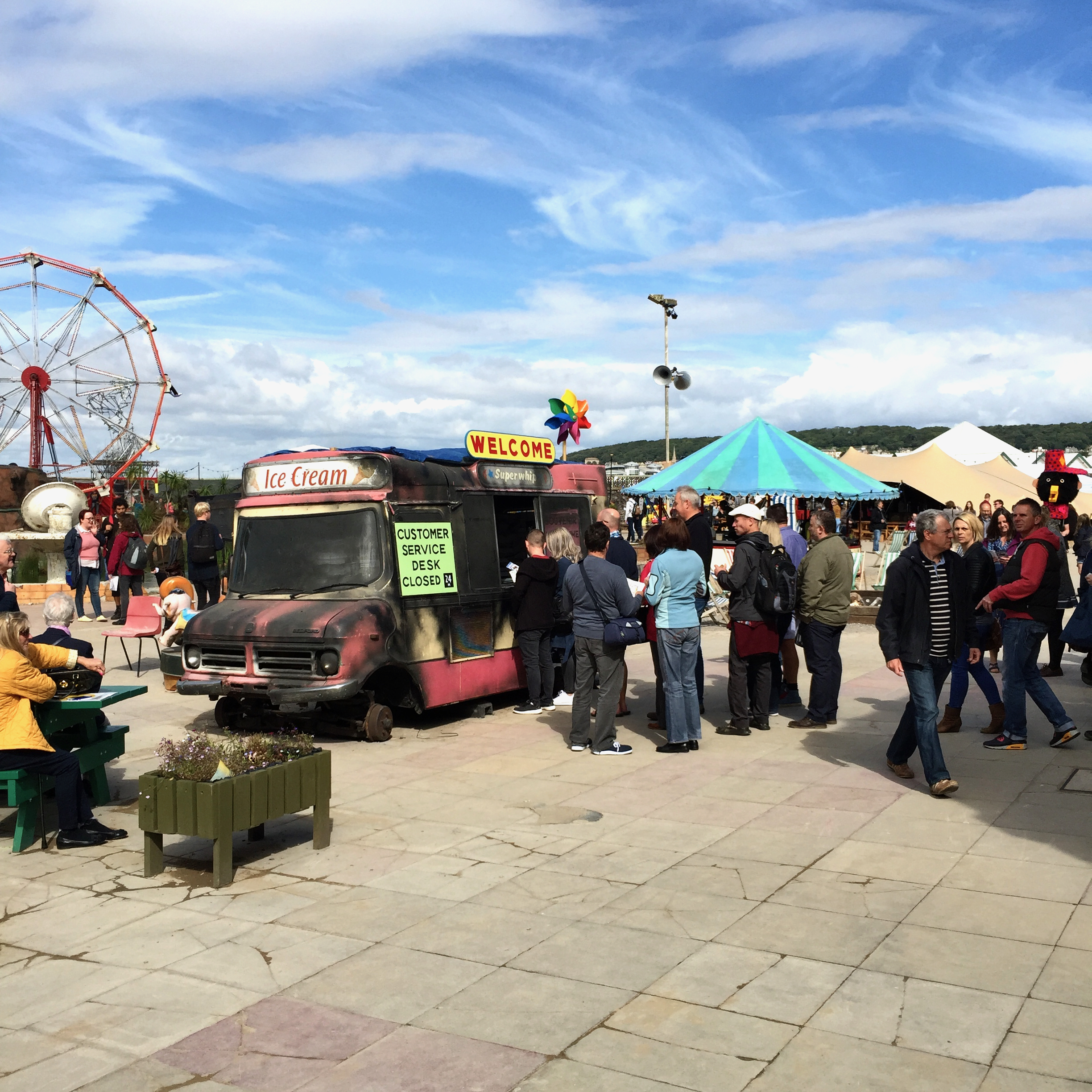
Dismaland was pop-up art exhibition, financed and organised by Banksy, staged in the seaside town of Weston-super-Mare, 30 km south of Bristol. Opening on August 21, 2015, and closing on September 27, 2015, this “bemusement park” was a dark, satirical twist on traditional theme parks like Disneyland, billed by Banksy as a “family theme park unsuitable for children.” Housed in the abandoned Tropicana lido, it combined dystopian aesthetics with sharp social commentary, targeting themes such as consumerism, celebrity culture, immigration, and law enforcement.
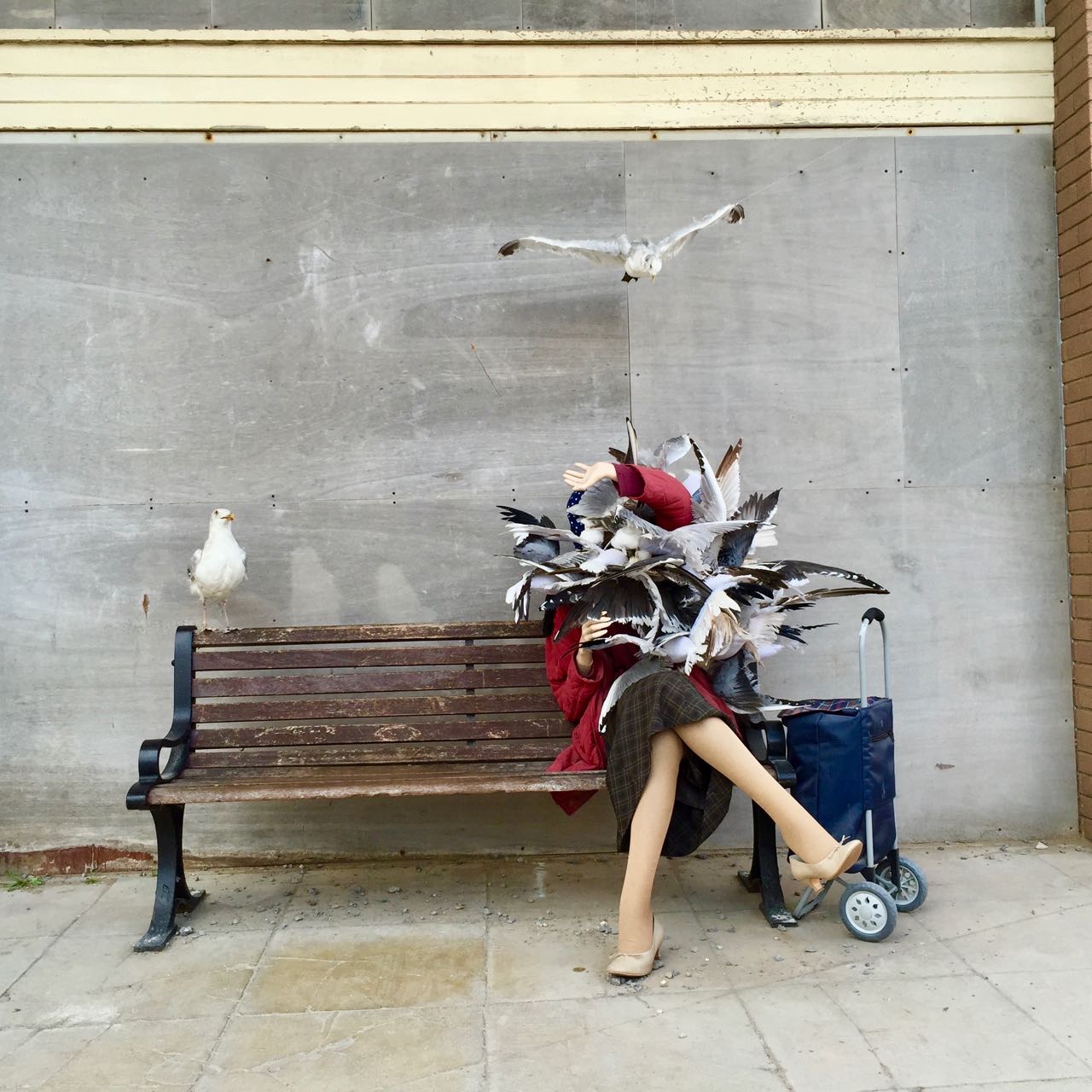
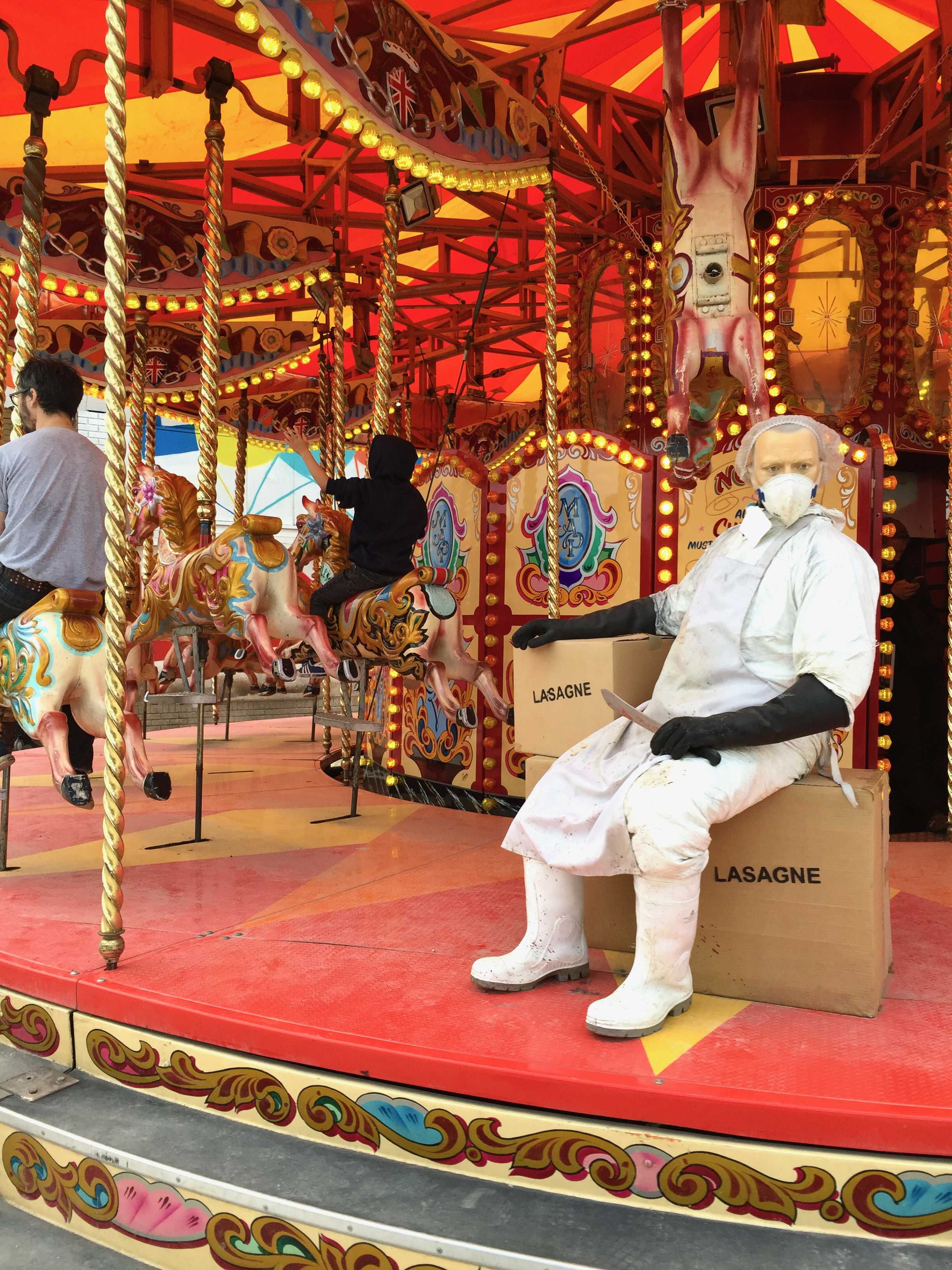
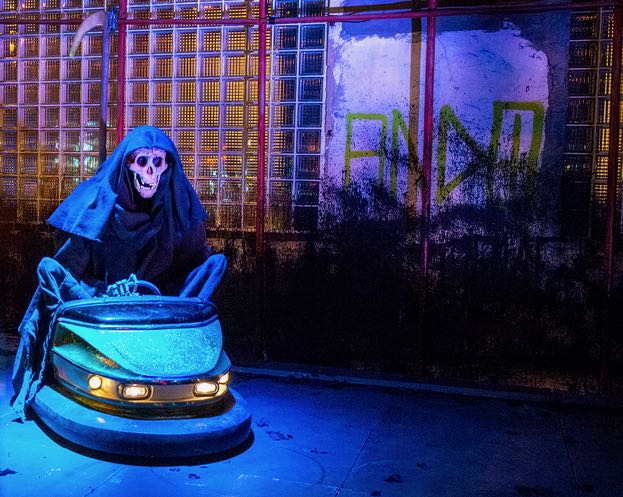
The project was shrouded in secrecy during its development. It featured approximately 15 original works by Banksy alongside contributions from 58 other artists, including notable names like Damien Hirst, Jenny Holzer, and Jimmy Cauty. One can say that Dismaland in itself was a big art installation, in which all the visitors played a part. Attractions included a dilapidated castle, a crashed Cinderella carriage surrounded by paparazzi (evoking Princess Diana’s death), and a grim reaper on a bumper car, all underscored by a deliberately bleak atmosphere. The park also offered twisted versions of classic fairground attractions—think a carousel with a butcher carving a horse or impossible games like “topple the anvil with a ping pong ball.”
Dismaland had one key element, the contradiction: the sad bemusement park, rude stewards, and a helpdesk closed 24/7 to the public and the Hawaiian music at full volume was played in “minor” and at varying speeds, interrupted every ten minutes by strange messages from child voices. Everything at Dismaland was the other way around.
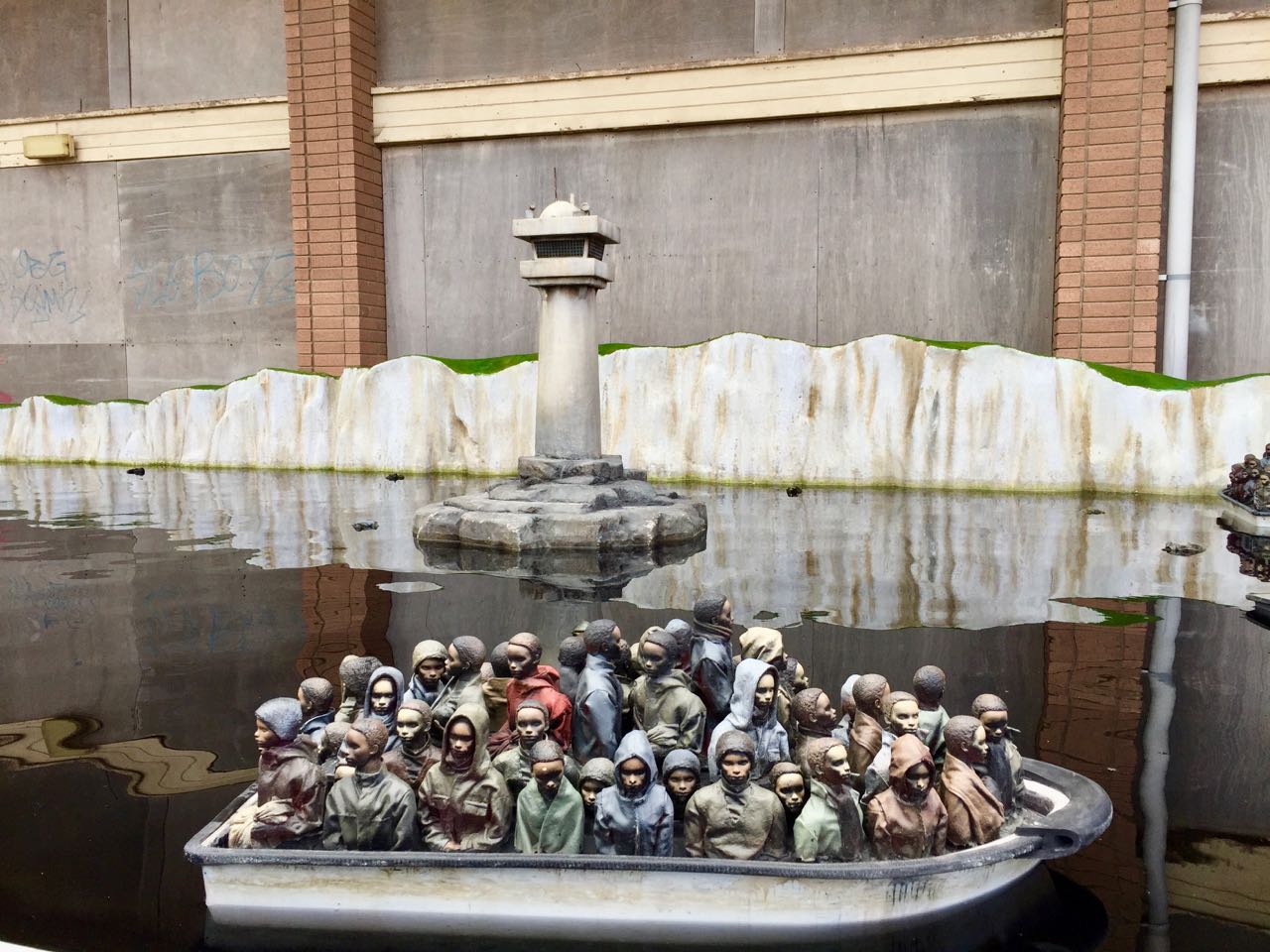
Dismaland drew 150,000 visitors over its 36-day run, with 4,000 tickets available daily at £3 each. The intentionally rude staff, mock security checks, and a gift shop exit added to the experience’s irony. Its impact extended beyond art, boosting Weston-super-Mare’s economy by an estimated £20 million. After closing, some materials were repurposed for refugee shelters, and Banksy’s coin-operated “Dream Boat” was later donated to the charity.
Critics were divided—some praised its bold absurdity, while others dismissed it as heavy-handed or gimmicky. Regardless, Dismaland remains a standout in Banksy’s career, blending his signature provocation with an immersive, chaotic spectacle.
The show featured 58 artists from the 60 Banksy initially invited to participate. The list included Damien Hirst, Jenny Holzer, Jimmy Cauty, Tracy Emin, Jeff Gillette, David Shrigley, Paco Pomet, Escif, Peter Kennard, and many more.
Banksy created approximately 15 new works for Dismaland
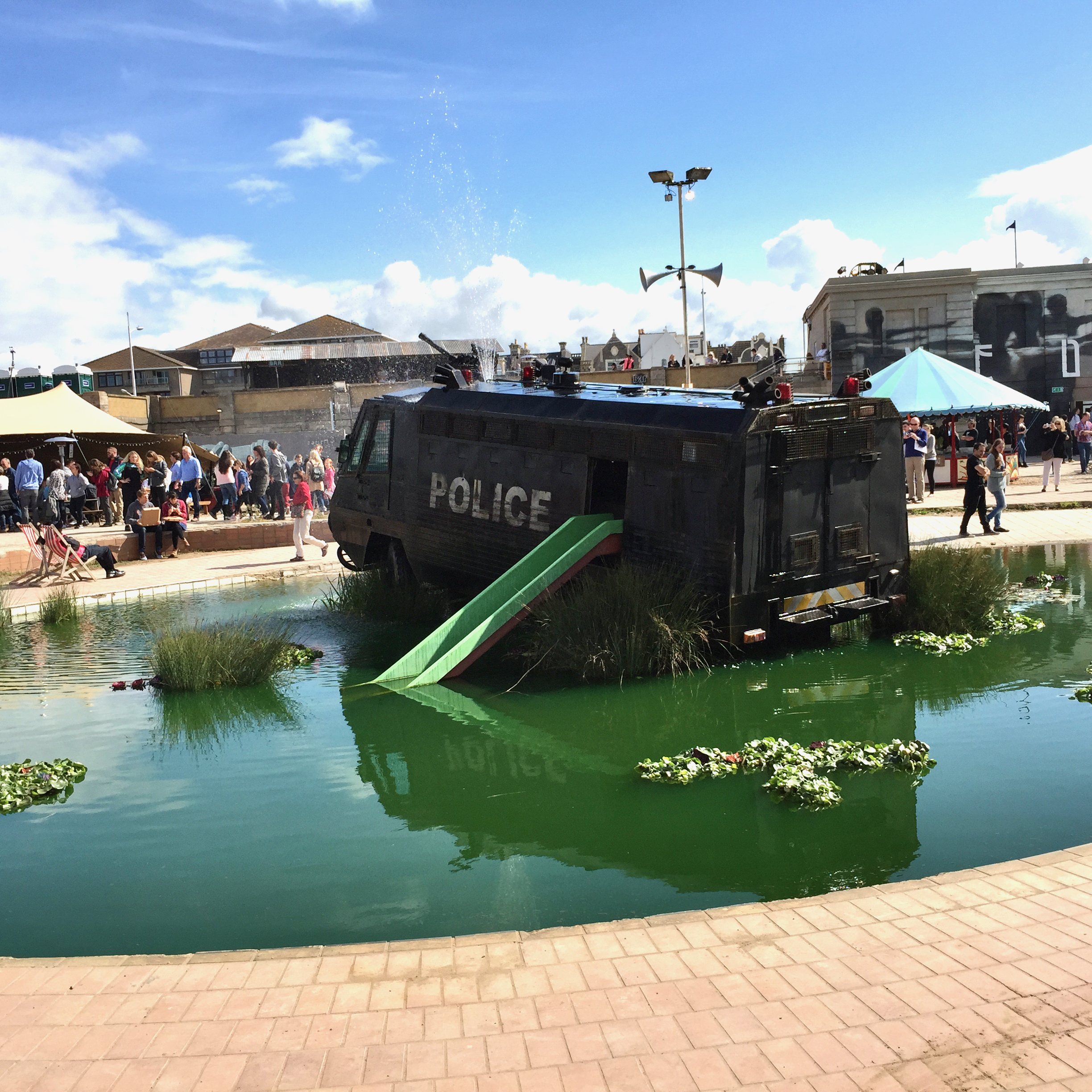
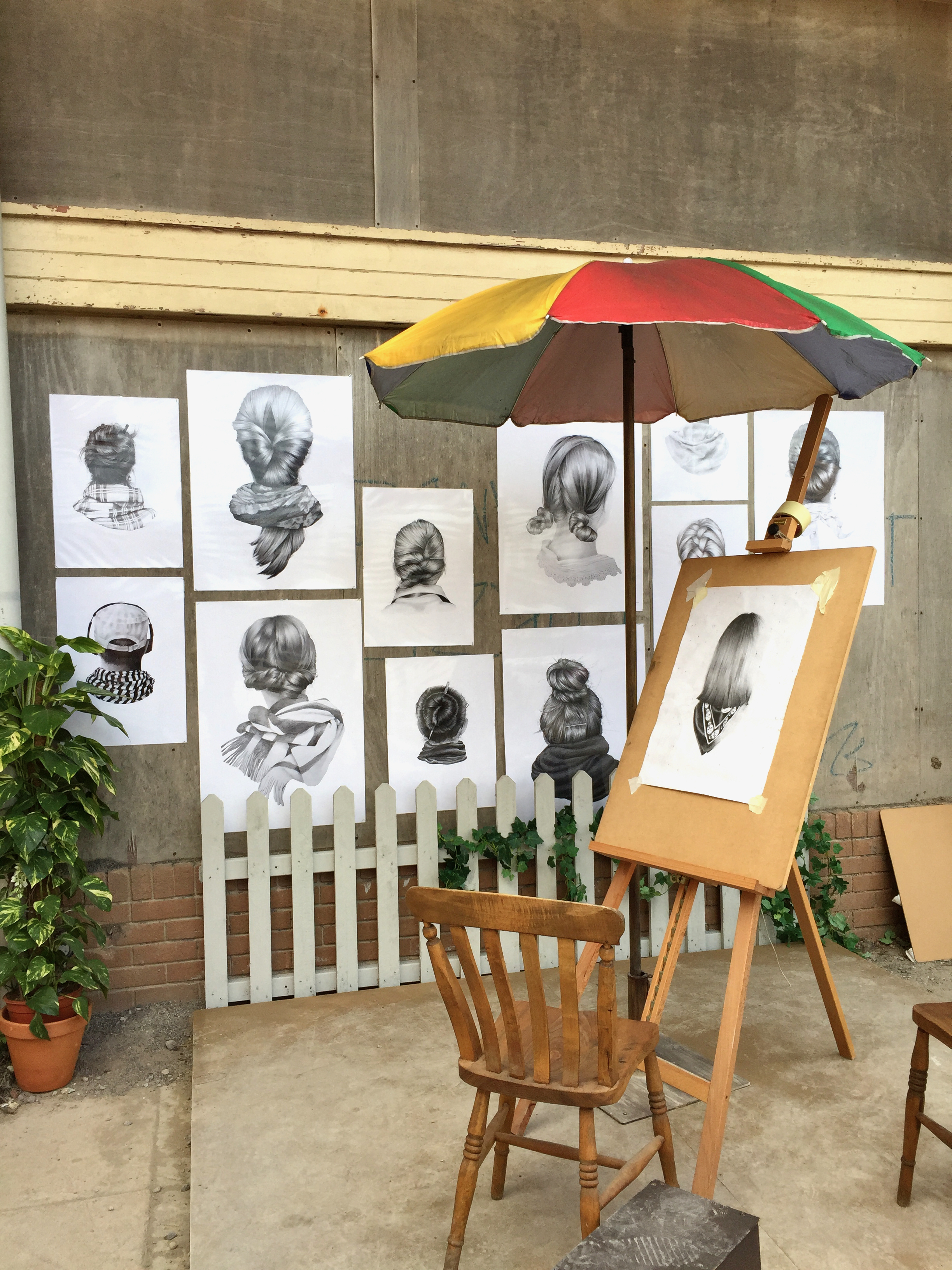
Some of Banksy’s pieces at Dismaland. Photos: R.A.
The Grim Reaper
A clip from Banksy’s Grim Reaper in Bumper Car:
Video: R.A.
The rude stewards:
Who else but Banksy could have come up with the idea to train more than a hundred stewards to behave as rudely as possible at his own art show?
Video: R.A.
Some other pics:
Photos: R.A.
The Dismaland layout:
Source: The official Dismaland brochure
The official Dismaland trailer:
Source: Banksyfilm / Youtube
The Dismaland Programme
Maybe the best way to get an understanding of Dismaland without having been there is through the official programme. You can download it here:
List of artists at Dismaland in order of appearance in the programme:
Bill Barminski. California, 1962. ‘The cardboard security room’
Ben Long. UK, 1978. ‘The cornice ice cream’
Stephen Powers. USA, 1968.
Jenny Holzer. Ohio, 1950.
Caitlin Cherry. Chicago, 1987.
Caroline McCarthy. Ireland, 1971.
Banksy. UK, 197?
Dietrich Wegner. Australia. ‘The mushroom cloud’ and the ‘Baby in the vending machine’
Andreas Hykade. Germany, 1968.
James Joyce. UK.
Brock Davis. USA. The Broccoli painting
Josh Keyes. USA, 1969. ‘The great white shark’
Leigh Mulley. UK. Balloons
Jani Leinonen. Finland, 1978. ‘Modified cereal boxes’
Barry Reigate. UK, 1971.
Jeff Gilette. California, 1979. Conceptual inspiration for Dismaland.
Lee Madgwick. UK. The rural solitary house with Internet access
Paco Pomet. Spain, 1970. ‘Once upon a time’, ‘Internacional’ and ‘Bloody Trees’
Laura Lancaster. UK, 1979.
Zaria Forman. USA, 1982.
Jessica Harrison. UK, 1982. Small porcelain figures.
Kate MacDowell. USA. The hare wearing a gasmask
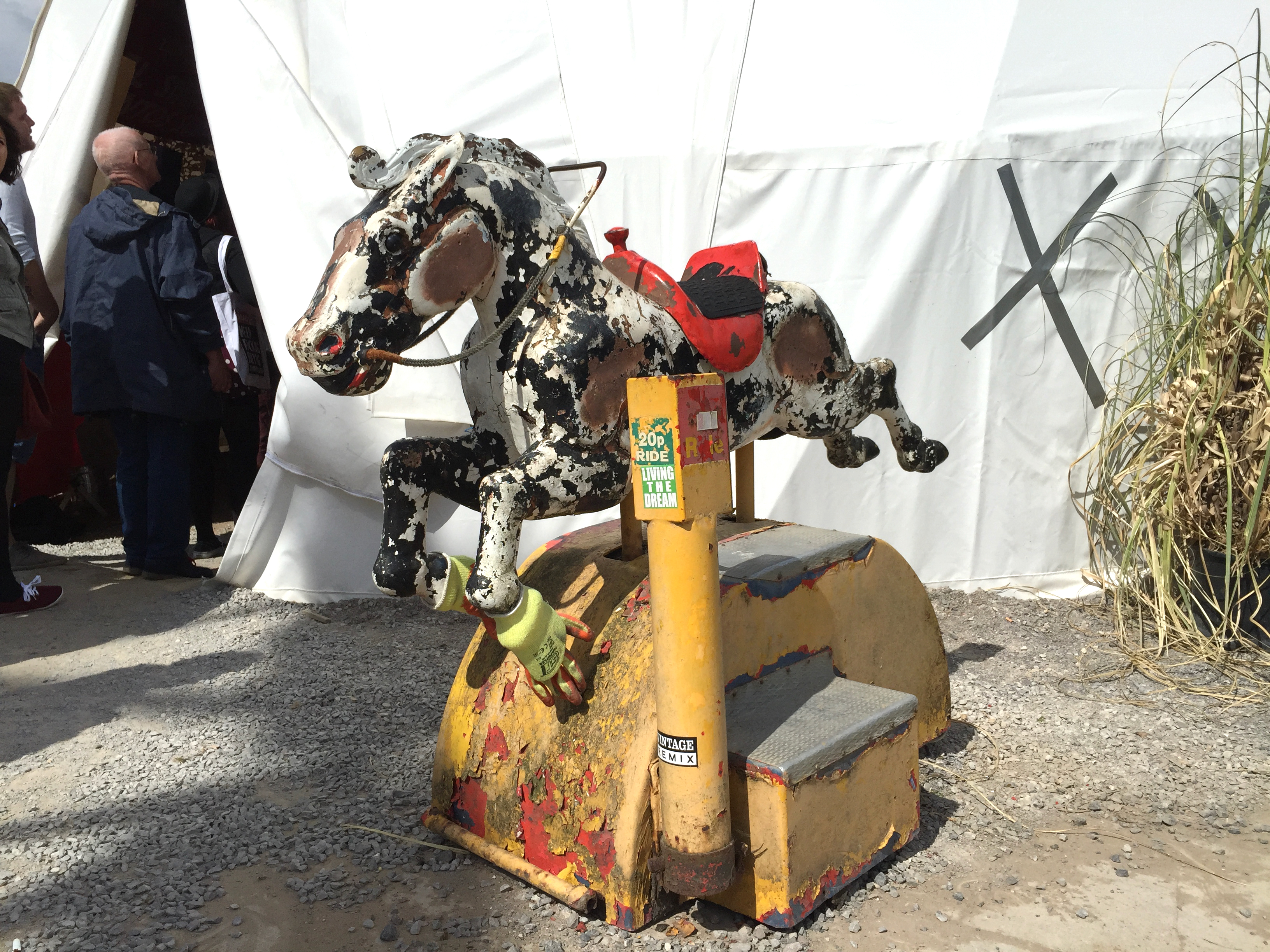
Maskull Laserre. Canada, 1978. Janus – the wooden carousel horse.
Severija Inčirauskaitė. Lithuania, 1977.
Amir Schiby. Israel. The four palestininan boys in Gaza.
Sami Musa. Palestina.
Neta Harari Navon. Israel, 1970.
Huda Beydoun. Saudi Arabia, 1988.
ESCIF. Spain, 1980.
LU$H. Australia
Axel Void (Alejandro Hugo Dorda Mevs). USA.
Jimmy Cauty. UK, 1956. ADP – the miniature urban landscape
Tim Hunkin & Andy Plant. UK. ‘The Astronauts Caravan’
Block 9. UK. ‘The Fairytale Castle’
David Shrigley. UK. The ‘I am an imbecille’ balloons
Scott Hove. USA.
Ronit Baranga. Israel.
Dorcas Casey. UK. The horses in the Cinderella castle
Polly Morgan. UK. Taxidermist animals
Damien Hirst. UK, 1965. ‘the Unicorn’
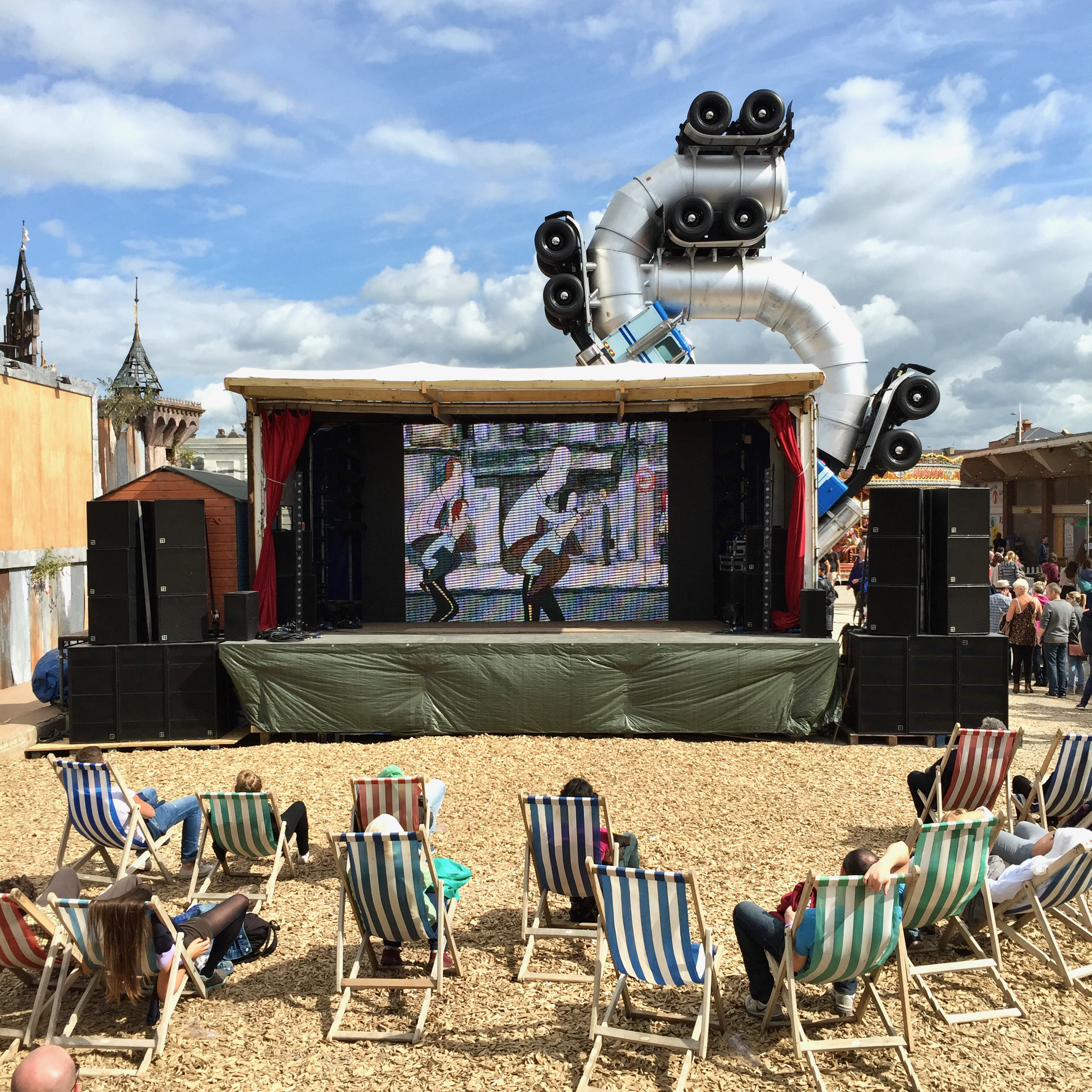
Mike Ross. USA. ‘Big Rig Jig’
Michael Beitz. USA.
Peter Kennard & Cat Phillips. The David Cameron Billboard
Wasted Rita. Portugal, 1978. Written messages on big Post-Its.
Paul Insect & Bäst. UK and USA.
Greg Haberny. USA, 1975.
Nettie Wakefield. UK, 1987.
Darren Cullen. UK, 1983. The Pocket Money Loan installation
Tinsel Edwards, UK
Ed Hall, UK. The banners
Dr Gavin Grindon. UK. Museum of Cruel Objects
Joanna Pollonais, Canada.
Suliman Mansour. Palestina.
Tammam Azzam. Syria, 1980.
Shadi Al Zaqzouq. Libya, 1989.
El Teneen. Egypt
Mana Neyestani. Iran.
Fares Cachoux. Syria.
–
Dismaland Reviews
The Guardian published a surprisingly negative review of Dismaland on 21 August 2015:
In Dismaland, Banksy has created something truly depressing
By Jonathan Jones
The artist’s ‘Bemusement Park’ claims to be making you think, but as an actual experience it is thin, threadbare and, to be honest, quite boring
This place is unreal. A dilapidated pub, desperate-looking big wheel and grim promenade perfectly express the melancholy of the British seaside. But that’s just Weston-super-Mare on a cloudy morning. Dismaland is even stranger. Or so I hope, as I join the very first visitors to Banksy’s “Bemusement Park” waiting to see what lies behind a miserably gothic sign on the battered facade of a decaying lido.
People have been waiting for hours in a queue that stretches far along the prom. A thousand free tickets have been given away to Weston-super-Mare residents for this first public day. All ages and subcultures, from punks to a man dressed entirely in union jacks, are waiting to have their bags searched.
There are two layers of security as we pour in: real and fake. The fake security is one of the funniest moments of the day. Created by Californian artist Bill Barminski, it consists of cardboard X-ray machines and tables of cardboard objects supposedly taken from visitors. But this joke about modern security systems does not change the fact that before you enter Dismaland you do actually get your bag thoroughly inspected by very real security guards who asked one visitor if he had any knives or, get this, spray cans. All graffiti in Dismaland is official graffiti.
You can see why Banksy needs to control spontaneous art. Already the streets between the railway station and his attraction have been enlivened by rival street artists. Banksy. He’s so famous that Weston-super-Mare’s lucky golden ticket holders rush into the park already taking pictures, and I too am caught up in the thrill. This has been in the Daily Mail and everything, it’s got to be special.
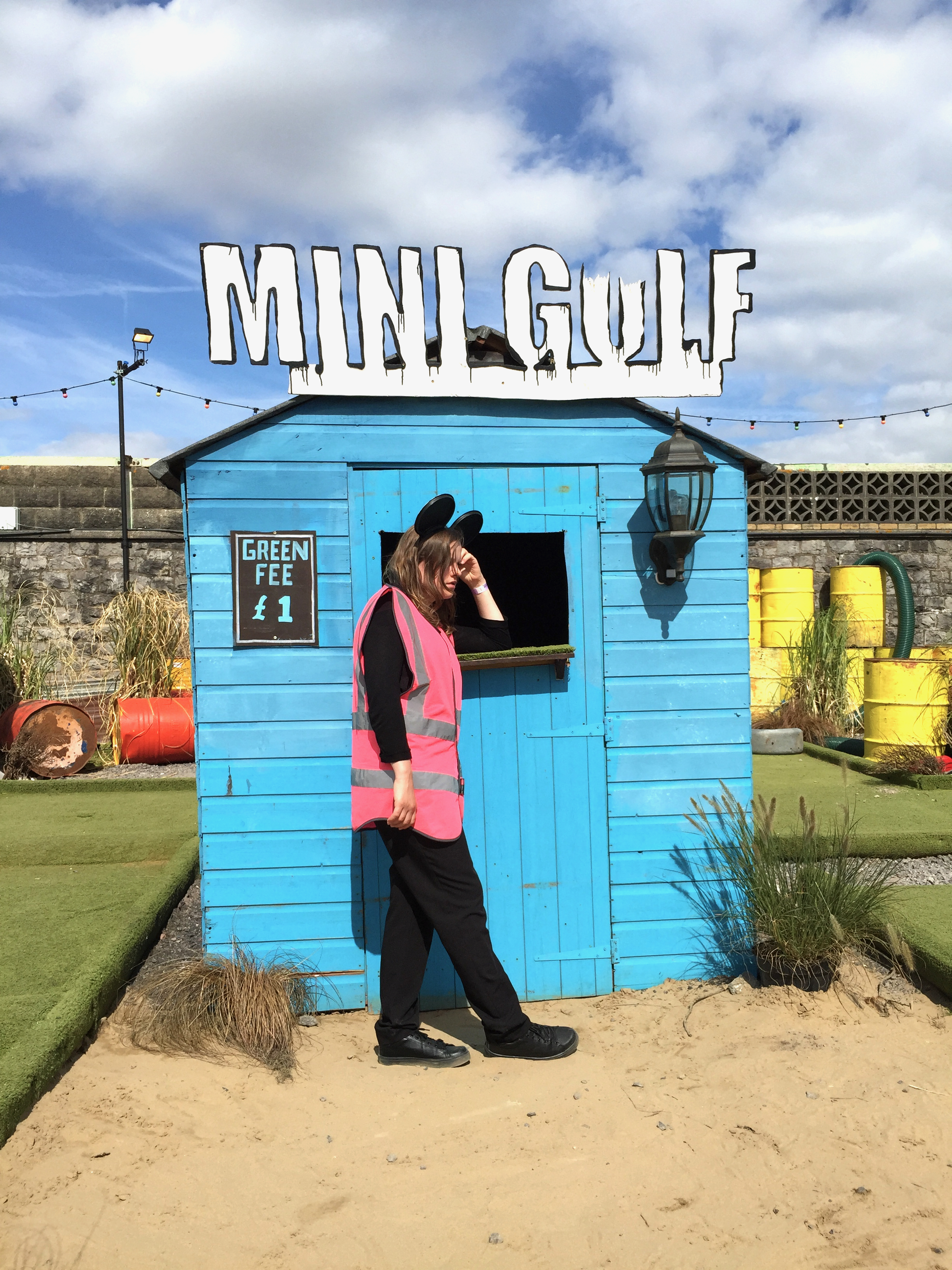
Greeters – or rather, sulkers – wear Mickey Mouse ears and T-shirts that say DISMAL. Instead of being forced to smile all day they have to grimace all day. Some are so good at it they appear genuinely pissed off. It’s infectious, for me at least.
As cameraphones snap everything in sight, the gloom of the British seaside at its most dilapidated and moribund wells up in me. Memories of amusement arcades in Rhyl. Banksy has created something truly depressing. There at the heart of Dismaland is the fairytale castle, ruinous and rancid. The lake around it has a fountain that is a police water cannon. But an empty feeling is starting to hollow me out. Where’s the fun I was promised? Well, I wasn’t promised any fun, just dismalness. But surely not this dismal.
Inside the festering wreck of a fairytale castle, Cinderella’s coach has crashed. Flash bulbs create indoor lightning as paparazzi photograph her. Shock! It’s like the death of Diana. But there’s no emotion. The lifesize tableau, by Banksy himself, is just one big smirk. Wait. He’s built a castle. He leads us into it … For this? It’s such a trite, simplistic joke.
Dismaland is not all crap jokey installations, however. There are political one-liners here as well as artistic ones. People are queuing up to go inside a caravan with intense displays about the evil of our fascist police state. There is also a huge model of said fascist police state, with tiny police cars everywhere, blue lights flashing right across a diorama of a city at night.
The irony of the security on the way into Dismaland is underlined by all the references to CCTV and the wicked security establishment that pervade it. Yet that obvious double standard goes much deeper. Dismaland is a kind of consummation, for me, of all that is false about Banksy. It claims to be “making you think” and above all to be defying the consumer society, the leisure society, the commodification of the spectacle. Disneyland packages dreams, Dismaland is a blast of reality. But it is just a media phenomenon, something that looks much better in photos than it feels to be here. “Being here” is itself just a way of touching the magic of Banksy’s celebrity – that’s why everyone is taking pictures. This is somewhere to come to say you went. As an actual experience it is thin and threadbare, and I found, to be honest, quite boring.
I felt I was participating in a charade where everyone has to pretend this is a better joke than it is. In reality the crazy fairgrounds and dance tents at rock festivals are far more subversive – because they are joyous.
Perhaps you need intoxicants to enjoy Dismaland, and I was there at 11 in the morning. But its failure to create joy is self-defeating. Funfairs really are strange, wild places, as film-makers have known since Tod Browning made Freaks and rock music has known since the Doors recorded Strange Days. But in Dismaland, the rather well established idea that fairs are bizarre is not taken anywhere new or interesting.
As a news story, a media sensation, it works wonderfully – but up close, this is a Potemkin theme park. It’s not an experience, just a pasteboard substitute for one. Indeed, it is a mere art exhibition. Dismaland does not offer the energy and danger that real theme parks do. Instead, it brings together a lot of bad art by the seaside.
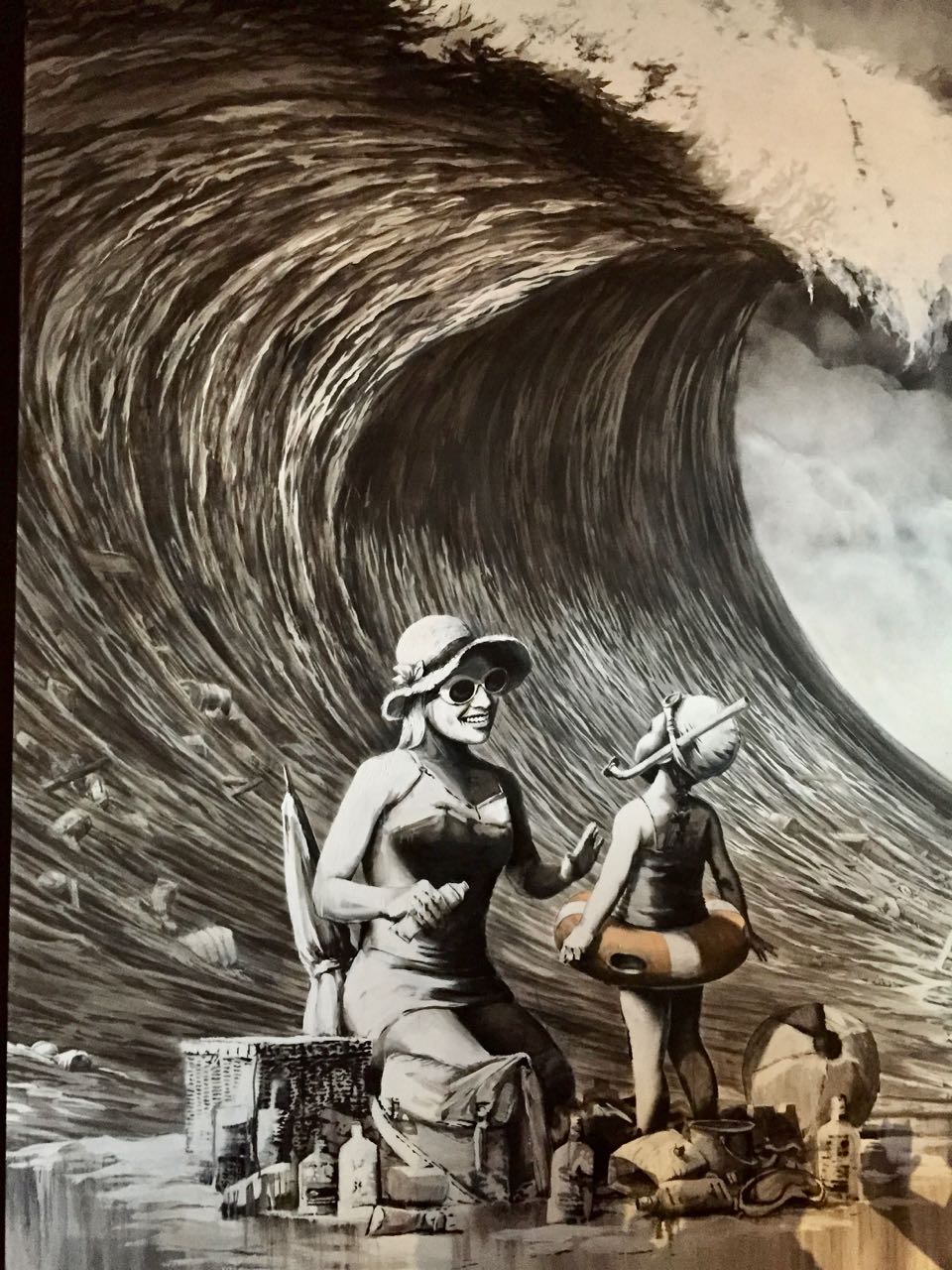
Banksy shows a painting of a mother and child about to be overwhelmed by a tsunami. The grotesquely clumsy crudeness of his painting technique up close, and without any excuse that he did it quickly to evade the cops, is embarrassing. But nastiest of all is the work’s peculiar lack of human feeling. We are – apparently – meant to think it’s funny that the wave is about to kill these beachgoers. They have lots of commodities, you see – sun cream and stuff. All the detritus of consumer capitalism. See the wave of the future crush them! This heartless allegory is worthy of Maoist propaganda. As art it is sterile and dead.
Banksy does better with a figure of Death riding a dodgem. This would be a lot of fun if you could go on the dodgems and try to dodge death. Sadly you just have to watch. It elicits a half laugh.
At least a visit to Dismaland is a real, sustained chance to assess Banksy as an artist. His one-dimensional jokes and polemics lack any poetic feeling. Devoid of ambiguity or mystery, everything he has created here is inert and unengaging. Cinderalla dies and no one gives a toss. What a good joke about our time, that one of the most famous critics of the way we live now is nothing more than a media-savvy cultural entrepreneur.
Banksy’s taste in other artists is no more insightful. Most of the artists he’s selected for this seaside outing are as one-dimensional as his own visions.
Only one image held me. It has been a long time since I was thrilled to see a Damien Hirst but among all the half-baked efforts here, Hirst’s gold-framed vitrine containing a unicorn has a true strangeness. It is not preachy or self righteous. Nor is its fascination easily explained. It is a real fairground attraction, freakish and bizarre. Dismaland needs a few more unicorns. So does Weston-super-Mare. So do we all.
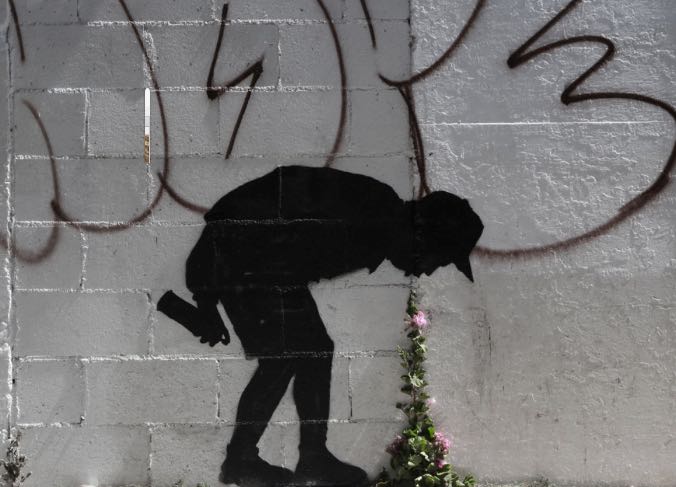
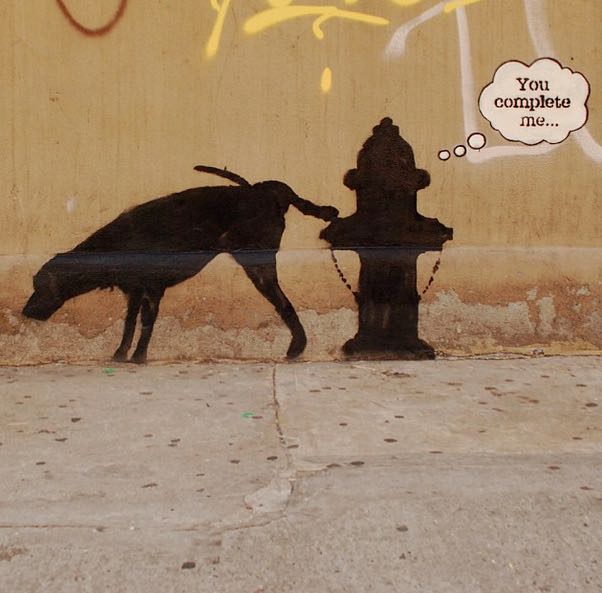
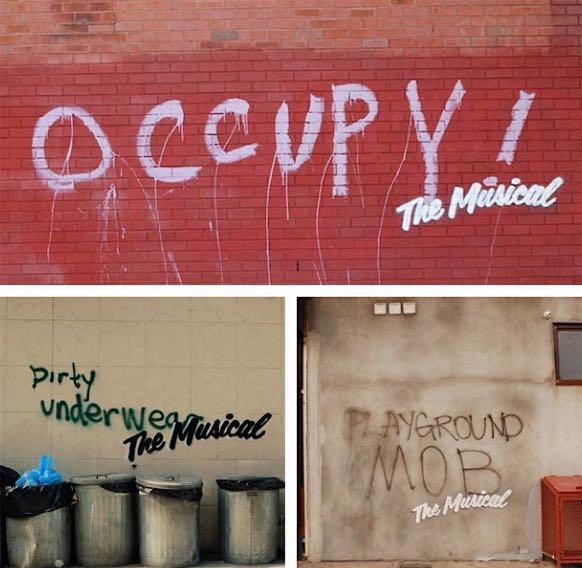
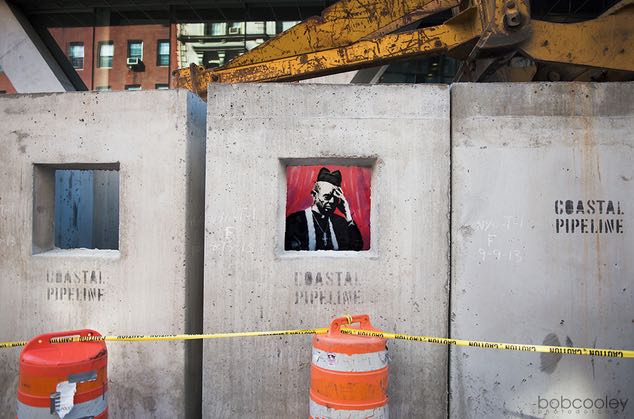
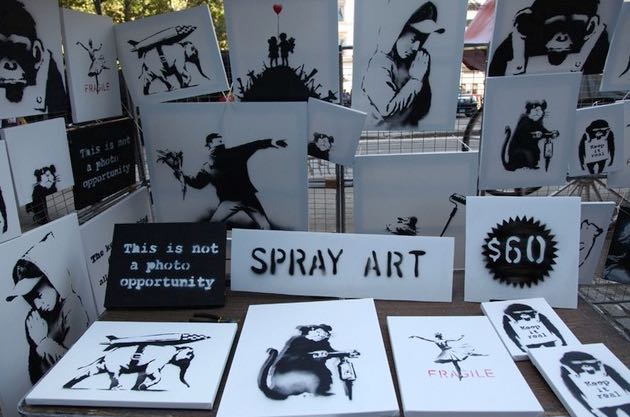
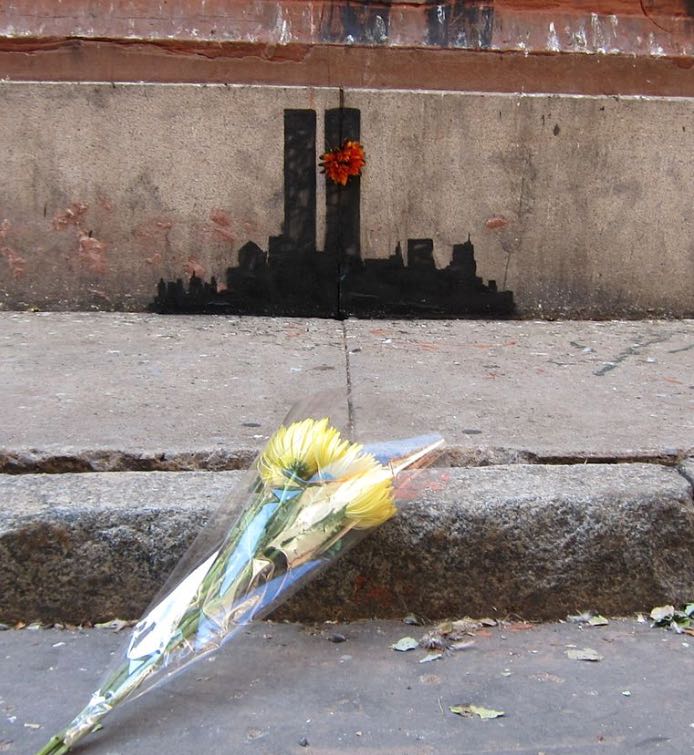
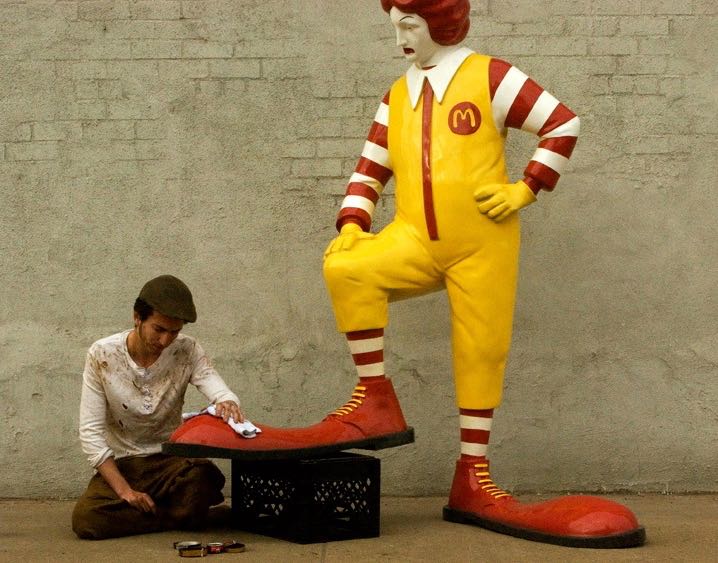
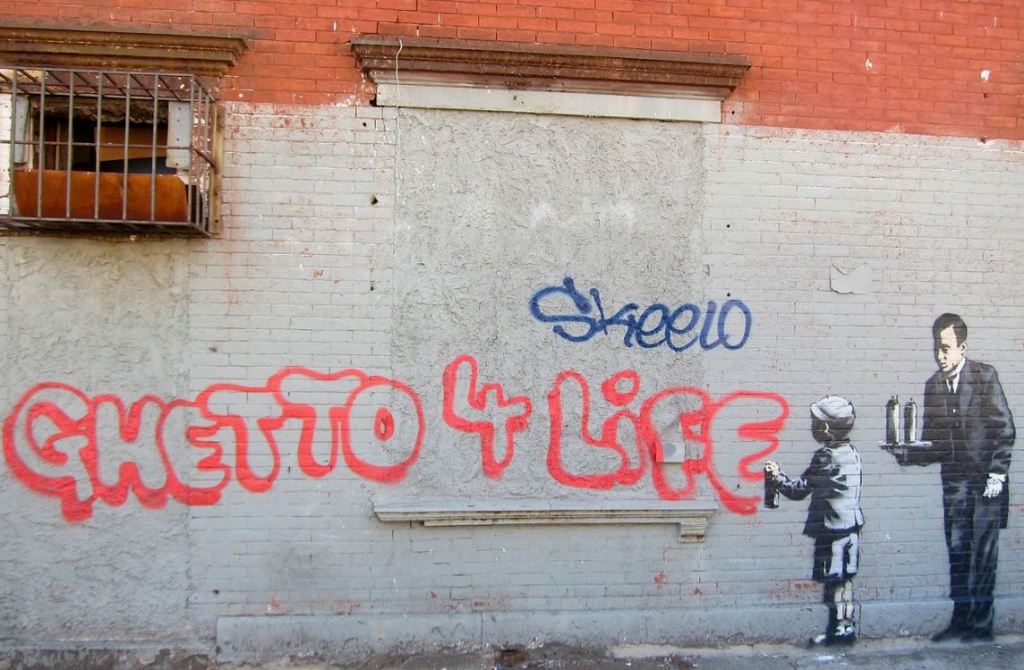
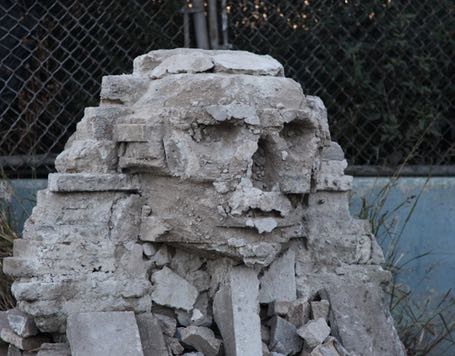
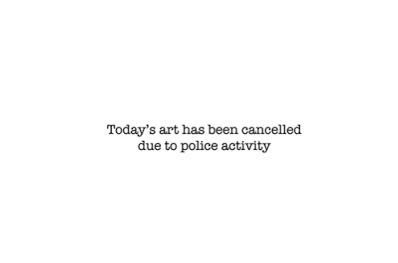
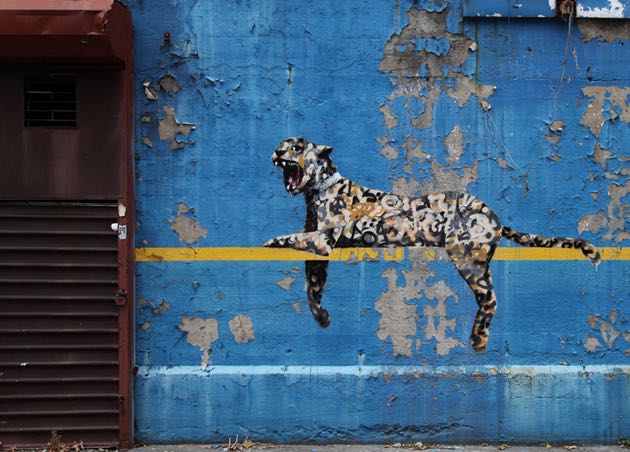
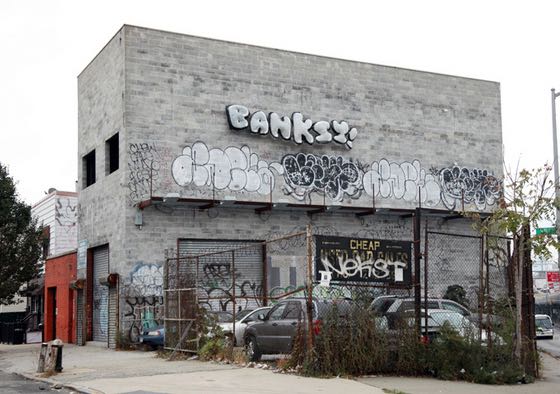
On 1 October 2013, Banksy began a one-month residency on the streets of New York. Team Banksy produced one street art piece in different locations daily for the rest of the month. Chronological sequence, from 1 to 31 October:
Grim Reaper at Better Out in New York
Banksy published a film clip where he summarised his New York residency:
Source: Banksyfilm / Youtube
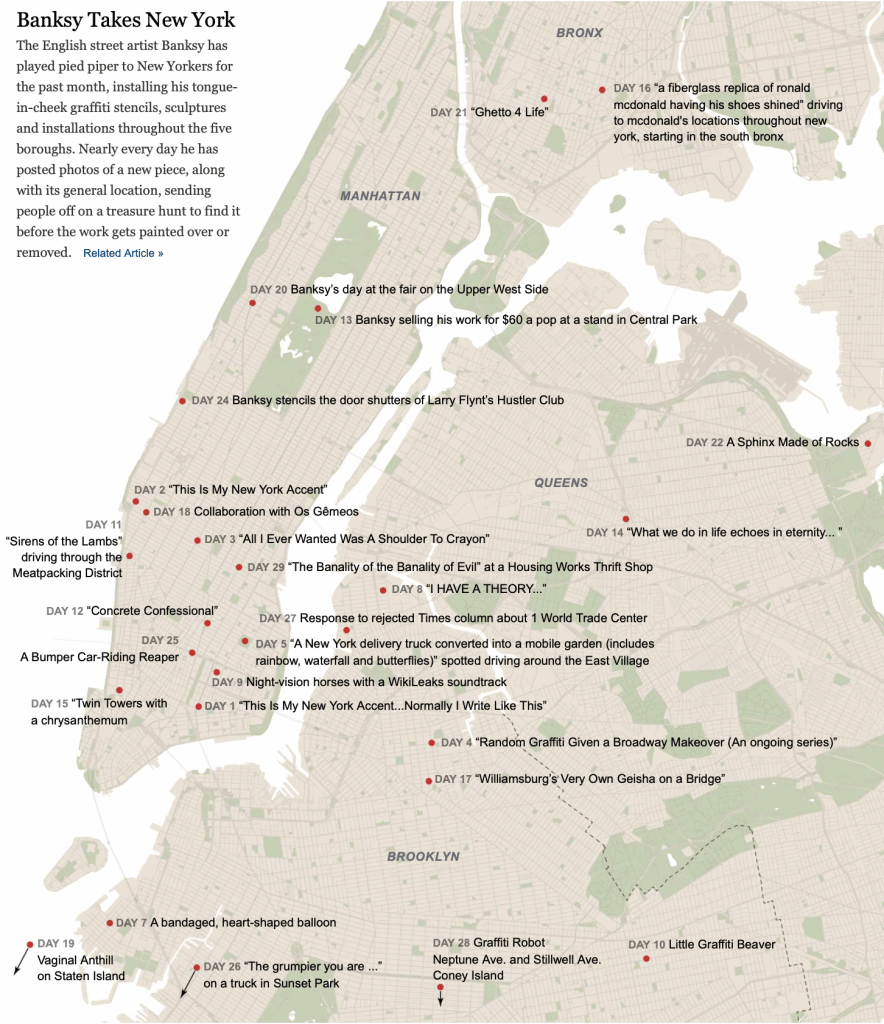
The New York Times published a map of the street art pieces:



















































 Banksy unofficial