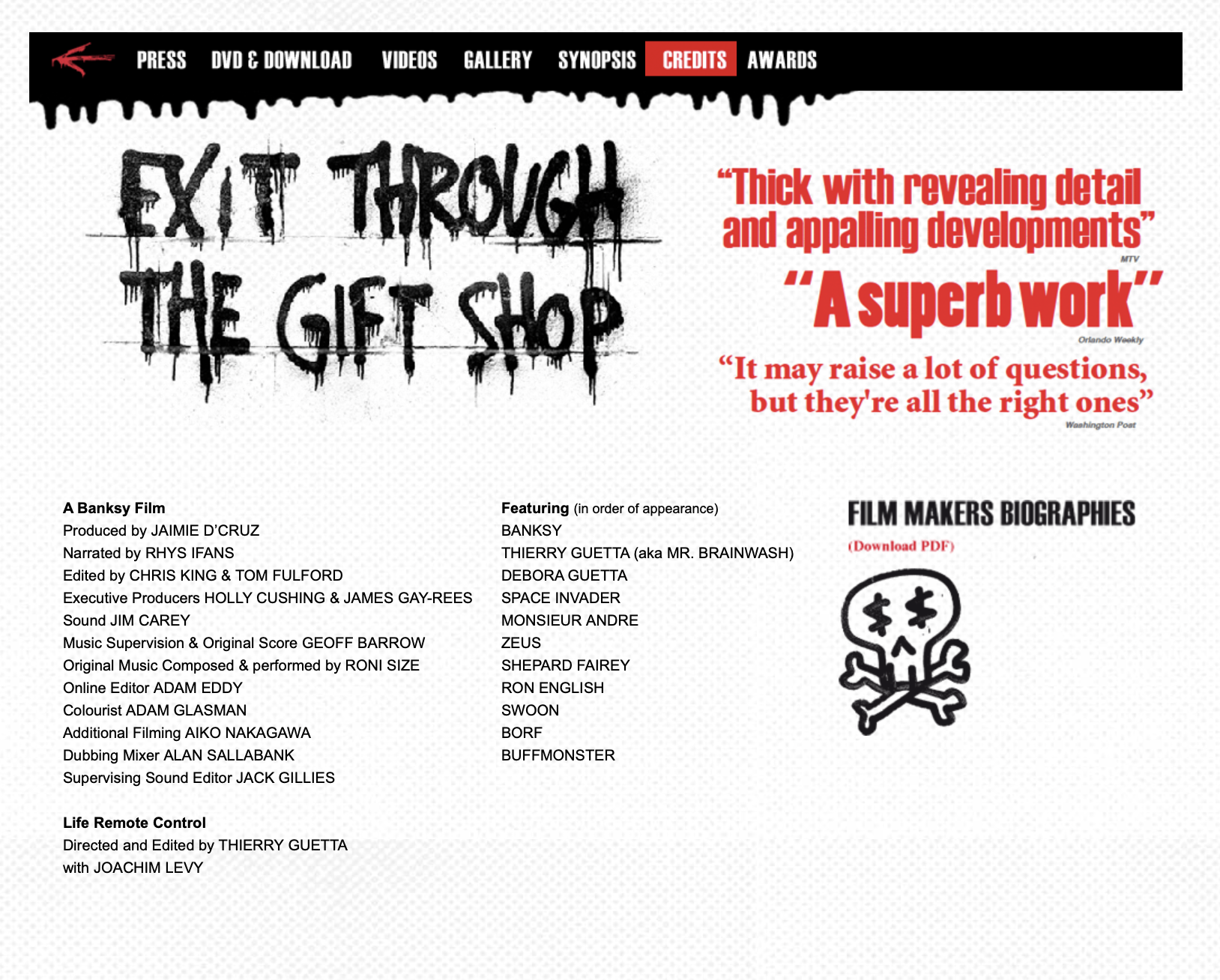
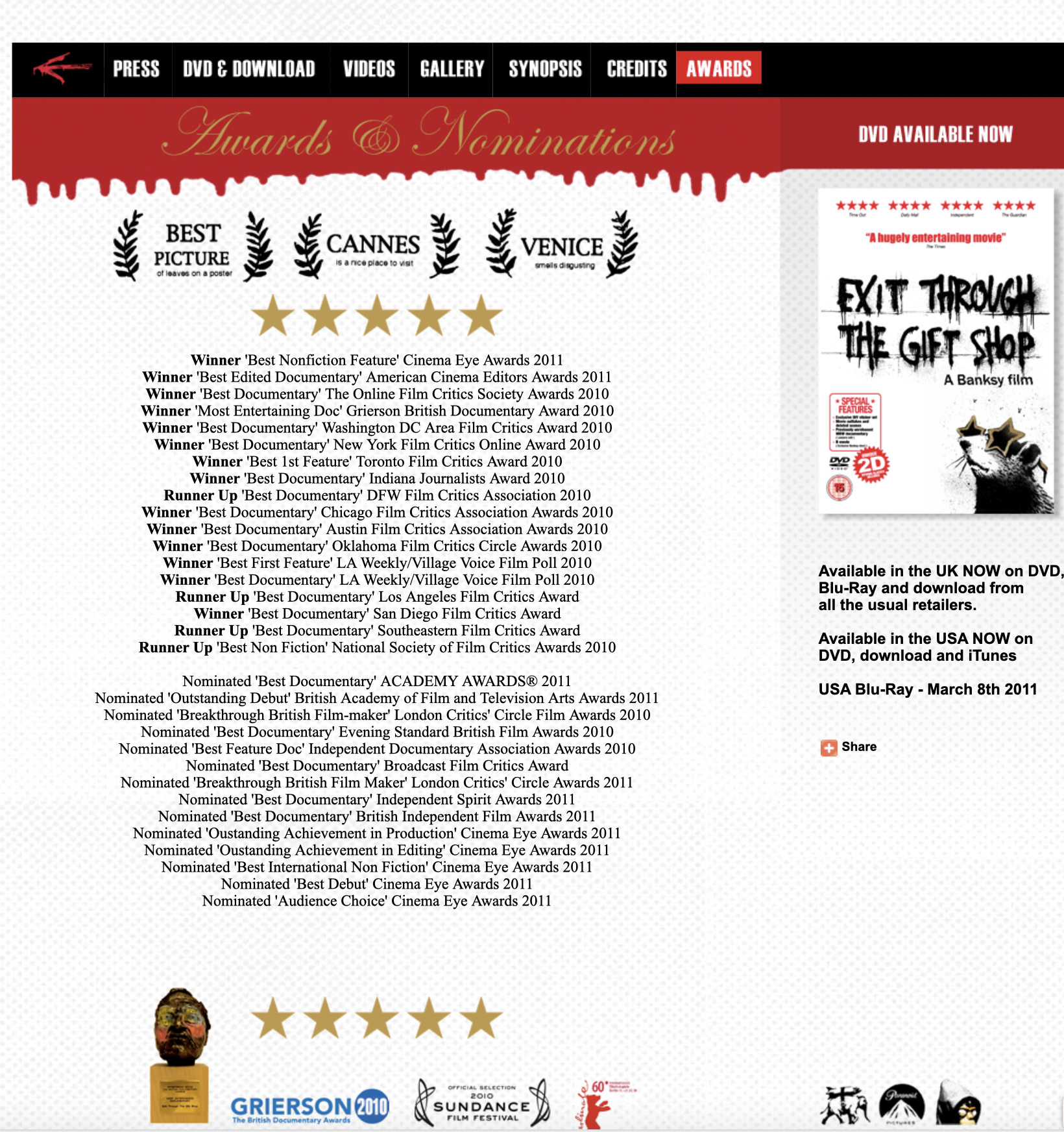
The film premiered at the 2010 Sundance Film Festival on 24 January 2010 and was later nominated for the Oscars and the BAFTAs for Best Documentary Feature. The synopsis was described in the following way on the official website:
“This is the inside story of Street Art – a brutal and revealing account of what happens when fame, money and vandalism collide. Exit Through the Gift Shop follows an eccentric shop-keeper turned amateur film-maker as he attempts to capture many of the world’s most infamous vandals on camera, only to have a British stencil artist named Banksy turn the camcorder back on its owner with wildly unexpected results. One of the most provocative films about art ever made, Exit Through the Gift Shop is a fascinating study of low-level criminality, comradeship and incompetence. By turns shocking, hilarious and absurd, this is an enthralling modern-day fairytale… with bolt cutters.”
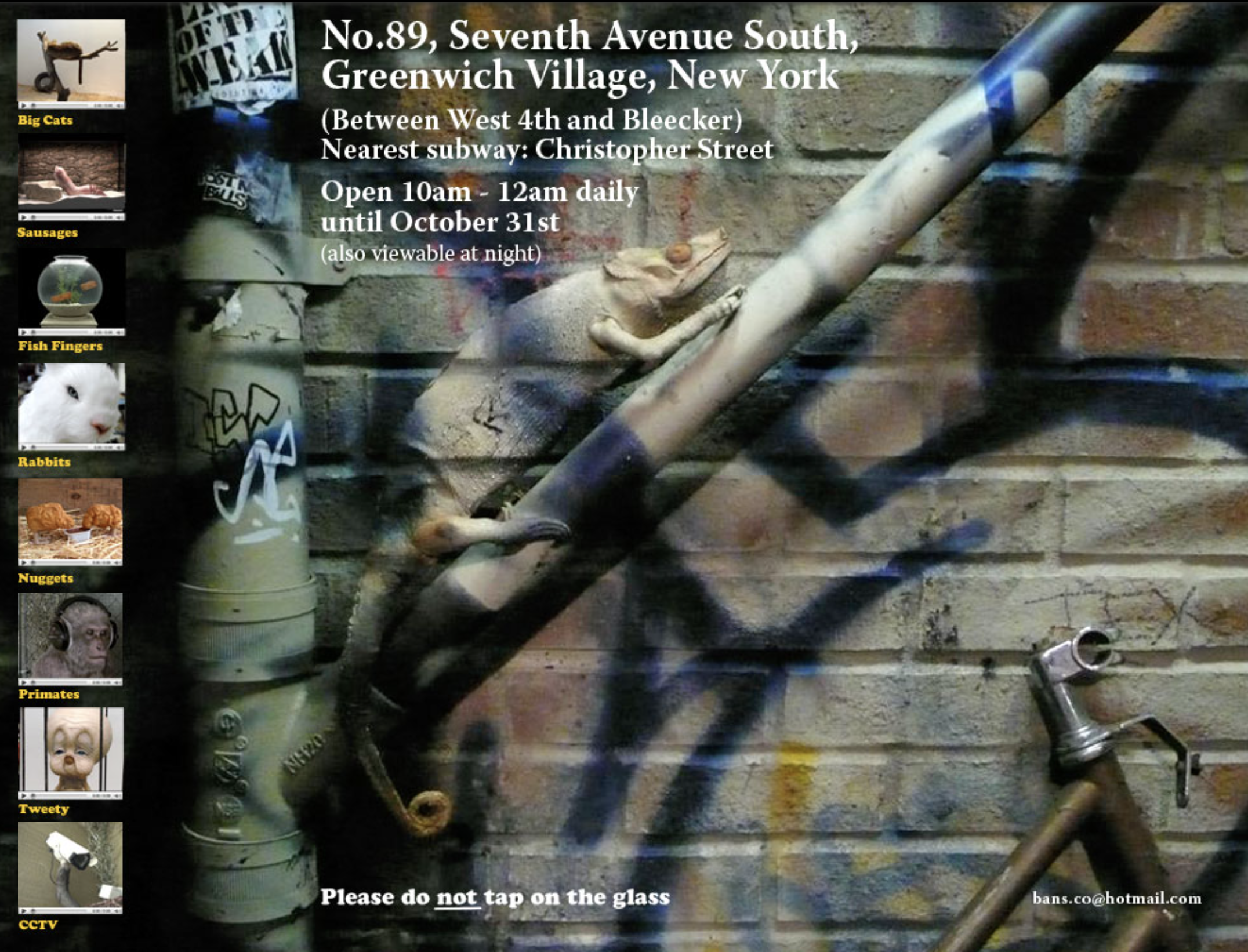
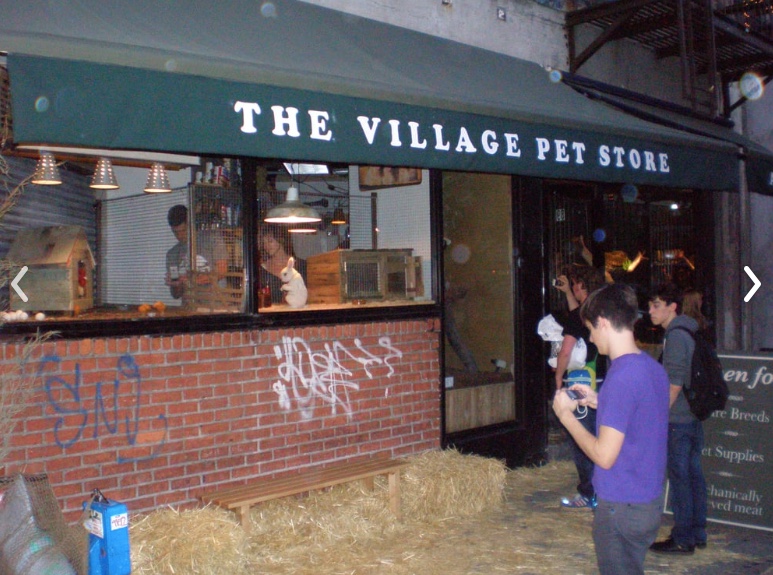
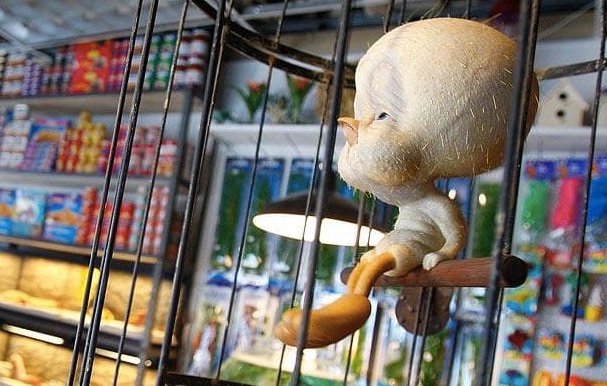
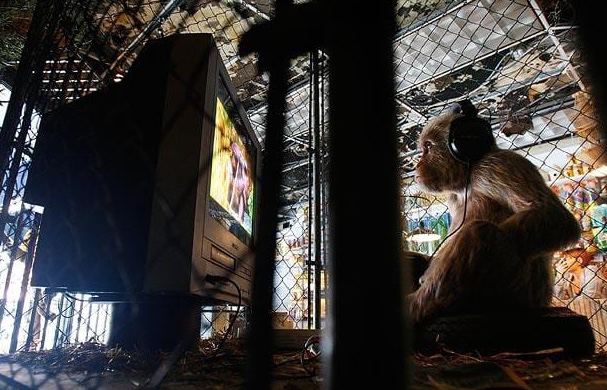
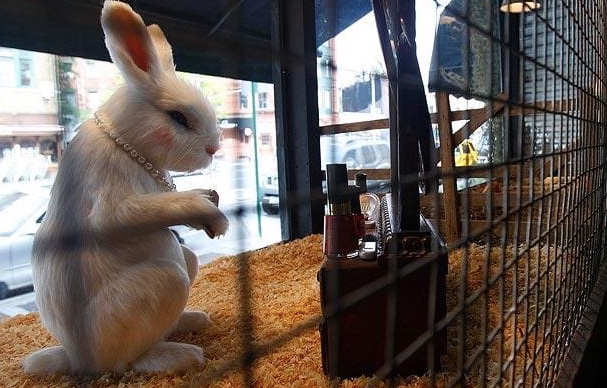
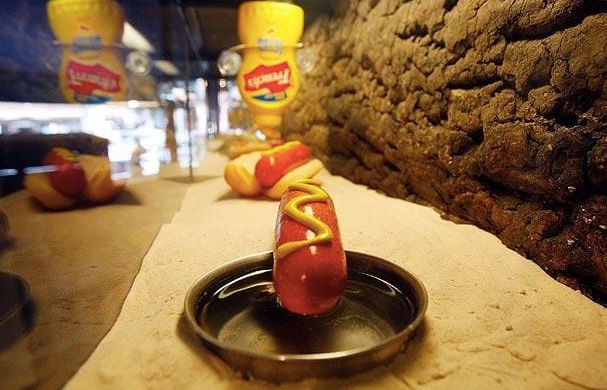
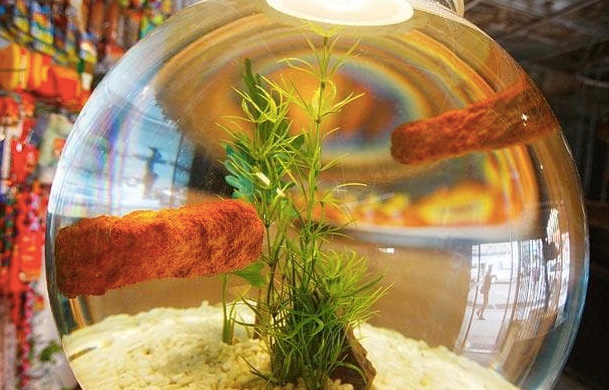
Banksy opened his first exhibition in New York, The Village Pet Store and Charcoal Grill, featuring mainly animatronics. Almost all of the content was used the following year in the Banksy vs. Bristol Museum exhibition.
“New Yorkers don’t care about art, they care about pets. So I’m exhibiting them instead. I wanted to make art that questioned our relationship with animals and the ethics and sustainability of factory farming, but it ended up as chicken nuggets singing. I took all the money I made exploiting an animal in my last show and used it to fund a new show about the exploitation of animals. If its art and you can see it from the street, I guess it could still be considered street art.”
Photos: Getty images
Vernisage.tv published an amazing video of the exhibition on youtube:
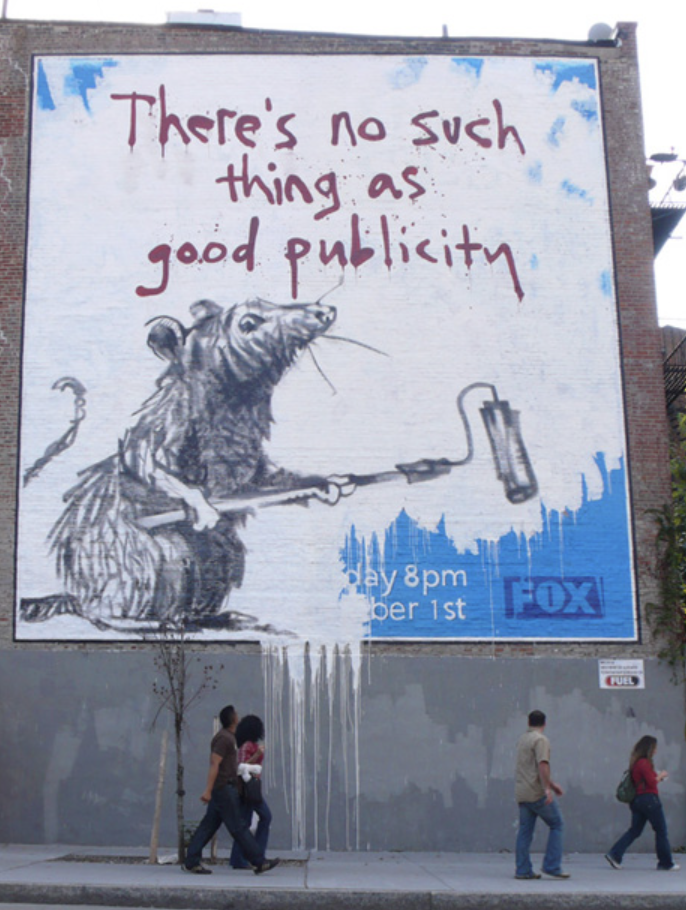
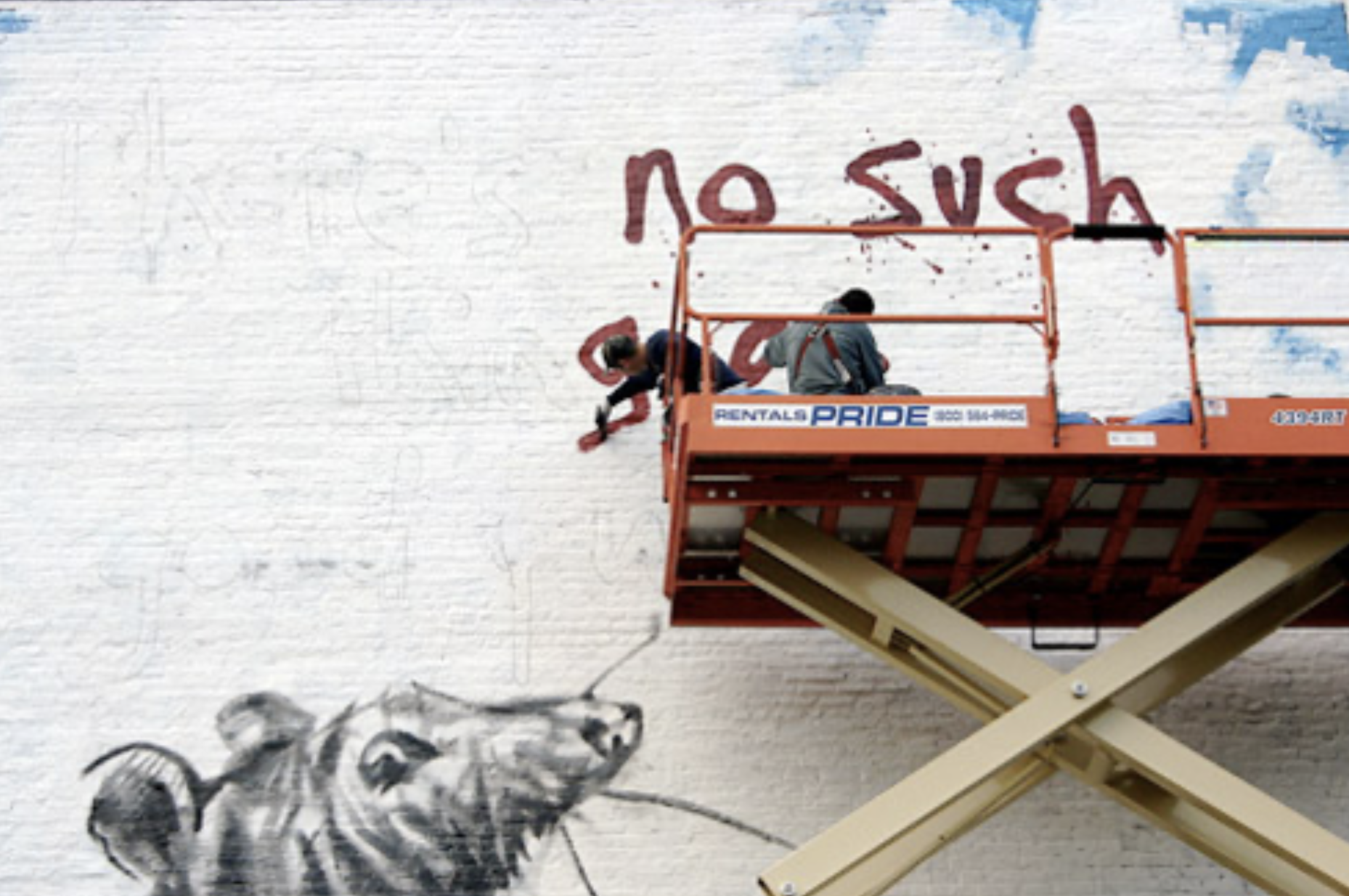
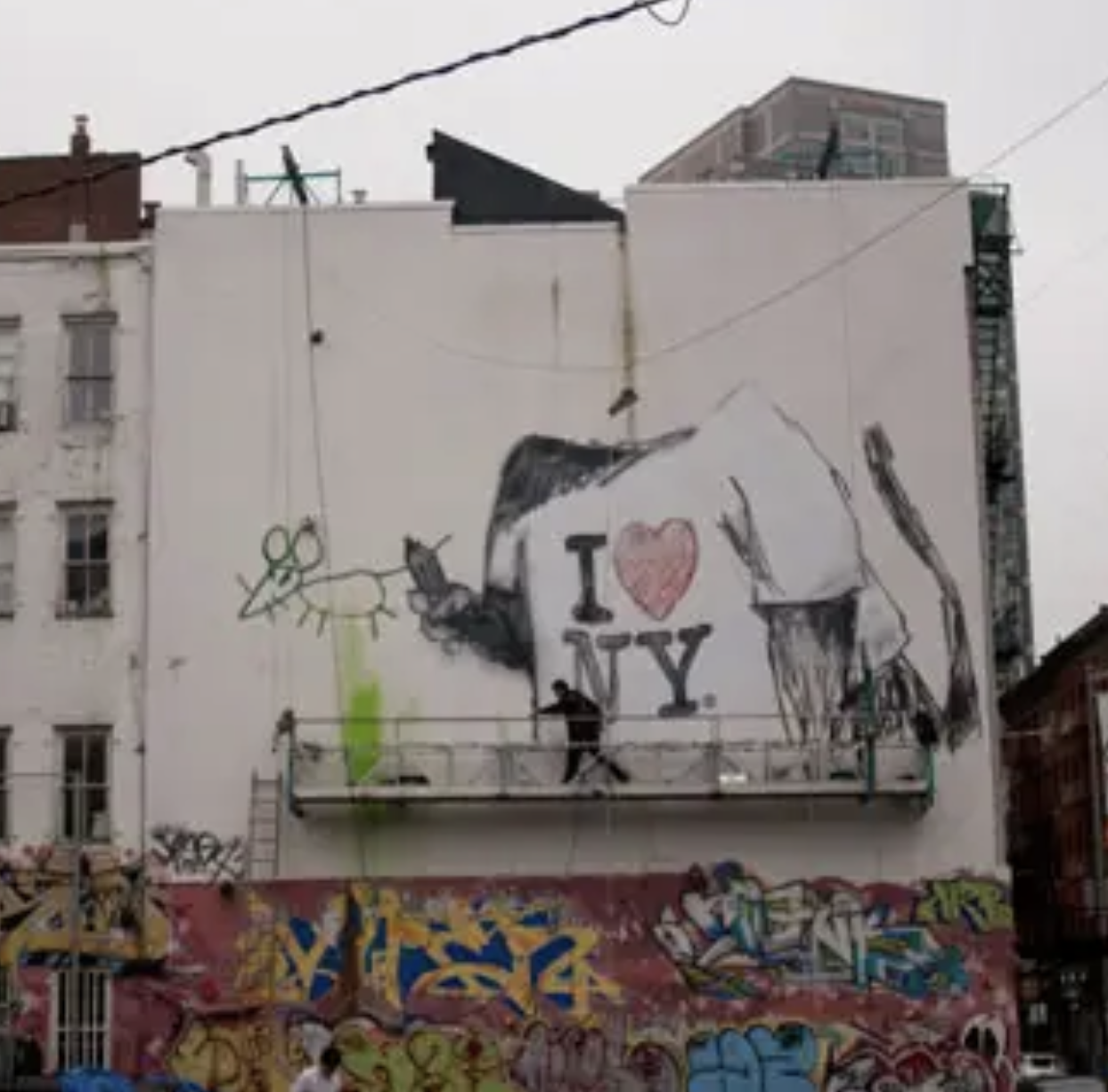
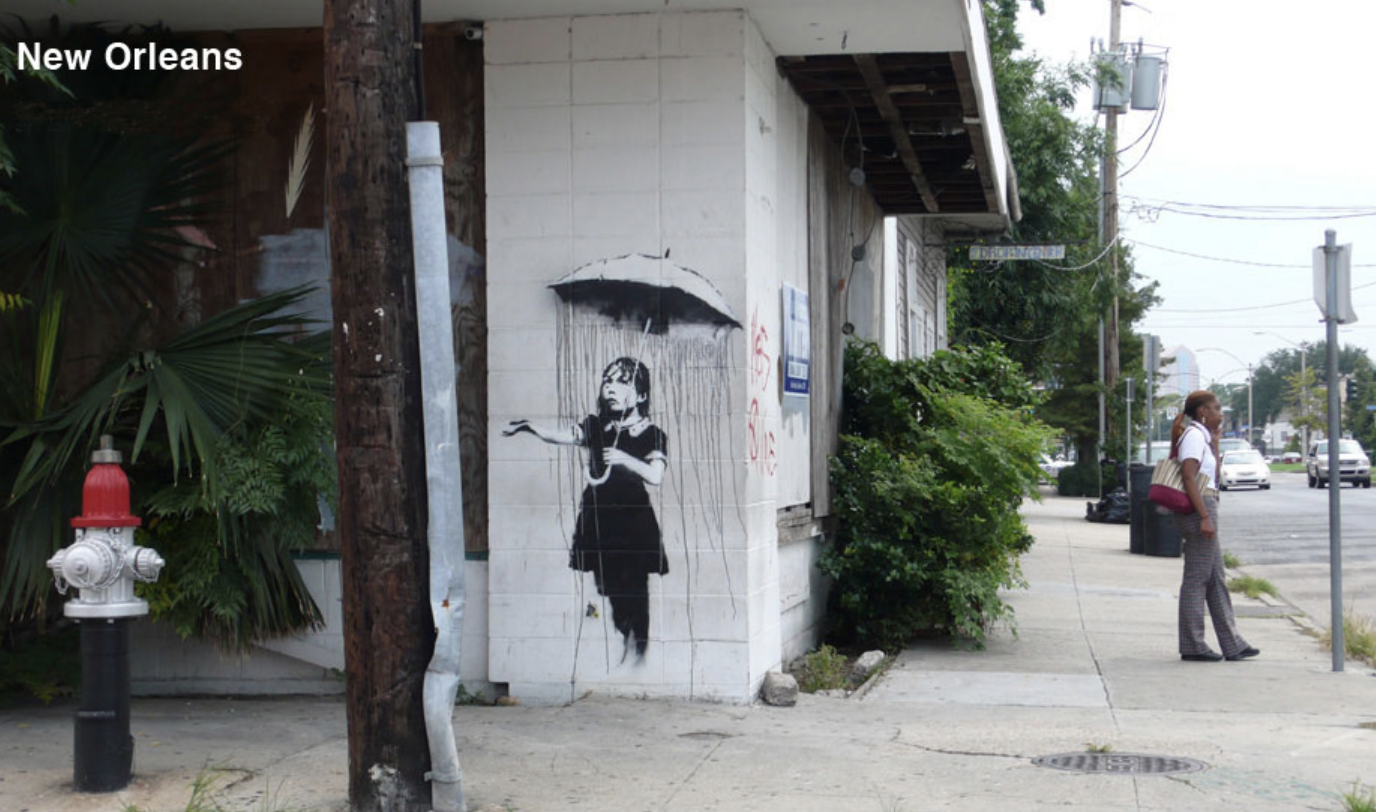
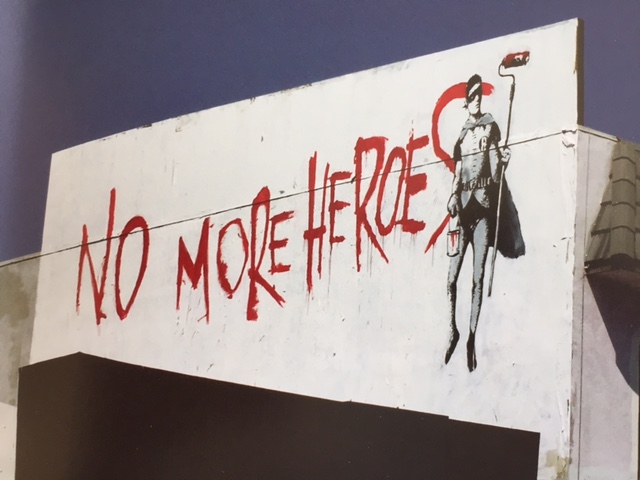
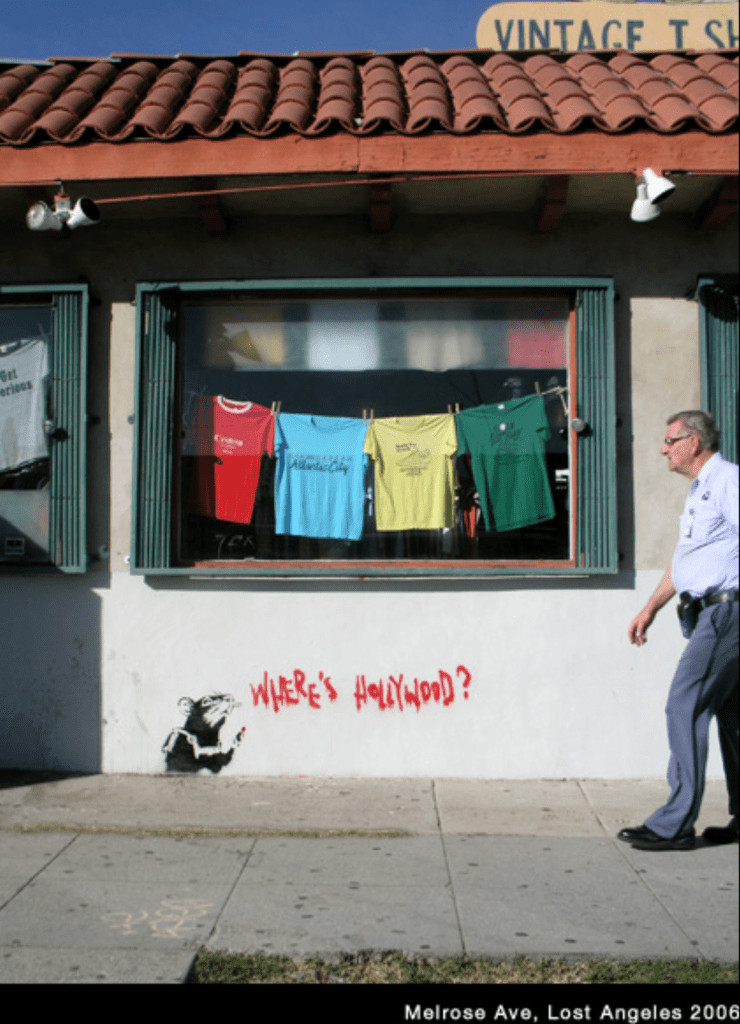
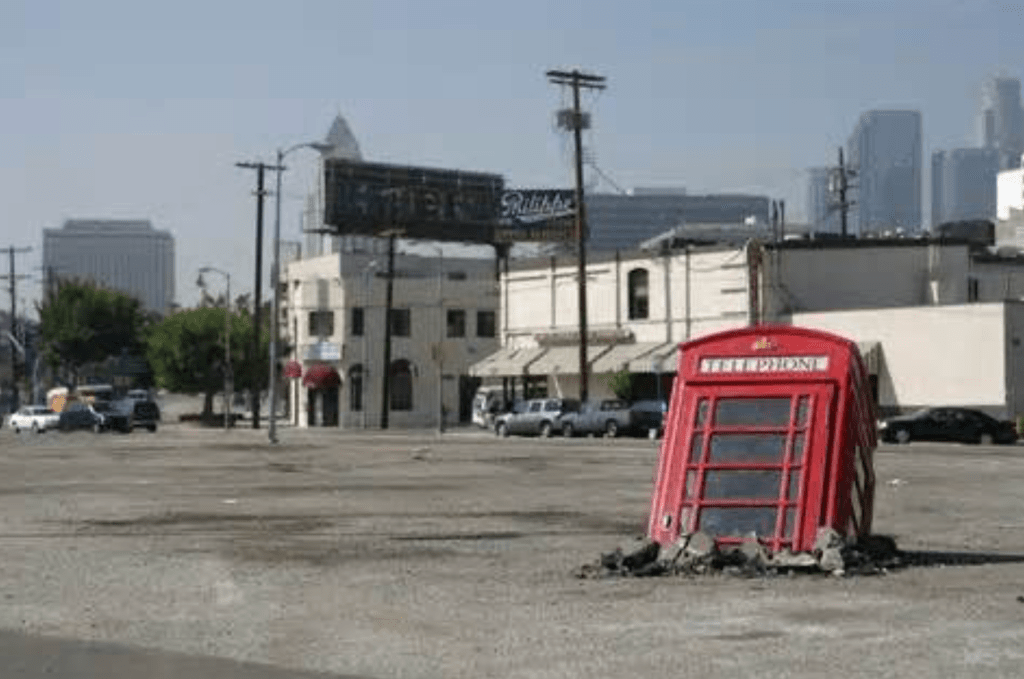
Apart from the stencils in New Orleans, a few more pieces were documented across the US in 2008. At least two in the Los Angeles area and a few giant rats on billboards in New York before the Village Pet Store exhibition in October 2008.
As reported by Natalie Hanman in the Guardian on 1 September 2008:
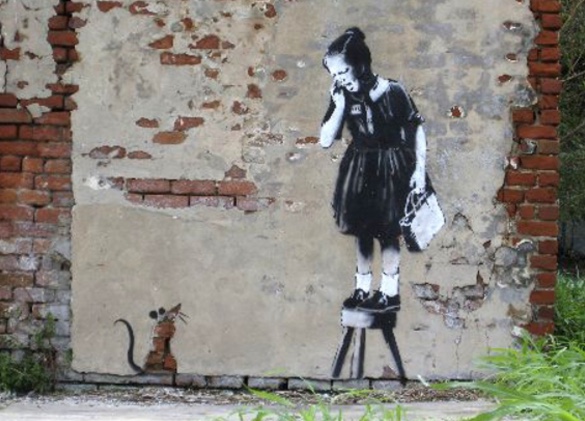
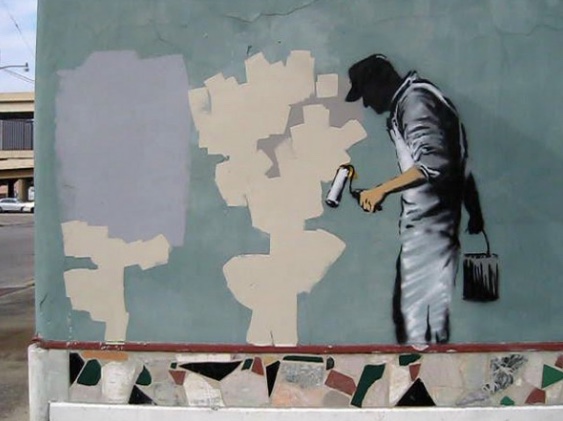
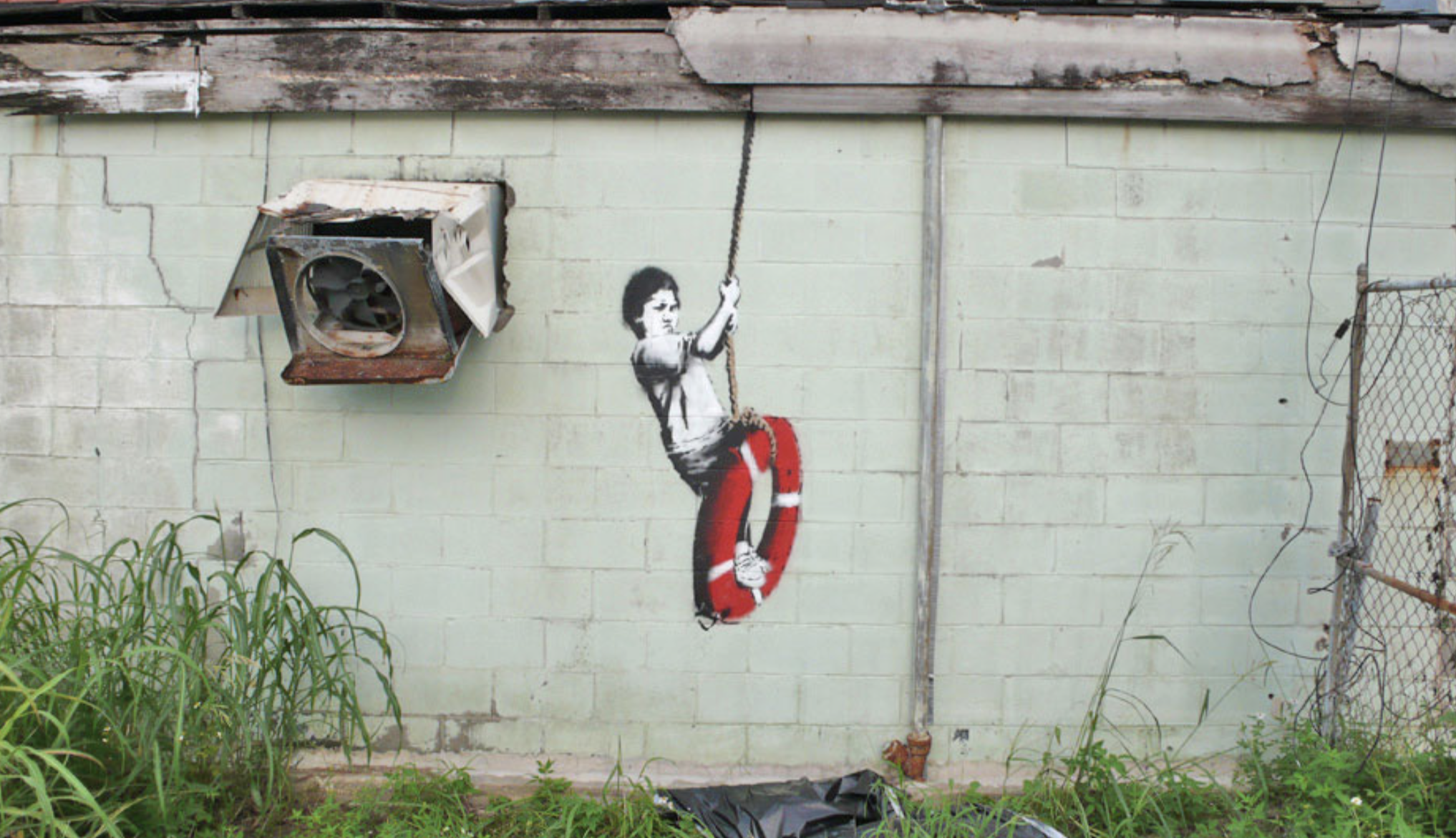
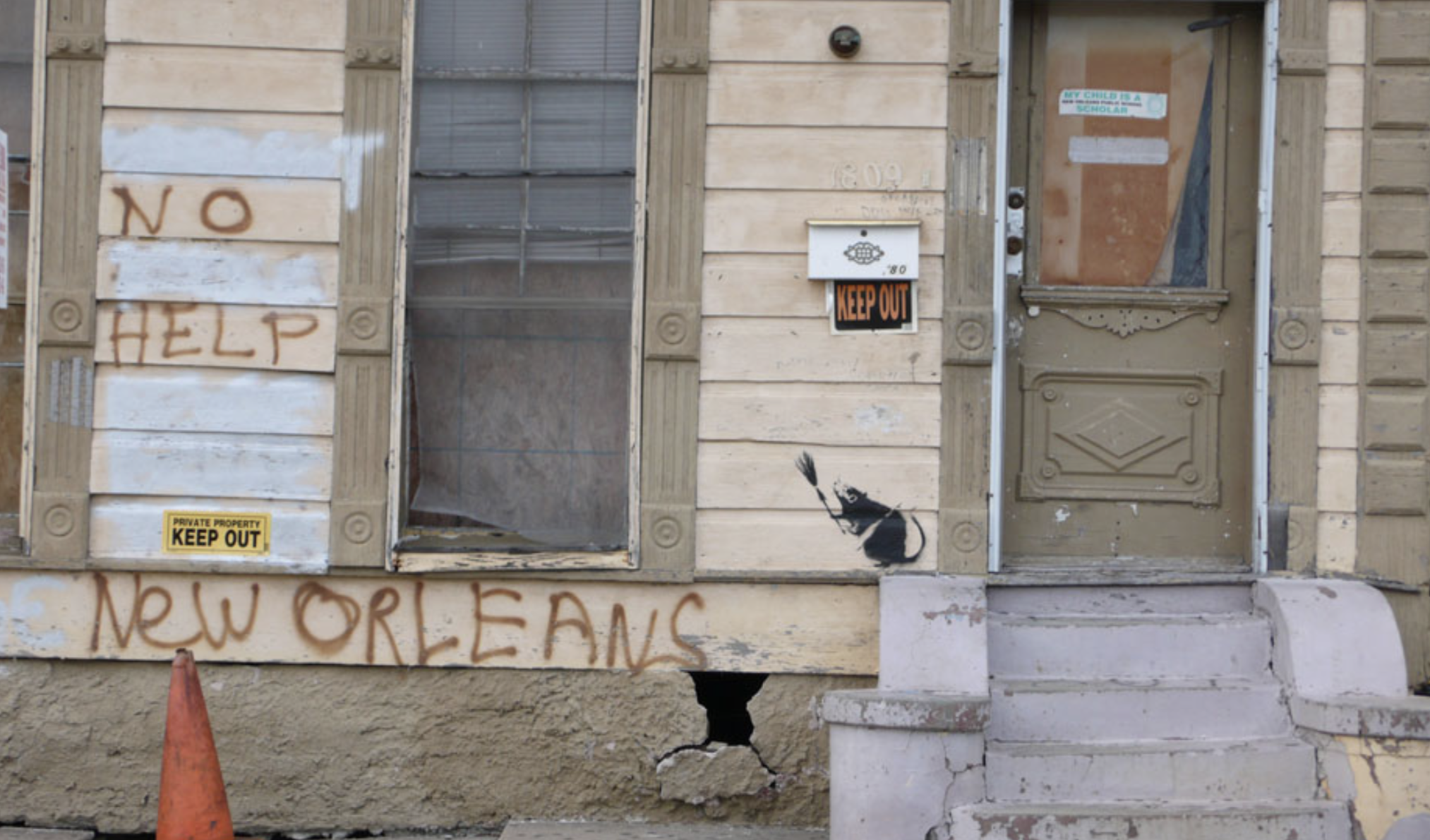
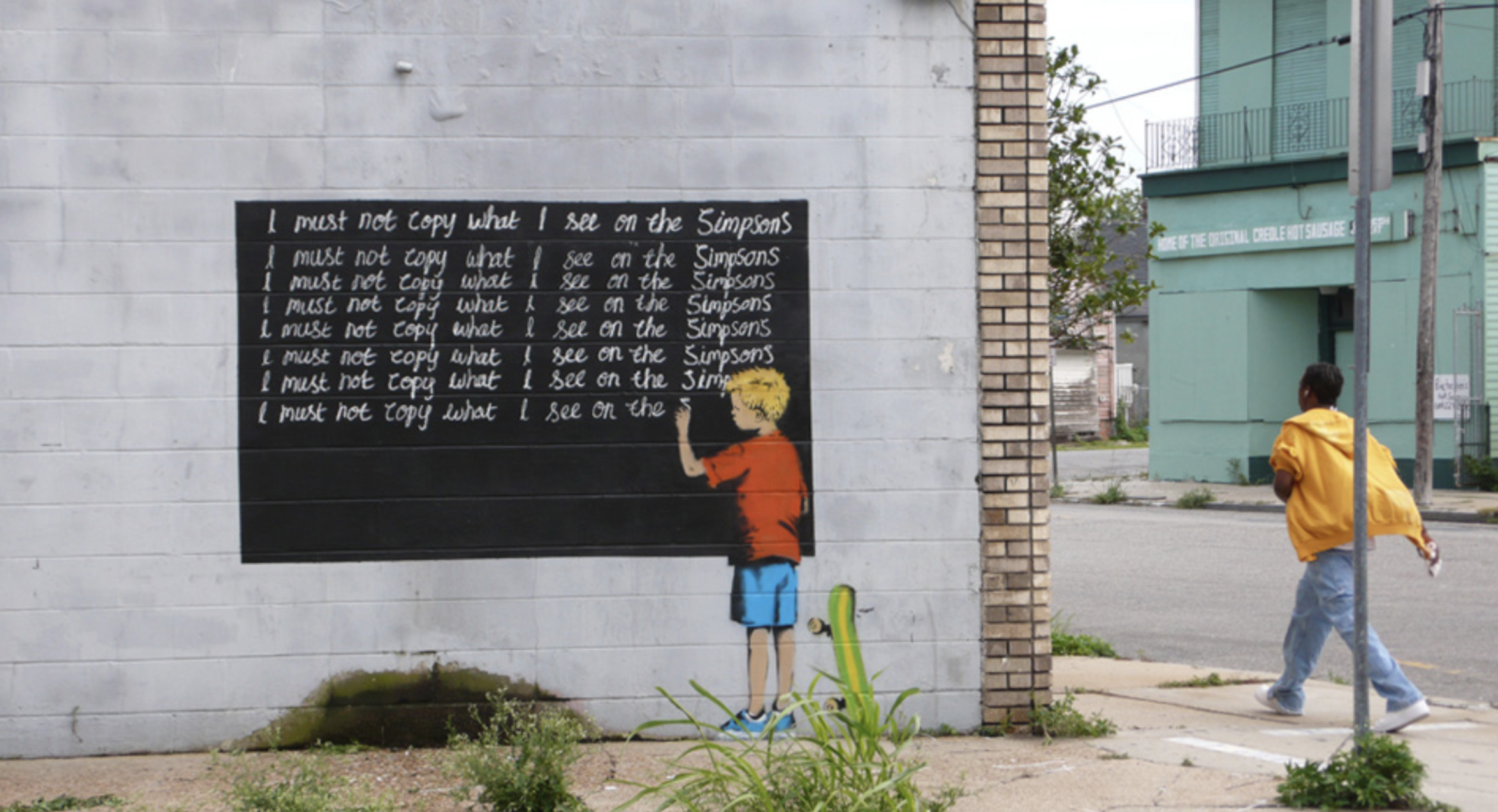
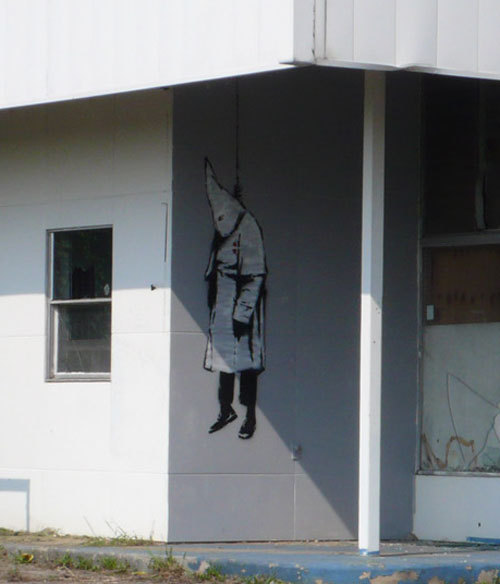
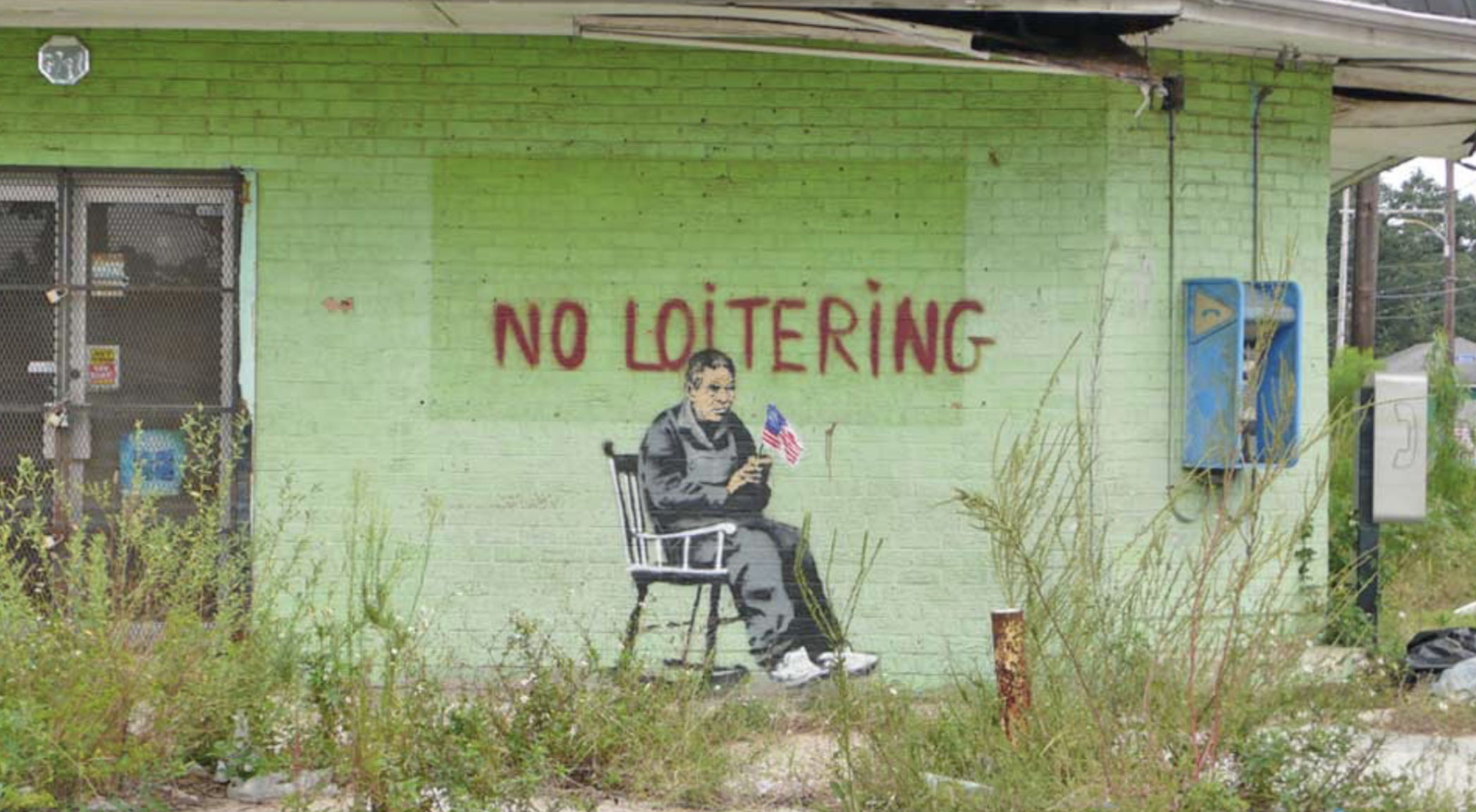
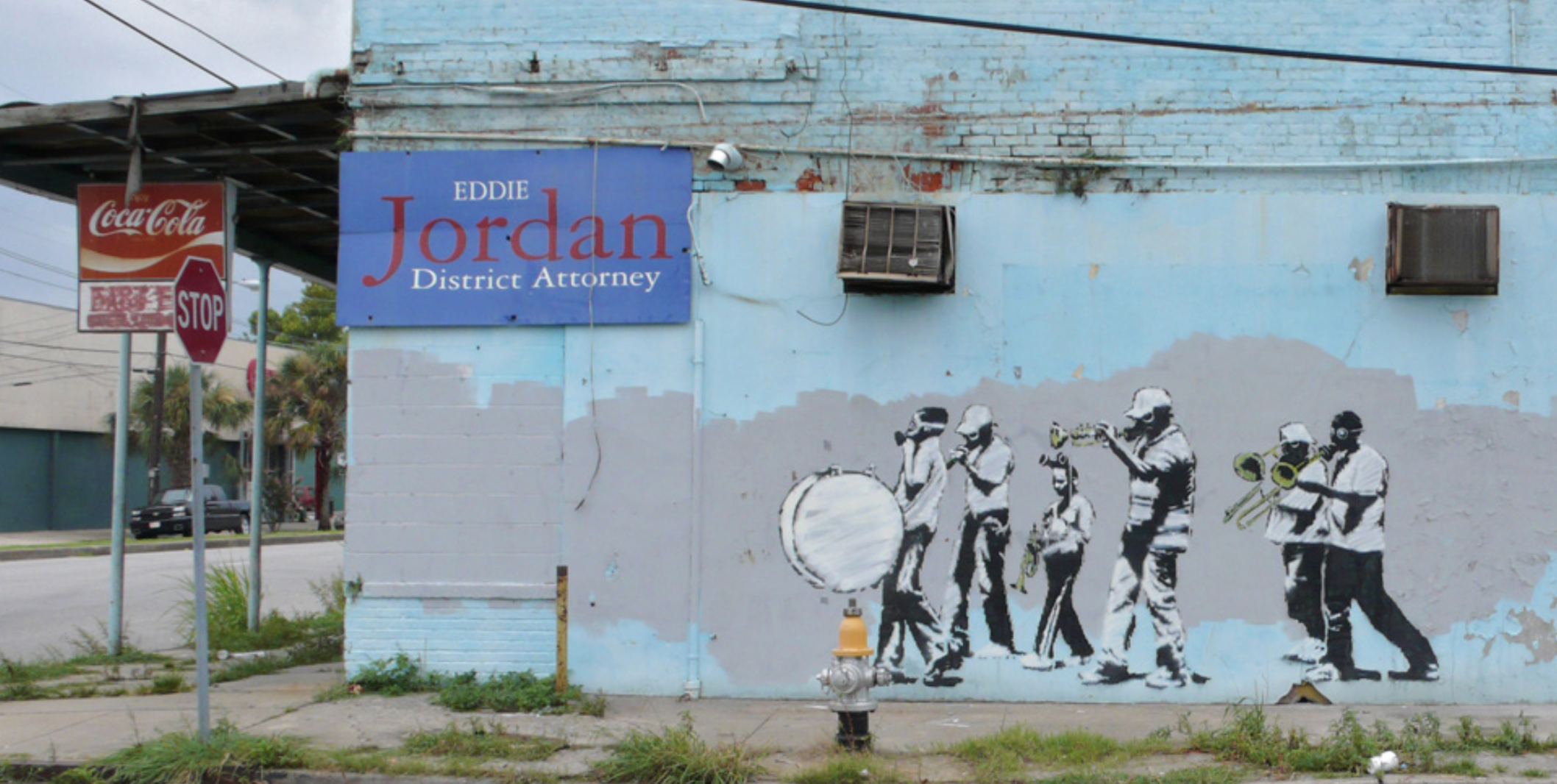
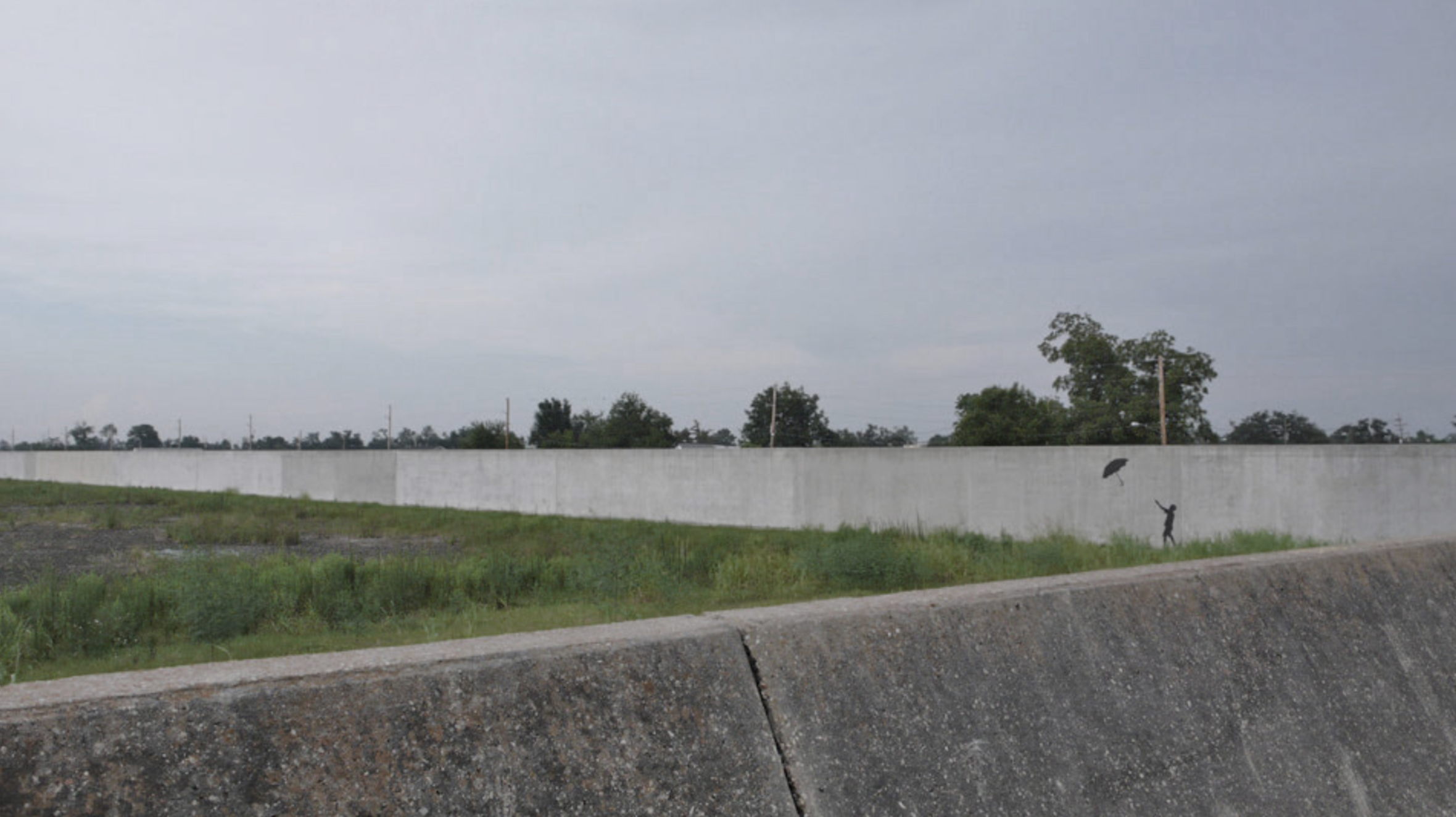
Street artist Banksy has taken his trade to the streets of New Orleans, as the city remembers those whose lives were destroyed by hurricane Katrina three years ago – and the country braves itself for another storm in hurricane Gustav, which hit the US Gulf coast this morning.
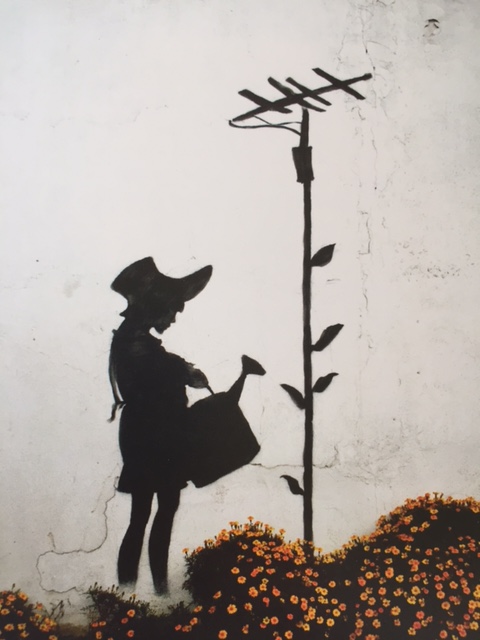
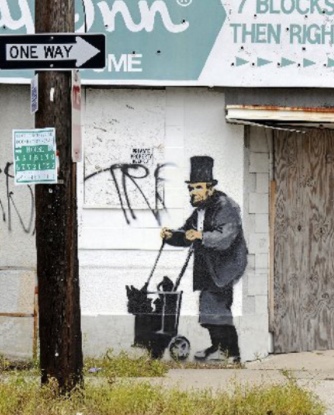
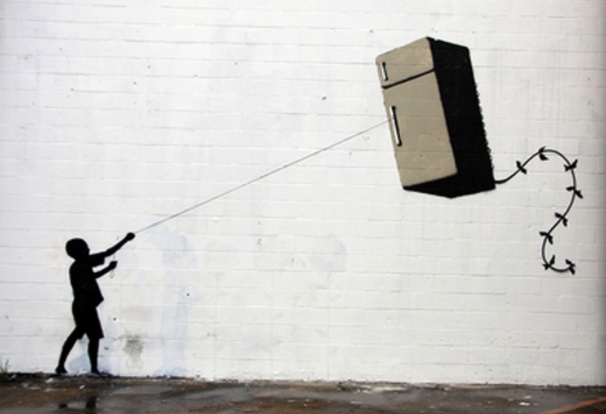
The graffiti artist’s latest creations of more than a dozen murals – which include depictions of a young boy flying a fridge like a kite and Abraham Lincoln as a homeless man – adorn buildings around the city, according to the New York Times.
A statement released by Banksy reveals that they were created in response to Fred Radtke aka the “Grey Ghost”, an anti-graffiti campaigner who uses grey paint to cover up street art. The statement also said: “Three years after Katrina I wanted to make a statement about the state of the cleanup operation.”
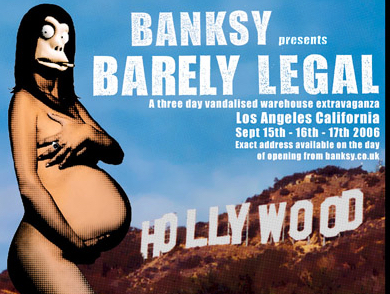
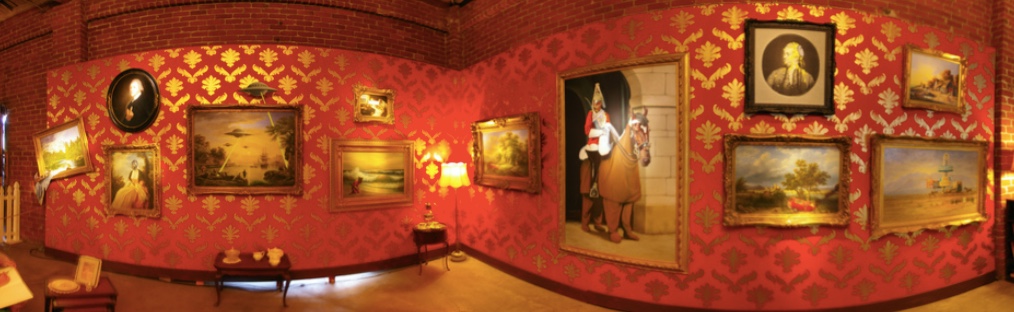
Barely Legal was the third major exhibition after the Turf War and Crude Oils. It took place on the weekend of 16 September 2006 in a warehouse in Los Angeles and was billed as a “three-day vandalised warehouse extravaganza”.
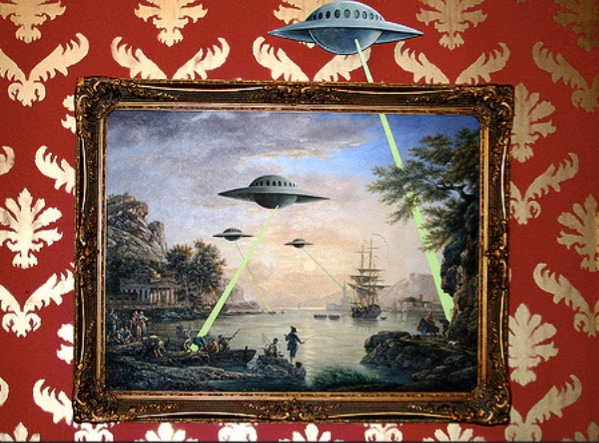
The exhibition featured a live “elephant in the room,” painted in a pink and gold floral wallpaper pattern. According to leaflets handed out at the show, “the elephant in the room” is intended to draw attention to the issue of world poverty. Banksy continued exploring the modified oil genre from the previous Crude Oils exhibition.
–
Official video of Barely Legal
Banksy published a video on his website of news coverage from KCAL9 FOX with footage from the exhibition:
Source: banksy.co.uk
BBC did a feature on the exhibition:
–
The New York Times published a review of the show on 6 September 2006
In the Land of Beautiful People, an Artist Without a Face
By Edward Wyatt
LOS ANGELES, Sept. 15 — As a metaphor for problems that people are uncomfortable talking about, “the elephant in the room” is not the most original.
But then, few people actually put the elephant in the room, paint it red and adorn it with gold fleurs-de-lis to match the brocade wallpaper, and then dare viewers not to talk about it.
Banksy, perhaps Britain’s most notorious graffiti artist and public prankster, has done just that with “Barely Legal,” a new show at an industrial warehouse in Los Angeles, as part of what his spokesman says is his first large-scale exhibition in the United States. Such a show — complete with advance publicity, an opening party with valet parking and Hollywood glitterati, including Jude Law and his posse, and sales of numbered prints at $500 each — would seem to go against Banksy’s rebel image.
“Yes, there probably is some contradiction,” Banksy’s spokesman, Simon Munnery, said on Thursday in an interview at the warehouse in a commercial district east of downtown. (Details on the exhibition site can be found at http://www.banksy.co.uk.)
“It depends on what he does with the money, right?” Mr. Munnery added. “Maybe he makes more art. Maybe he’s getting more ambitious.”
Banksy makes a habit of not revealing himself in public, a practice that is part survival technique and part publicity ploy, but he has shown projects in the United States. Most notoriously, he carried his own artworks into four New York institutions last year — the Museum of Modern Art, the Metropolitan Museum of Art, the Brooklyn Museum and the American Museum of Natural History — and hung them on the gallery walls, next to other paintings and exhibits, without guards’ taking notice. He has performed similar stunts at museums in Britain.
Earlier this month Banksy surreptitiously placed a blow-up doll dressed as a Guantánamo detainee inside the fence of the Big Thunder Mountain Railroad ride at Disneyland, where it apparently remained for more than an hour before park officials shut down the ride and removed it. Recently he also smuggled 500 altered versions of Paris Hilton’s new CD into record stores around Britain and placed them in the racks.
All of those stunts are featured in a video that loops continuously at the show, which also includes two large rooms displaying stenciled images on canvas, sculptures and mixed-media productions, like the panel van with the notice on the back, “How’s My Bombing?” and an 800 number that links to a Navy recruiting office in Phoenix.
All of this is arranged around a sort of mock-self-loathing, elephant-in-the-room theme, or, as Banksy puts it in a handout: “1.7 billion people have no access to clean drinking water. 20 billion people live below the poverty line. Every day hundreds of people are made to feel physically sick by morons at art shows telling them how bad the world is but never actually doing something about it. Anybody want a free glass of wine?”
Many of the pieces have been seen before, either on the streets of London and other cities, in books of Banksy’s work or at his Web site. Many comment on war, like the stark image of a television camera crew filming a child amid ruins as the producer holds back aid workers to allow for just one more shot.
With seemingly so much to say, and being so clearly desirous of an audience, surely Banksy would show up at his first big exhibition in the United States, then?
Perhaps he’s the gaunt chap over there, with the nose ring and the “Tagger Scum” T-shirt, touching up the gold fleurs-de-lis on the elephant. Or is he Mr. Munnery, who is also a British comedian with a penchant for rhetorical questions (“Why are some people dying of obesity, and others are starving to death?”) and who, in fact, looks quite a bit like the mysterious hatted and bearded fellow who appears in Banksy’s videos?
“I’m not him,” said Mr. Munnery, who is credited for “additional inspiration and assistance” in one of Banksy’s books, titled “Cut it Out,” which was distributed to journalists as part of the promotion for the new show.
The Guardian, the British newspaper, has identified Banksy as Robert Banks, an artist from Bristol. Some commentators have identified him as Stephen Lazarides, a photographer who set up Banksy’s Web site and whose gallery is the sales agent for the Banksy prints at the show here.
Mr. Munnery would not divulge the artist’s identity. Banksy “requests the right to remain silent,” he said. “He insists on it.”
But the artworks are Banksy’s alone, he said. “And I do know that some of them took literally hours to paint.”
Banksy entered Disneyland with an inflatable doll dressed as a Guantanamo detainee. He inflated the doll and placed it within the Thunder Mountain Railroad Ride. The doll remained there for 90 minutes before security guards removed the figure. The sequence was filmed and included in the film Exit through the gift shop a few years later.
On a Sunday, 13 March, Banksy hung his work in four world-famous New York museums: the MoMA, the Metropolitan Museum of Art, the Brooklyn Museum, and the American Museum of Natural History. The pranks were presented in the following way on http://www.banksy.co.uk:
The Metropolitan MuseumThe Brooklyn MuseumMoMAThe Natural History Museum
The NPR Radio Interview about the New York pranks
On 24 March 2005, Banksy did a remarkable interview on the New York pranks on a National Public Radio show called All Thing Considered. You can listen to it here:
Banksy opened his first Los Angeles exhibition, Existencilism, at the 33 1/3 Gallery on 19 July 2002. The show was sponsored by Puma. The most important piece was a big ‘Stop ESSO’ painted on one of the walls.
19 July 2002 – Opening night Existencilism, Los Angeles. The Stop Esso in the background:
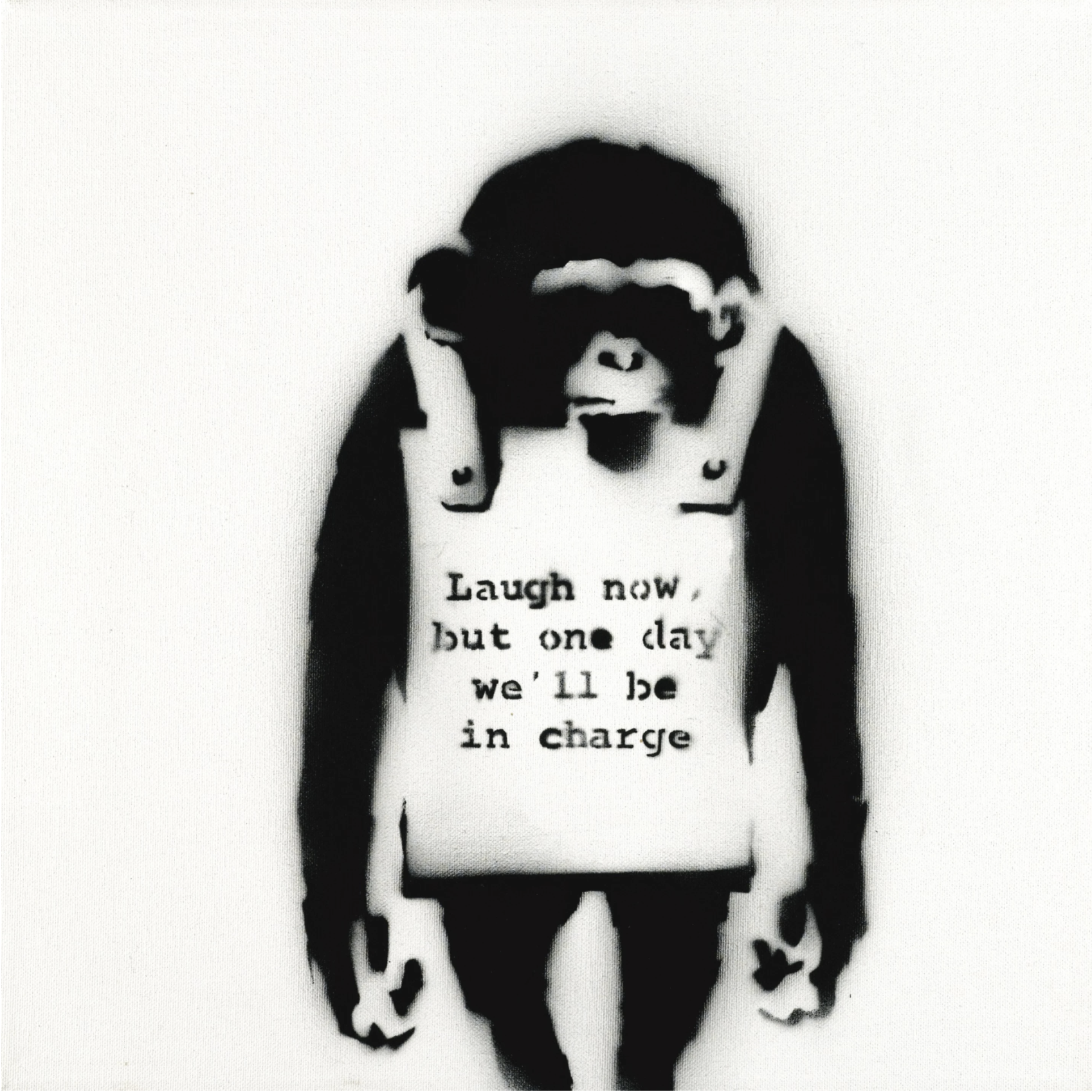
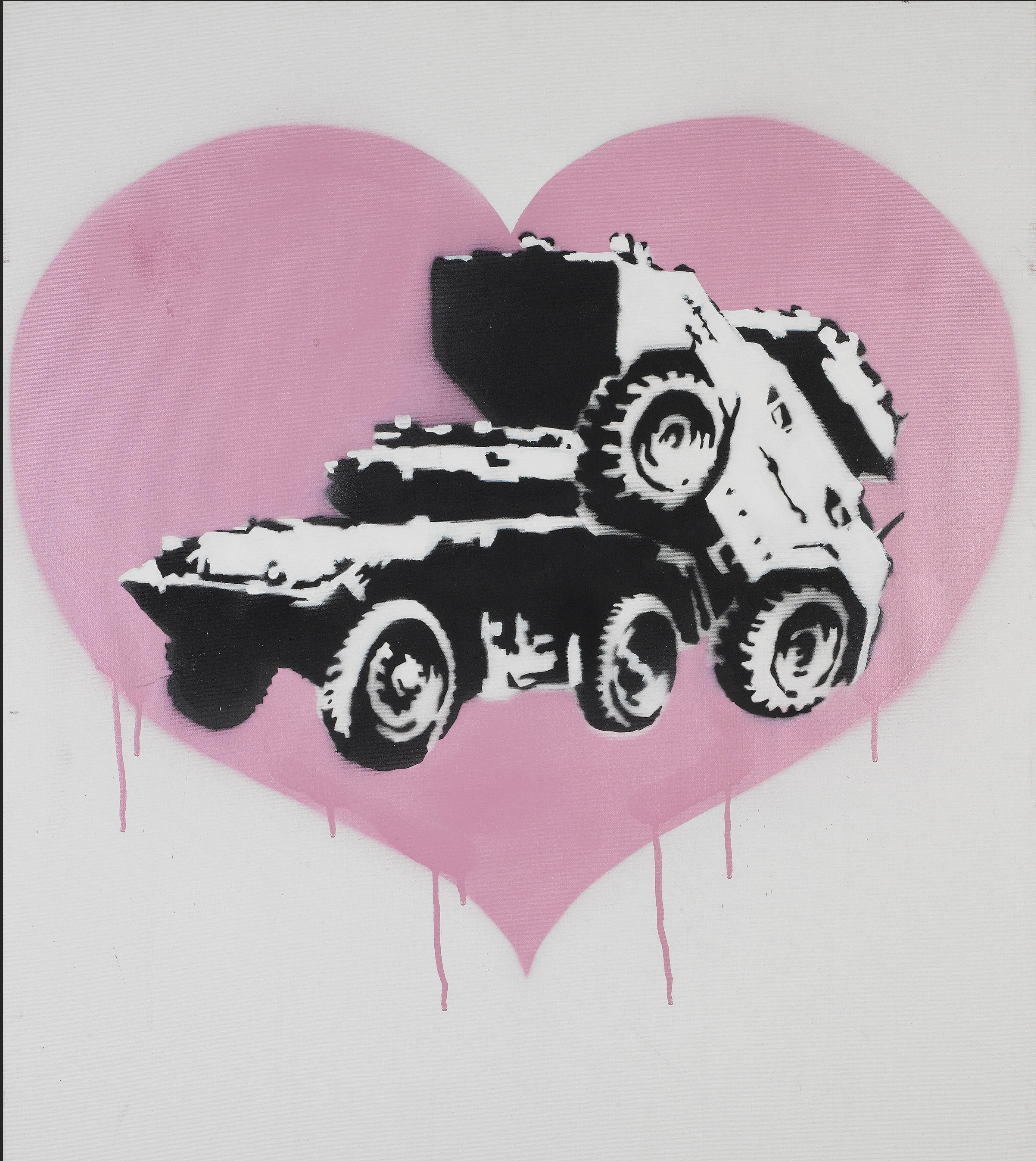
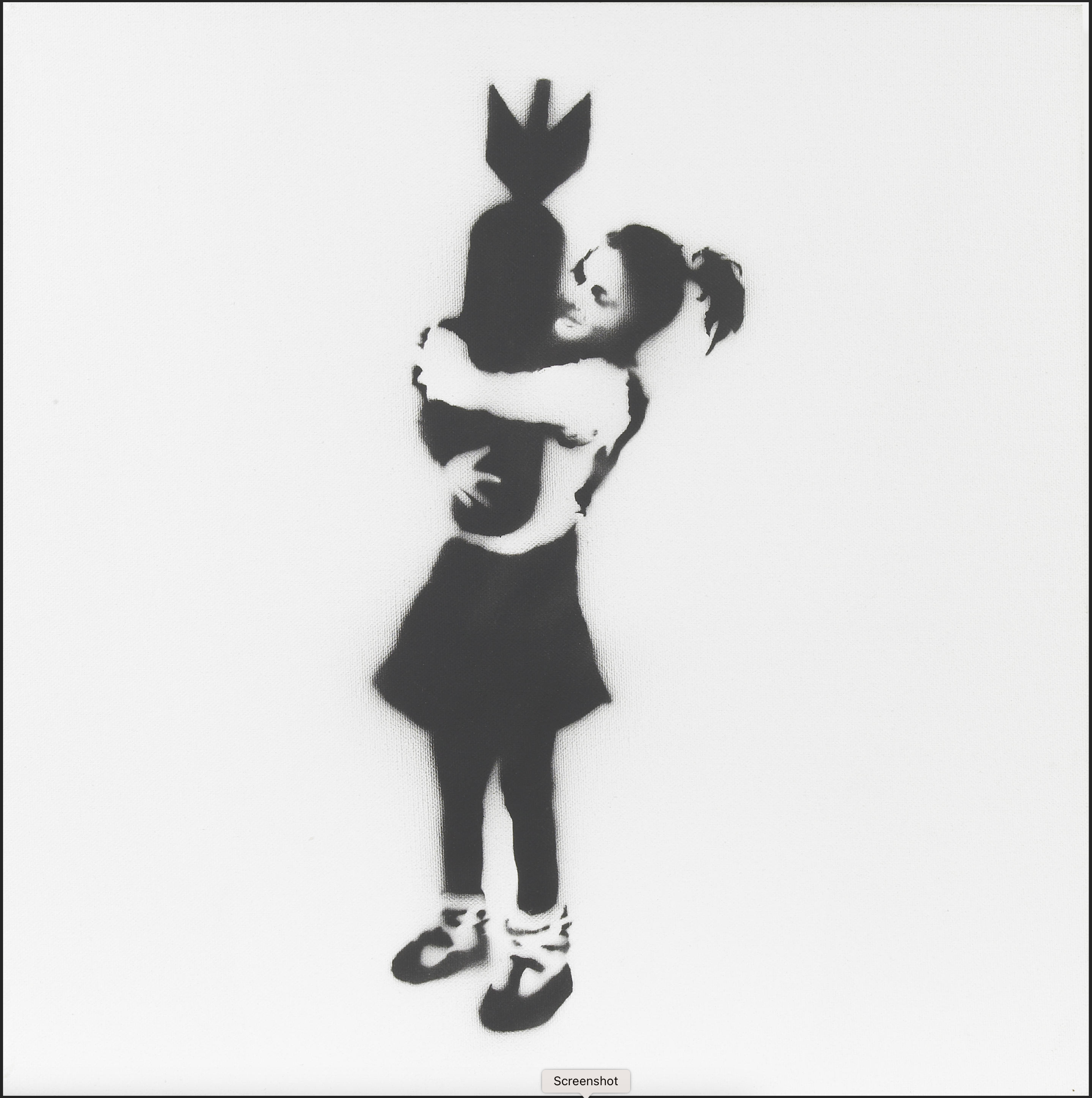
It was a selling exhibition, and Banksy sold quite a few multiple canvases, most of them in an edition of 5 and dated LA 2002 on the stretcher:
Some of the multiple canvases that were sold at Existencilism. Photos: Bonhams and Sotheby’s
EXISTENCILISM IN JAPAN. SEPTEMBER 2002
A month later, Banksy opened a reduced version of the Existencilism exhibition in Japan – Osaka (8-17 September) and Tokyo (13 – 24 September). Among other pieces, a Laugh Now on cardboard with the text in Japanese:
Burning Man is an annual event held in the Black Rock Desert of northwestern Nevada, about 100 miles north-northeast of Reno. It’s not your typical festival—think of it as a temporary city, Black Rock City, built by tens of thousands of participants who gather to celebrate art, community, self-expression, and self-reliance. The event culminates in the burning of a large wooden effigy, “The Man,” on the Saturday night before Labour Day.
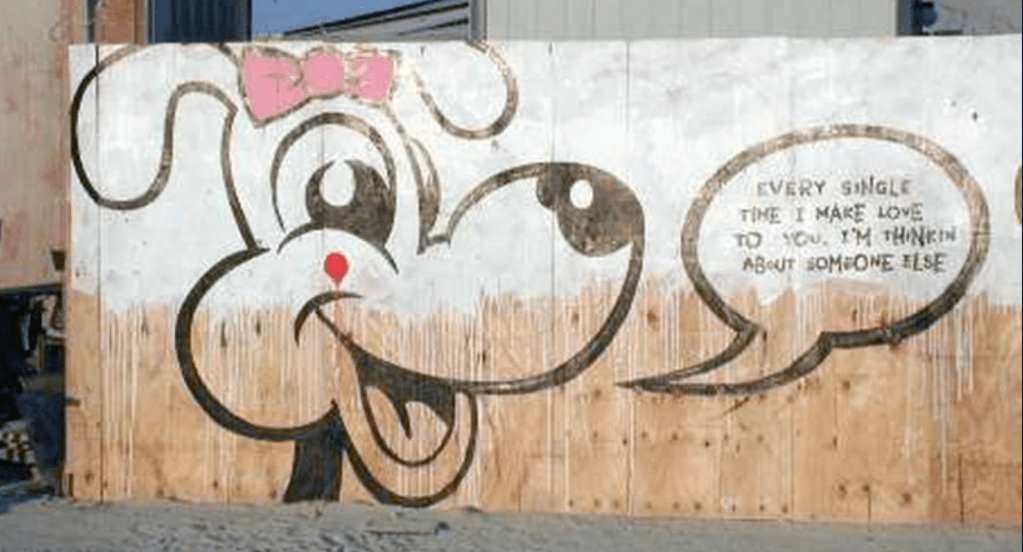
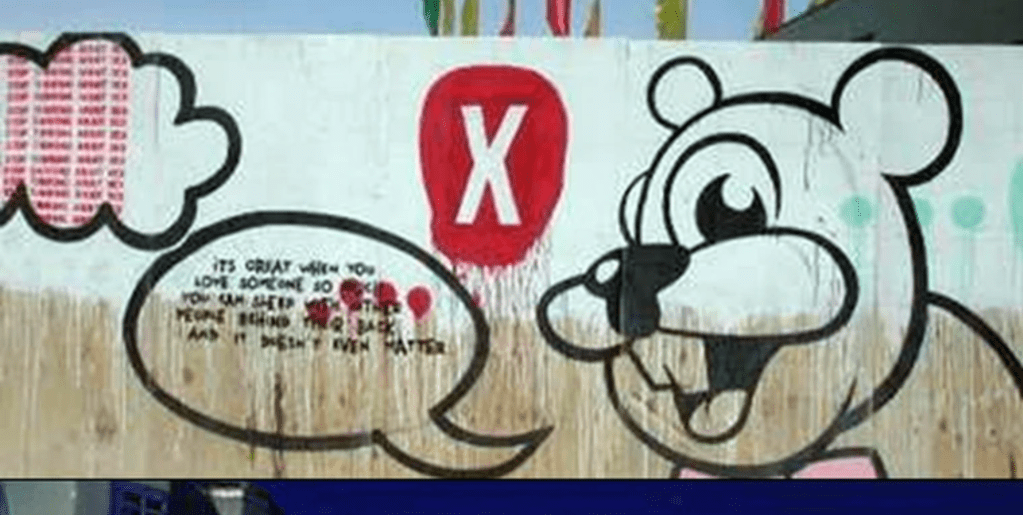
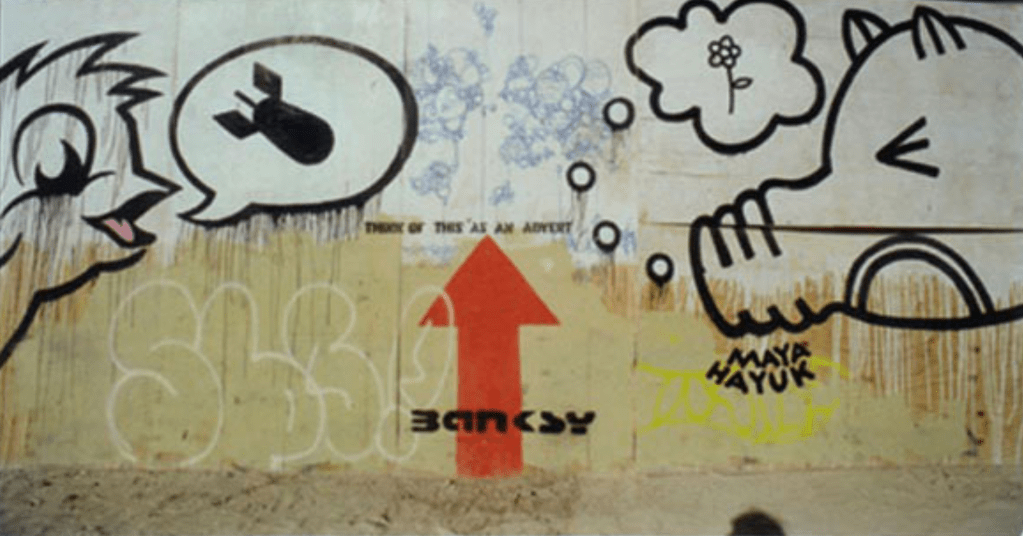
In the 2001 edition of the festival, Banksy had an interesting collaboration with Ukrainian-American artist Maya Hayuk, known for her colourful and abstract graffiti. The collaboration was a comic strip that covered an entire wall right in the middle of the festival area. There are very few photos remaining.
































 Banksy unofficial