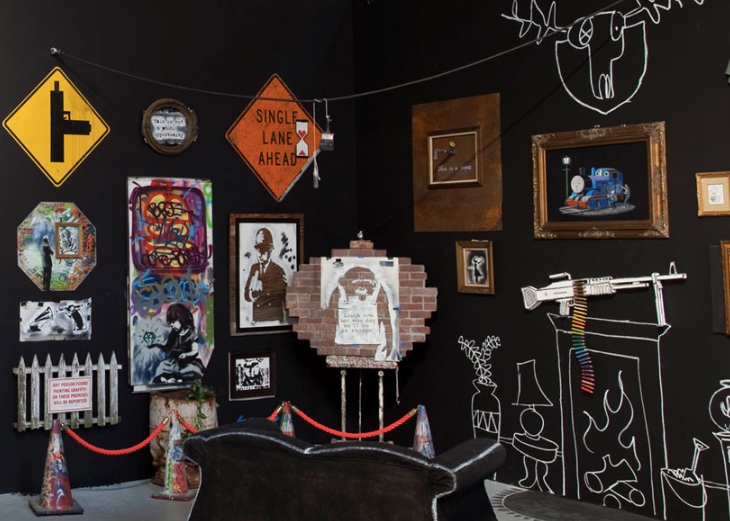
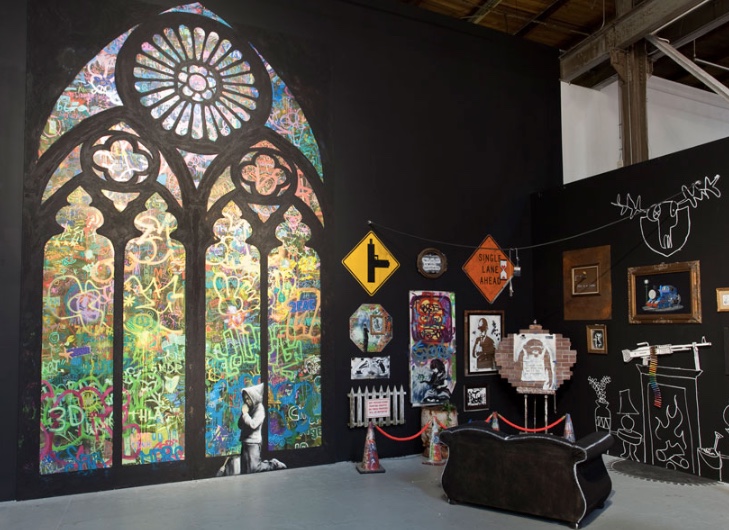
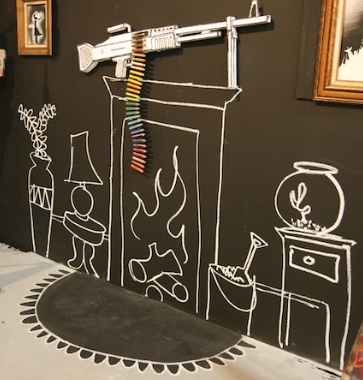
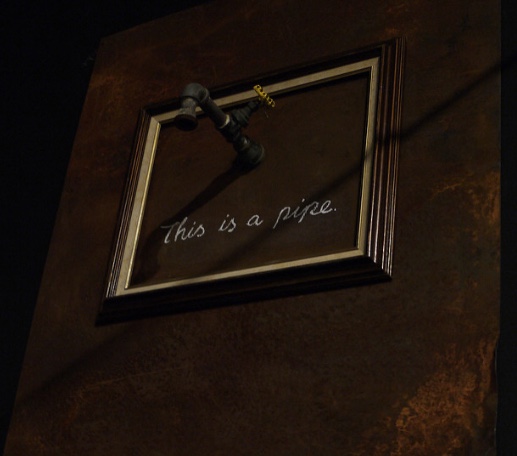
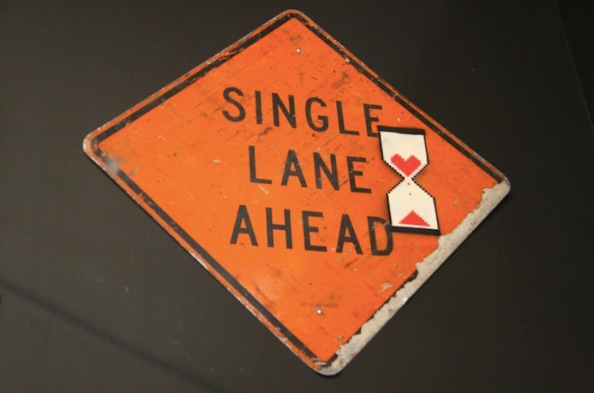
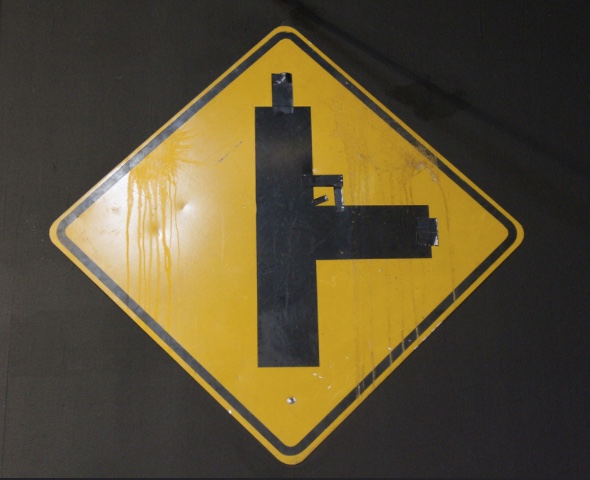
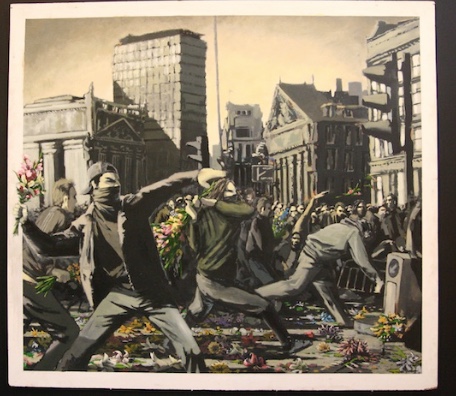
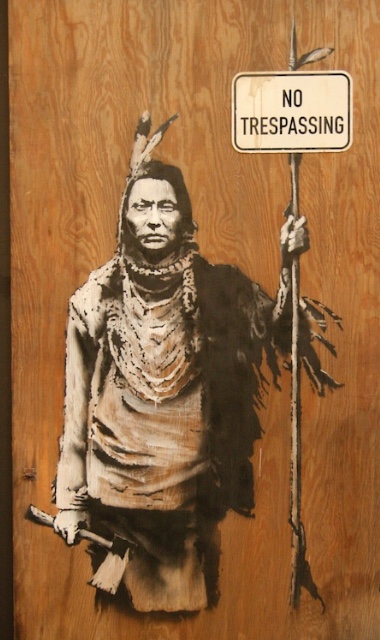
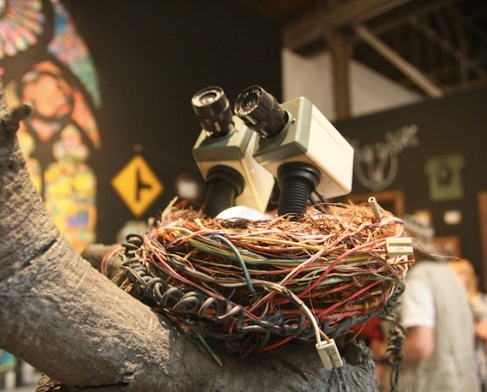
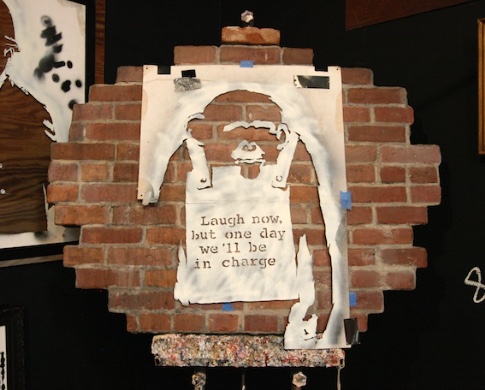
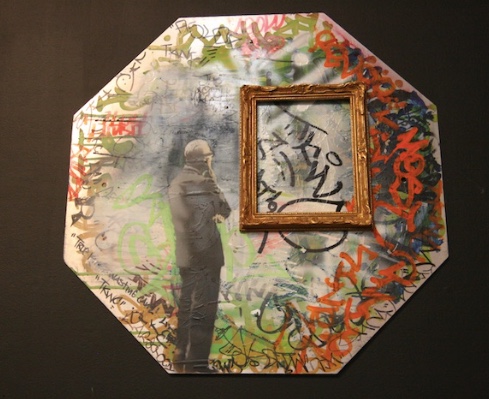
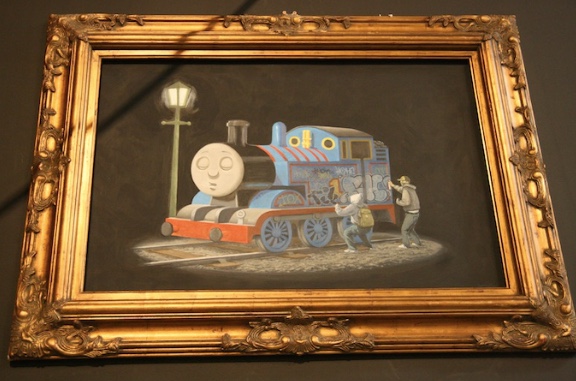
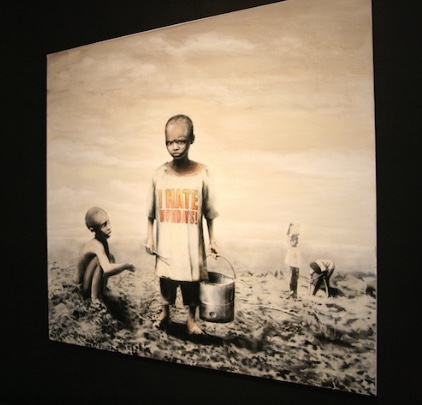
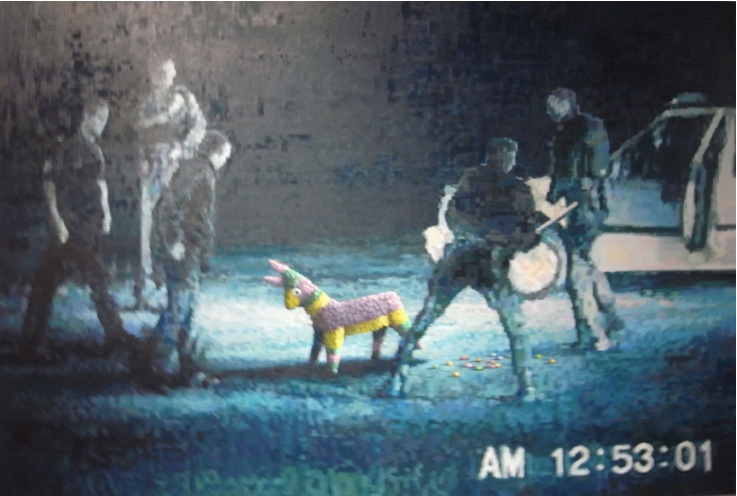
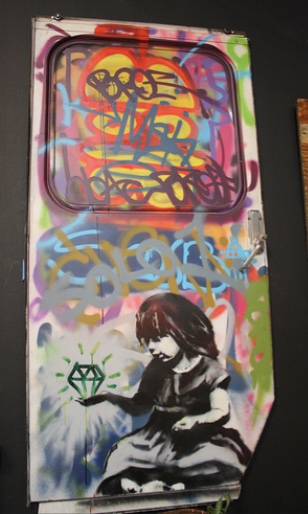
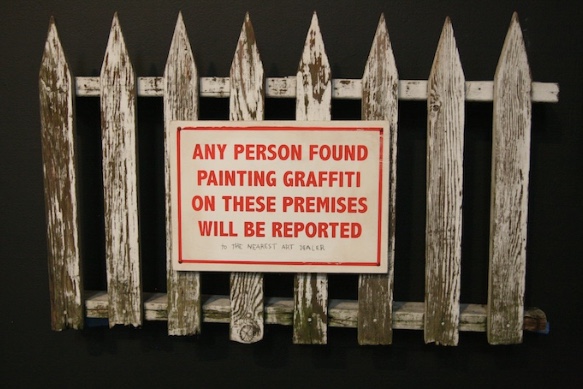
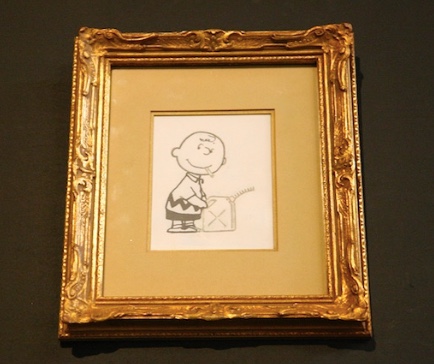
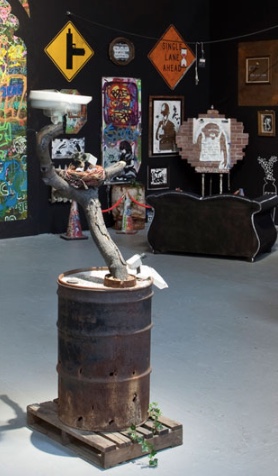
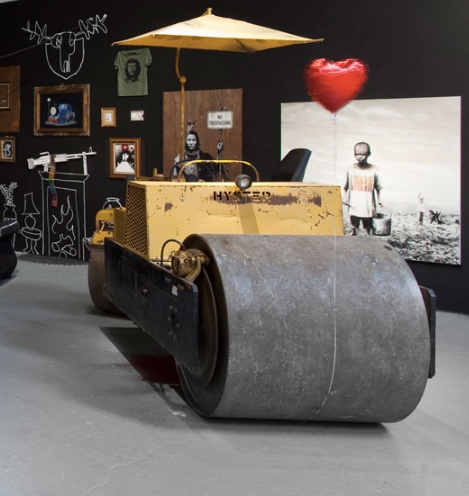
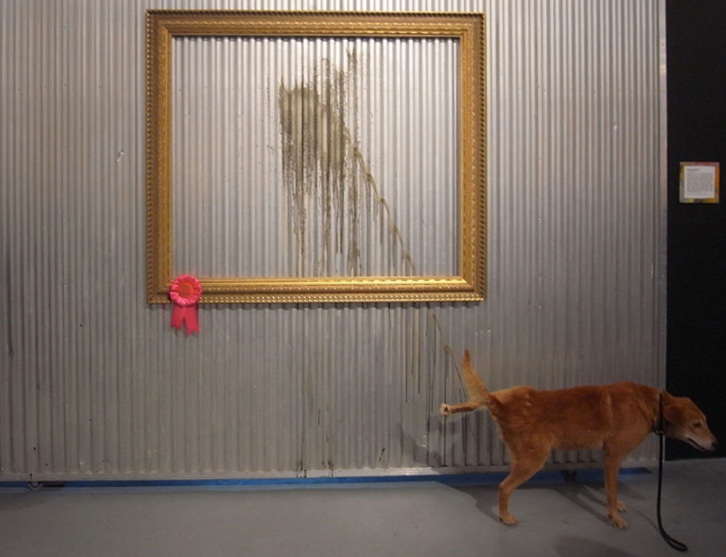
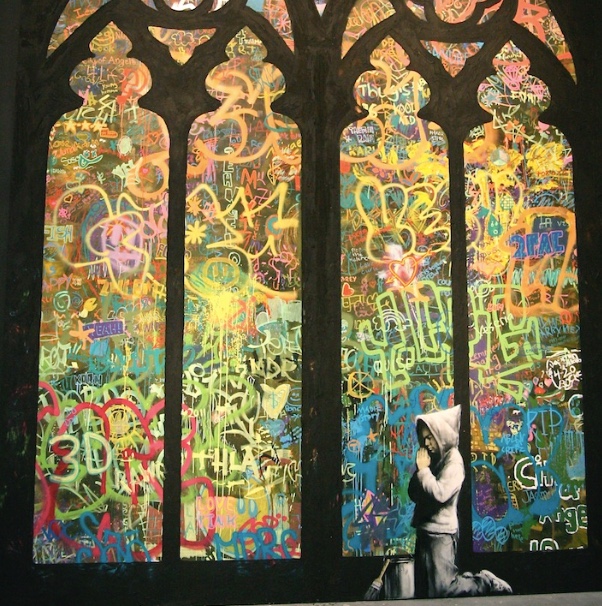
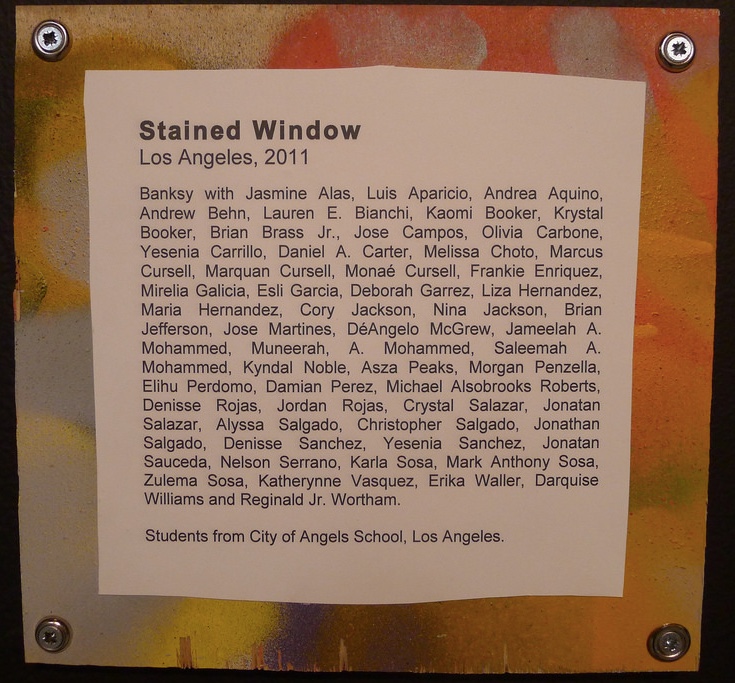
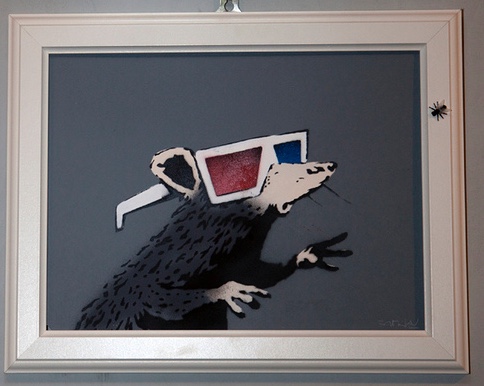
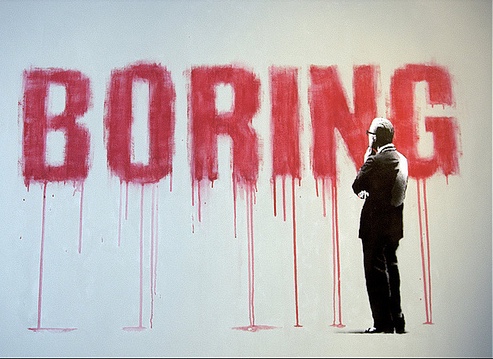
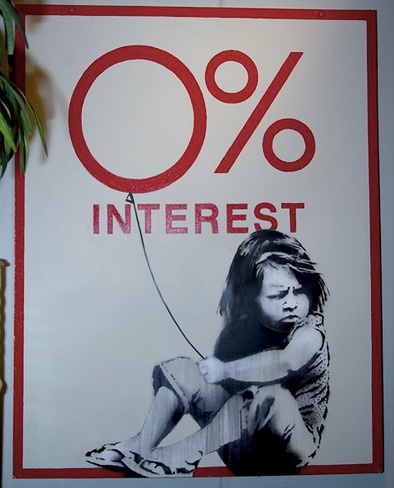
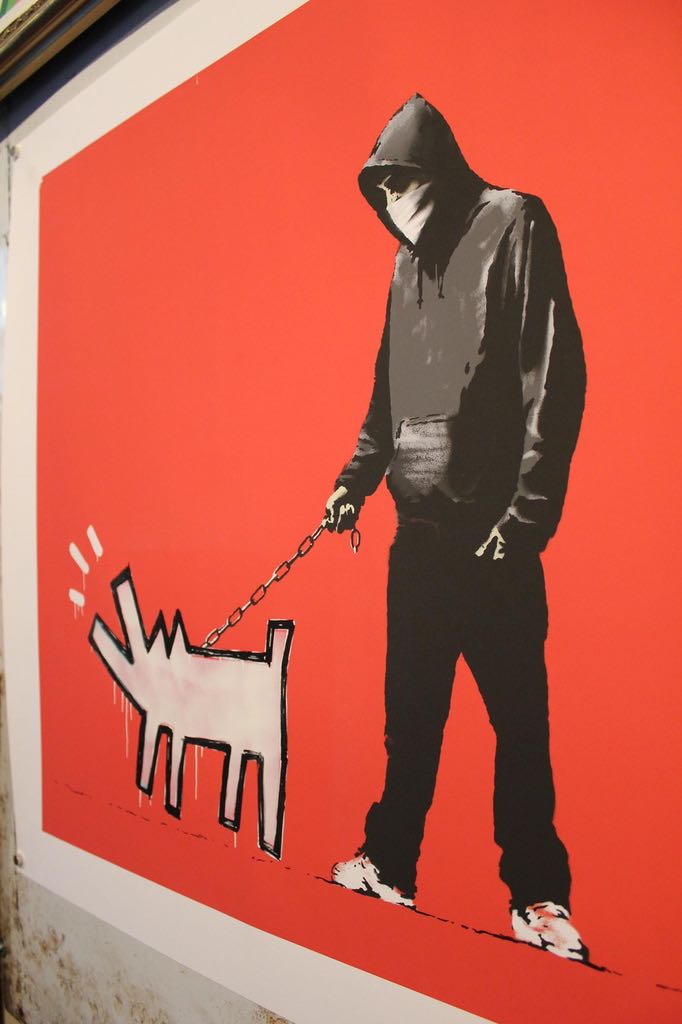
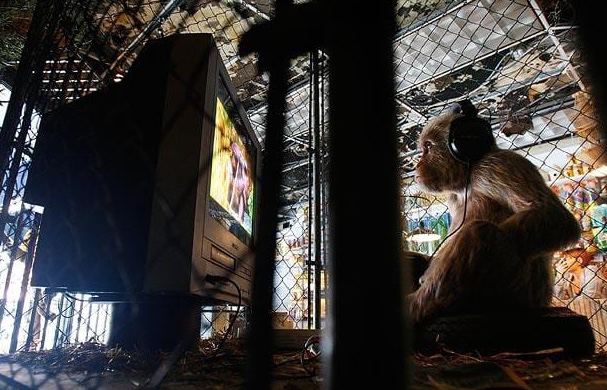
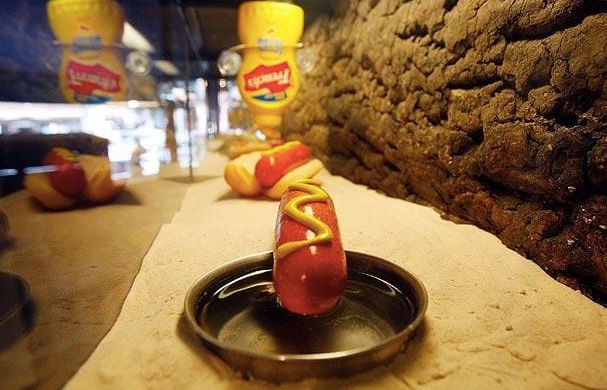
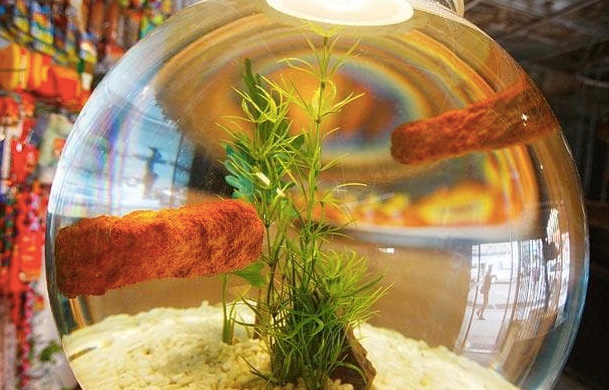
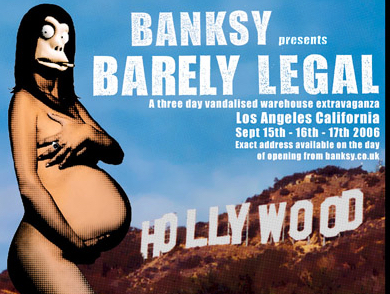
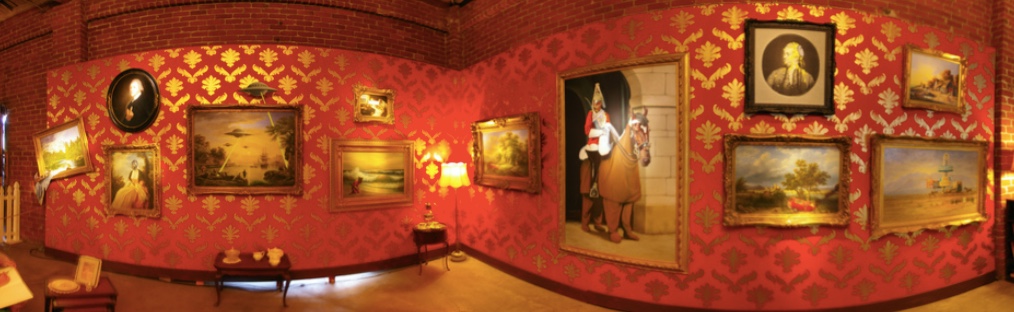
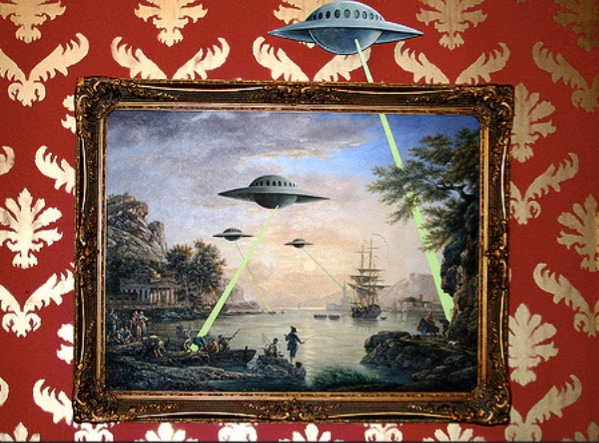
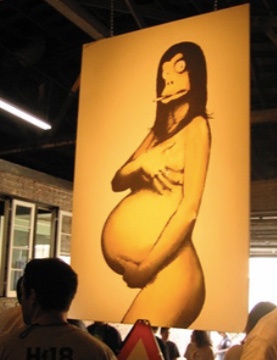
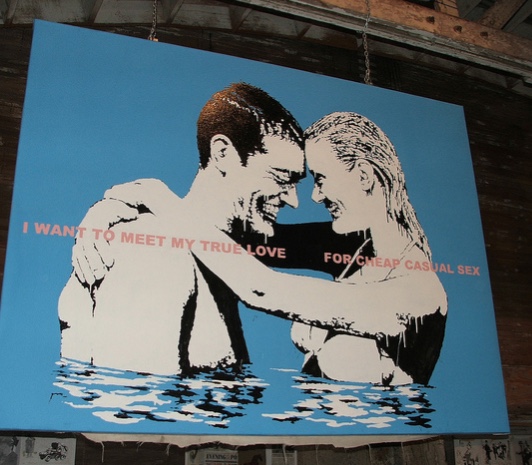
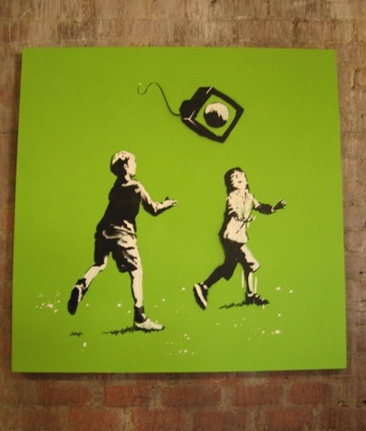
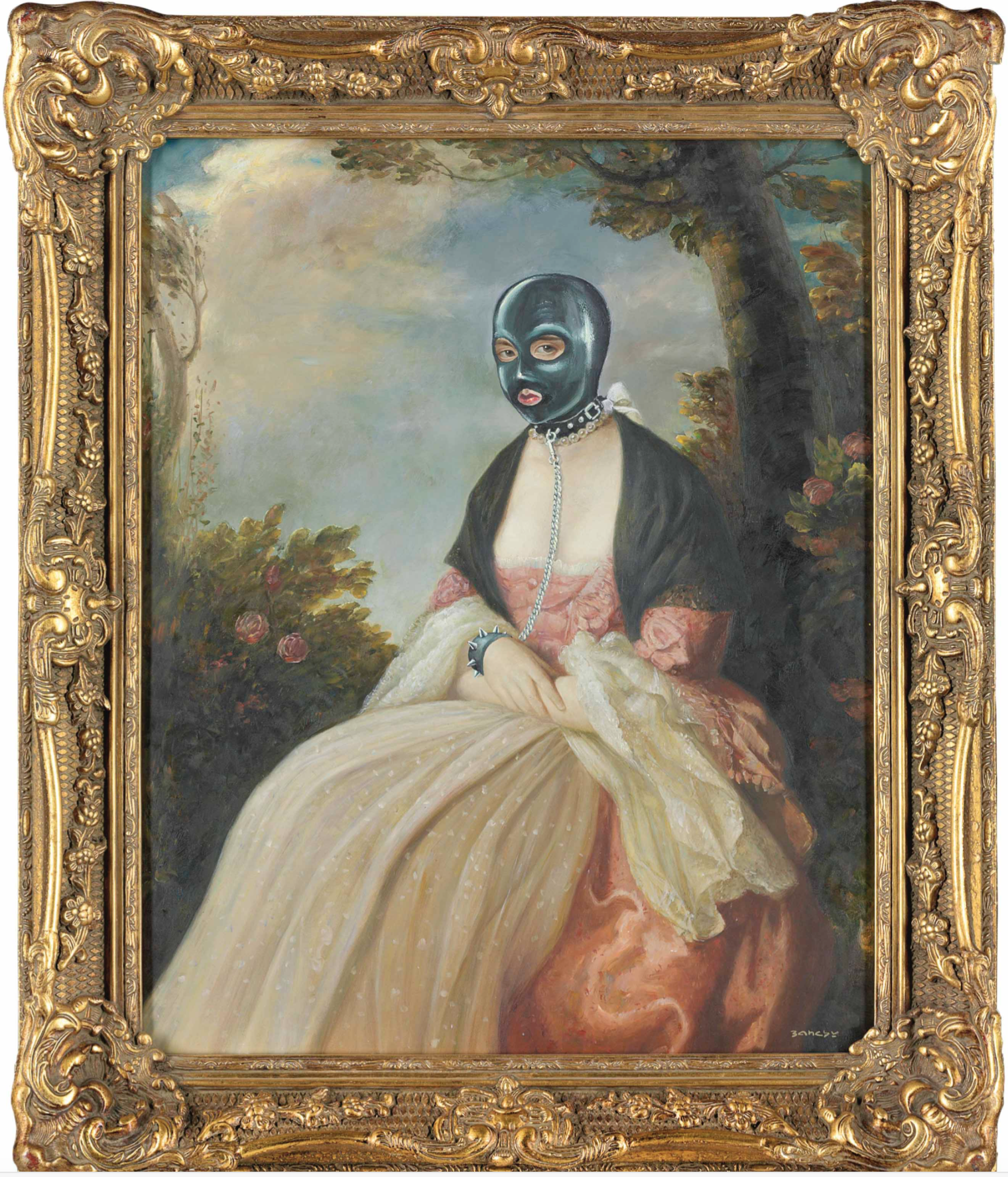
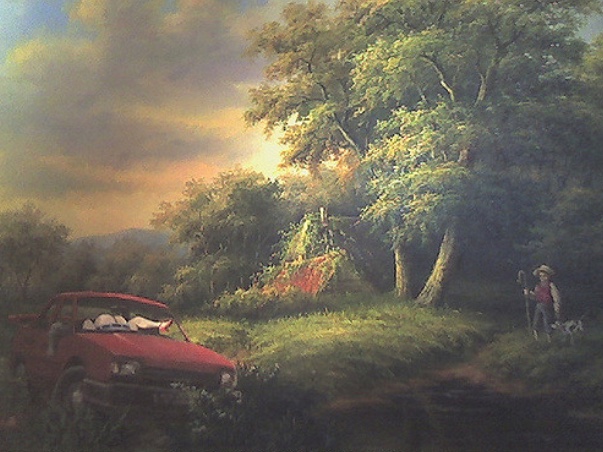
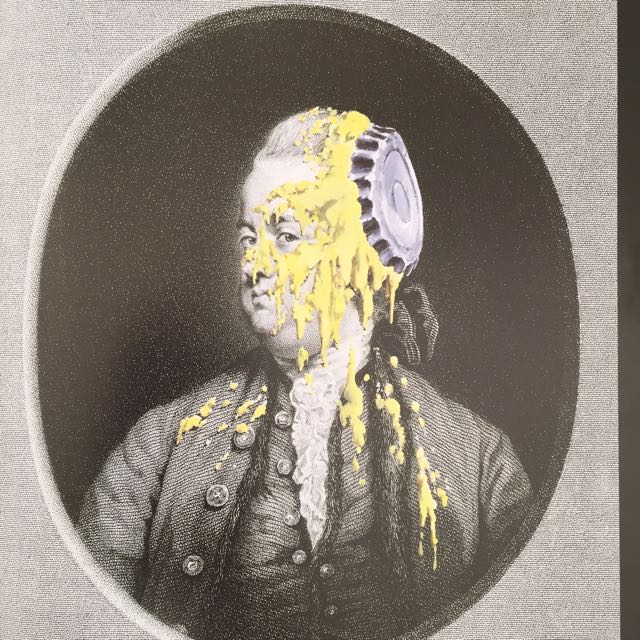
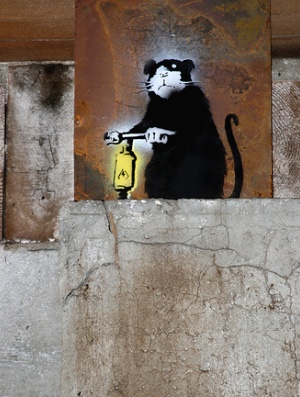
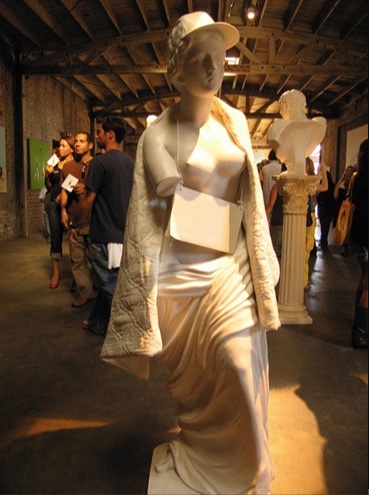
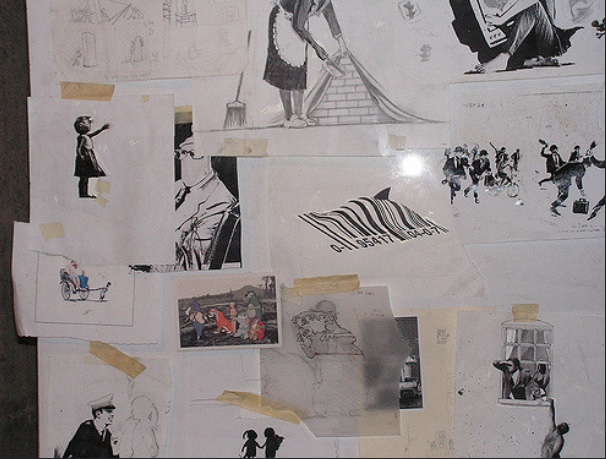
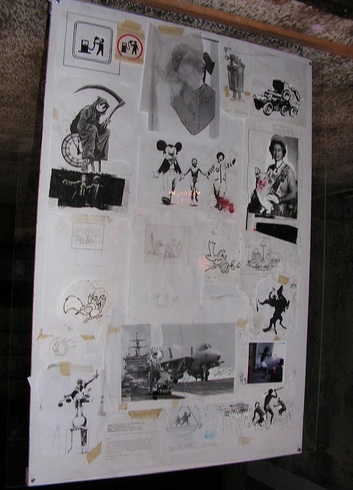
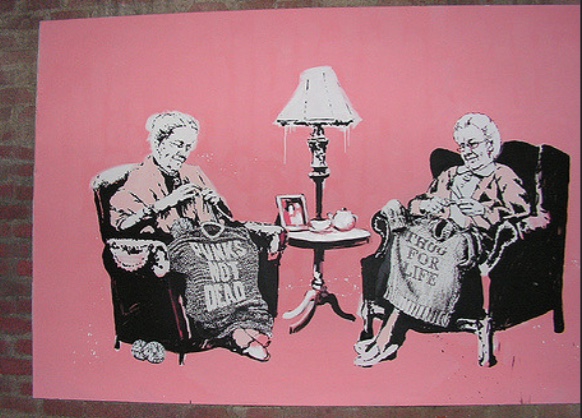
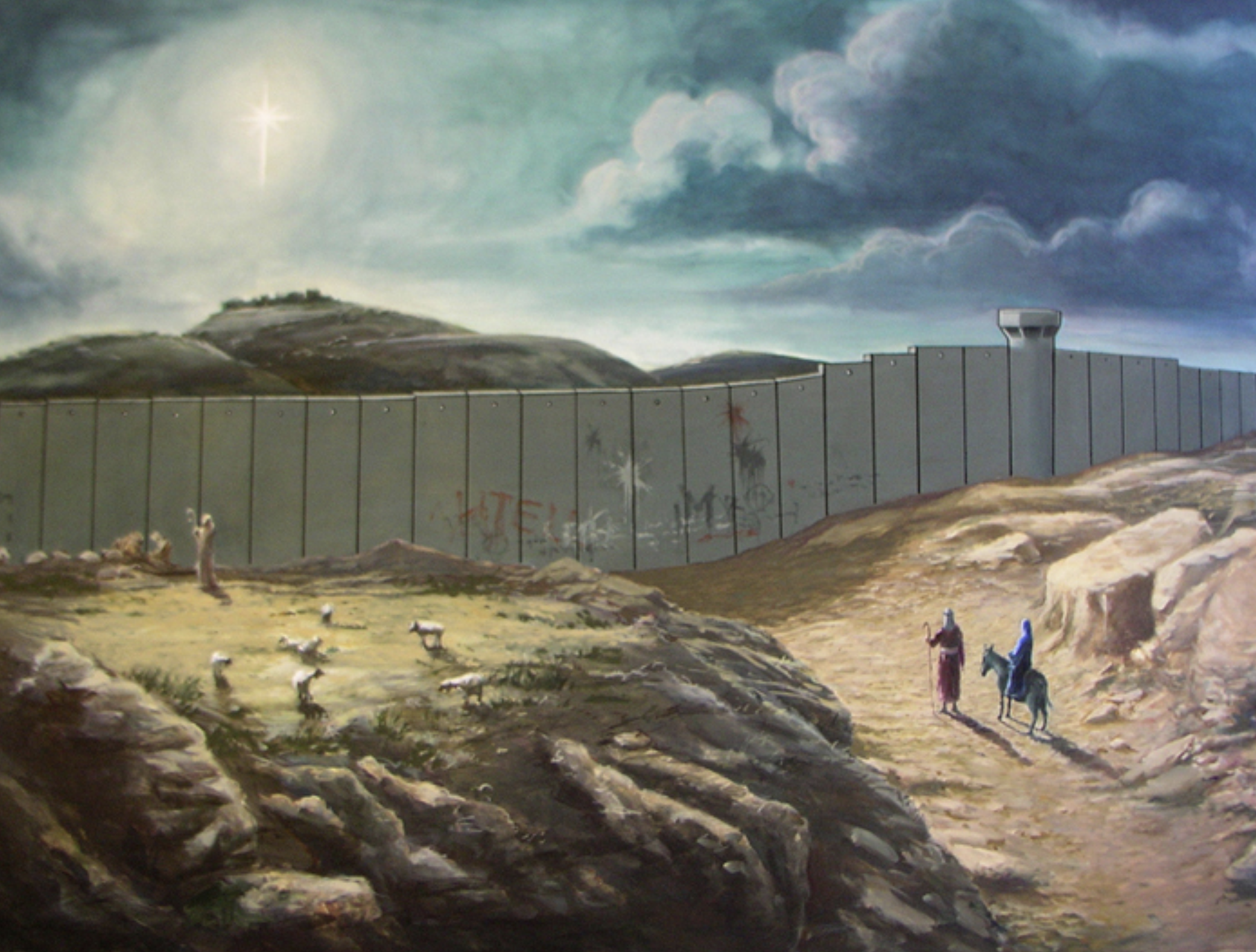
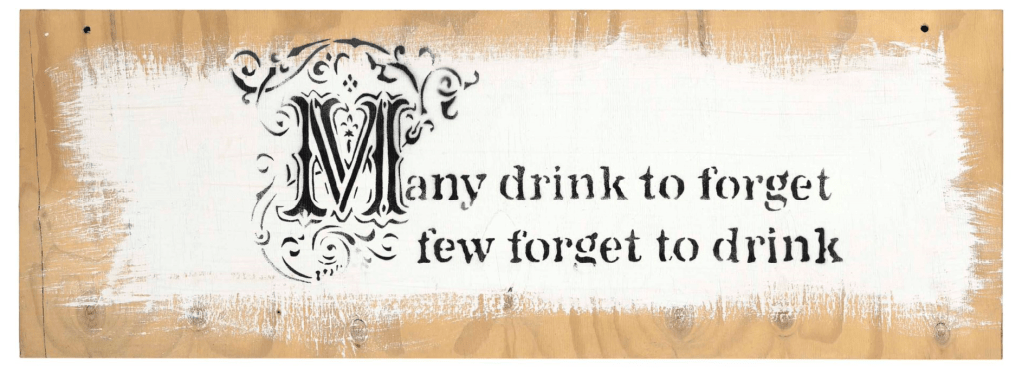
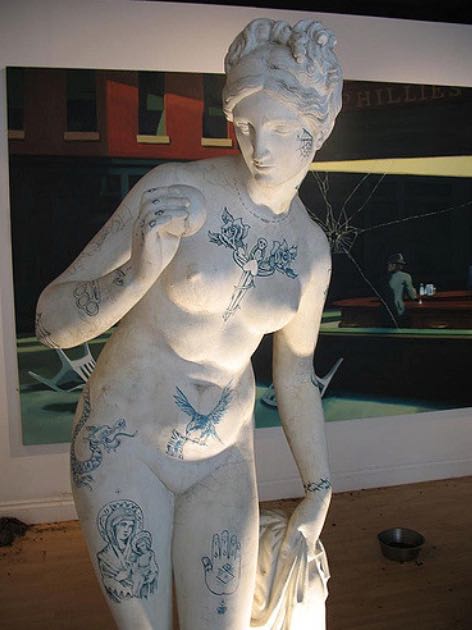
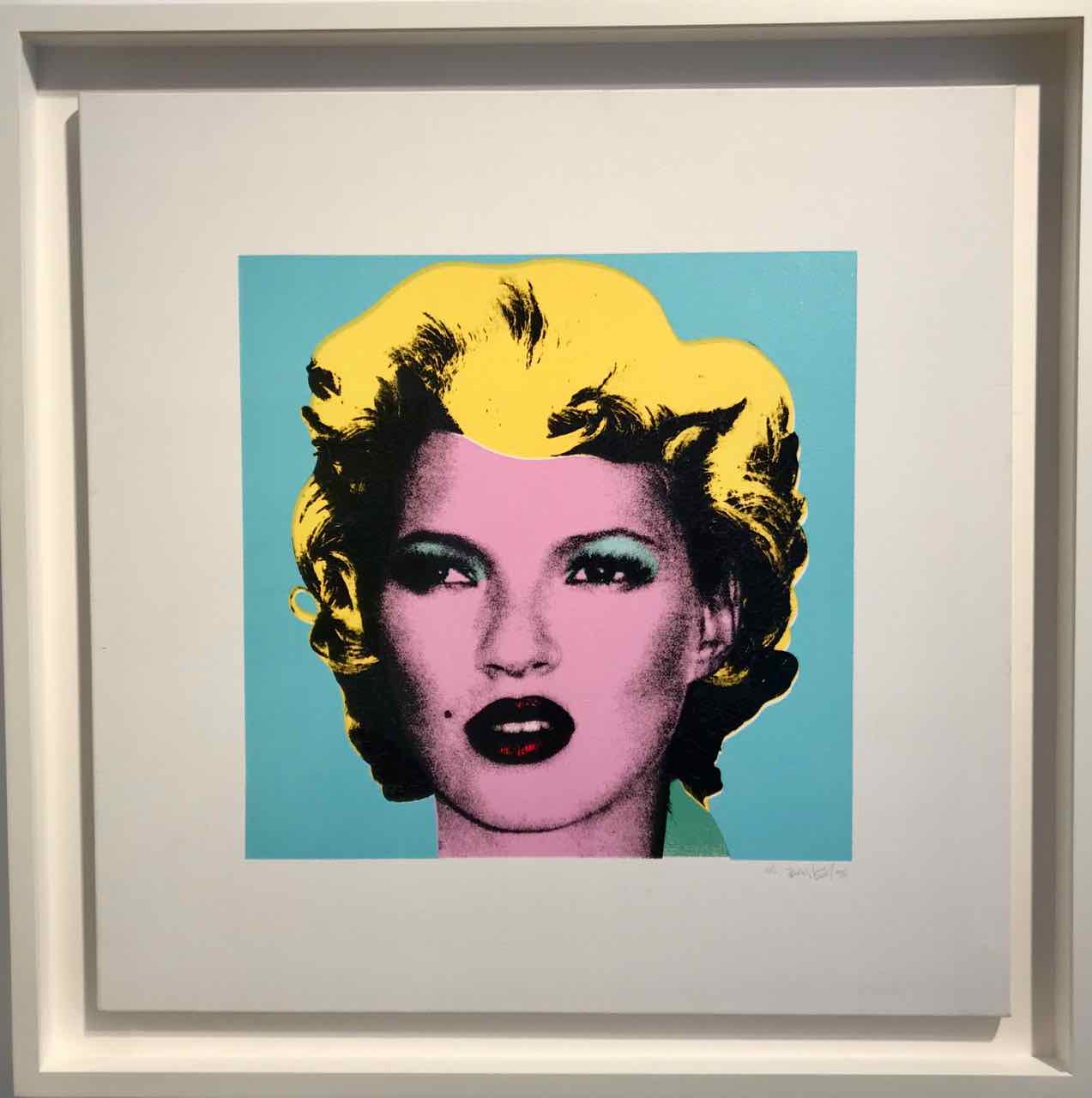
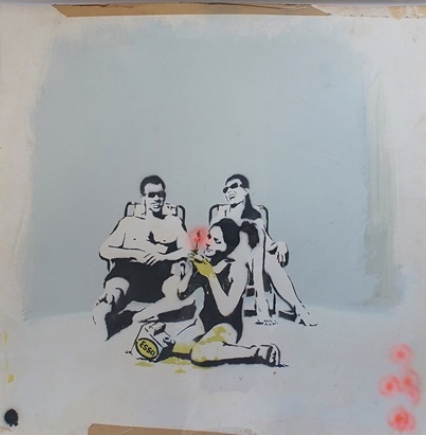
The Museum of Contemporary Art Los Angeles (MOCA), held a collective street art exhibition in April 2011. Banksy participated with versions of old work and some new stuff. Forgive us our trespassing—the graffiti boy praying—was a collaboration between Banksy and a local art school.
All photos: http://www.moca.com
As reported by Los Angeles Times 15 April 2011:
Art review: ‘Art in the Streets’ at the Geffen Contemporary at MOCA
It’s generally not a good idea to censor a mural you commissioned, especially when that mural is part of a show about uncommissioned street art.
When Museum of Contemporary Art director and curator Jeffrey Deitch whitewashed a mural by Italian artist Blu in December, the episode perfectly illustrated how graffiti’s unruly, in-your-face attitude, even when sanitized under the banner of “street art,” might not be a good fit for a museum retrospective. The very idea of the exhibition “Art in the Streets” at the Geffen Contemporary asks whether this erstwhile outlaw culture can or should be folded into the grand narrative of art history.
Despite its first, faltering steps, the exhibition answers this question with a resounding “Yes.” Viewers will encounter a bombastic, near-overwhelming cavalcade of eye candy: colorful swirling murals, immersive installations, walls papered with candid and provocative photos, and a custom-designed skate ramp. Immodestly anticipating the response, there’s even a big “WOW” painted on the inside of the building’s roll down doors. But the exhibition’s strong suit is not its impressive array of large-scale work but rather its art historical treatment of an outsider form, complete with a timeline, “period” rooms, and plenty of video and photographic documentation.
Although bright colors, lights and sounds beckon from the galleries on the main floor, it’s worth spending some time with the terse but informative timeline upstairs. It moves briskly from the movement’s beginnings in tagging in New York and Philadelphia in the 1960s, through cholo graffiti in L.A. in ’70s, and the form’s emergence on the New York gallery scene in the ’80s.
It also charts graffiti’s overlap with punk and skateboarding cultures and the emergence of the “Wild Style” that famously blanketed New York subway cars in the ’70s and ’80s. The timeline stops abruptly in 1989, when the New York Metropolitan Transit Authority began its anti-graffiti campaign, but picks up again on the other side of the galleries to chart the movement’s increasing popularity: the founding of Juxtapoz magazine, Shepard Fairey’s Obama “Hope” poster, and last year’s Academy Award-nominated documentary “Exit Through the Gift Shop.”
Because of its outlaw status (despite its long-running influence in art and fashion), street art has not been fully welcomed into the annals of art history. At the press preview, Deitch, his co-curators Roger Gastman and Aaron Rose, and artist Fab 5 Freddy compared street art’s effect to that of Cubism, Constructivism, Dada, Surrealism and Pop Art. That might be a stretch, but this hyping of the exhibition is completely in step with graffiti’s ethos of self-presentation. Spawned with tagging — scrawling one’s name on every available surface — graffiti began as a simple act of self-assertion. In fact, perhaps the first piece of graffiti was created by World War II shipyard inspector James J. Kilroy, who inscribed every piece of equipment with a long-nosed cartoon face and the words “Kilroy was here.”
This character is revitalized in Lance Mountain’s and Geoff McFetridge’s custom skate ramp, basically a collection of inclines and blocks decorated with large, Kilroy-esque faces. Nike, a co-sponsor of the exhibition, will send members of its SB skate team to skate the ramp twice a week, filling the galleries with a soundtrack of scraping and crashing. It’s not the first time skaters have been welcomed into a museum — co-curator Rose built a skate bowl in the 2004 exhibition “Beautiful Losers” at the Yerba Buena Center for the Arts in San Francisco — but in the context of this show, their performance underscores the importance of the body and self-fashioning in street art.
Created on the street, at night, often in inaccessible places, graffiti writing is itself a species of physical performance. It’s not surprising then that images of the artists and their friends appear everywhere in the exhibition. As Deitch noted, graffiti is an ephemeral form. Like performance art, it is often only experienced as documentation. This ranges from Gusmano Cesaretti’s gritty photographs of the cholo scene in 1970s L.A. and Martha Cooper’s vibrant portraits of New York artists in the early ’80s to darker images of more raucous, sometimes violent youth by Ed Templeton, Teen Witch (Andrea Sonnenberg), Dash Snow, Terry Richardson and Larry Clark.
If Pop artists responded to the shiny new consumer culture that emerged after World War II, graffiti artists responded to its decay, reflecting disillusionment and broken promises. This underbelly of consumerism also surfaces in several large, immersive installations. “Street Market” by Todd James, Barry McGee and Stephen Powers is a facsimile of a clutch of narrow city streets lined with decaying, fetid buildings and bedecked with cheap electric signage. The buildings are filled with what look like miniature art studios and makeshift living spaces that can be glimpsed only through the windows; they’re like little dens of creativity amid the ruins of consumer society.
In a more illusionistic vein, Neckface has created a dark, filthy alleyway littered with broken bottles and debris whose only purpose seems to be inspiring trepidation. Such installations were obviously never intended for the street. Rather, they attempt to re-create a “street” atmosphere that is both carnival-esque and unsettling. In this, they are not unlike the works of mainstream installation artists — Mike Kelley comes to mind — or for that matter, the artificial environments at Disneyland.
This extension of street art aesthetics to illusionistic installations raises the question: What happens to street art when it is no longer in the street? Certainly it loses some of its shock value — part of the beauty of street art is that it might take us unawares. Perhaps the examples above are attempts to shock us by bringing the street into the gallery. But they feel overly labored and oddly, a bit fussy.
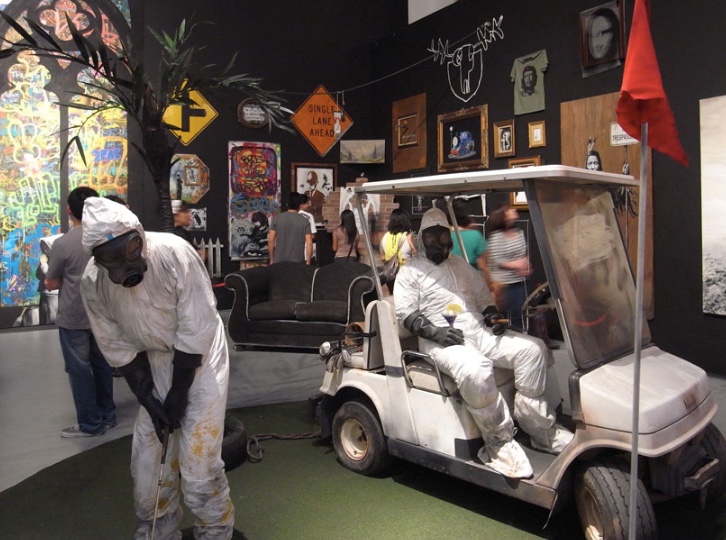
This elevation of street art in the museum — essentially, the show’s premise — is the target of the ubiquitous Banksy’s contribution. He asked local high school students to tag panels in myriad colors and then framed them inside a drawing of a Gothic arch that resembles a stained glass window in a church. Below, he added an illustration of a praying figure kneeling next to a can of paint. The piece suggests that enshrining graffiti art within the museum turns it into an icon requiring our submission. In case we missed this point, Banksy has also placed a real, full-sized steamroller in the space as a not-so-subtle reminder of the implacable march of commodification. Ever the contrarian, he brilliantly continues to bite the hand that feeds him.
In the end, the show is not just about showcasing street art but about recovering in some way what has already been lost. Henry Chalfant’s installation of hundreds of photos of graffiti-laden New York subway cars is oddly touching, not just for its nostalgic look at the past but because it’s a testament to the sheer volume of work that has been erased.
L.A. artist Saber responds to this phenomenon in a huge white and gray mural — a grisaille, really — with a trompe l’oeil tear in it that reveals layers of graffiti underneath. The piece acknowledges not only that graffiti is a temporal medium — painted over layers and layers of previous work — it’s also a nod to those writers who came before. Street art may be a product of a particular moment, but as the energy and variety of this show attest, it is constantly reinventing itself.
As reported by Los Angeles Times on 9 June 2011.
Banksy sponsors free admission to MOCA’s ‘Art in the Streets’ on Mondays
By David Ng
The British street artist known as Banksy likes to stay under the radar in terms of public exposure, eluding the press and generally shunning the spotlight. Lately however, the anonymous artist has been gradually creeping out of the shadows, sort of.
Banksy directed the hit pseudo-documentary ‘Exit Through the Gift Shop,’ which was released last year and earned the artist an Oscar nomination. This summer, he is teaming with L.A.’s Museum of Contemporary Art to provide free admission to its blockbuster street-art exhibition on Mondays.
Banksy is sponsoring free Monday admission for all visitors to the museum’s Geffen Contemporary space in Little Tokyo for the duration of the exhibition ‘Art in the Streets,’ running through Aug. 8. The show highlights the history of street and graffiti art and features works by Banksy, Shepard Fairey and other genre notables.
MOCA even provided a quote from Banksy himself: ‘I don’t think you should have to pay to look at graffiti. You should only pay if you want to get rid of it.’
The museum said that free admission to the Geffen Contemporary will be Mondays from 11 a.m. to 5 p.m. June 13 through Aug. 8. ‘Art in the Streets’ has been met with controversy since its inception. MOCA was criticized for removing a commissioned outdoor mural by the street artist Blu. In addition, local officials have reported an increase in graffiti and tagging in the neighborhood surrounding the Geffen.
MOCA reports that the exhibition has been a success with visitors, saying that it has drawn record attendance. The exhibition will travel to the Brooklyn Museum in 2012.

































 Banksy unofficial