Santa’s Ghetto was a “squat art concept store” set up at Christmas each year in different locations around London. The Dragons Bar in Shoreditch hosted the first edition. There were only Banksy and Ben Eine artworks.


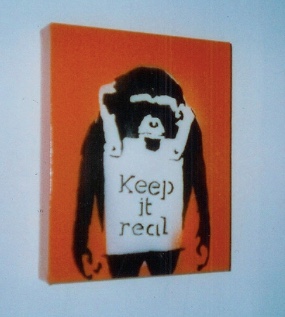

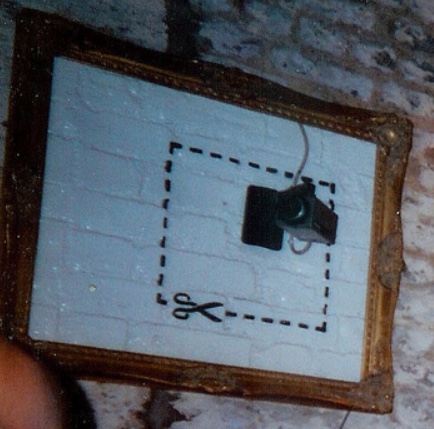
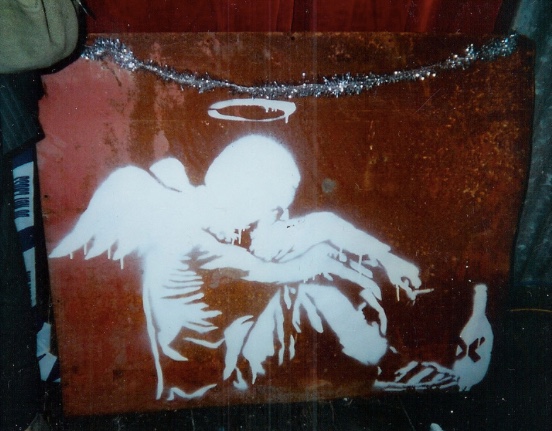


some sort of Banksy retrospective
Santa’s Ghetto was a “squat art concept store” set up at Christmas each year in different locations around London. The Dragons Bar in Shoreditch hosted the first edition. There were only Banksy and Ben Eine artworks.
Banksy opened his first Los Angeles exhibition, Existencilism, at the 33 1/3 Gallery on 19 July 2002. The show was sponsored by Puma. The most important piece was a big ‘Stop ESSO’ painted on one of the walls.

19 July 2002 – Opening night Existencilism, Los Angeles. The Stop Esso in the background:

It was a selling exhibition, and Banksy sold quite a few multiple canvases, most of them in an edition of 5 and dated LA 2002 on the stretcher:


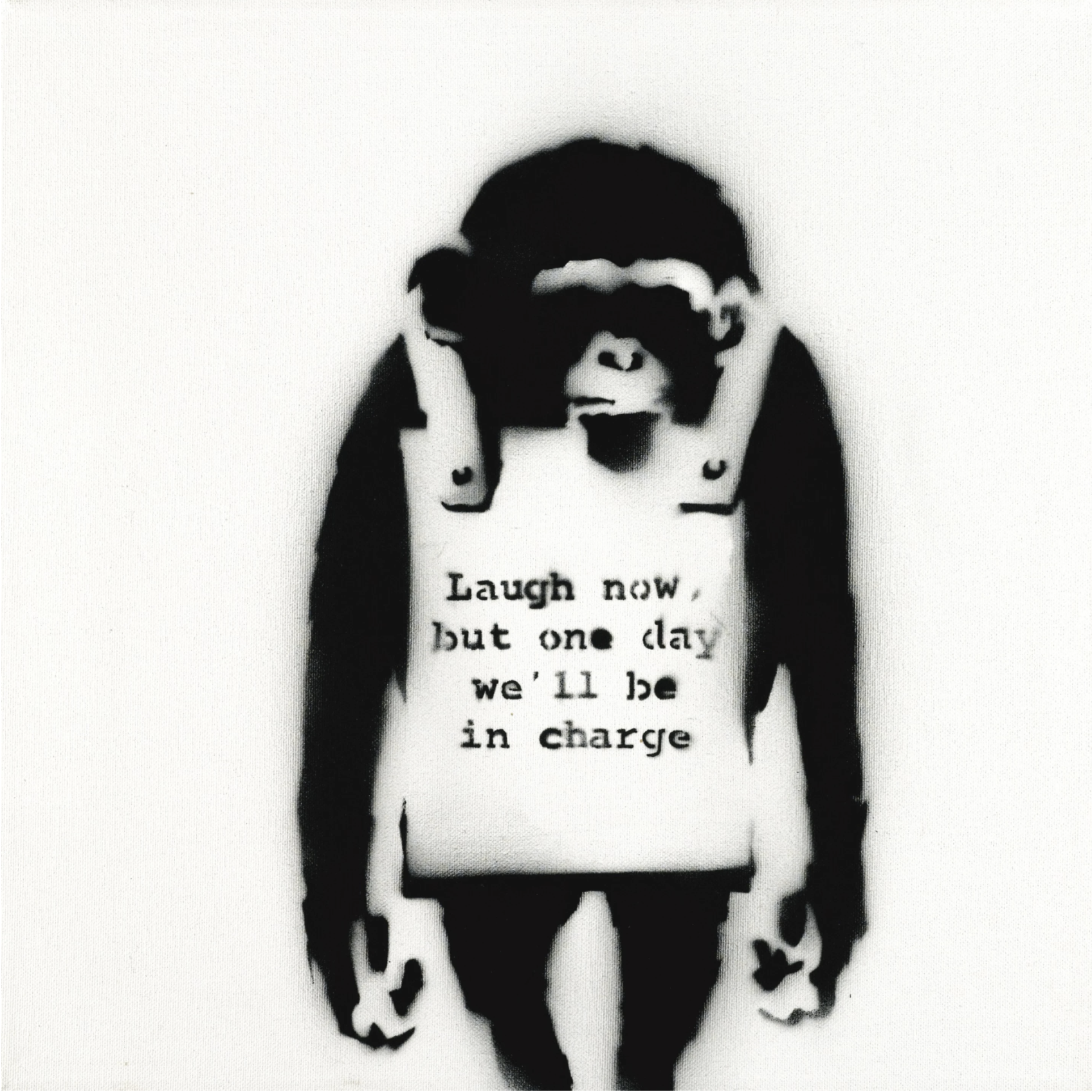
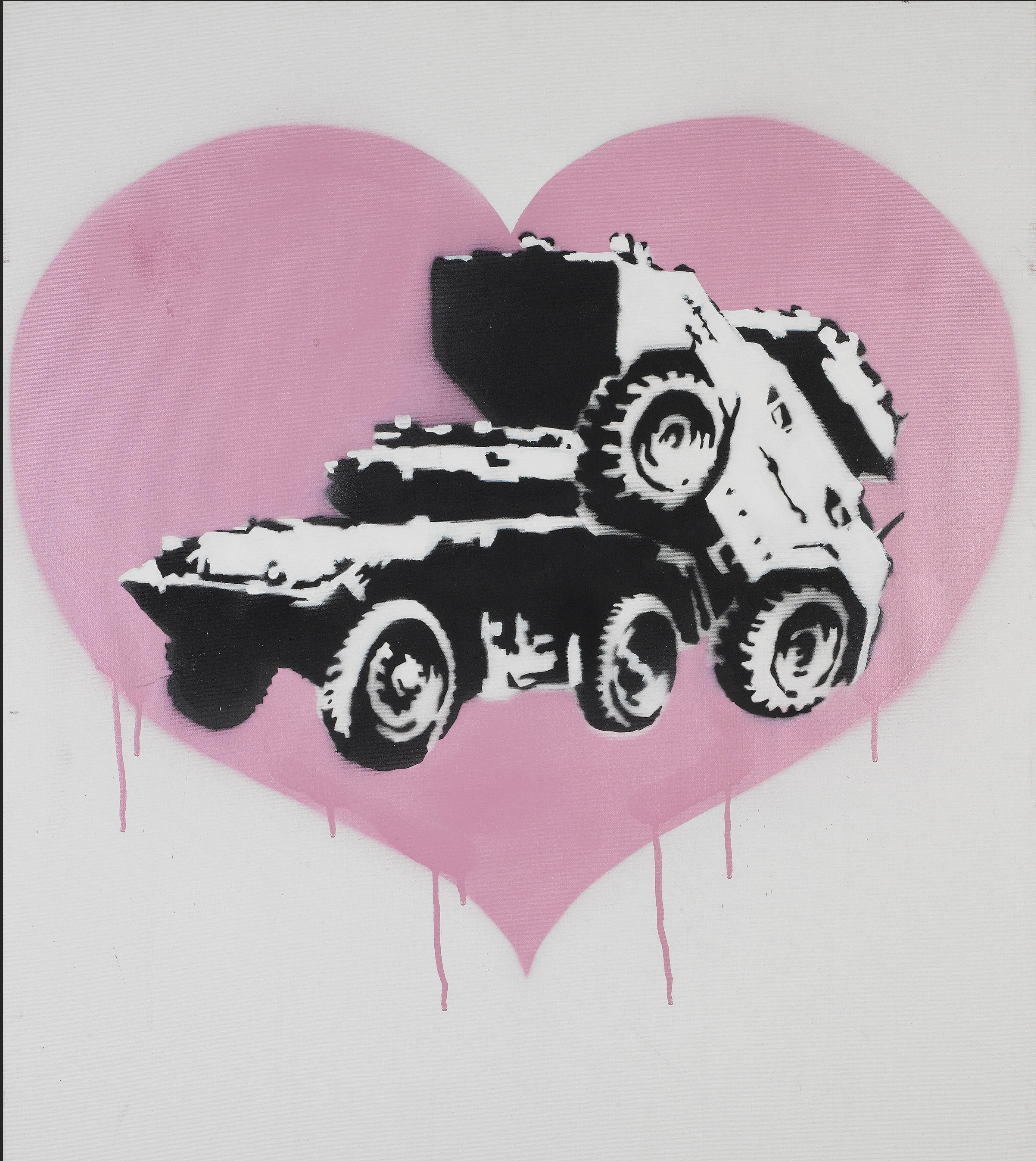
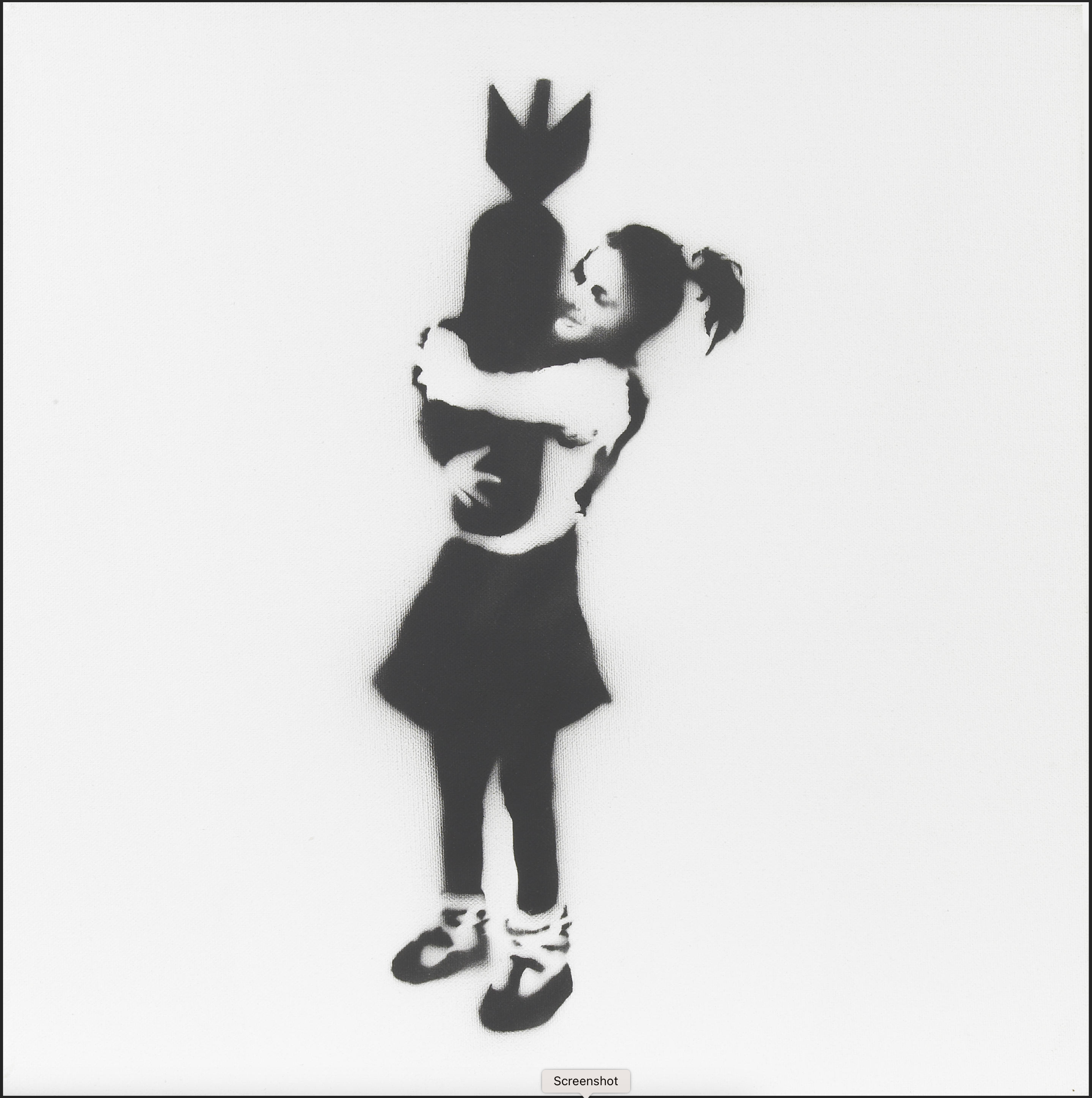

Some of the multiple canvases that were sold at Existencilism. Photos: Bonhams and Sotheby’s
A month later, Banksy opened a reduced version of the Existencilism exhibition in Japan – Osaka (8-17 September) and Tokyo (13 – 24 September). Among other pieces, a Laugh Now on cardboard with the text in Japanese:

Laugh Now on cardboard. Photo: Sotheby’s
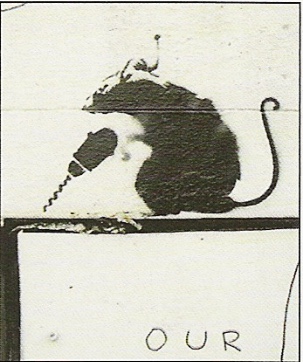
On May 30, Banksy released his second little black book, much heavier on rats than his first book. The book was launched with a street art show called Graffiti, Hostility and the Jubilee, which took place in a tunnel under the railway tracks connecting Clink Street and Bank End in Southwark, Central London.
UK Indymedia published a collage of photos from the event:
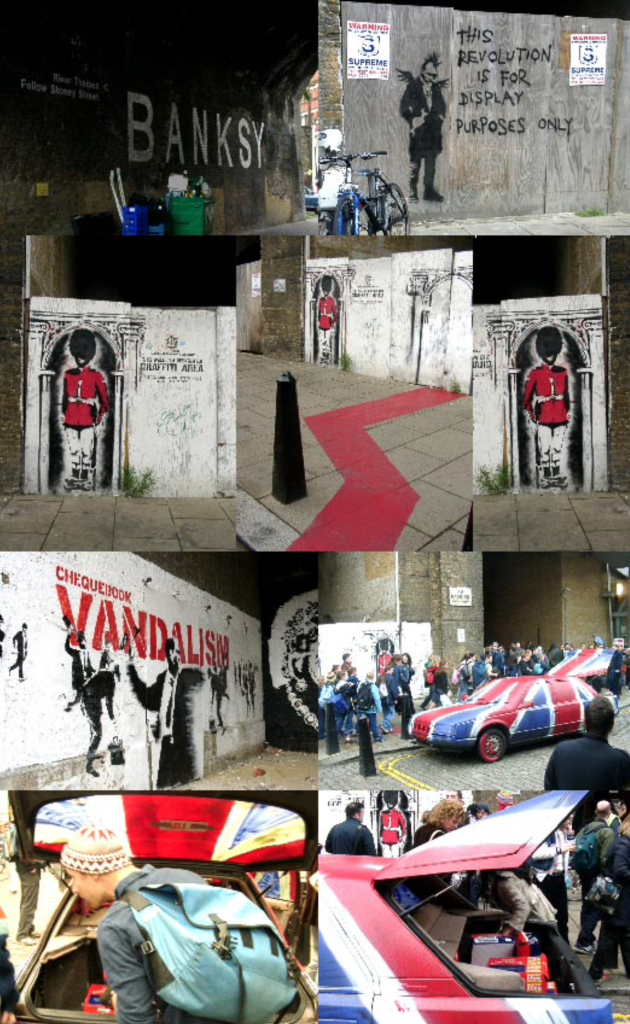
Collage: UK Indymedia
In his own words:
“Like most people I have a fantasy that all the little powerless losers will gang up together. That all the vermin will get some good equipment and then the underground will go overground and tear the city apart”




Burning Man is an annual event held in the Black Rock Desert of northwestern Nevada, about 100 miles north-northeast of Reno. It’s not your typical festival—think of it as a temporary city, Black Rock City, built by tens of thousands of participants who gather to celebrate art, community, self-expression, and self-reliance. The event culminates in the burning of a large wooden effigy, “The Man,” on the Saturday night before Labour Day.
In the 2001 edition of the festival, Banksy had an interesting collaboration with Ukrainian-American artist Maya Hayuk, known for her colourful and abstract graffiti. The collaboration was a comic strip that covered an entire wall right in the middle of the festival area. There are very few photos remaining.
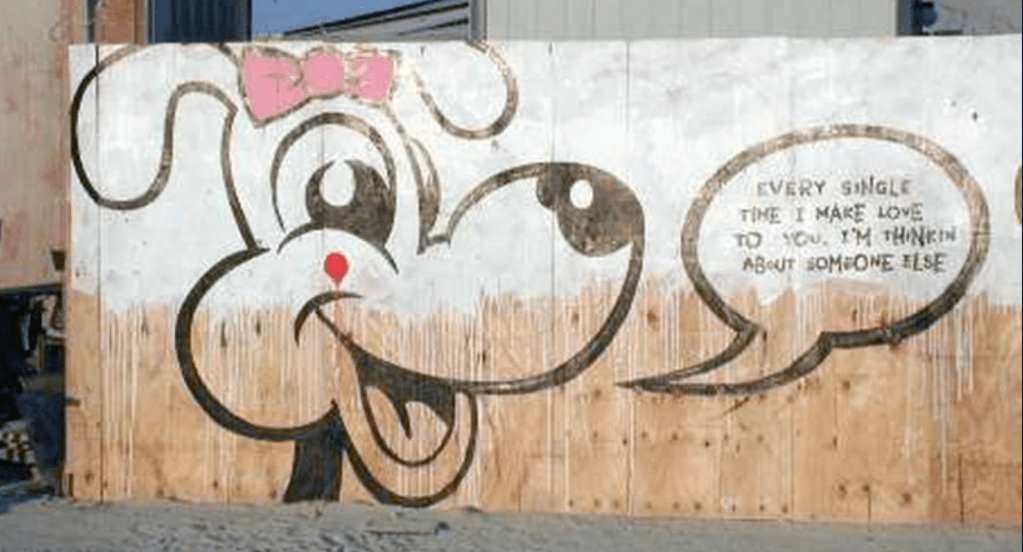
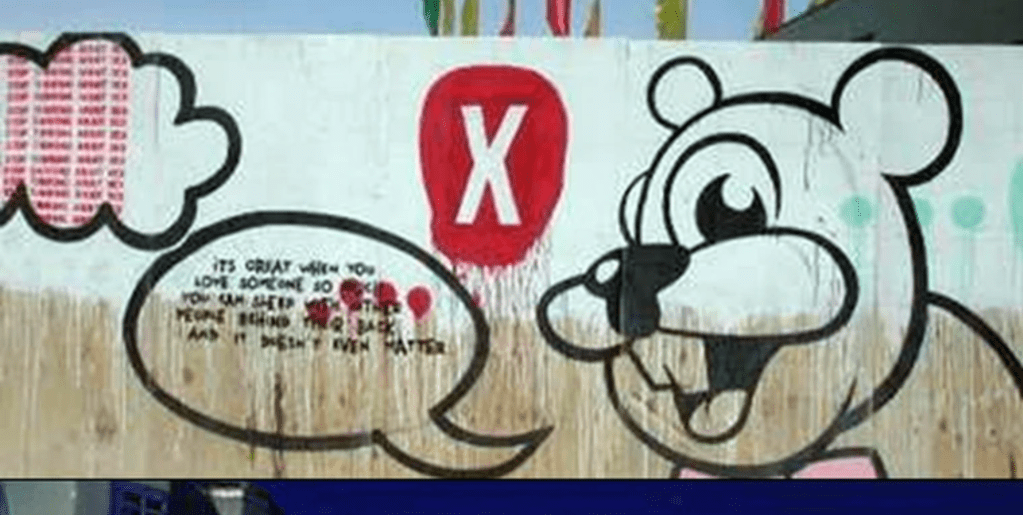
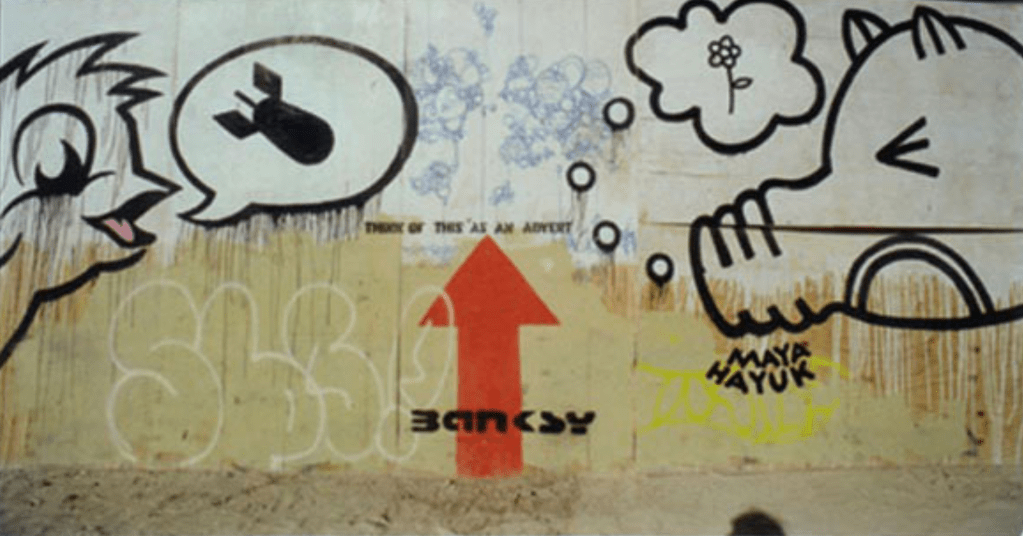
Three sections of the wall at Burning Man.
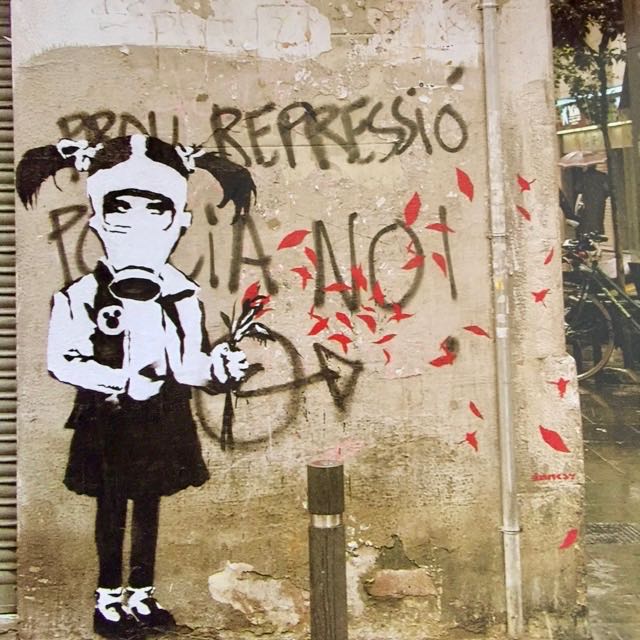
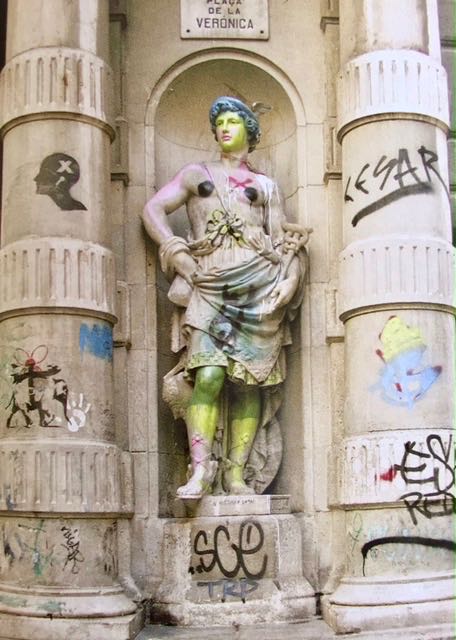
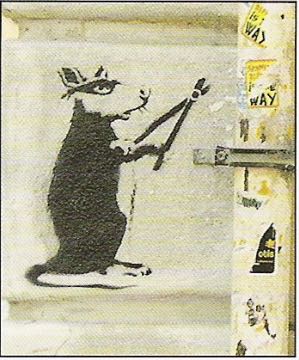
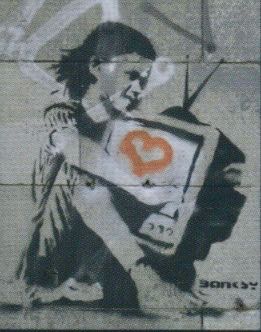
In the first years of the decade, besides the UK and US, Banksy went to Barcelona, Berlin, Vienna, Bergen, Copenhagen, Tokyo, Paris, and Palestine, where he painted the first stencilled version of the iconic Love is in the Air behind a gas station in Bethlehem.



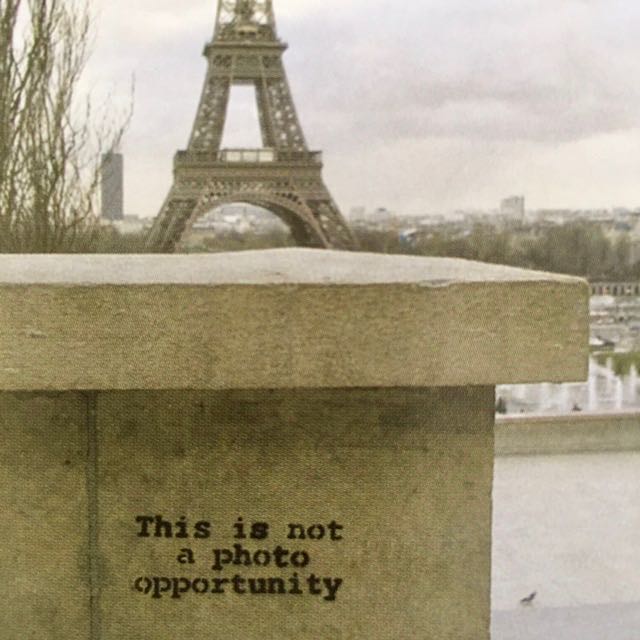
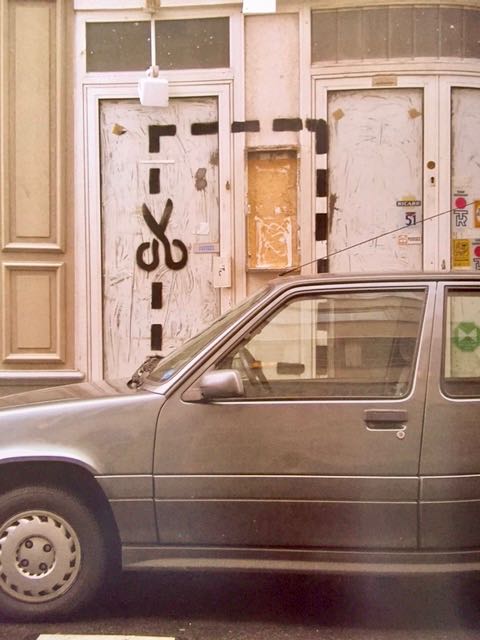


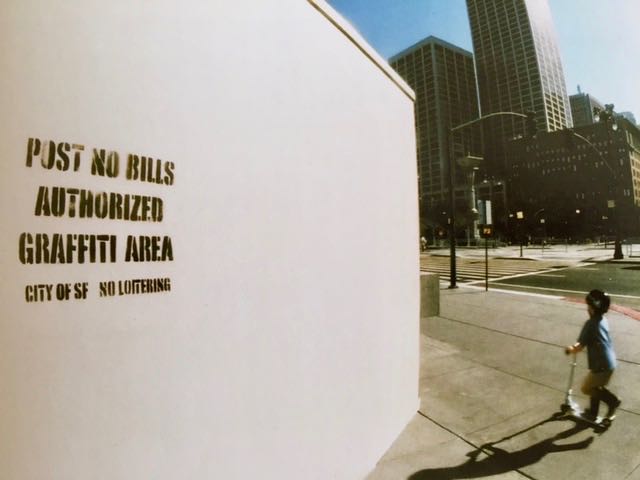

In the summer of 2001, Banksy organised an exhibition at the Cargo Club on Rivington Street. Cargo Club had opened in November 2000 and was built into the railway arches in the same spot as the Rivington Street railway underpass, where Banksy had done his first show in London the year before.
The exhibition featured a lot of the many unsold pieces from the Peace is Tough exhibition in Glasgow earlier that year. It also had various outdoor pieces in the courtyard.

At the same time, Banksy released a book, Banging your head against a brick wall, the first of a series of three small black books in A6 format. It has some surprisingly well-written texts along with images of his most prominent street art and originals. 54 pages in B&W. Some curious highlights:

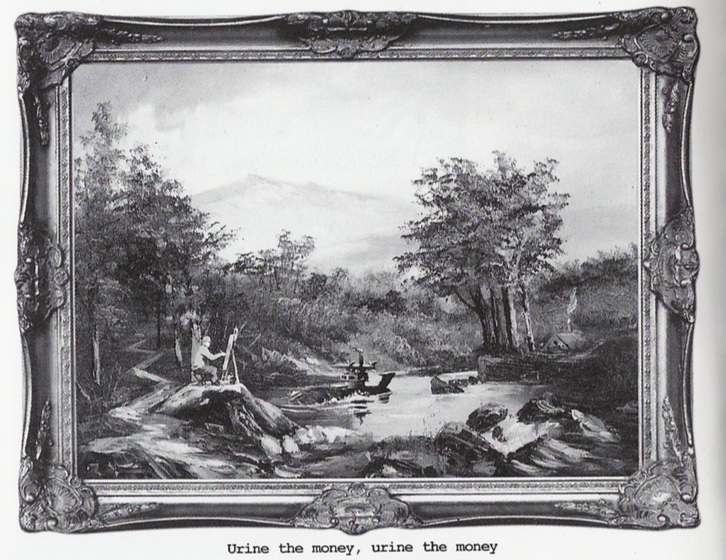
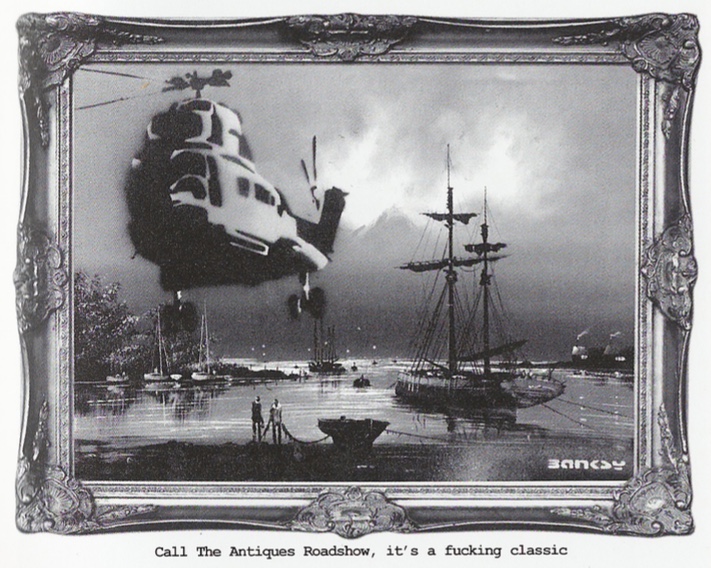
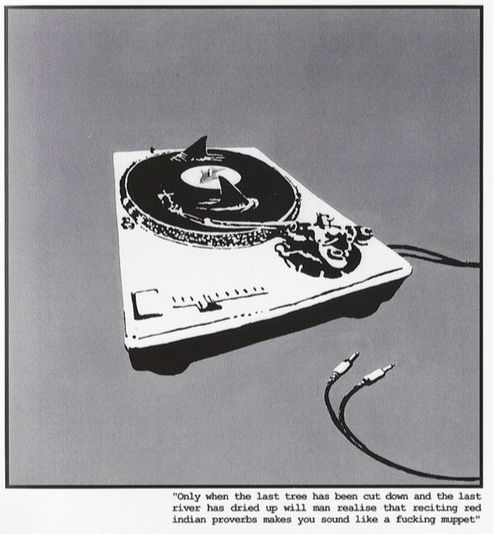
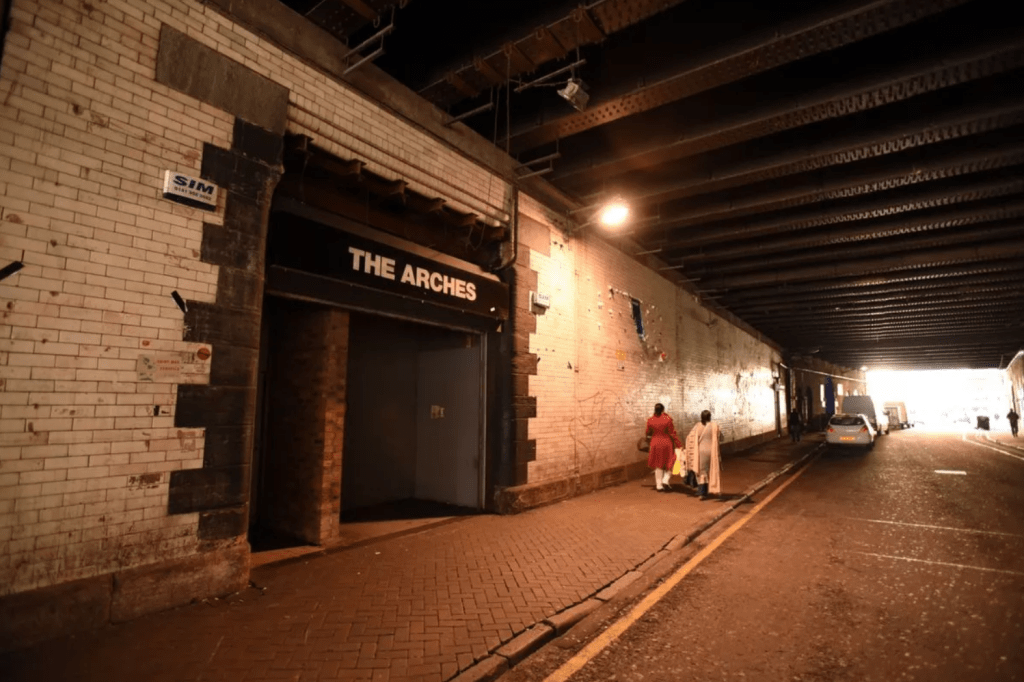
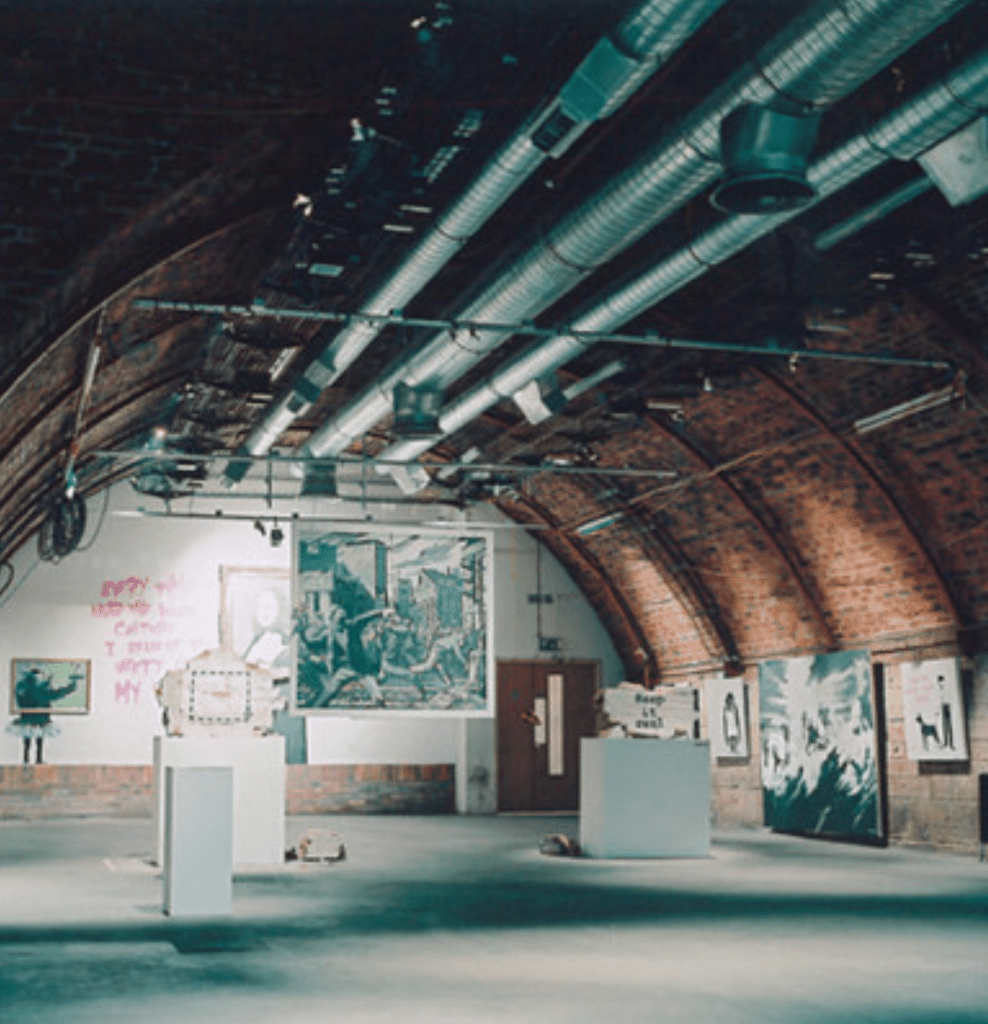
In March 2001, Banksy went to Glasgow to participate in an exhibition at The Arches, a club located under Glasgow Central Railway Station. The organiser and main attraction of the exhibition was anti-art world colleague Jamie Reid. According to several sources, Banksy’s pieces didn’t sell well, and they were taken back to London, where they appeared a few months later at the Cargo Club exhibition. Very little documentation remains.



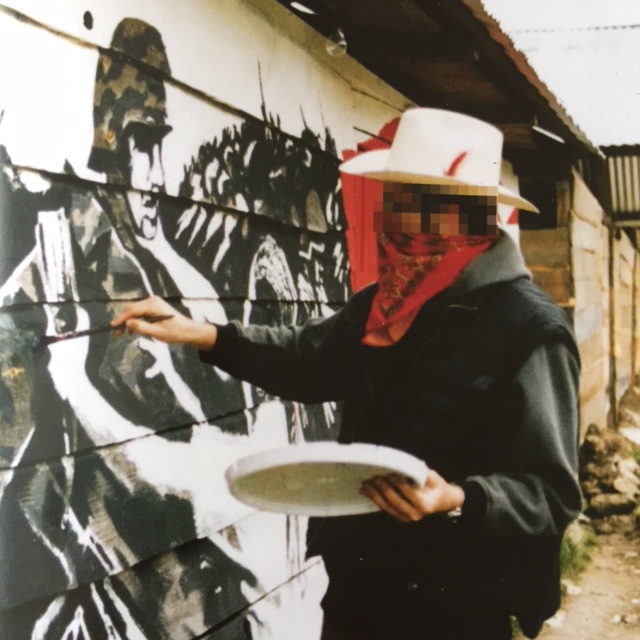
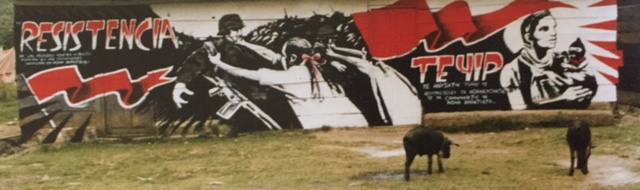
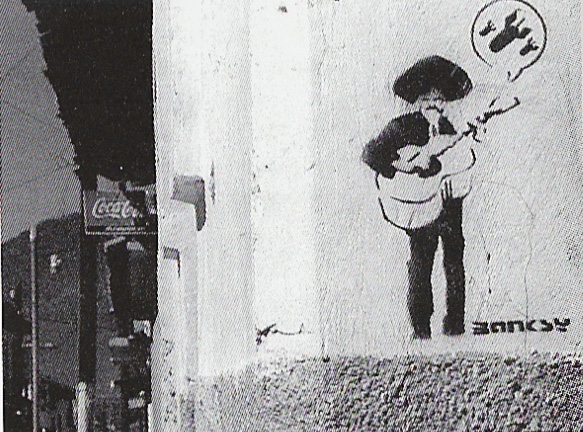
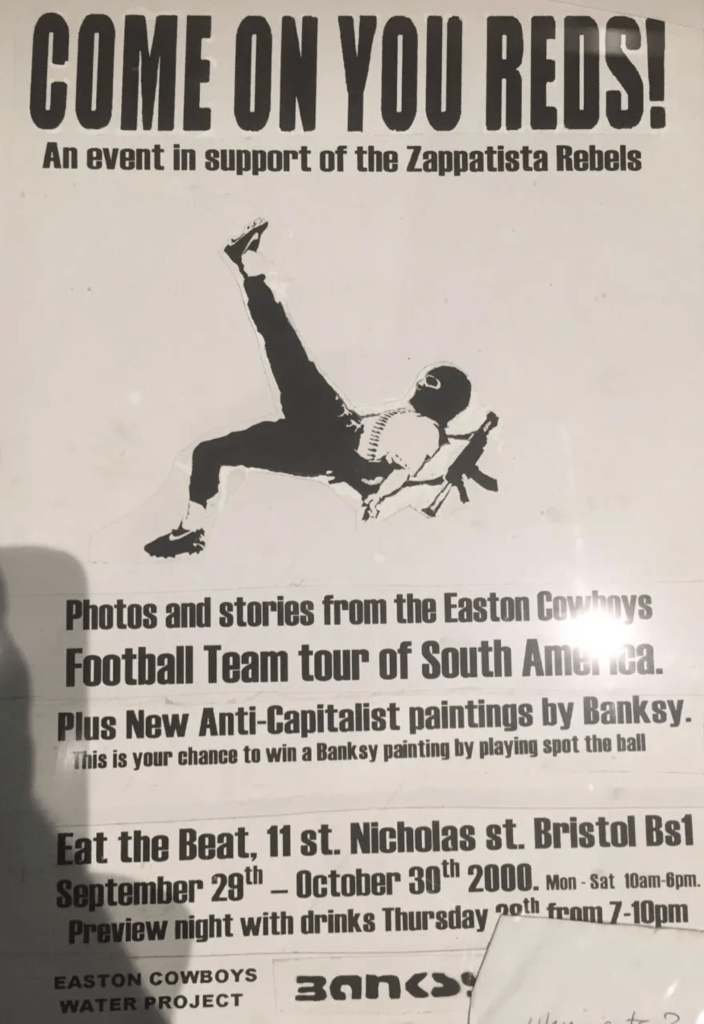
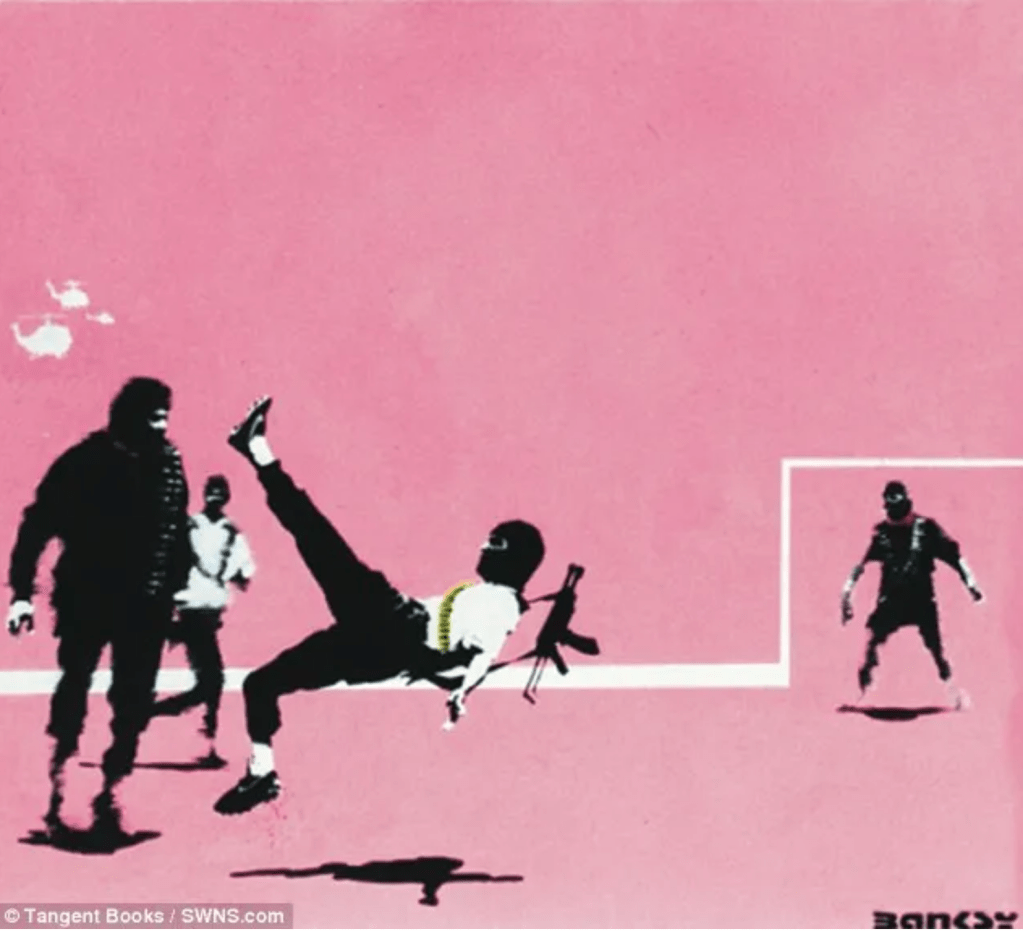
Banksy joined the Easton Cowboys, a radical football team from Bristol. In early 2001, they went to Chiapas, Mexico, to play against a football team from EZLN, Ejército Zapatista de Liberación Nacional. Banksy played as a goalkeeper. During the stay in Chiapas, the Banksy team completed a few stencils and at least two free-hands.


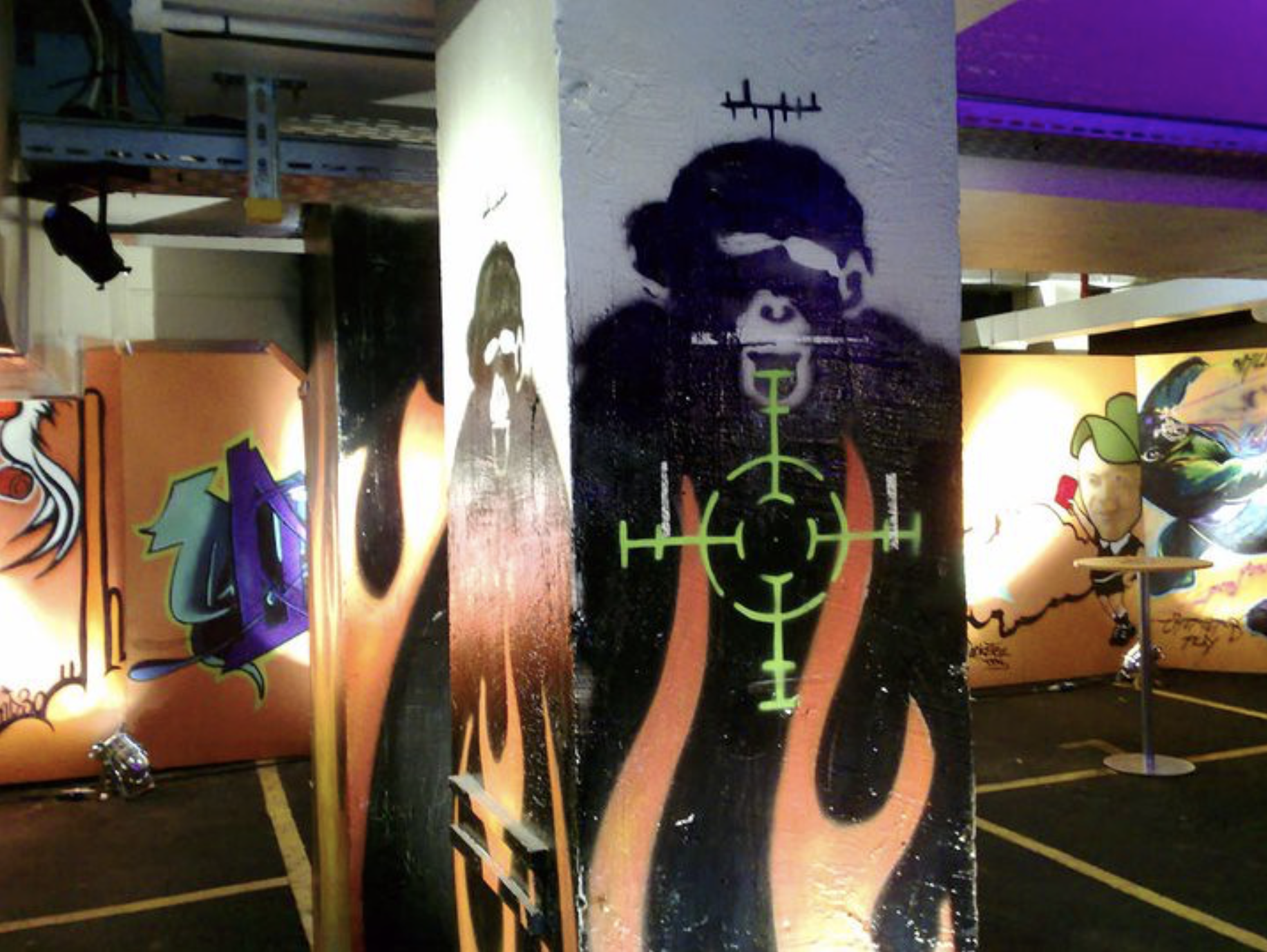
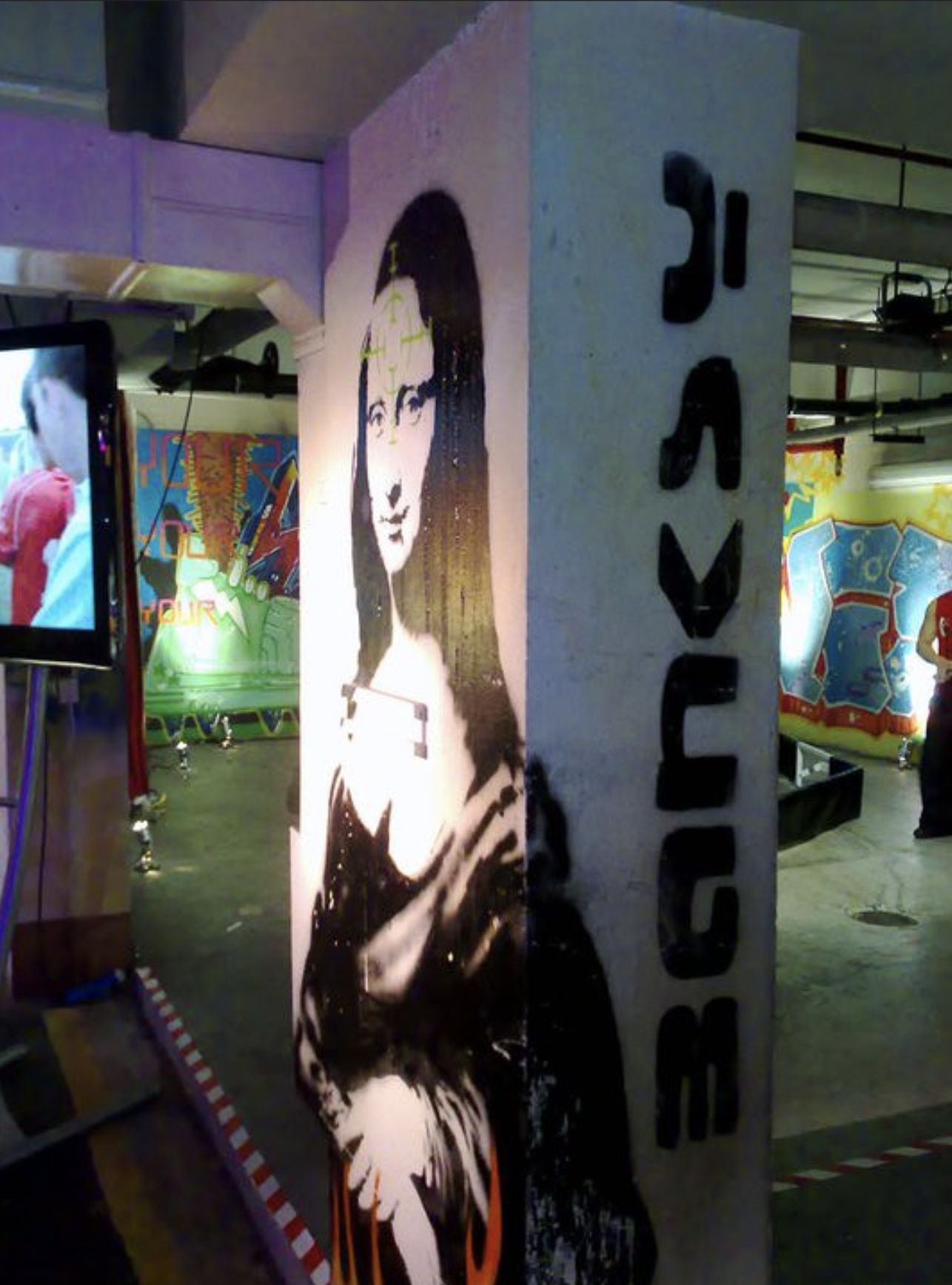
The Swiss ambassador to the UK invited a group of street artists to decorate the underground parking of the embassy. It was part of a cultural programme. The press release from the Swiss Embassy read as follows:
“The course of the new century will be shaped and determined largely by those who are 15 – 30 years old today. We, the members of staff at the Swiss Embassy in London, are dedicating our programme for 2001 to this particular section of our society. We want to find out from the “next generation” what it thinks of the future, how it plans and influences future events, what values and ideas it has. We want to learn and understand, we want to debate and experience.Together with young people and young adults we intend to organise five principal events:
We want to begin the year 2001 with a New Year Graffiti Party for 15-30 year-olds in the Garage at the Embassy. We have invited other graffiti artists too, who will transform the Embassy’s Garage into a cultural space one month before the Party.”
Two of Banksy’s many pieces:
Photos: Banksyforum, Flickr
The Guardian told the story behind the ambassador’s initiative:
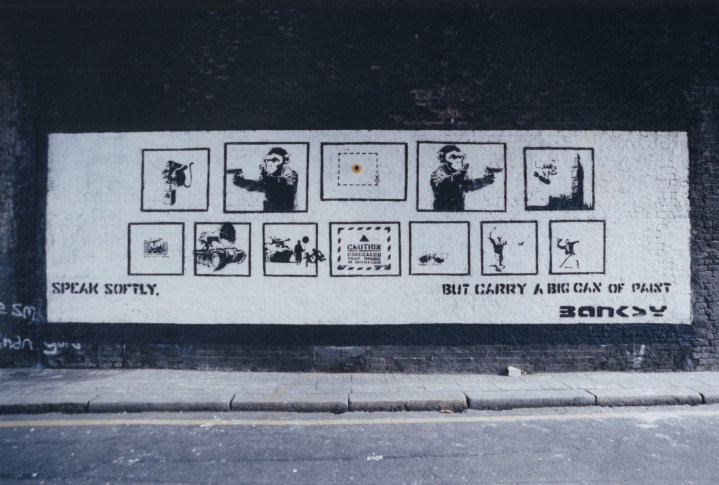
The first exhibition in London took place in a railway underpass on Rivington Street. In Banksy’s own words:
“We came out of a pub one night arguing about how easy it would be to hold an exhibition in London without asking anyone permission. As we walked through a tunnel in Shoreditch someone said – You’re wasting your time, why would you want to paint pictures in a dump like this?”

The exhibition was divided into five sections. This is the main section:
The programme for the first exhibition in London:


As explained in the program above, all images were available for purchase as stencilled canvases through an ingenious mail order system. Every motive had a number—see the photo below. The interested buyer had to send an email to buyabanksy@hotmail.com and indicate which work they wanted to buy. There were 25 motives available. The canvases came in three sizes: small, £99.99; medium, £159.99; and large, £199.99, each in an edition of 25. The canvases were delivered to the buyer after three weeks.
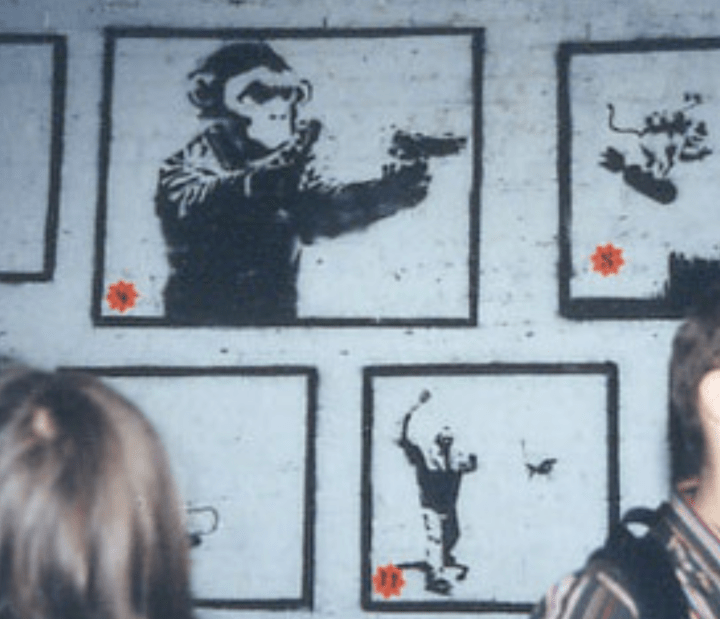

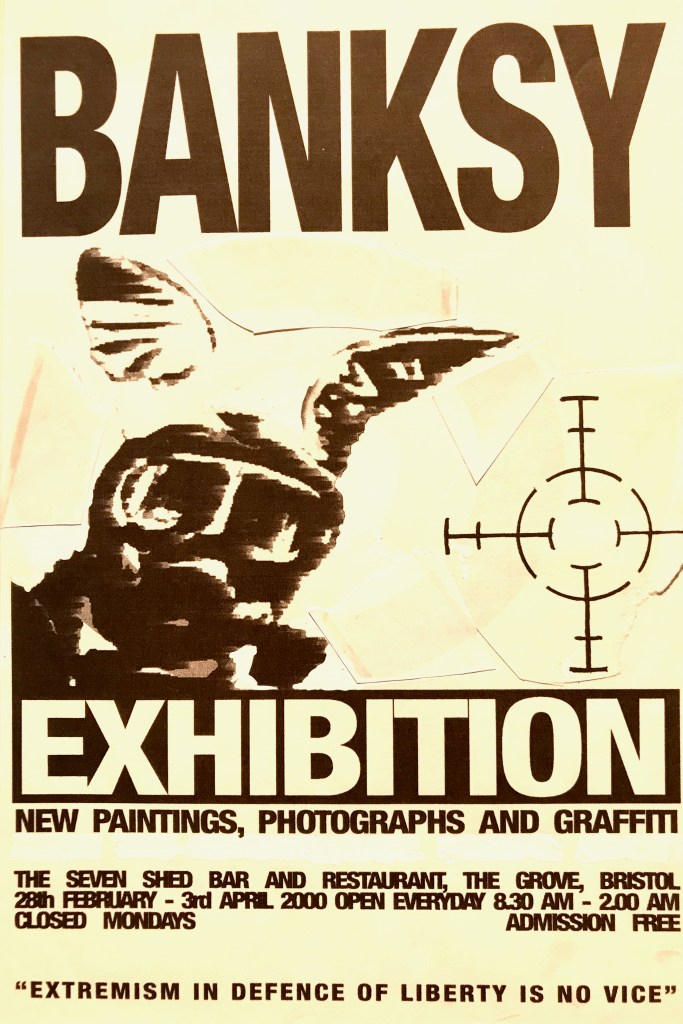
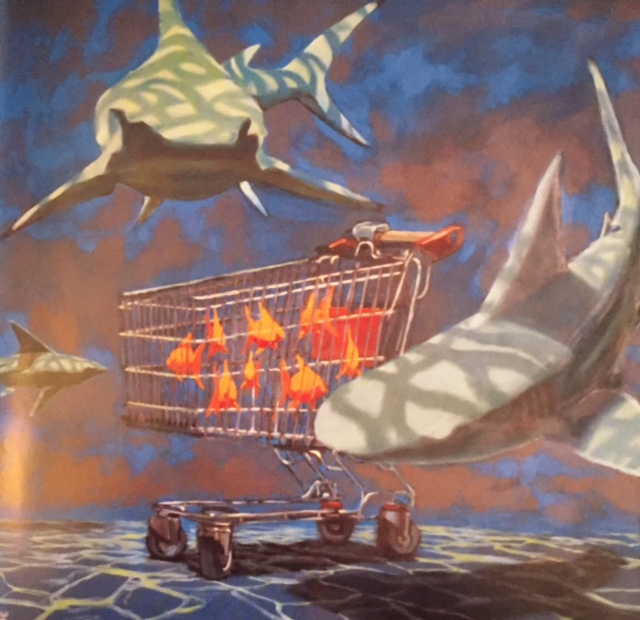
After moving to London in late 1999, Banksy returned to Bristol in February 2000 to open his first regular indoor exhibition at the restaurant Severnshed on The Grove, right behind the docks. Nowadays, the restaurant has changed its name to the Harbour House. The show was a mixture of stencils and acrylic on canvas. There were several remarkable pieces: Simple Intelligence Testing, Sharks, and You Told That Joke Twice.


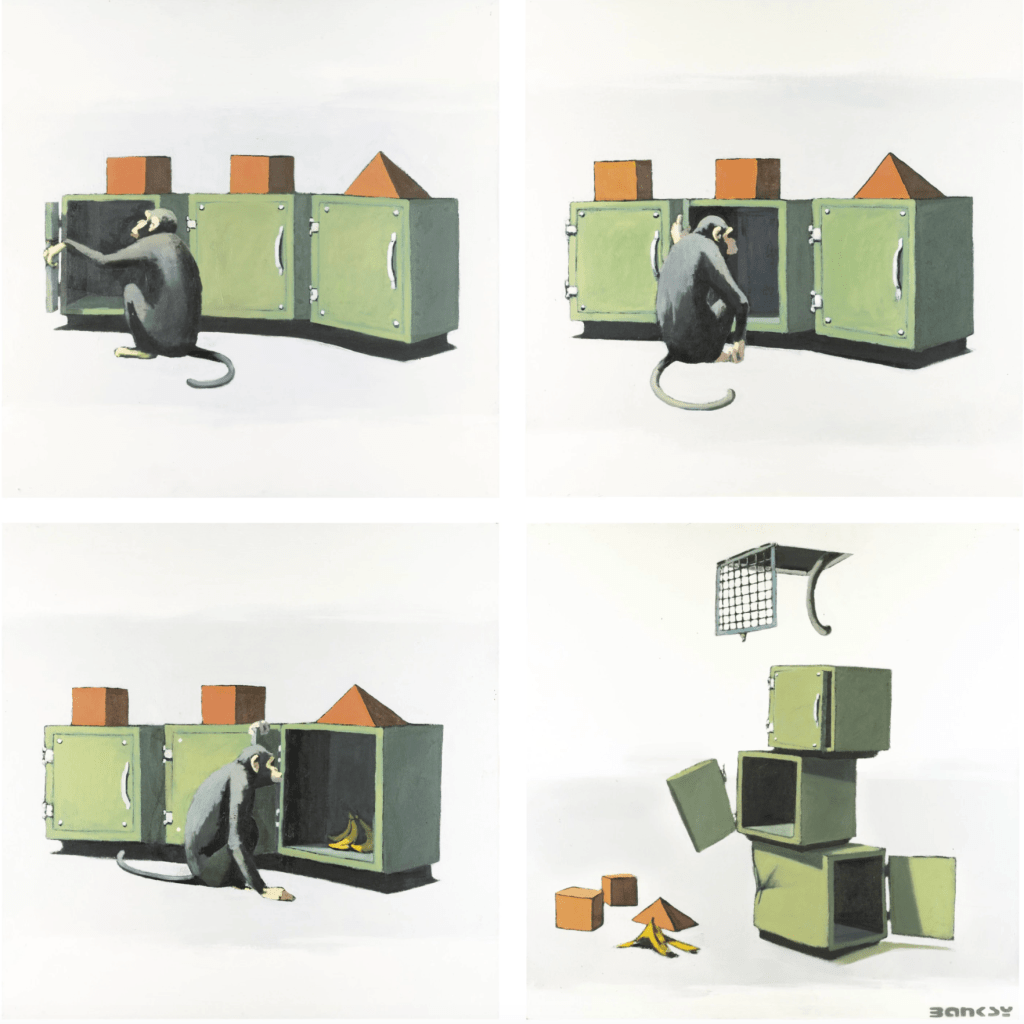


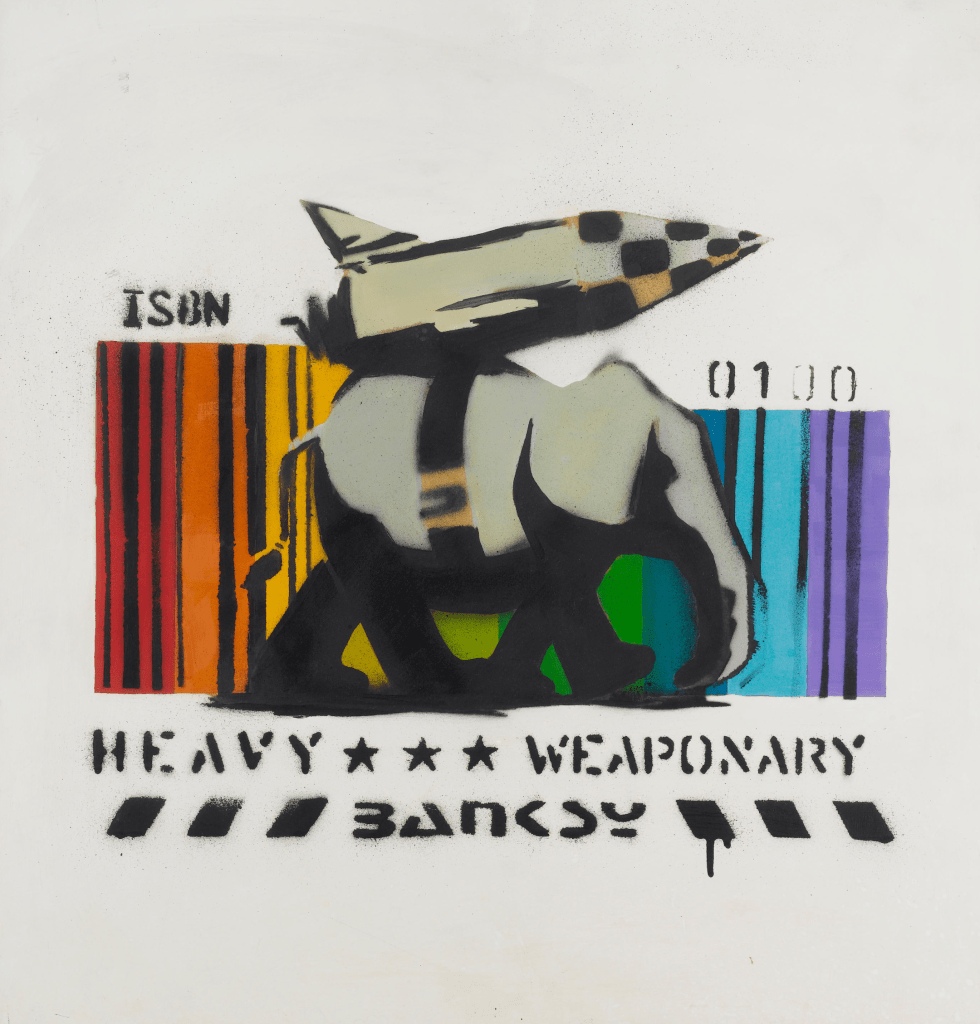
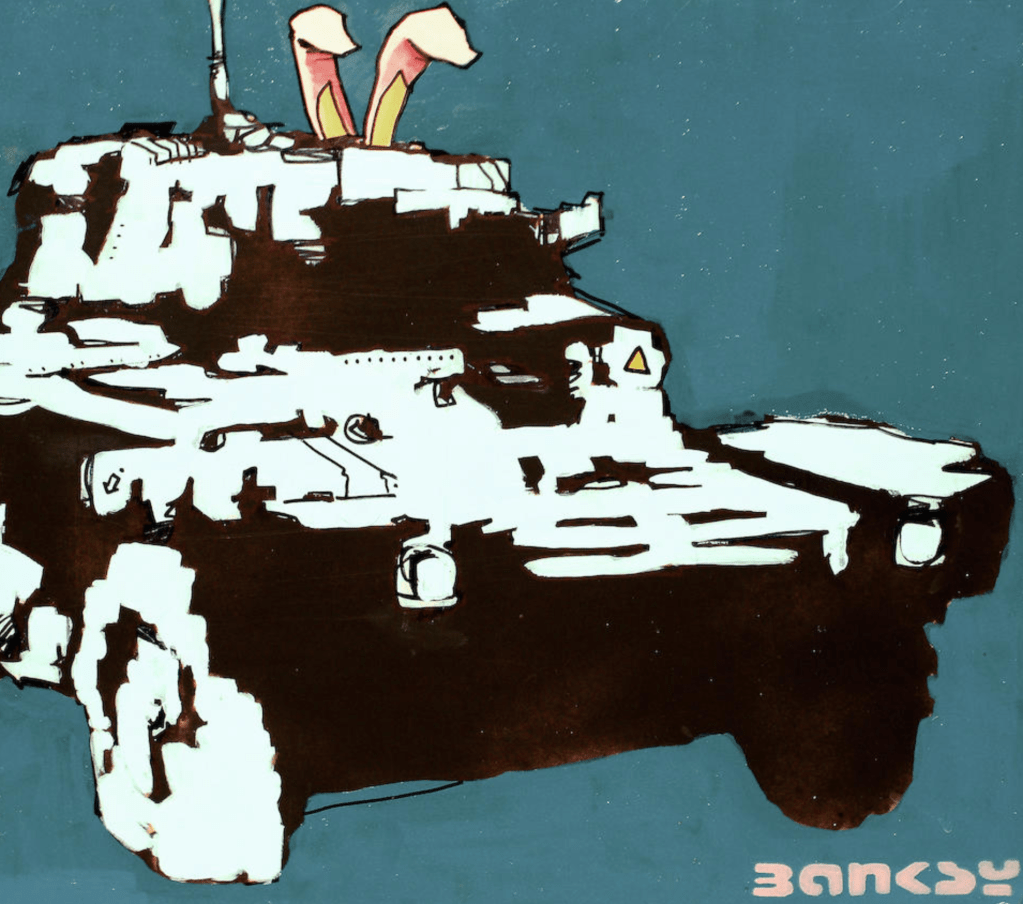
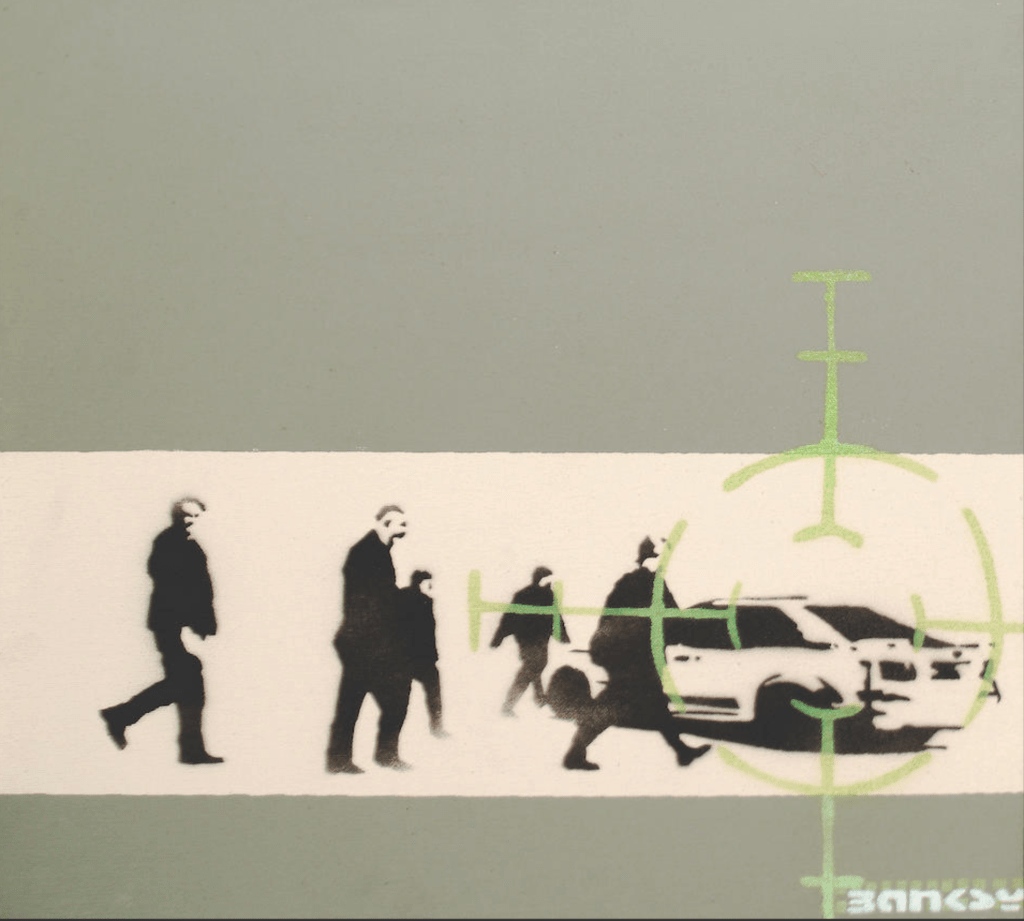
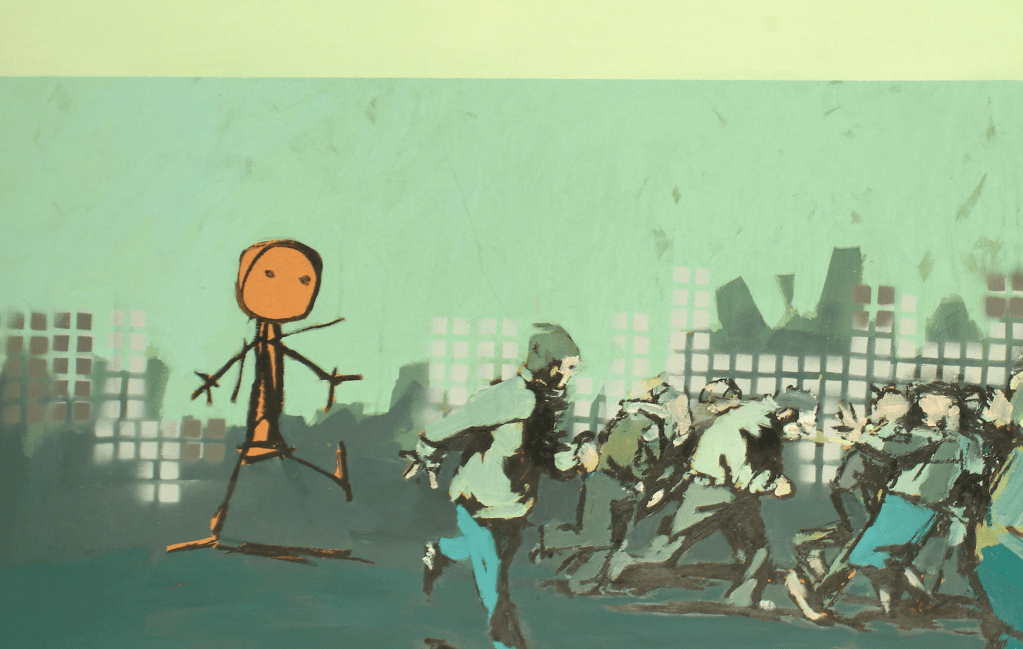
The prices ranged from £130 to £1,750. All of the pieces were sold.
BBC Bristol did an interview with Banksy at the exhibition. You can listen to it here:
 Banksy unofficial