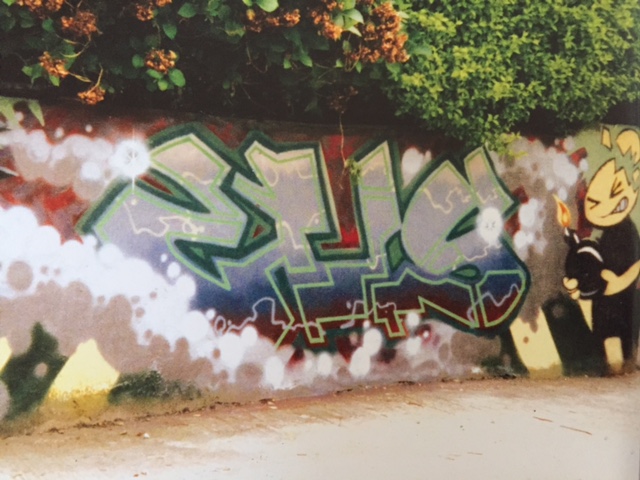
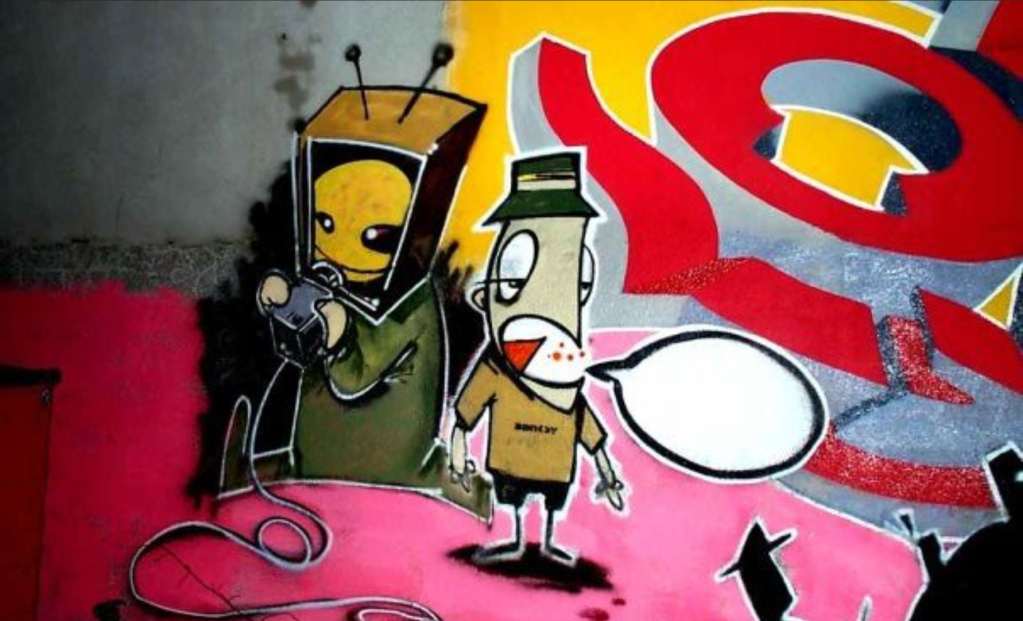
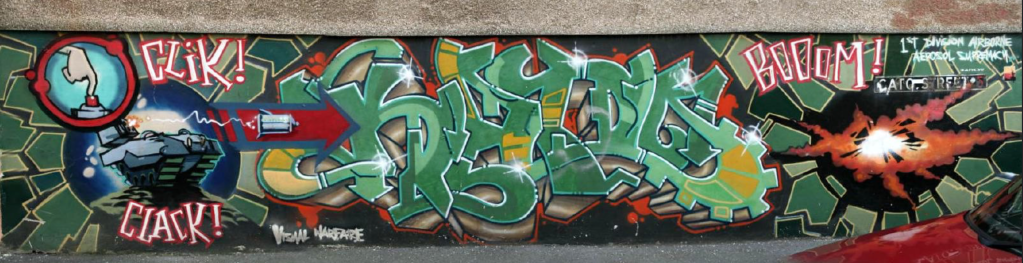
The walls of Easton in Bristol were the canvases for Banksy’s early freehand work. Inkie and other prominent figures from the Bristol street-art scene collaborated regularly.
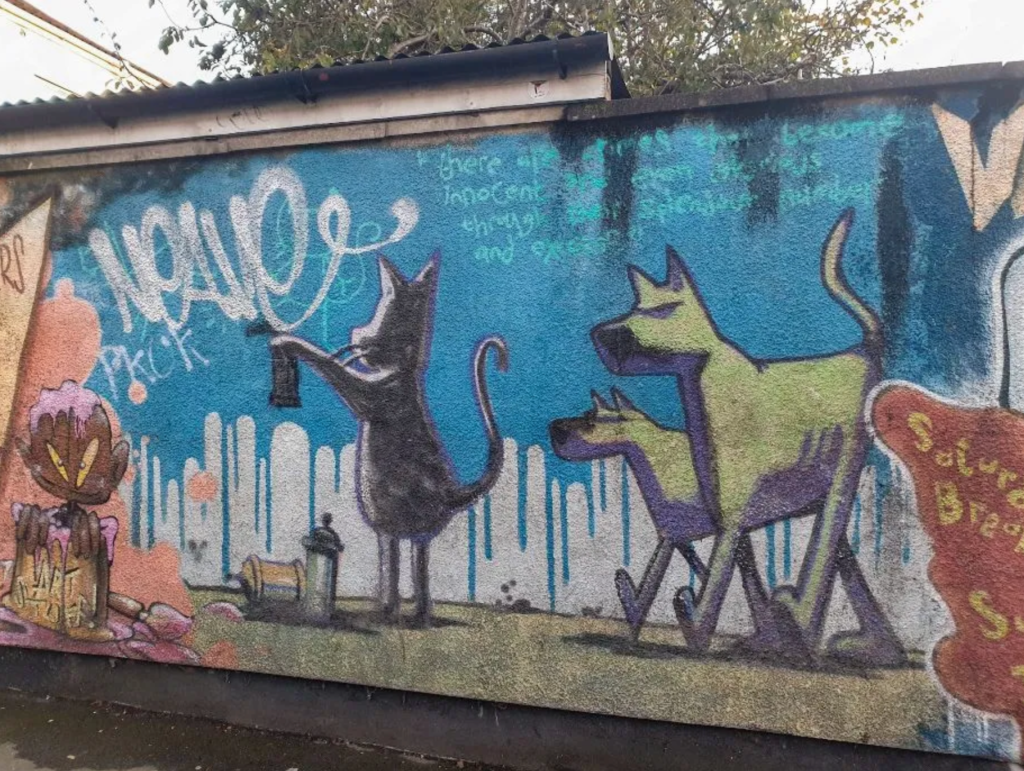
One can clearly see that, from the start, Banksy had a narrative in his art; there is always something happening. A lot of the early works had texts. One interesting example is the first photo in the series below: The artwork depicts a dog spraying a wall as two larger watchdogs approach. The text says, “There are crimes which become innocent and even glorious through their splendour, number and excess,” a quote by 17th-century philosopher François de La Rochefoucauld.




All photos above: Banksy forum on Flickr: https://www.flickr.com/groups/banksy/pool/
FIRST APPEARANCE AT GLASTONBURY. JUNE, 1997
In 1997, Banksy with Inkie (Tom Bingle), Dicy (Justin MacCarthy), Ekoe, Feek (Damien Neary) and Paris (Graham Dews) painted “Devious Nature” on a plywood plank on the Glastonbury Festival. The artwork depicts Michael Eavis, the co-founder of the Glastonbury Festival, on his tractor while being chased by a herd of cows.

GLASTONBURY FESTIVAL, JUNE 1997
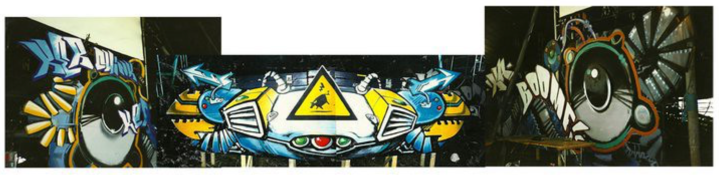
In 1998, Banksy and Inkie, Dicy, Ekoe, Feek, and Paris were invited back to Glastonbury, where they decorated a dance tent:
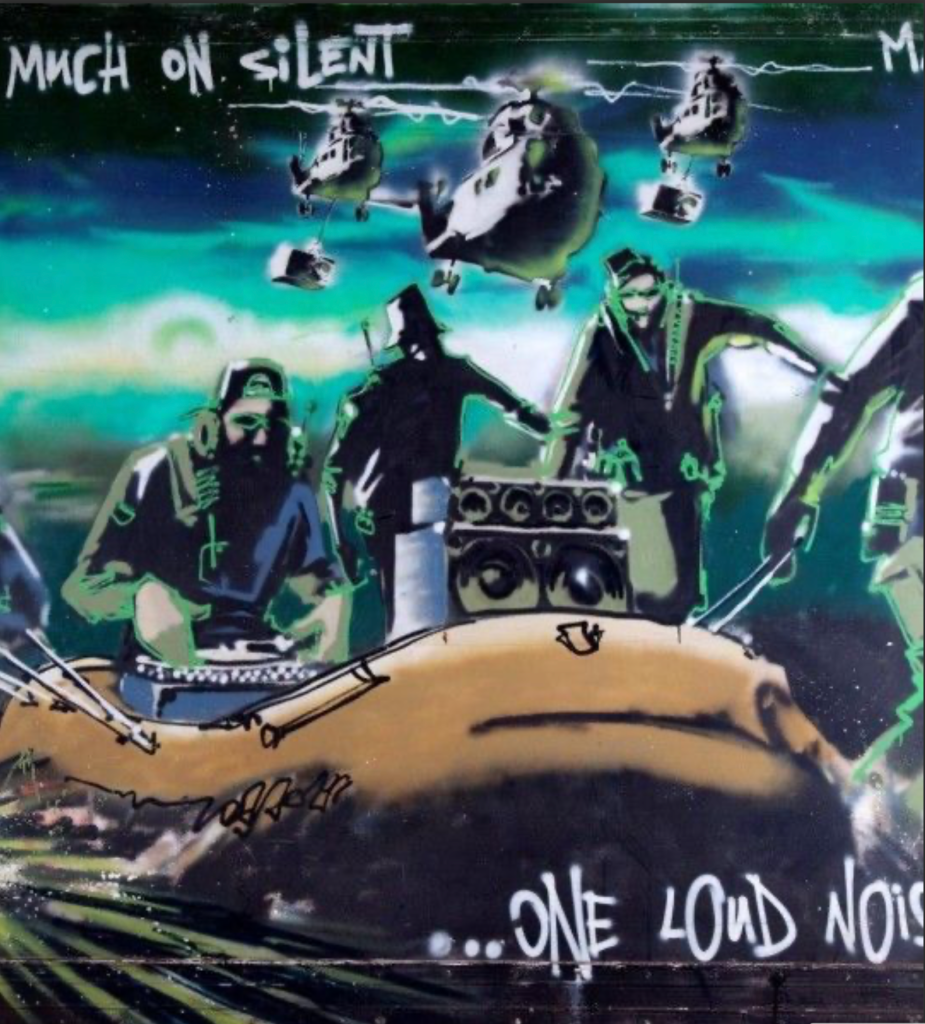
THE SILENT MAJORITY LORRY. 1998 (or 1999)
According to some sources, Banksy and Lokey painted the lorry at Glastonbury in 1998. Other sources claim it was painted in 1999. The text says, “It’s better not to rely too much on silent majorities … for silence is a fragile thing … one loud noise and it’s gone.” A reference to Richard Nixon’s speech from 1969, where the term “Silent Majority” was coined.
In 2015 the lorry was sold at Digard Auction for £ 445,792.


Photos: BBC and Digard Auction
 Banksy unofficial