Banksy went to Los Angeles in the fall of 2006 to prepare Barely Legal. He did a handful of street art pieces to promote the upcoming show.
Category: Street Art

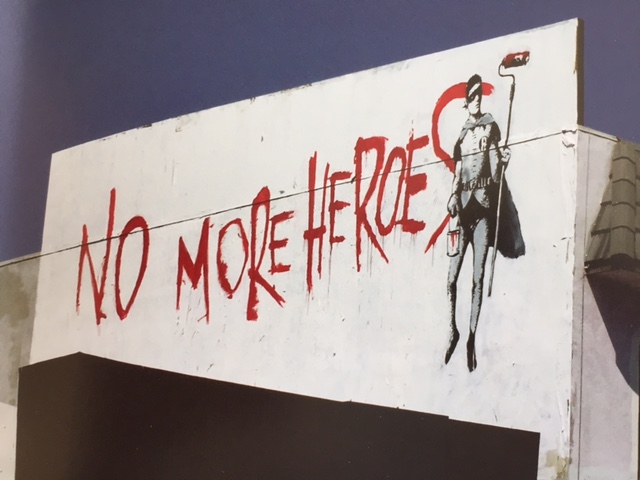


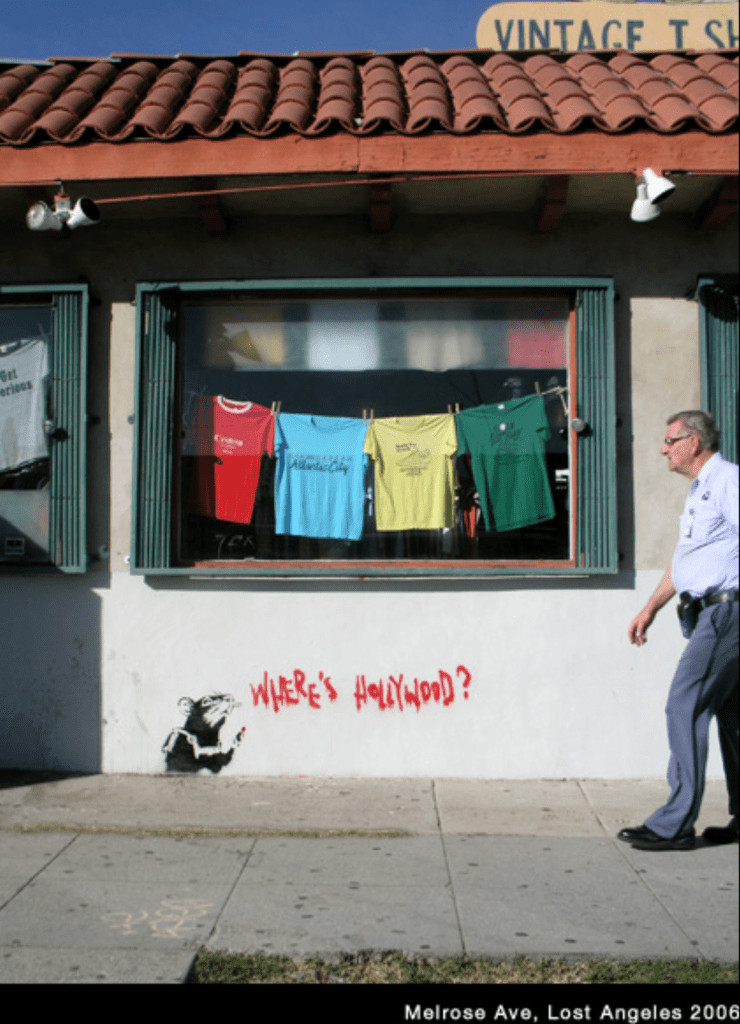
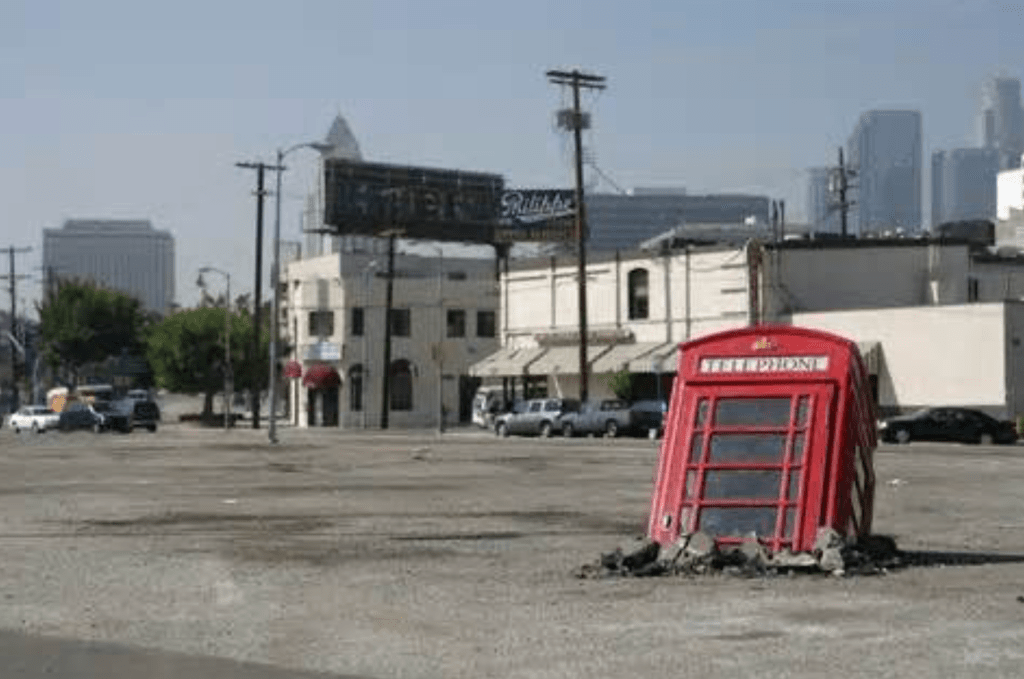
Street Art UK. 2006
In June 2006, Banksy went back to Bristol to paint the iconic Well Hung Man on Frogmore Street. Other notable work includes the vandalised telephone booth and 18 Minutes, the maid sweeping the dust under the carpet.


Street Art UK. 2005
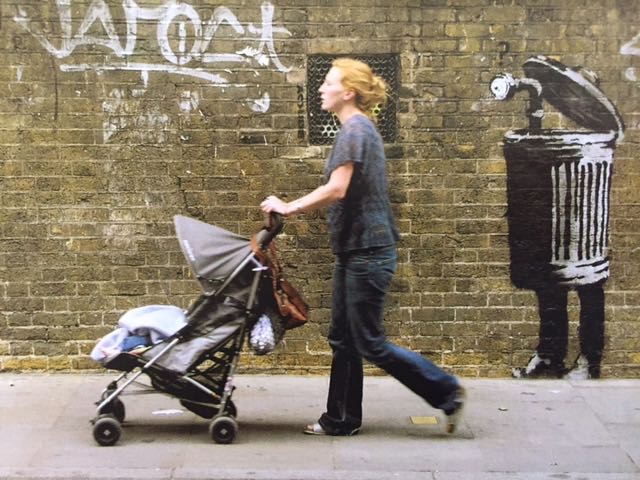
Apart from the works in Palestine in August 2005, Banksy concentrated on London this year. An interesting development in this period is the street installations in the London urban landscape.
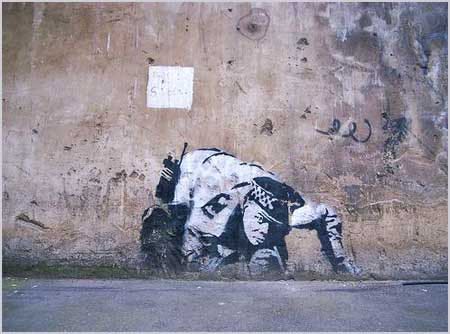






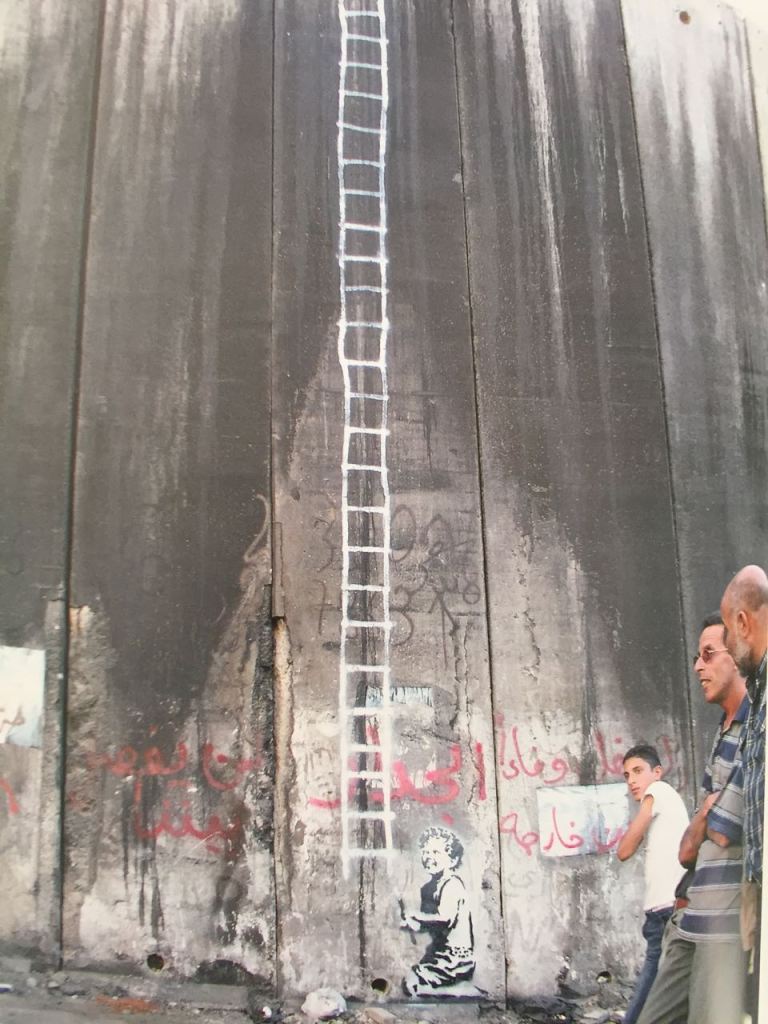
The segregation wall. Palestine, August 2005
In August 2005, Team Banksy visited Palestine, where they painted nine large murals on the segregation wall. Banksy commented that the wall “essentially turns Palestine into the world’s largest open prison.” Banksy’s website reminded readers that Israel’s 425-mile-long West Bank barrier, separating Israel from the Palestinian territories, is considered illegal by the United Nations.
During the visit to Ramallah and surrounding areas, Banksy reported some tense moments. His spokeswoman, Jo Brooks, said: “The Israeli security forces did shoot in the air threateningly, and there were quite a few guns pointed at him.”



Street Art 2004. Focus on UK.
London was the main focus of street art activity in 2004. But, also two pieces in Brighton and two in Somerset. There were only two pieces outside the UK in 2004, one documented in Berlin and another in Chicago. One of Banksy’s most iconic pieces goes up in Southbank: The girl with the red balloon.


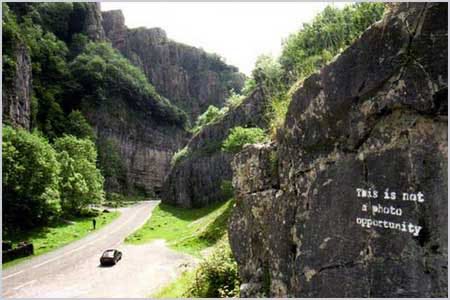

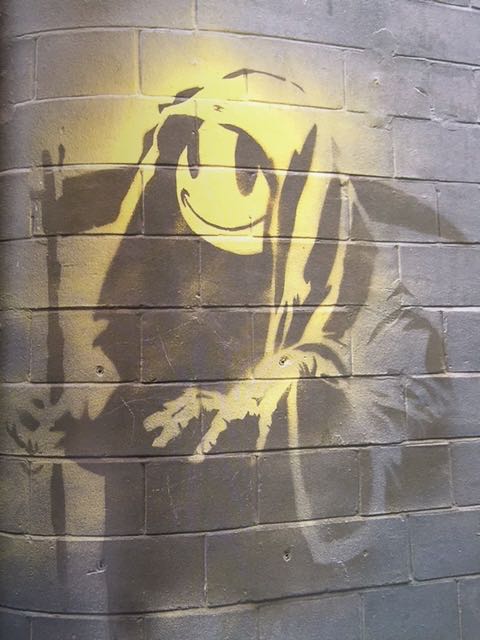


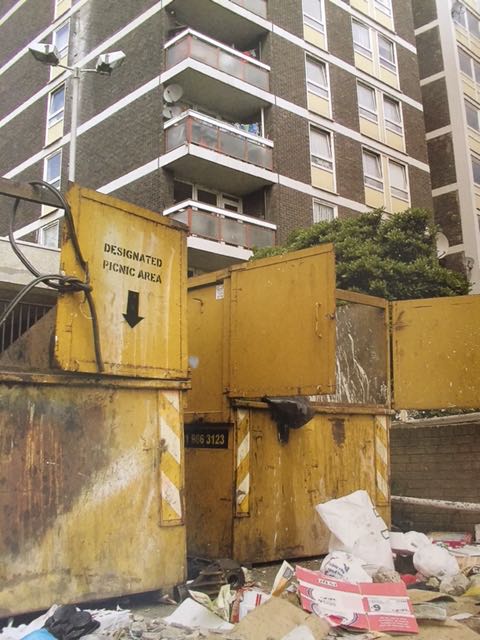
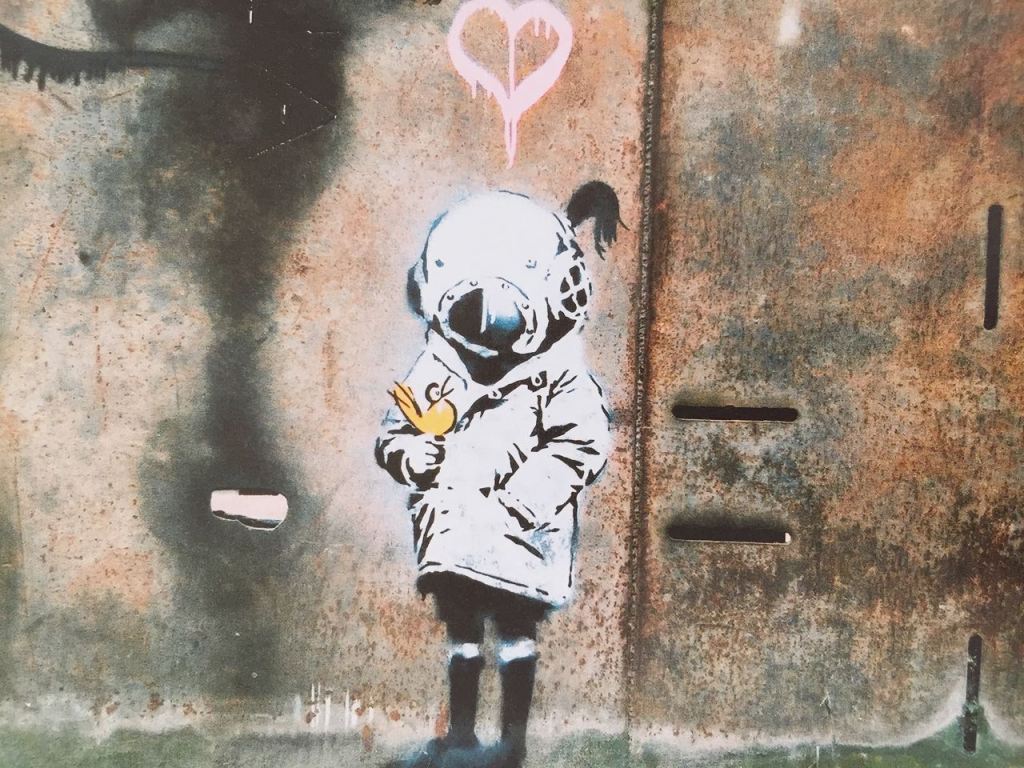
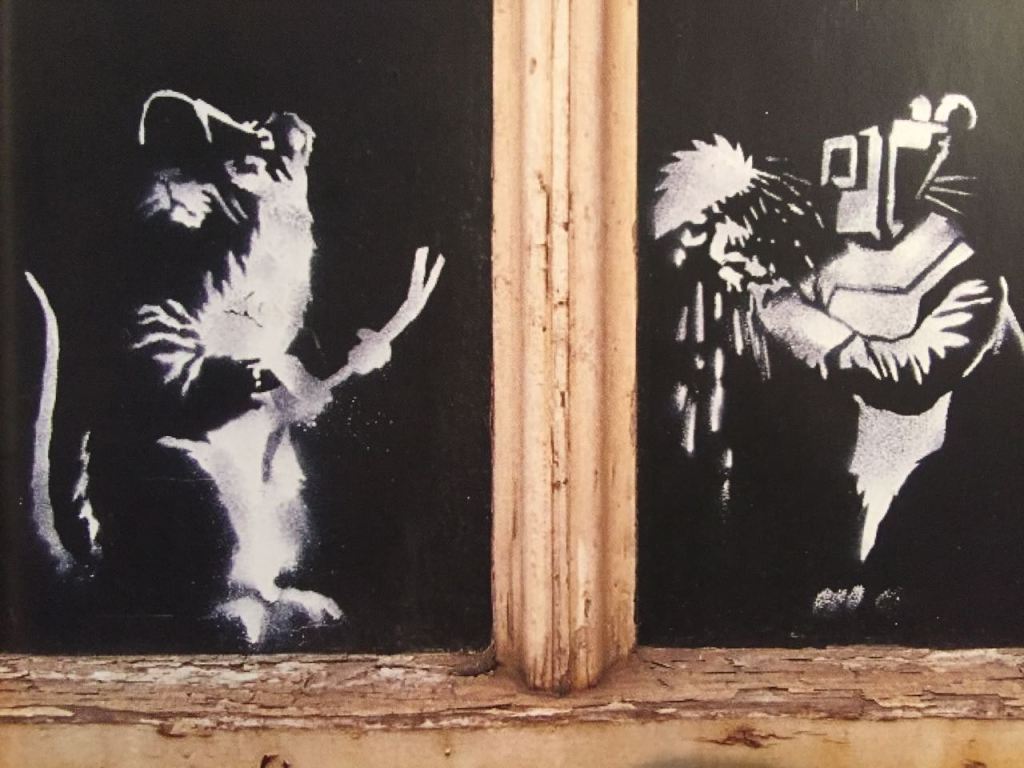


Photos: “Wall and piece”.
THE WHITE HOUSE RAT. LIVERPOOL, 18 SEPTEMBER 2004
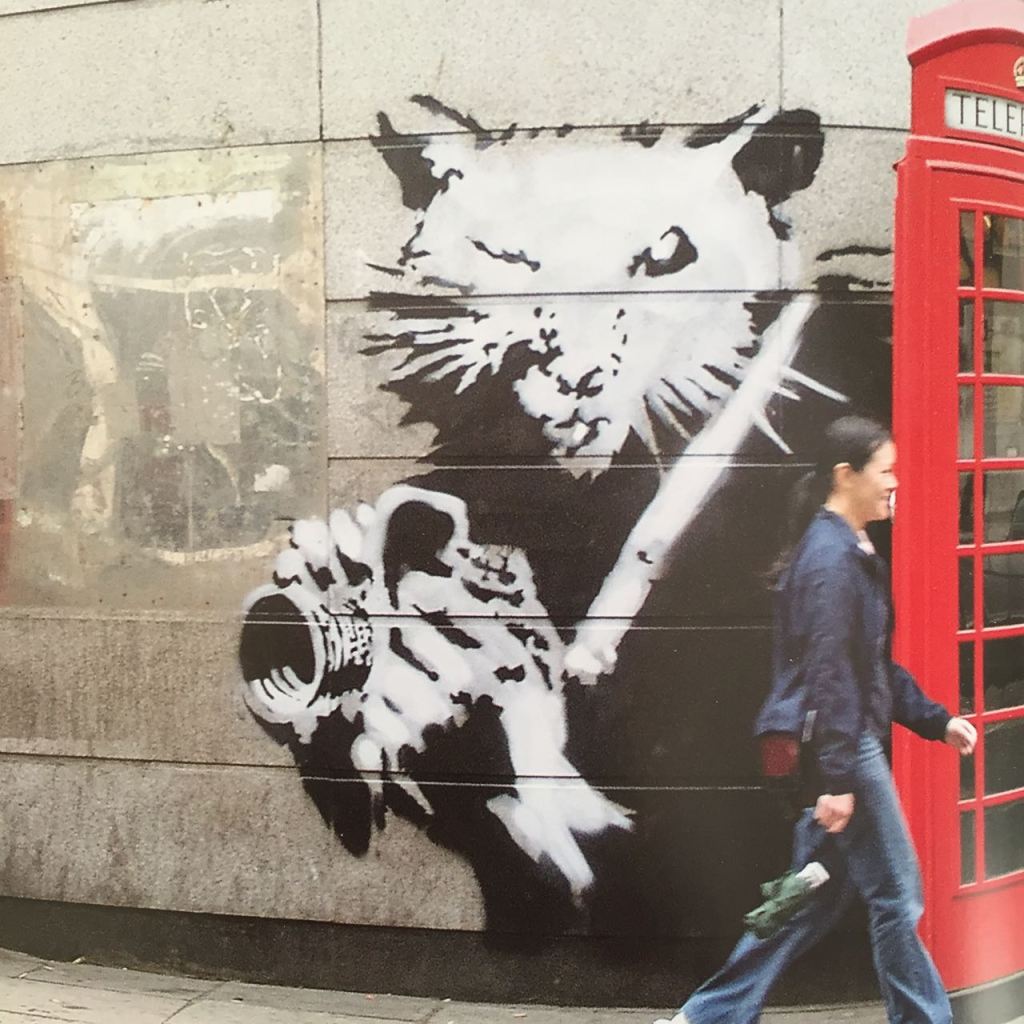
‘Whitehouse Rat’ by Banksy is probably the largest of his artworks, all categories, painted in broad daylight in Liverpool’s Chinatown. The artwork, which in its original form depicted a giant rat holding a marker pen, spanned nearly 200 square meters of a building that had previously housed the Whitehouse Pub, which quickly led to the piece being referred to by the press as ‘The Whitehouse Rat’.
The artwork was timed to coincide with the September 2004 Liverpool Biennial, which Banksy invited himself to, by painting a host of works throughout the city during the prestigious art fair.

JUSTICE UNVEILED. LONDON, 4 AUGUST 2004
A few months later, on 4 August 2004, Banksy installed another massive sculpture in London; the figure of justice overlooking the Old Bailey in London – with US dollar bills stuffed into her garter and a plaque on the plinth saying: “Trust no-one”.


Photos: Art of the State – http://www.aots.co.uk
Flyer for the Justice Unveiled event:

THE DRINKER STATUE. LONDON, FEBRUARY 2004
In February 2004, Banksy installed a statue in Princess Circus, a small square in central London. The statue is called The Drinker, a caricature of Augustin Rodin’s famous sculpture, The Thinker. A few weeks later, the statue was stolen by self-proclaimed “art terrorist” Andy Link.

JAMAICA AND CUBA. JANUARY, 2004
In early 2004, a group from Team Banksy went to the Caribbean together with DJ Jon Carter and filmmaker Rick Elgood. One of their hosts during the visit was Jamaican dancehall star Mark Anthony Myrie, a.k.a. Buju Banton. There is very little documented from the trip to Jamaica and even less from Cuba. The following collage with pictures of some of the work in Jamaica surfaced years later, when Steven Lazarides put part of his personal collection up for sale at Juliens in LA:
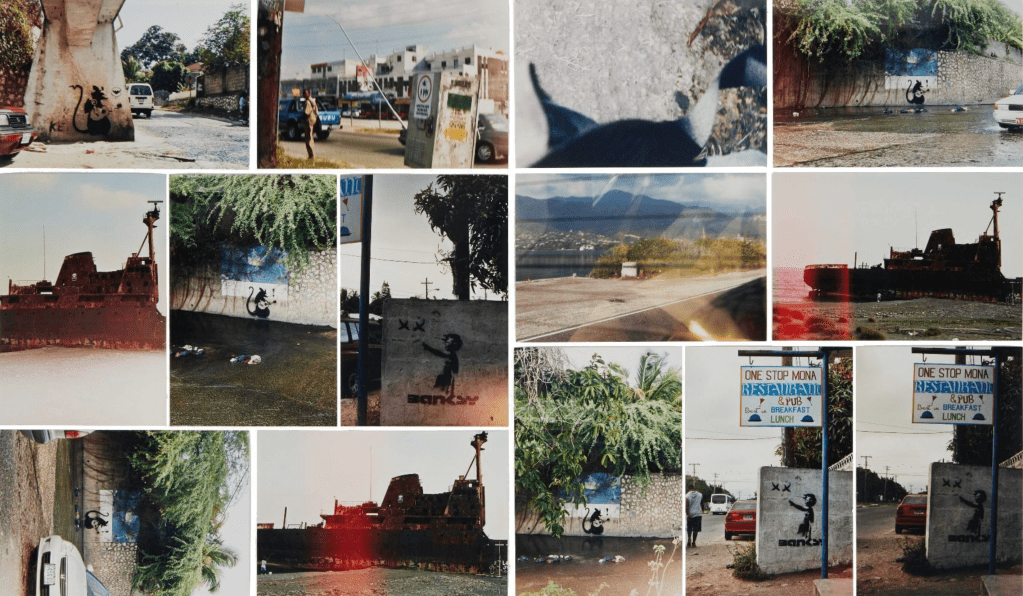
Photo: From Lazarides / Julien’s
The Jamaican magazine/blog Afflicted Yard published a few photos in 2004 of Team Banksy at work in Jamaica:
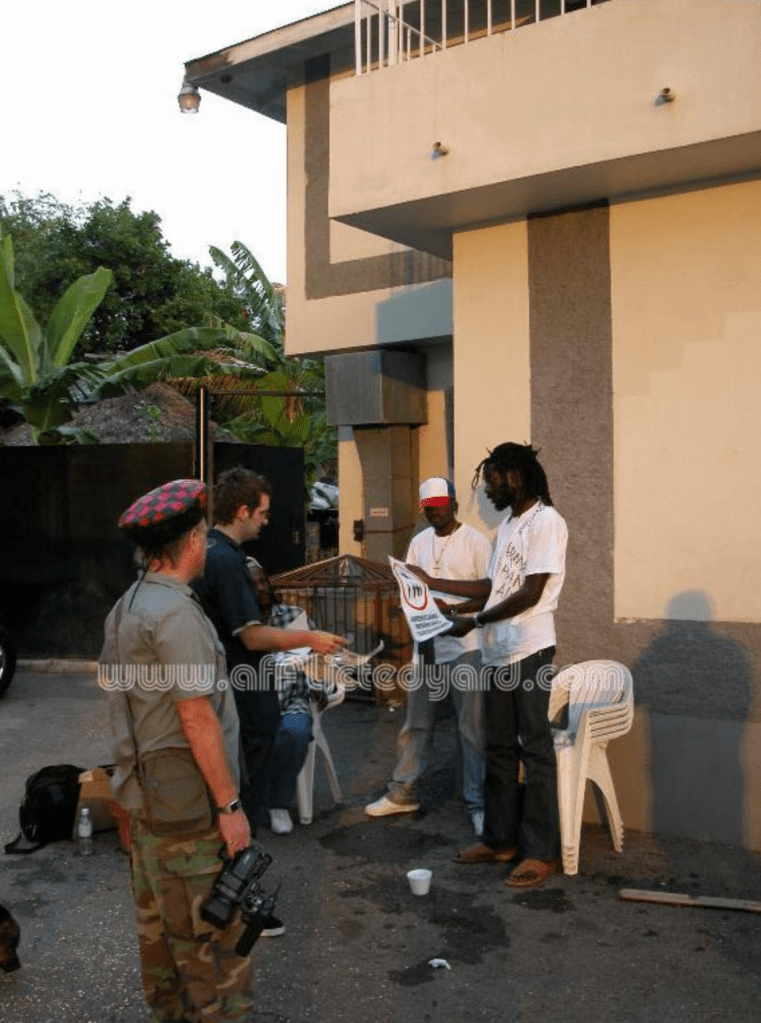
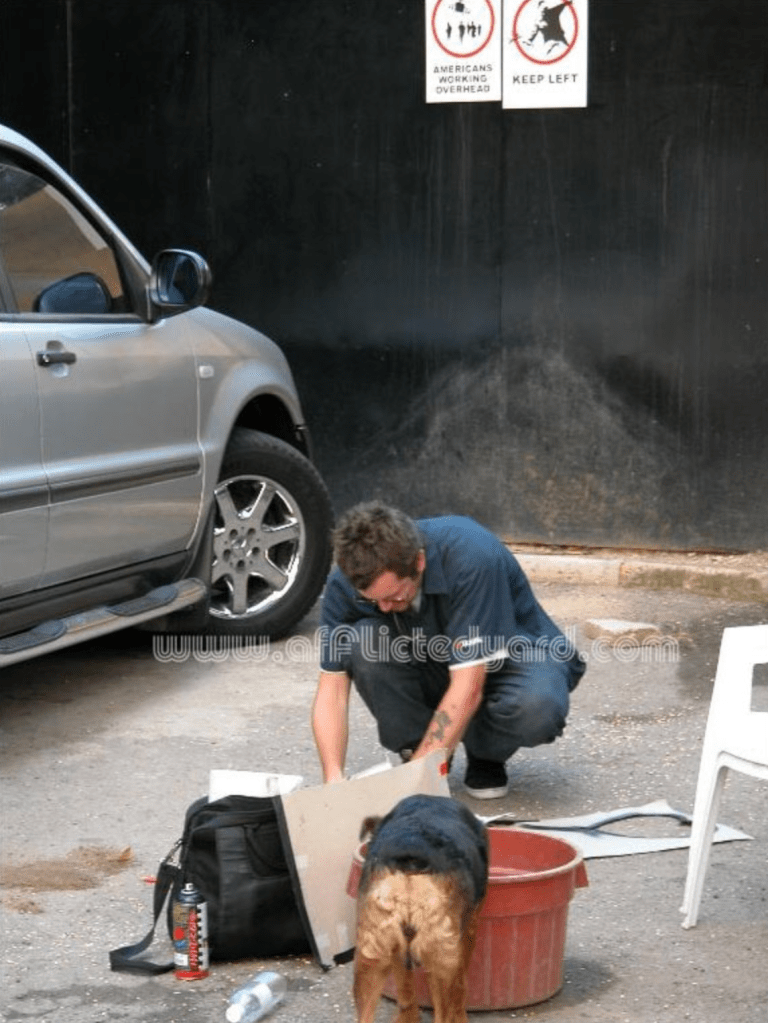
Photo to the left: Rick Elgood, R, unknown and Buju Banton holding the sticker. Photo to the right: R sorting out the stencils
Street Art in UK. 2002 – 2003
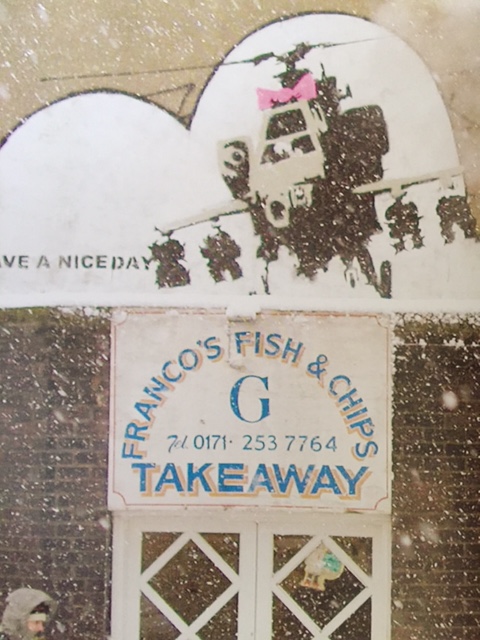
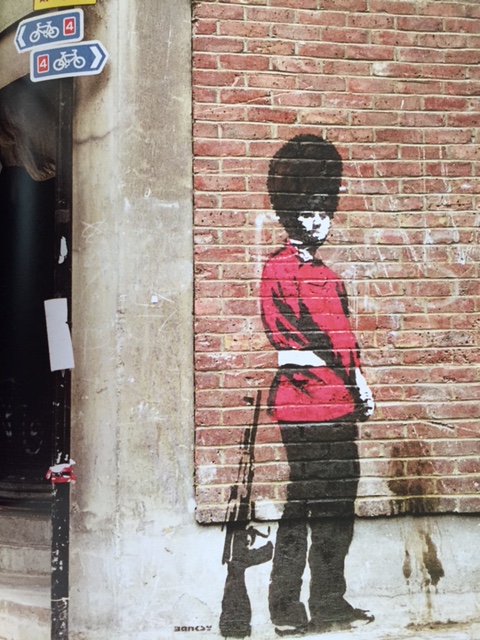
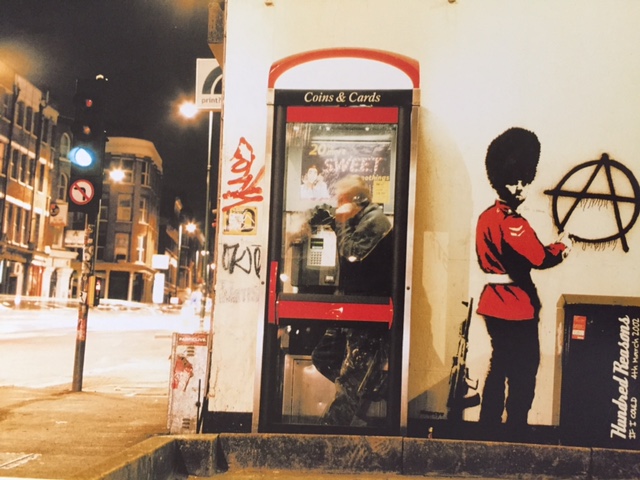
Banksy focused on London in 2002 and 2003, but he also did a few pieces in Bristol and Brighton. The iconic work Pulp Fiction went up in 2002 on Old Street in Shoreditch, one of Banksy’s preferred areas in London. The Royal Guards in different areas of London are from the same period.




Street art abroad. 2000-2003
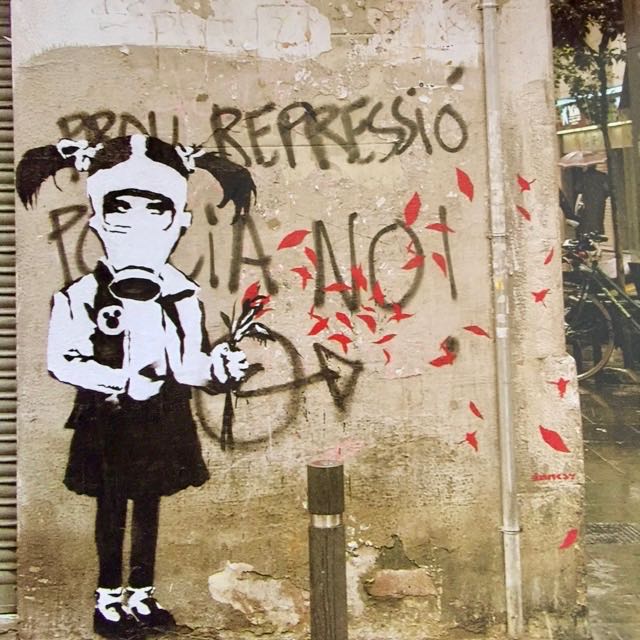
In the first years of the decade, besides the UK and US, Banksy went to Barcelona, Berlin, Vienna, Bergen, Copenhagen, Tokyo, Paris, and Palestine, where he painted the first stencilled version of the iconic Love is in the Air behind a gas station in Bethlehem.
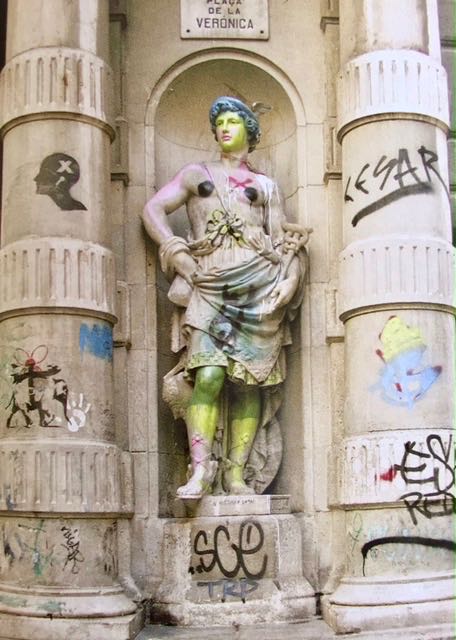


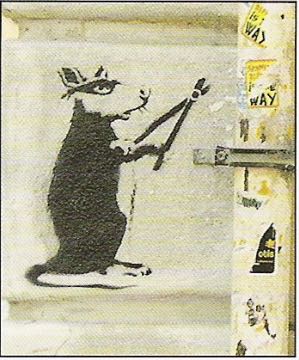

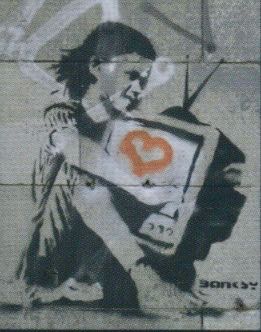
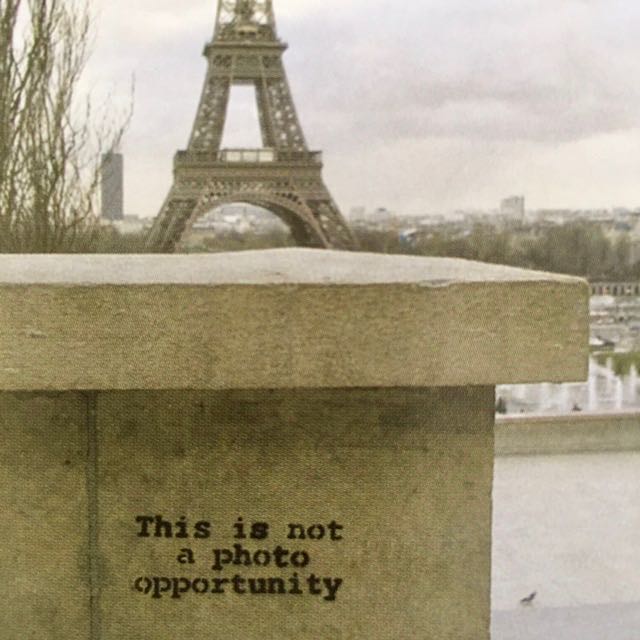



Easton Cowboys in Chiapas. Mexico, January 2001
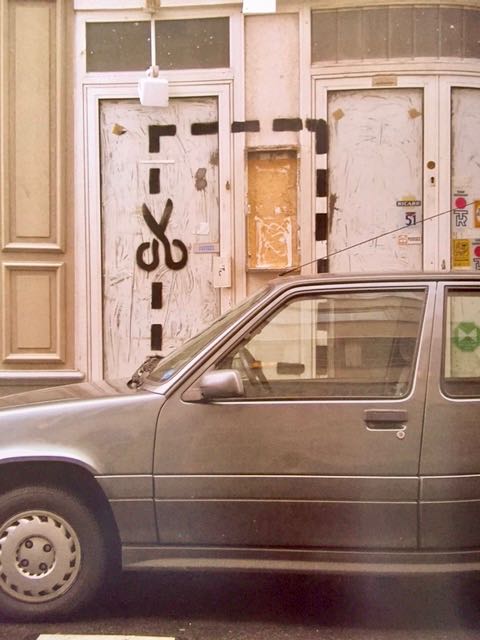
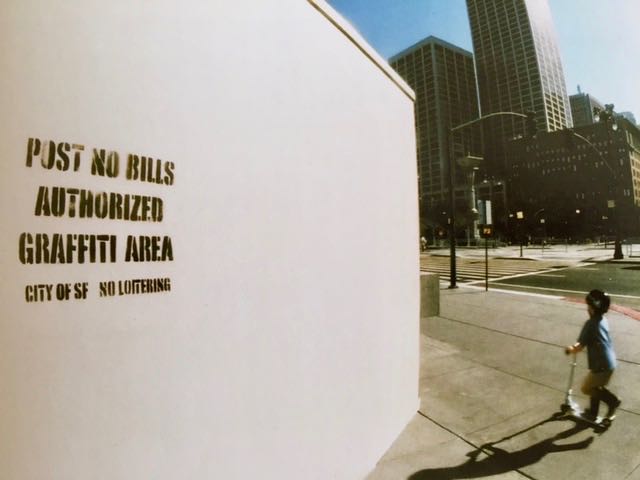
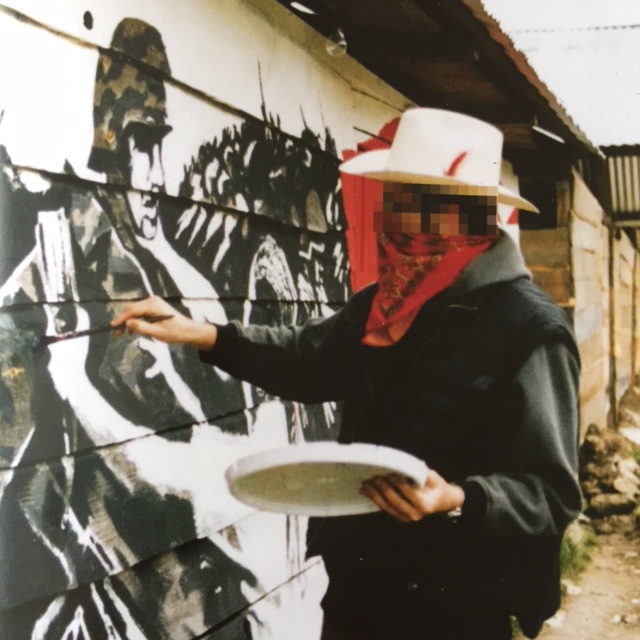
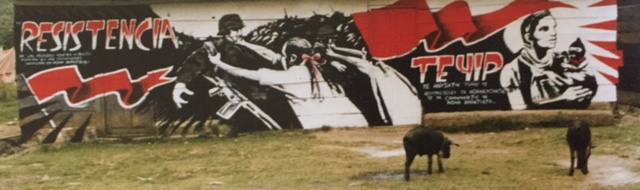
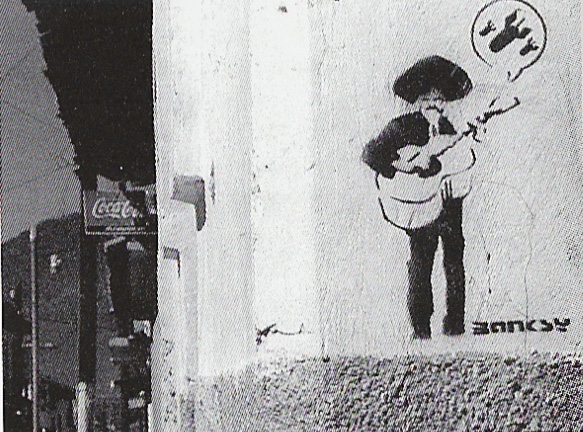
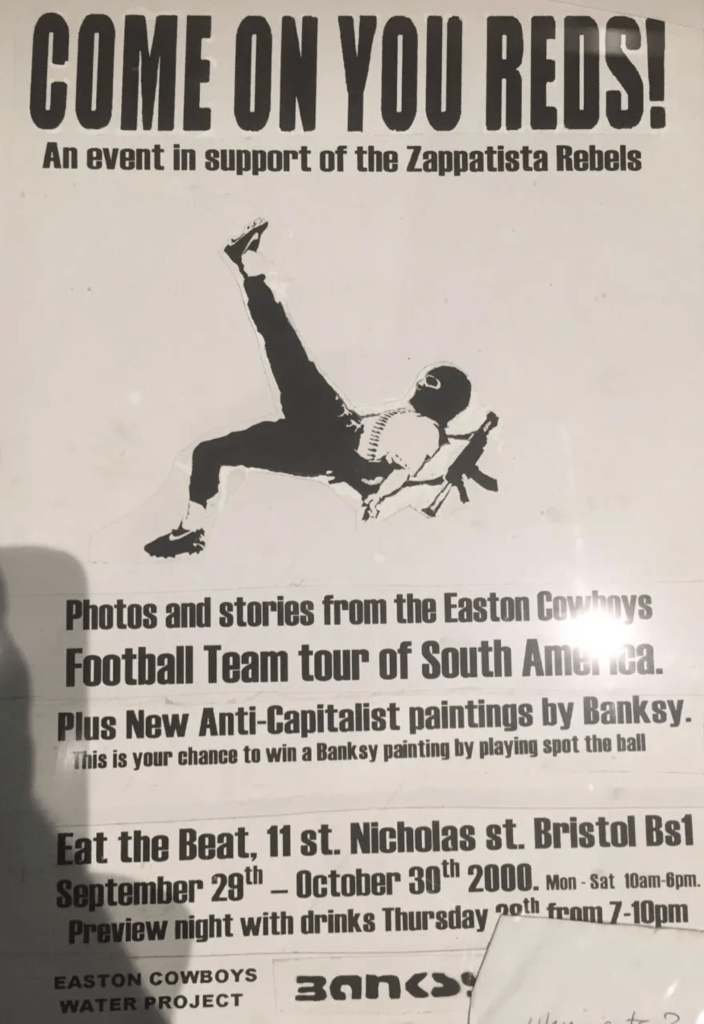
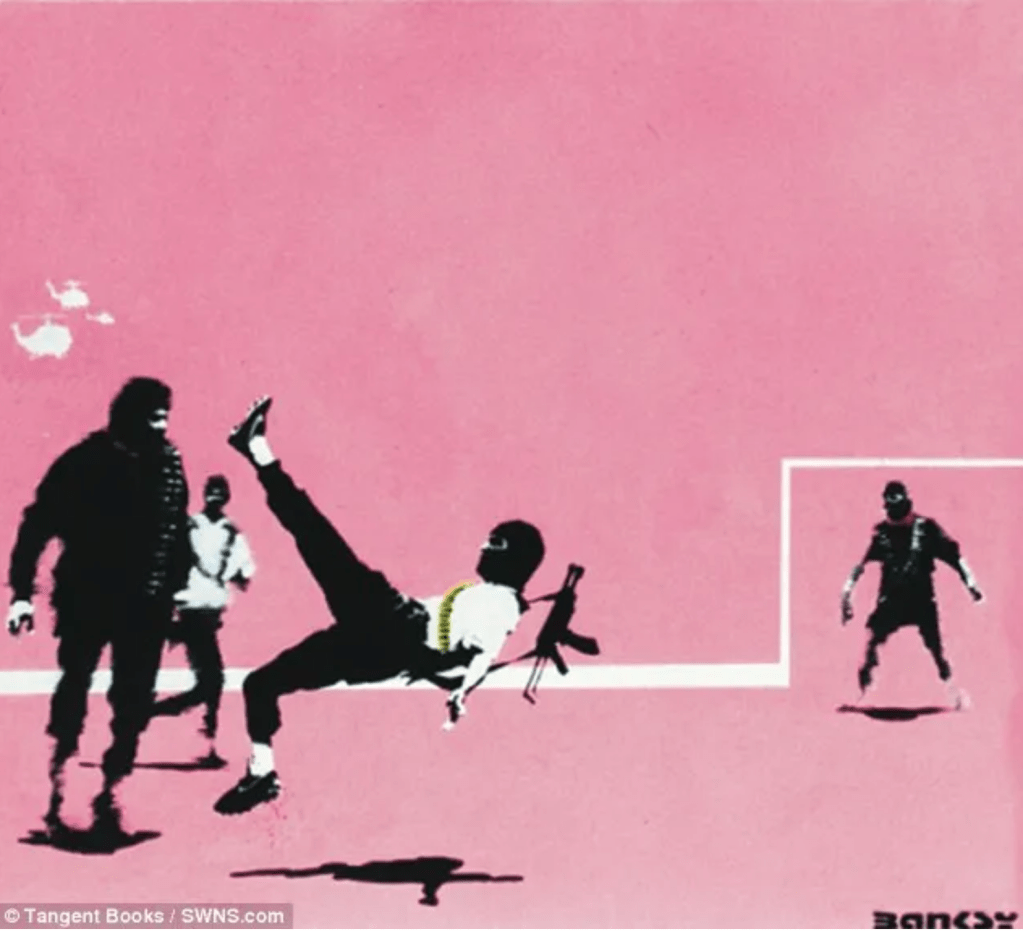
Banksy joined the Easton Cowboys, a radical football team from Bristol. In early 2001, they went to Chiapas, Mexico, to play against a football team from EZLN, Ejército Zapatista de Liberación Nacional. Banksy played as a goalkeeper. During the stay in Chiapas, the Banksy team completed a few stencils and at least two free-hands.


The trip was partly financed by a raffle of a Banksy painting in October 2000:
SWISS EMBASSY. 26 JANUARY 2001
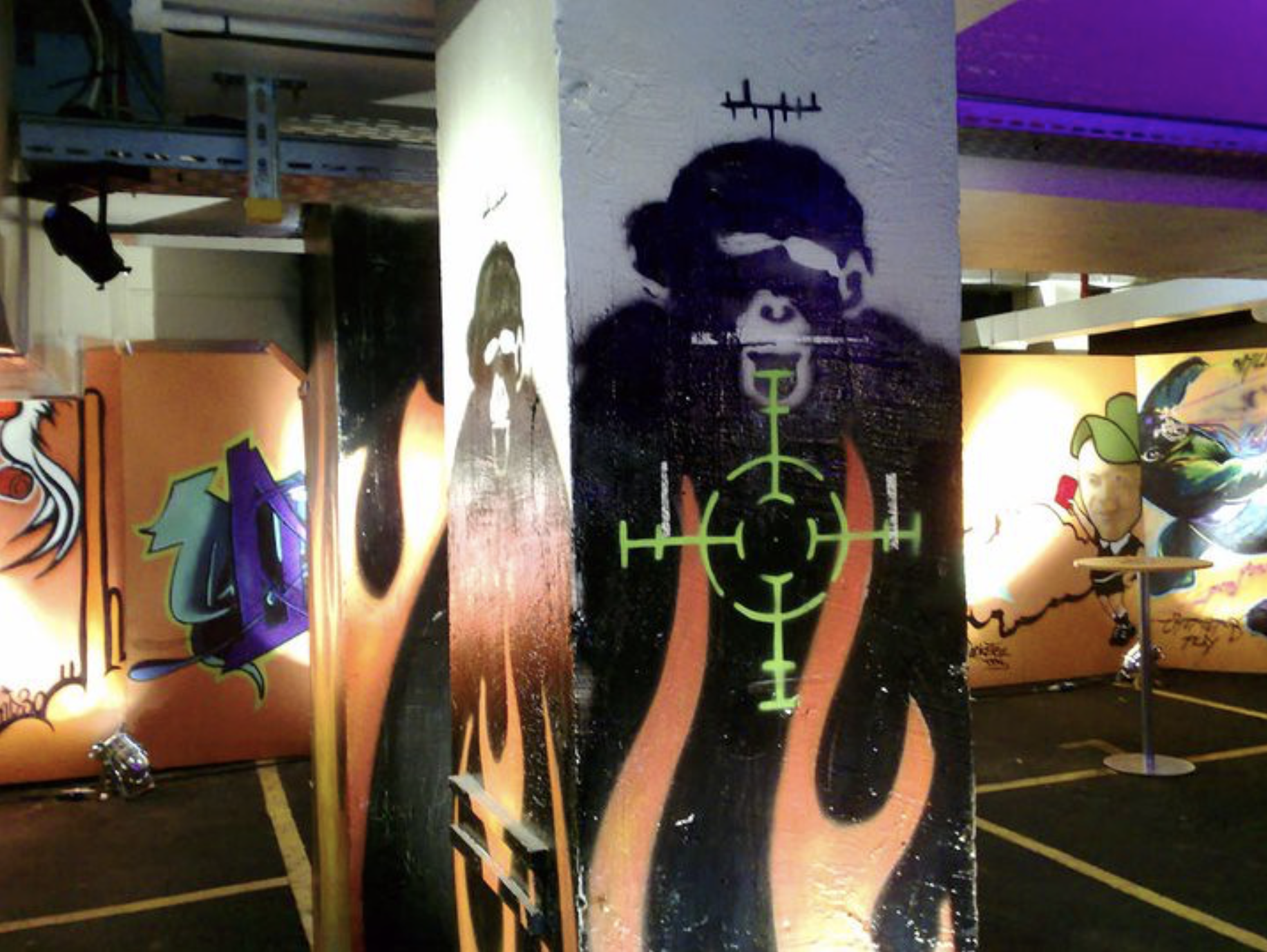
The Swiss ambassador to the UK invited a group of street artists to decorate the underground parking of the embassy. It was part of a cultural programme. The press release from the Swiss Embassy read as follows:
“The course of the new century will be shaped and determined largely by those who are 15 – 30 years old today. We, the members of staff at the Swiss Embassy in London, are dedicating our programme for 2001 to this particular section of our society. We want to find out from the “next generation” what it thinks of the future, how it plans and influences future events, what values and ideas it has. We want to learn and understand, we want to debate and experience.Together with young people and young adults we intend to organise five principal events:
- On 26 January 2001: Graffiti Party in the Garage at the Embassy
- On 29 May 2001: Swiss Ambassador’s Award 2001 (Mirjam Tschopp, violin, and Karl-Andreas Kolly, piano)
- In summer 2001: Trendsetting Sports and Food Event in the streets of London
- Also in summer 2001: Fashion Event
- As the grand finale in November 2001: major Swiss Event for young artists at Tate Modern.
We want to begin the year 2001 with a New Year Graffiti Party for 15-30 year-olds in the Garage at the Embassy. We have invited other graffiti artists too, who will transform the Embassy’s Garage into a cultural space one month before the Party.”
Two of Banksy’s many pieces:
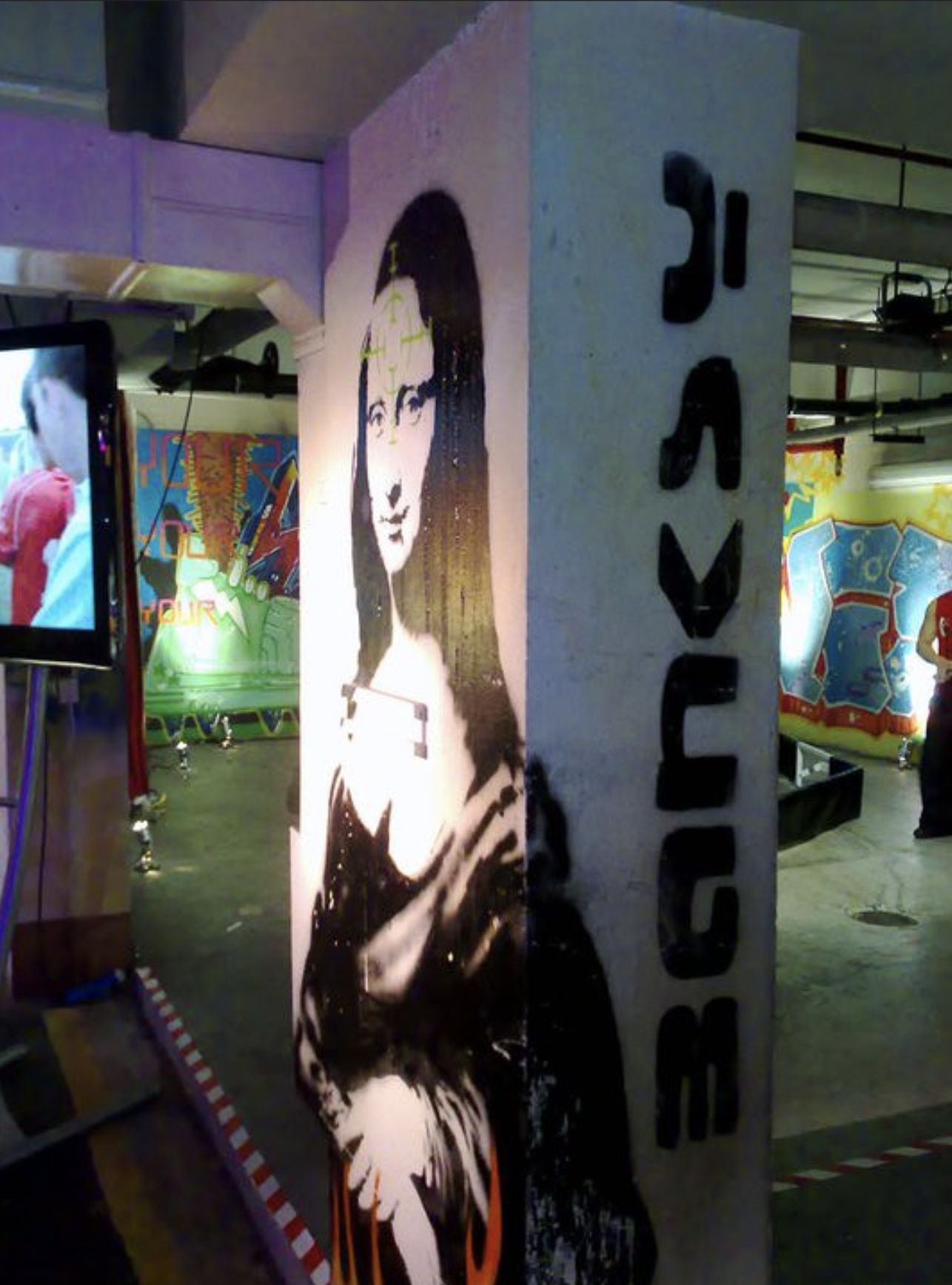
Photos: Banksyforum, Flickr
The Guardian told the story behind the ambassador’s initiative:
Early stencils in Bristol, 1995-1999
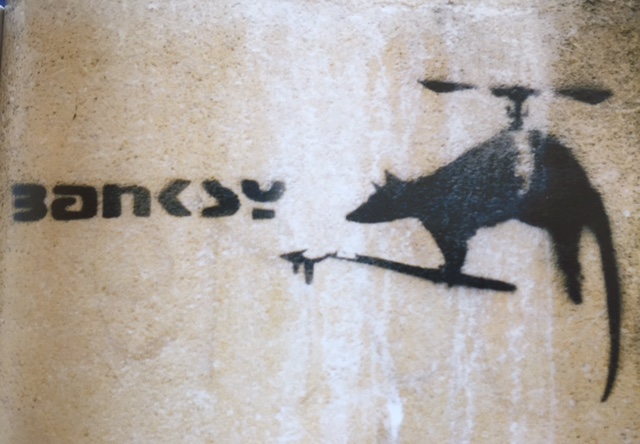
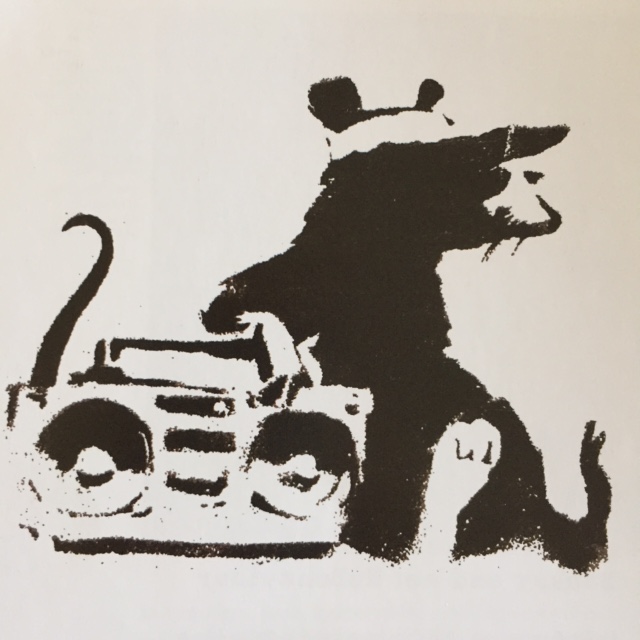
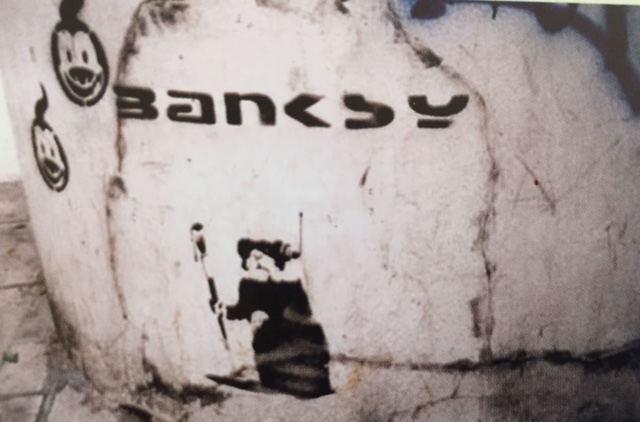
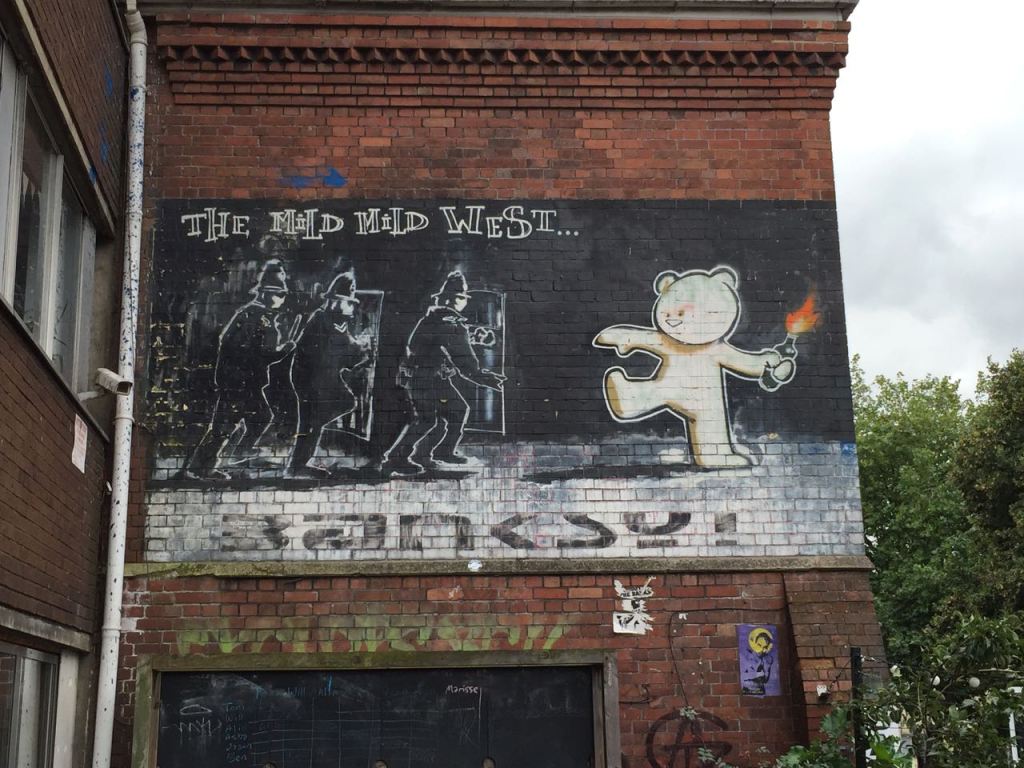
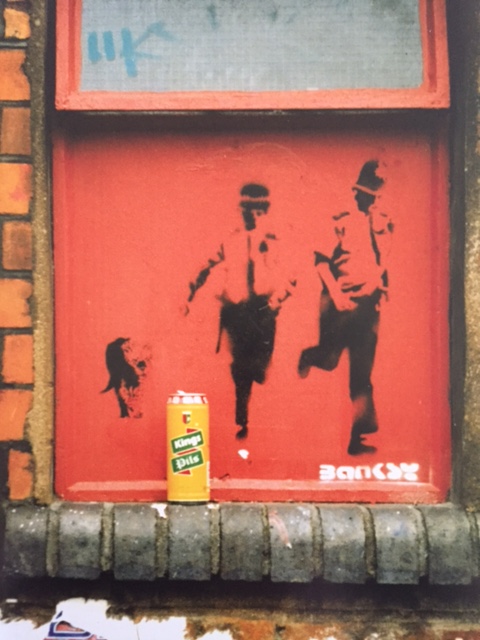
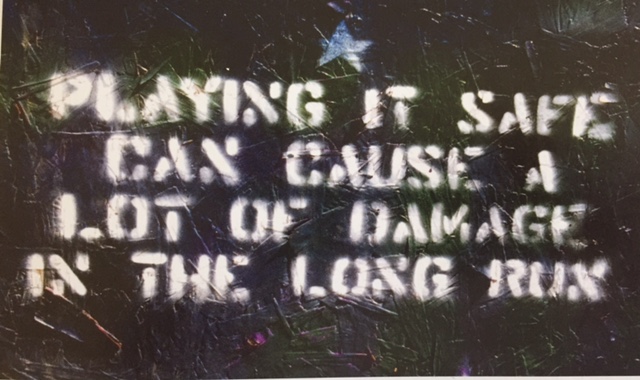
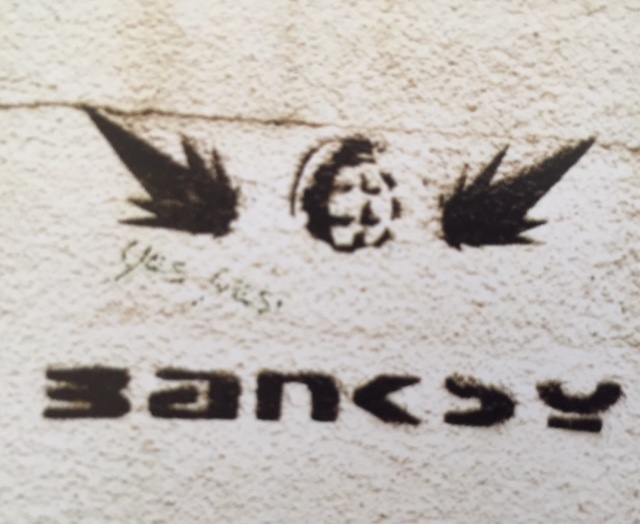
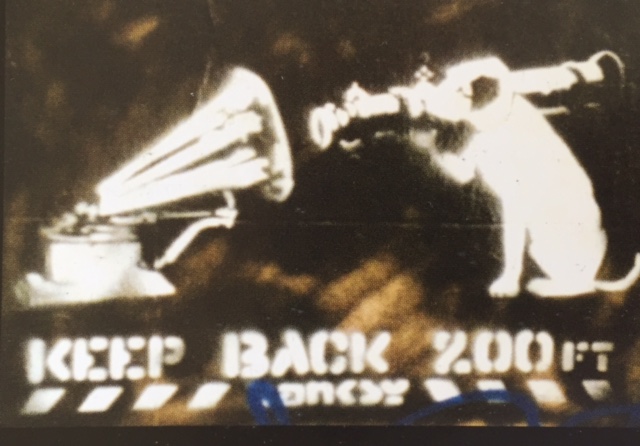
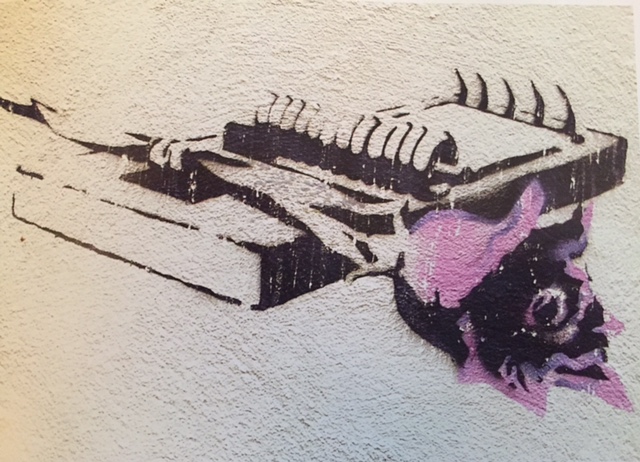
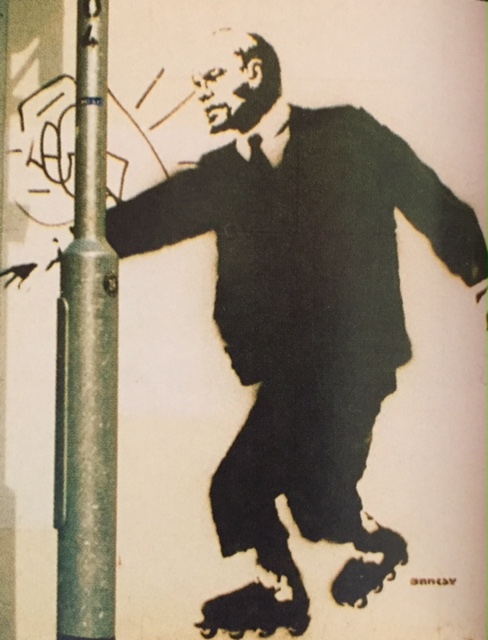
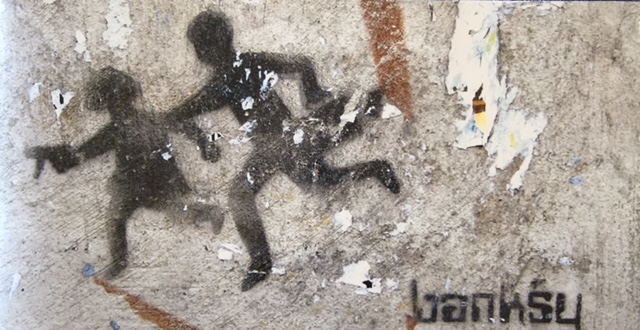
According to Steve Wright’s and Richard Jones’s excellent book Home Sweet Home, Banksy’s first stencil was an insect in a spotlight on a wall on Windmill Hill in South Bristol. The exact year is unclear, but 1996 is a good approximation.

Banksy’s early stencil work in Bristol:











Early Bristol freehand. 1995 – 1999
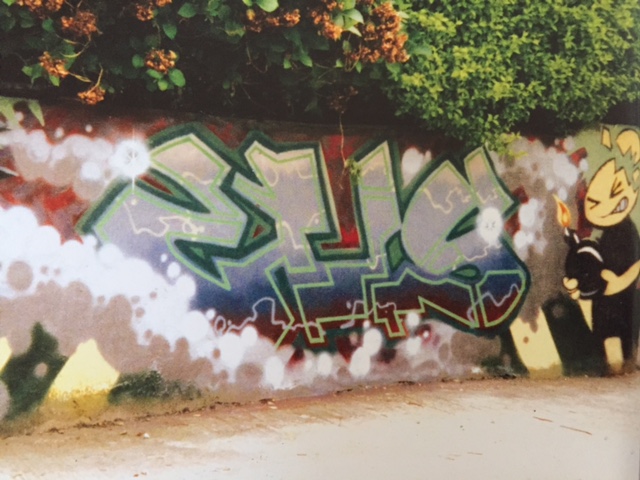
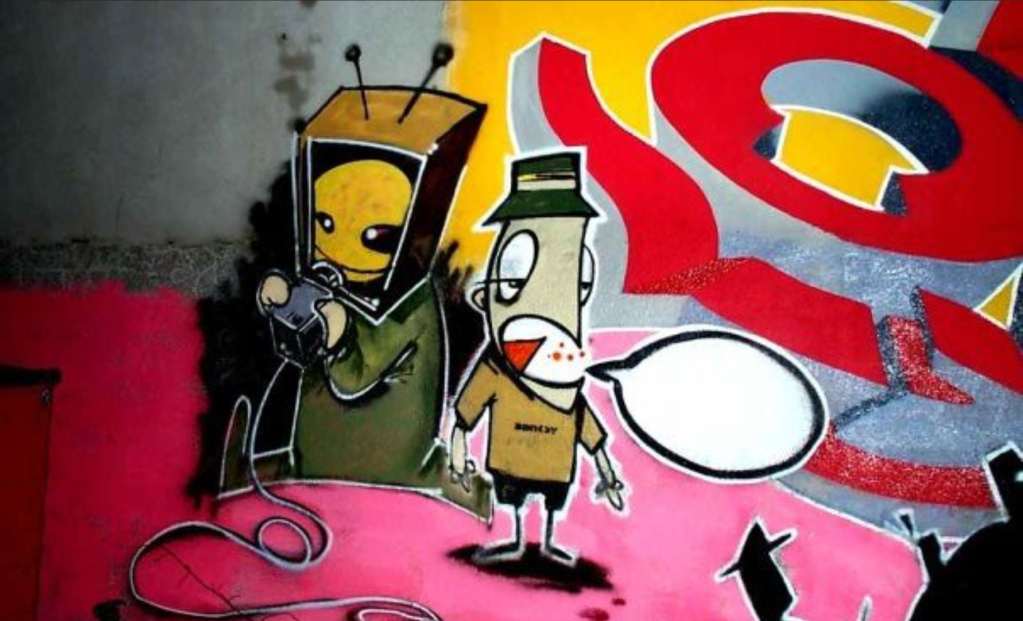
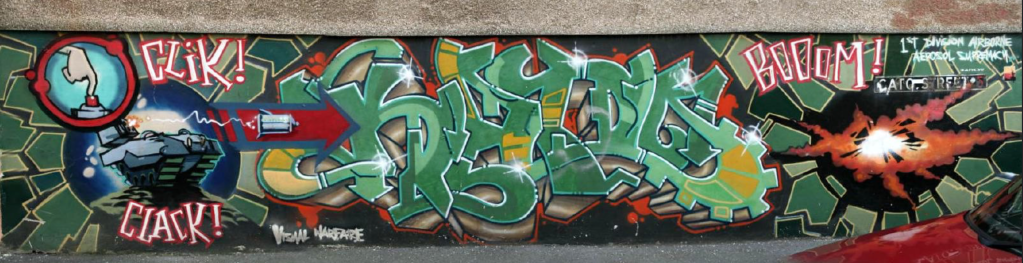
The walls of Easton in Bristol were the canvases for Banksy’s early freehand work. Inkie and other prominent figures from the Bristol street-art scene collaborated regularly.
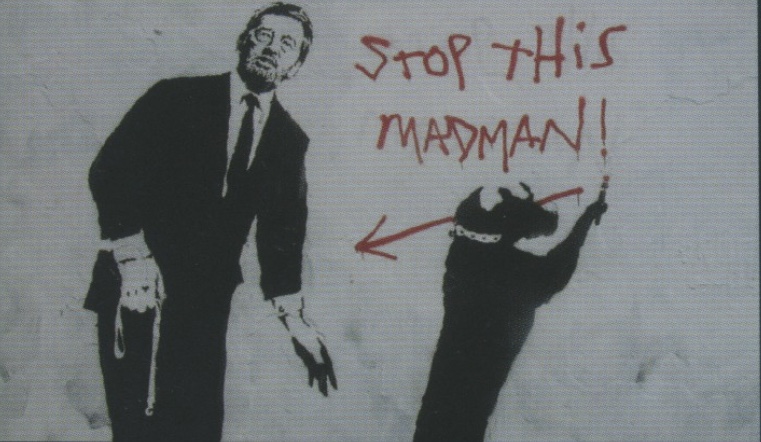
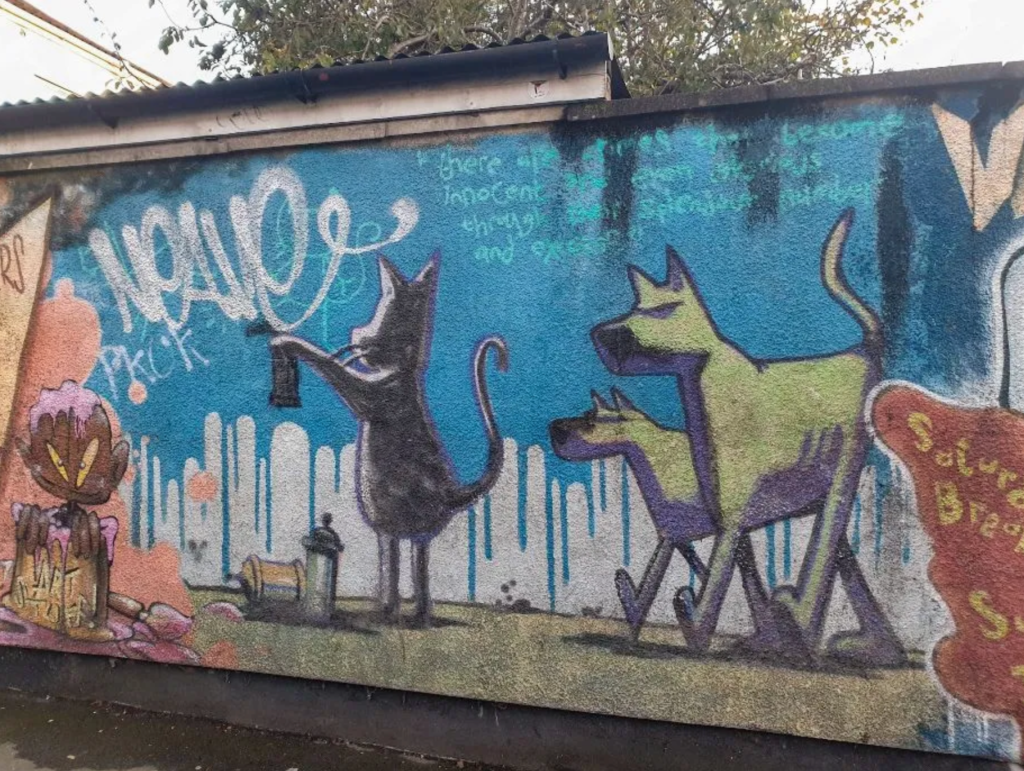
One can clearly see that, from the start, Banksy had a narrative in his art; there is always something happening. A lot of the early works had texts. One interesting example is the first photo in the series below: The artwork depicts a dog spraying a wall as two larger watchdogs approach. The text says, “There are crimes which become innocent and even glorious through their splendour, number and excess,” a quote by 17th-century philosopher François de La Rochefoucauld.




All photos above: Banksy forum on Flickr: https://www.flickr.com/groups/banksy/pool/
FIRST APPEARANCE AT GLASTONBURY. JUNE, 1997
In 1997, Banksy with Inkie (Tom Bingle), Dicy (Justin MacCarthy), Ekoe, Feek (Damien Neary) and Paris (Graham Dews) painted “Devious Nature” on a plywood plank on the Glastonbury Festival. The artwork depicts Michael Eavis, the co-founder of the Glastonbury Festival, on his tractor while being chased by a herd of cows.

GLASTONBURY FESTIVAL, JUNE 1997
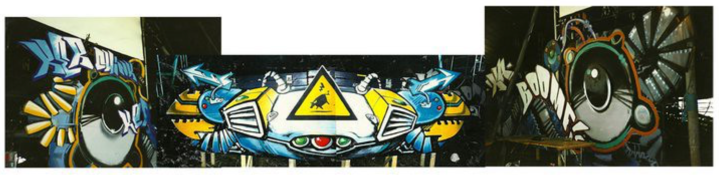
In 1998, Banksy and Inkie, Dicy, Ekoe, Feek, and Paris were invited back to Glastonbury, where they decorated a dance tent:
THE SILENT MAJORITY LORRY. 1998 (or 1999)
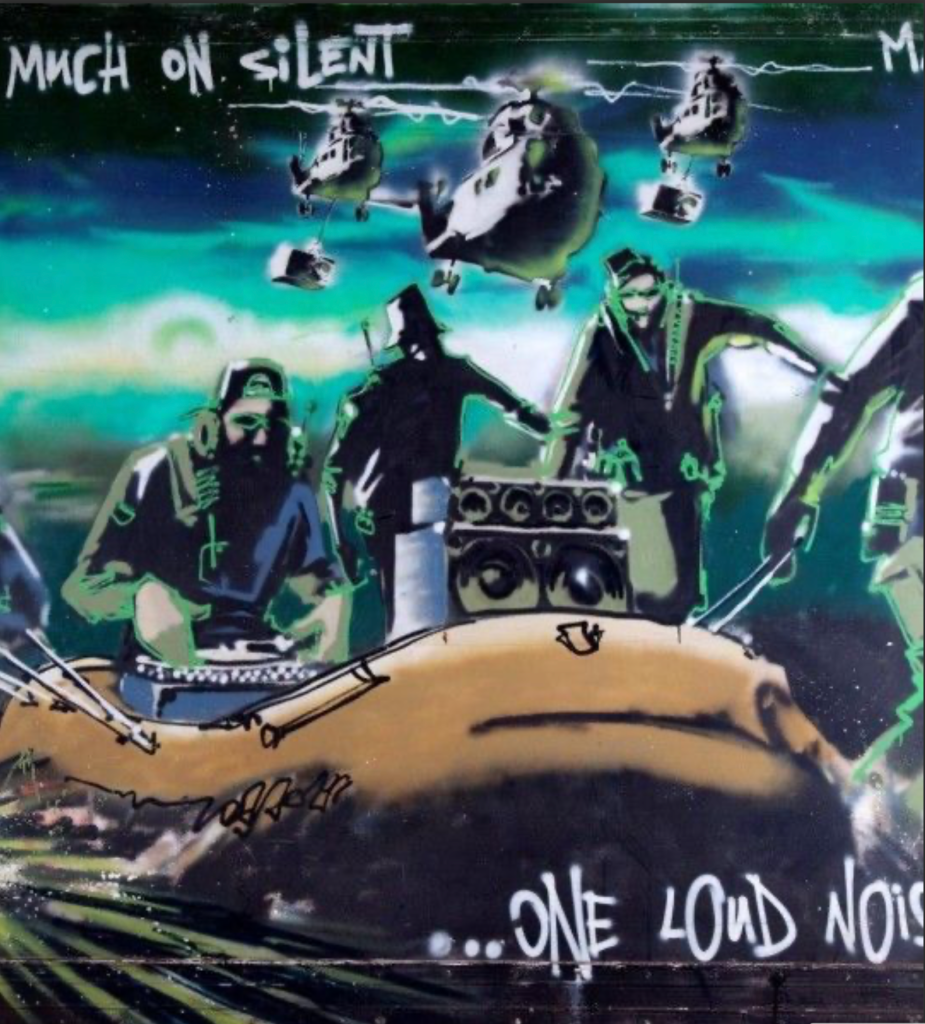
According to some sources, Banksy and Lokey painted the lorry at Glastonbury in 1998. Other sources claim it was painted in 1999. The text says, “It’s better not to rely too much on silent majorities … for silence is a fragile thing … one loud noise and it’s gone.” A reference to Richard Nixon’s speech from 1969, where the term “Silent Majority” was coined.
In 2015 the lorry was sold at Digard Auction for £ 445,792.


Photos: BBC and Digard Auction
 Banksy unofficial