Early exhibition in Easton, Bristol. January 1999

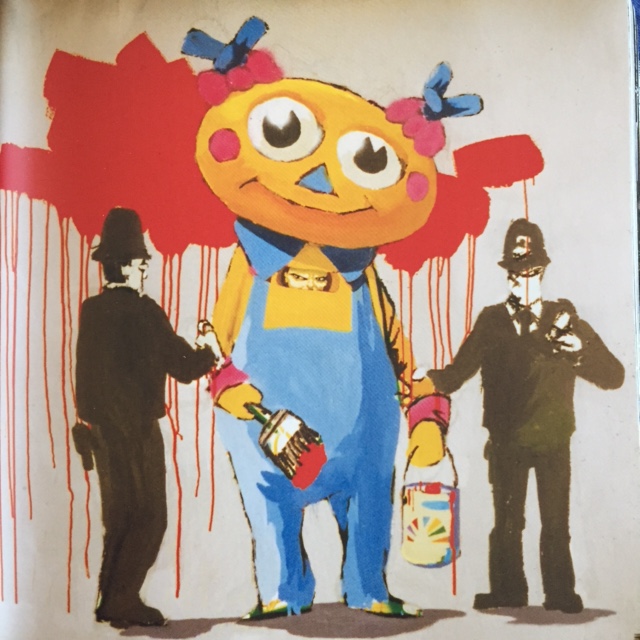
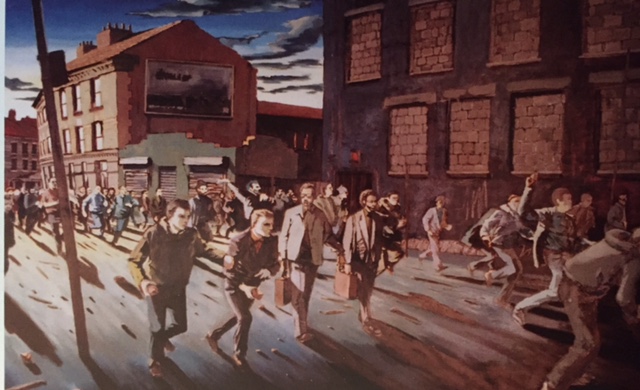
Banksy’s first non-street art exhibition was called “A Romantic View of Easton”. It was organised by Paul Kelly and took place in a flat in Easton, Bristol. There was an early version of Love is in the Air.

Banksy did an interview with the Knowledge Magazine the same year, where he explained his move into oil on canvas:

“What I’m facing is this compromise between making images that are more beautiful than my graffiti but get seen by less people. I think doing a gallery show would be kind of a step down, both in terms of how many people see your shit and what type of person sees it.”

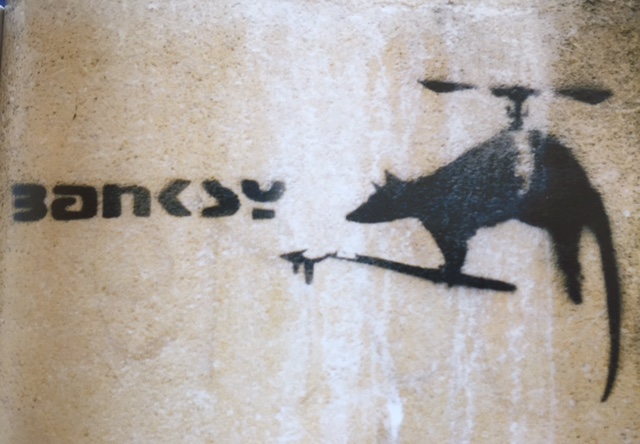
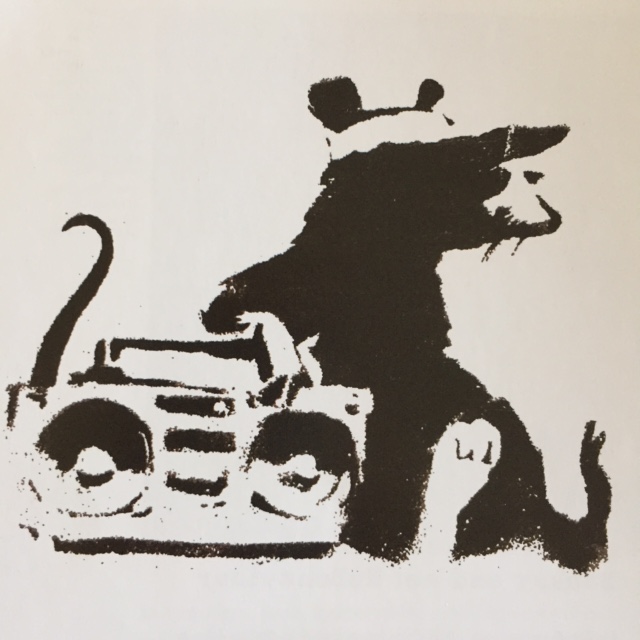
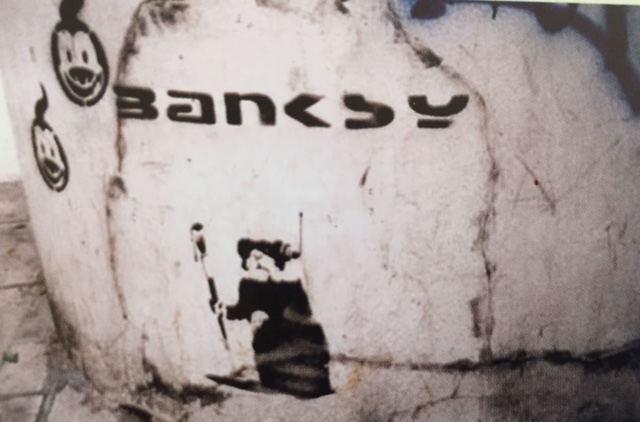
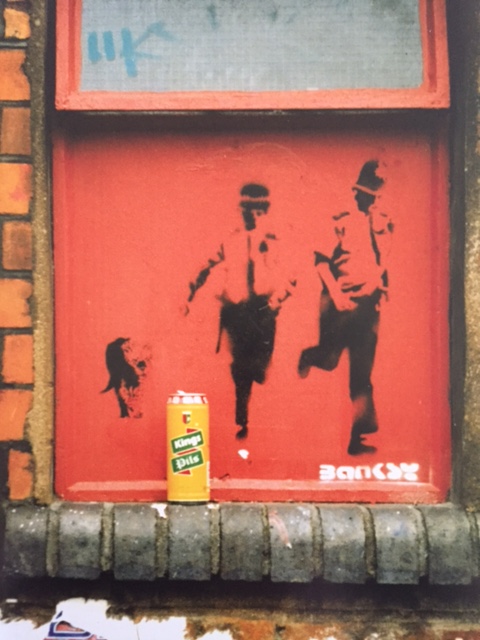
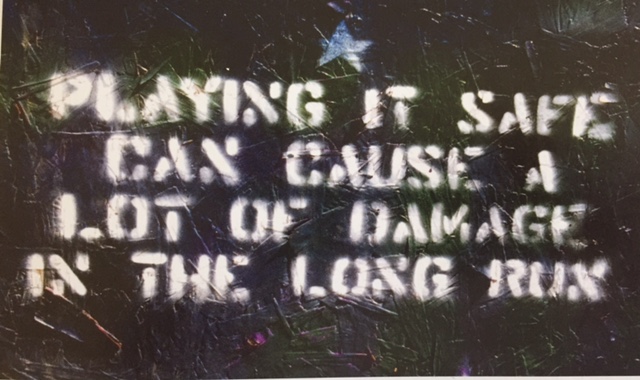
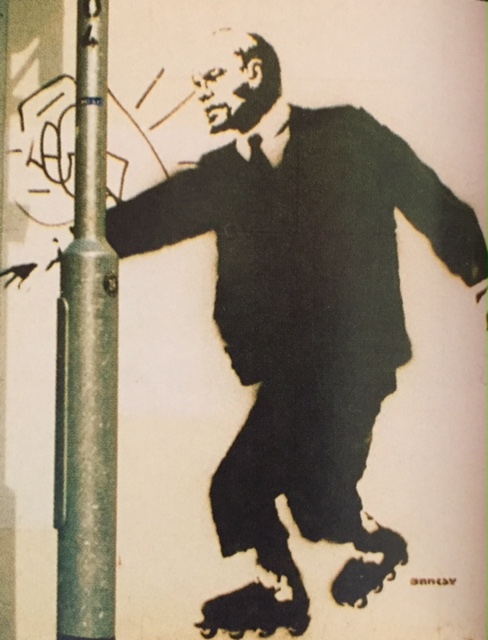
Here are some of the works Banksy presented at the exhibition in Easton:
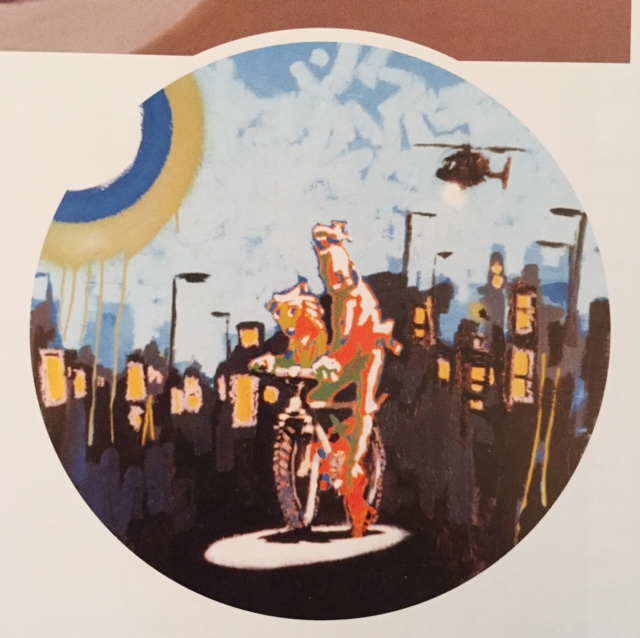
Photos: Mark Simmons – Home Sweet Home, Banksy’s Bristol.

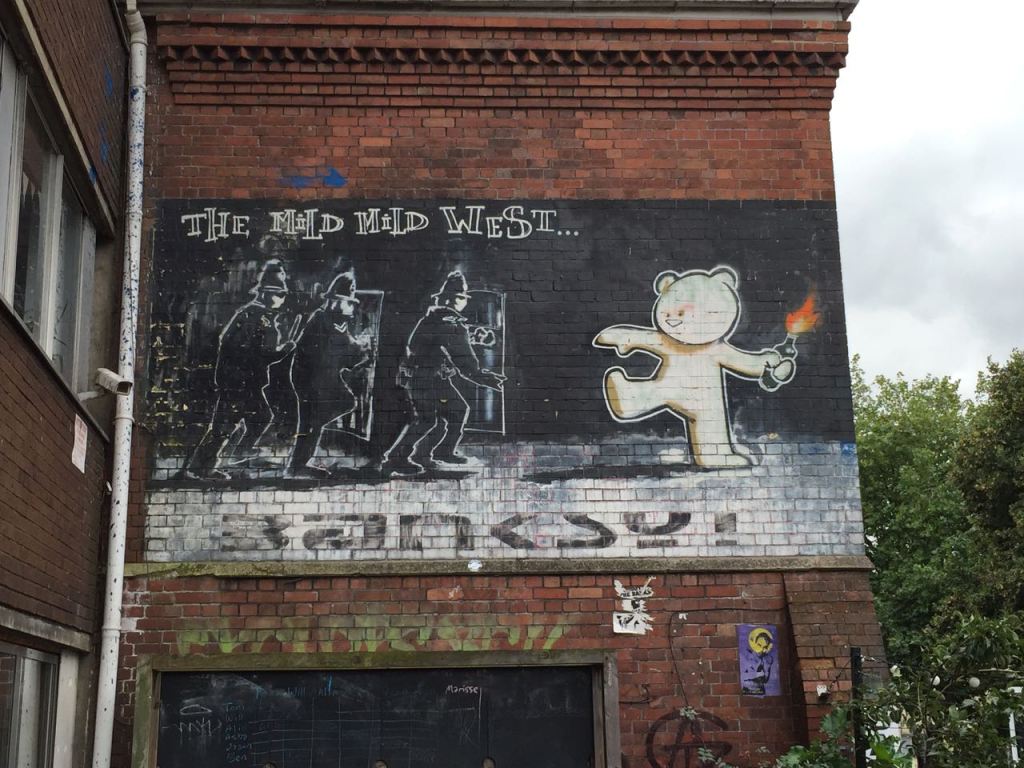
THE MILD MILD WEST. BRISTOL 1999

Photo: R.A.

The Mild Mild West is one of Banksy’s most iconic freehand works. Banksy painted it in broad daylight on a building in Stoke Croft, Bristol. It’s a response to several incidents in the late 90s with the Bristol police breaking up rave parties in full riot gear.

CARLTON ARMS, NEW YORK. 1999

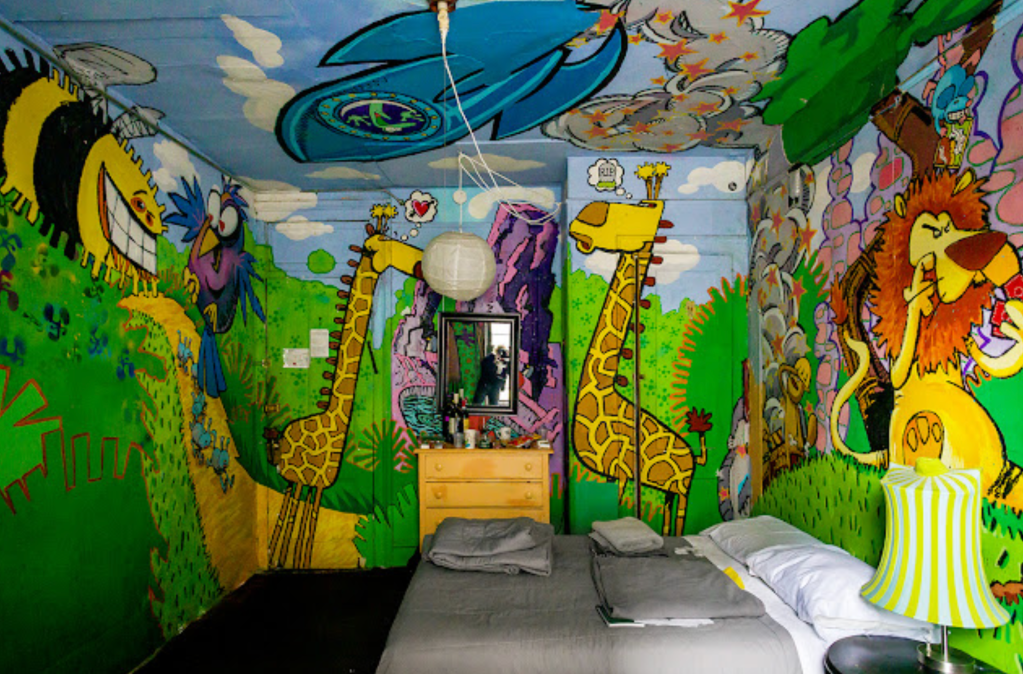
A few months later, Banksy visited New York and the Carlton Arms Hotel on East 25th Street, where he decorated a stairwell and the room 5B.
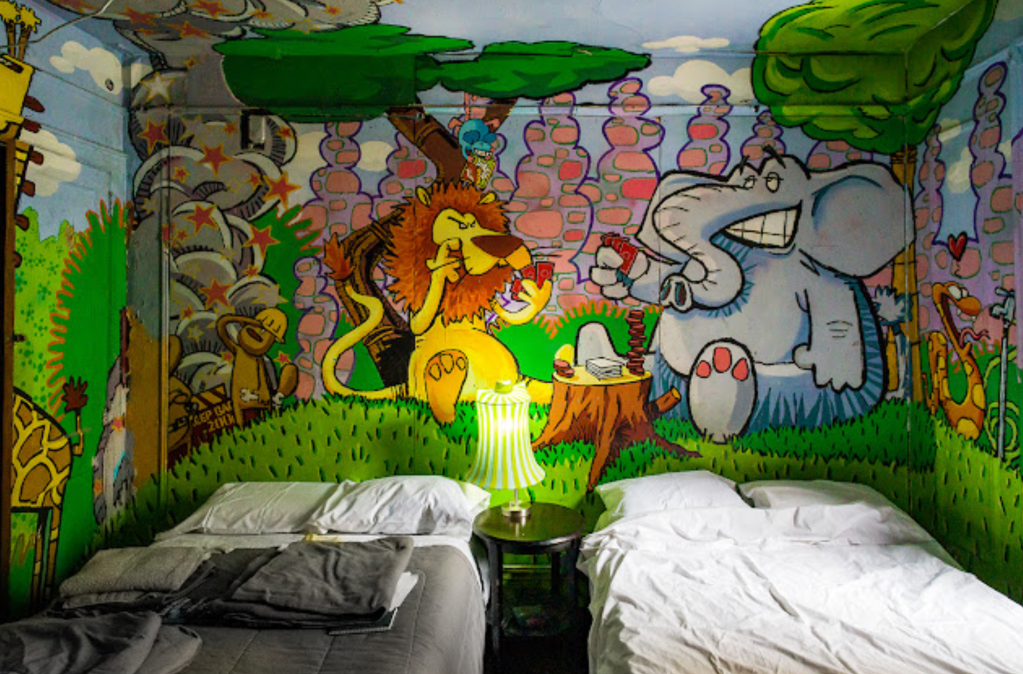
From the magazine Curbed New York:

“The artists are mostly up-and-comers, but some went on to garner significant acclaim—none more so than Banksy, who decorated a stairwell and room 5B in 1999, years before he became the world’s most famous street artist. His colorful murals of cartoonish animals are a far cry from the satirical monochrome stenciling for which he later became known. 

But outside the lobby there’s another early Banksy with more recognizable motifs: a fat cat politician smoking a cigar, a campaign poster of Elvis in Mickey Mouse ears, and a ballot box with a stick of dynamite wedged inside.

One of the managers, Hugo Ariz, says that Banksy—whom he describes as “a very funny, nice, regular kind of guy”—was experimenting with stenciling while at the hotel, and some of his practice stencils lying around somewhere. Ariz recently unearthed a rolled-up canvas that turns out to be a Shadowman painting by Richard Hambleton, the street artist whose sinister figures covered downtown Manhattan in the 1980s. Apparently, the Basquiat and Haring contemporary lived and worked at the hotel for a year; you can spot some of his pieces in the corridors and near the front door.”

Source: https://ny.curbed.com/2017/9/29/16384778/nyc-hotels-carlton-arms-banksy-artwork

Early stencils in Bristol, 1995-1999

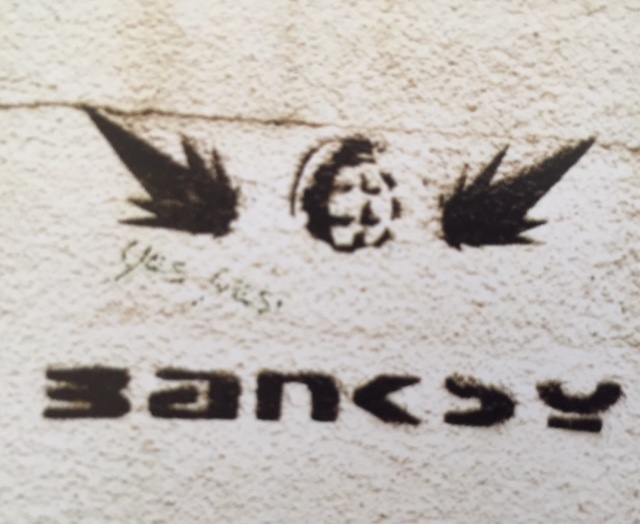
According to Steve Wright’s and Richard Jones’s excellent book Home Sweet Home, Banksy’s first stencil was an insect in a spotlight on a wall on Windmill Hill in South Bristol. The exact year is unclear, but 1996 is a good approximation.

1996 - SA - UK - Bristol - Windmill Hill - First stencil - ant - HSH p62
Photo: Home Sweet Home, Steve Wright and Richard Jones

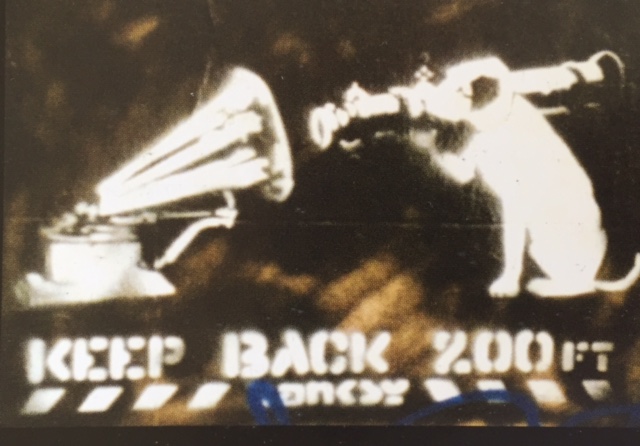
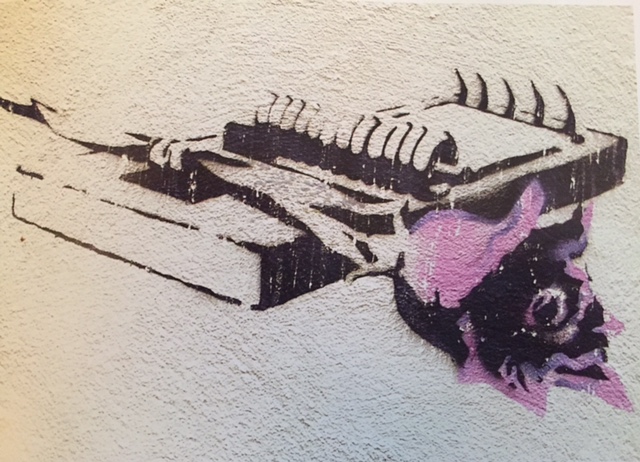
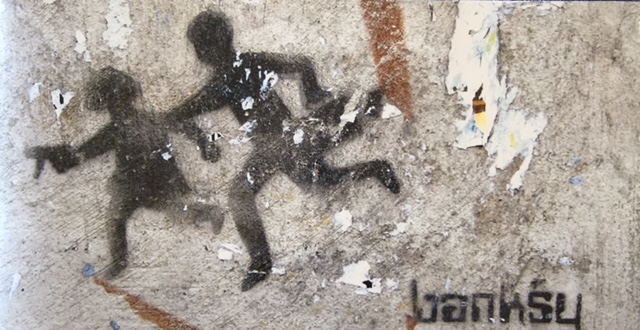
Banksy’s early stencil work in Bristol:

Early Bristol freehand. 1995 – 1999

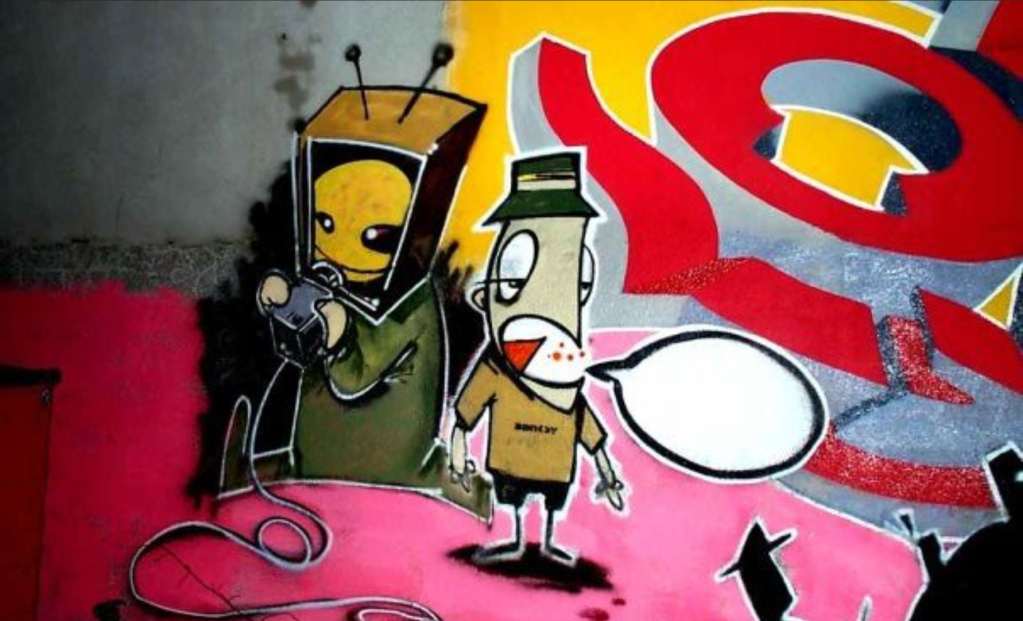
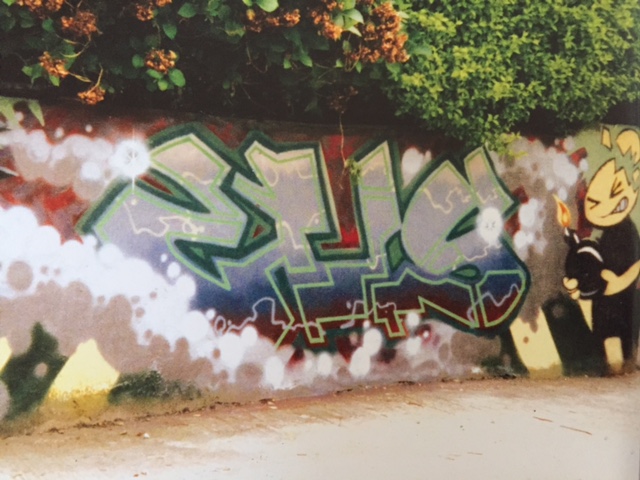
The walls of Easton in Bristol were the canvases for Banksy’s early freehand work. Inkie and other prominent figures from the Bristol street-art scene collaborated regularly.

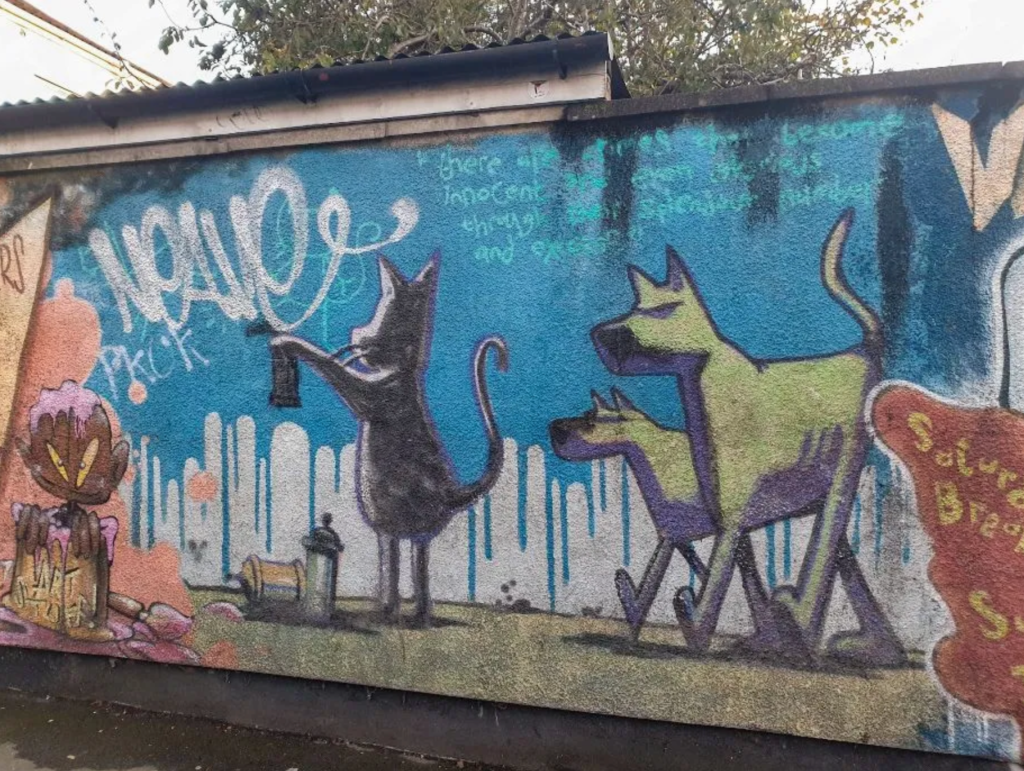
One can clearly see that, from the start, Banksy had a narrative in his art; there is always something happening. A lot of the early works had texts. One interesting example is the first photo in the series below: The artwork depicts a dog spraying a wall as two larger watchdogs approach. The text says, “There are crimes which become innocent and even glorious through their splendour, number and excess,” a quote by 17th-century philosopher François de La Rochefoucauld.
“There are crimes which become innocent and even glorious through their splendor, number and excess” – François de La Rochefoucauld.
Take the money and run – Banksy, Inkie and Mode2
Early Easton freehand
Do not inhale – Early Banksy
Early Banksy in Easton
Banksy’s first full colour piece – 1996
Dedicated to pure class – Abi rest in peace
There’s all this noise
There’s all this noise (detail)
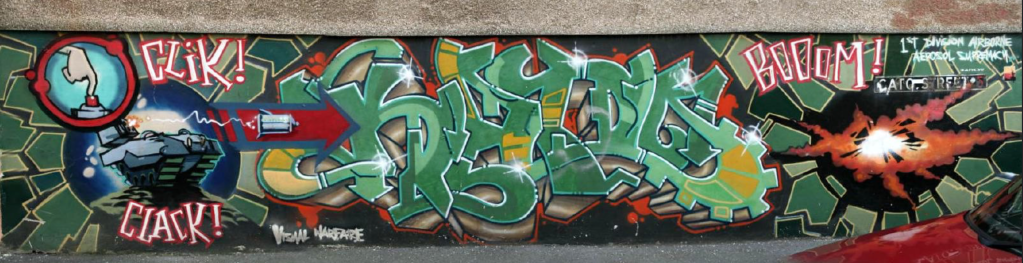
Click, clack boom.

All photos above: Banksy forum on Flickr: https://www.flickr.com/groups/banksy/pool/

FIRST APPEARANCE AT GLASTONBURY. JUNE, 1997

In 1997, Banksy with Inkie (Tom Bingle), Dicy (Justin MacCarthy), Ekoe, Feek (Damien Neary) and Paris (Graham Dews) painted “Devious Nature” on a plywood plank on the Glastonbury Festival. The artwork depicts Michael Eavis, the co-founder of the Glastonbury Festival, on his tractor while being chased by a herd of cows.

GLASTONBURY FESTIVAL, JUNE 1997

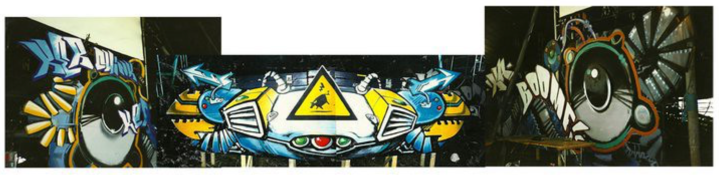
In 1998, Banksy and Inkie, Dicy, Ekoe, Feek, and Paris were invited back to Glastonbury, where they decorated a dance tent:

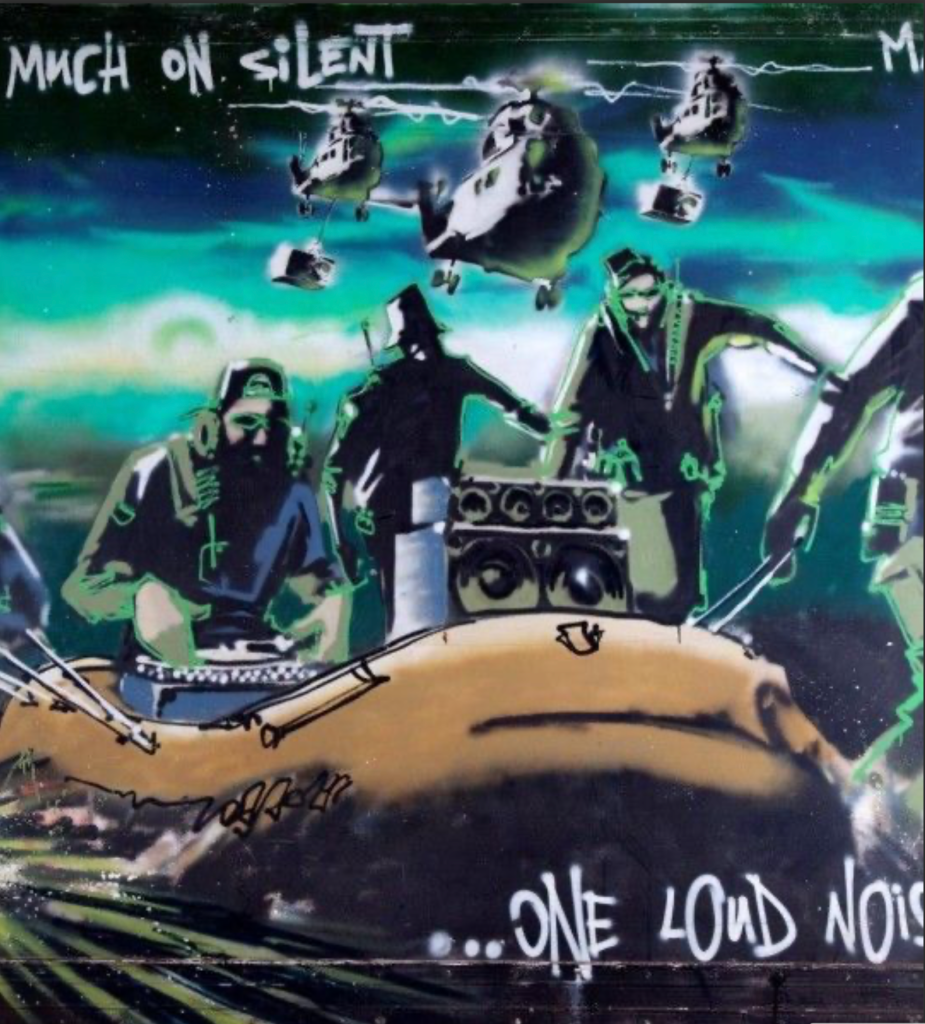
THE SILENT MAJORITY LORRY. 1998 (or 1999)

According to some sources, Banksy and Lokey painted the lorry at Glastonbury in 1998. Other sources claim it was painted in 1999. The text says, “It’s better not to rely too much on silent majorities … for silence is a fragile thing … one loud noise and it’s gone.” A reference to Richard Nixon’s speech from 1969, where the term “Silent Majority” was coined.

In 2015 the lorry was sold at Digard Auction for £ 445,792.

Photos: BBC and Digard Auction