I
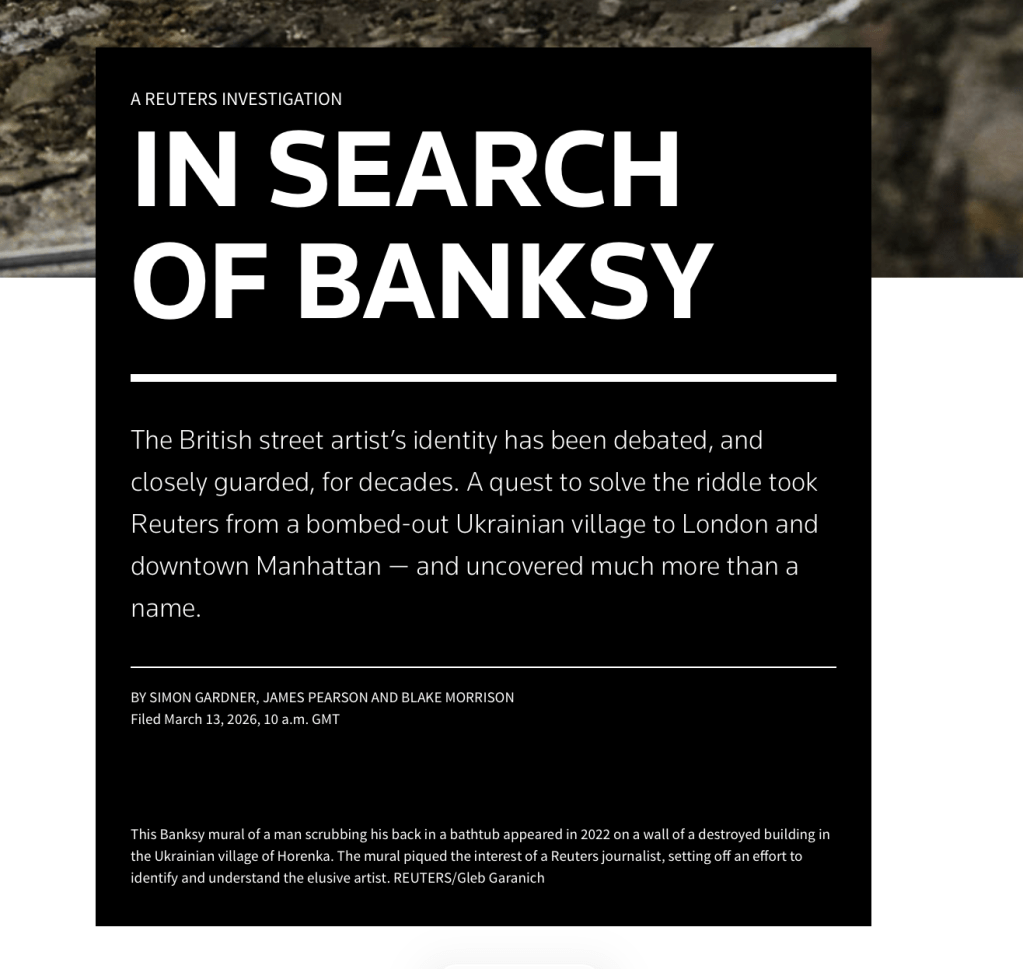
In case you missed it, here is the link to the in-depth article by Reuters: https://www.reuters.com/investigates/special-report/global-art-banksy/
The man at the centre of the story is Robin Gunningham, whose name first entered the public domain in 2008, when the Mail on Sunday published it alongside a photograph taken in Jamaica in January 2004. According to Reuters, Gunningham has since changed his name to David Jones. Steve Lazarides, Banksy’s former agent, confirmed to the news agency that he helped arrange the name change in 2008, though he declined to say what name Gunningham adopted.
Another key finding by Reuters is that Banksy travelled together with Robert del Naja, the Massive Attack frontman, to Ukraine in November 2022 – a trip that produced seven now-classical street art pieces around Kyiv. Reuters traced the new identity by cross-referencing immigration records at the Poland–Ukraine border crossing around the time of the Kyiv street art blitz. (One has to give it to Reuters; they are pros.) Gunningham’s role on the team was already widely assumed; what’s new is the confirmation, and the detail that the name change happened as early as 2008. With any luck, he has changed it again by now, if only to stay a step ahead of reporters.
Anyway, the real value of the investigation, though, lies less in the headline reveal than in the smaller stories woven through it: the Kyiv trip, the New York arrest, the Carlton Arms, the ex-girlfriend, the Sotheby’s shredding stunt. For serious Banksy followers, these details are the real payoff.
Anonymity: Banksy’s body of work is outstanding, and its artistic value doesn’t depend on anonymity. He will make it into the history books as the most important artist of the early 21st century. Like no other artist, Banksy has created an enormous narrative in which his anonymity is just one element. Banksy’s artistic (and physical) risk-taking in creating this narrative is unprecedented in today’s art world.
If Banksy decides to stay anonymous, it’s his decision, and he surely has many reasons to do so. One reason could be to distance himself from the celebrity cult. Another reason is, of course, that he is doing illegal street art, where illegality is part of the expression. (Banksy doesn’t do legal commissions from property owners as many of his colleagues do.) With that in mind, do we have the right to demand transparency and scrutiny simply because he is one of the most influential artists of our time, while he operates outside the law? It is an interesting question. I think it all boils down to the fact that nobody is above the law; therefore, going public would be signing his own arrest warrant. It probably will be a subject for future art historians to study.
Banksy business: Strip away the street art, and Banksy’s operation looks a lot like any other major contemporary artist’s, as this blog has noted before. He produces work in his studio and sells it to a base of collectors — his primary market. That’s how he earns his living, and there’s nothing unusual about that; even a subversive artist has to eat.
The secondary market works differently. Banksy makes no money from the resale of his studio artwork at auction houses or between collectors and dealers. Roughly 300 Banksy studio pieces change hands at London auctions each year, all in transactions between collectors in which Banksy has no direct stake. He does collect Artist Resale Rights of 2–4% on those sales, scaled to the hammer price, and benefits indirectly in another way: rising auction prices let him charge more for new work sold to his own collector base. That’s simply how the market works for most living artists.
So, it shouldn’t be a surprise that Team Banksy is a million-pound business and several of the key players are well off. Why shouldn’t they be? It’s well-earned money from 30 years of hard work. What differentiates Team Banksy from other big-revenue artists is that a lot of money is donated to various charity projects. Credit to Reuters for mentioning the many charities in the article.
One person or a team: Reuters frames Banksy largely as a single artist working with a small circle of helpers. Gunningham — or Jones — is clearly part of that circle, but it’s worth asking how anyone can be certain he sits at the top of it. Banksy’s peers in the art world — Damien Hirst and Jeff Koons among them — run operations with as many as forty people on payroll: craftsmen, logistics staff, marketing, accounting, PR. If Banksy’s enterprise is built along similar lines, the question of where Gunningham actually ranks in the hierarchy remains genuinely open. He’s the likeliest candidate for a leading role, but the exact pecking order isn’t known — and it’s fair to ask whether that’s even something the public needs to know.
Some collaborators on the street art side have been identified over the past thirty years: Ben Eine, James Ame, Robert del Naja (aka 3D), and John Tsombikos (aka Borf), among others. Some contributors to the studio work are known as well. Given the sheer range of Banksy’s output — street art, oil on canvas, sculpture, installation, prank projects, curated shows, books, film production, even a hotel — it’s hard to imagine the creative core of the operation as a one-man affair. A committee of some kind seems far more plausible. What can be said with confidence is that, beyond that, very little is actually known.
The takeaway is that Reuters has revealed only part of the story—there’s clearly much more beneath the surface. The harder question is whether we actually want to know more.
There are some minor inaccuracies in the article. One example:
Reuter writes: “David Jones also is the given name of David Bowie, whose Ziggy Stardust alter ego inspired a Banksy portrait of Queen Elizabeth.”
The Queen Elizabeth piece from 2012, which Reuters refers to, with makeup in the style of Bowie’s Aladdin Sane, is not by Banksy – it was done by Inc Wel – https://www.instagram.com/incwel_official/
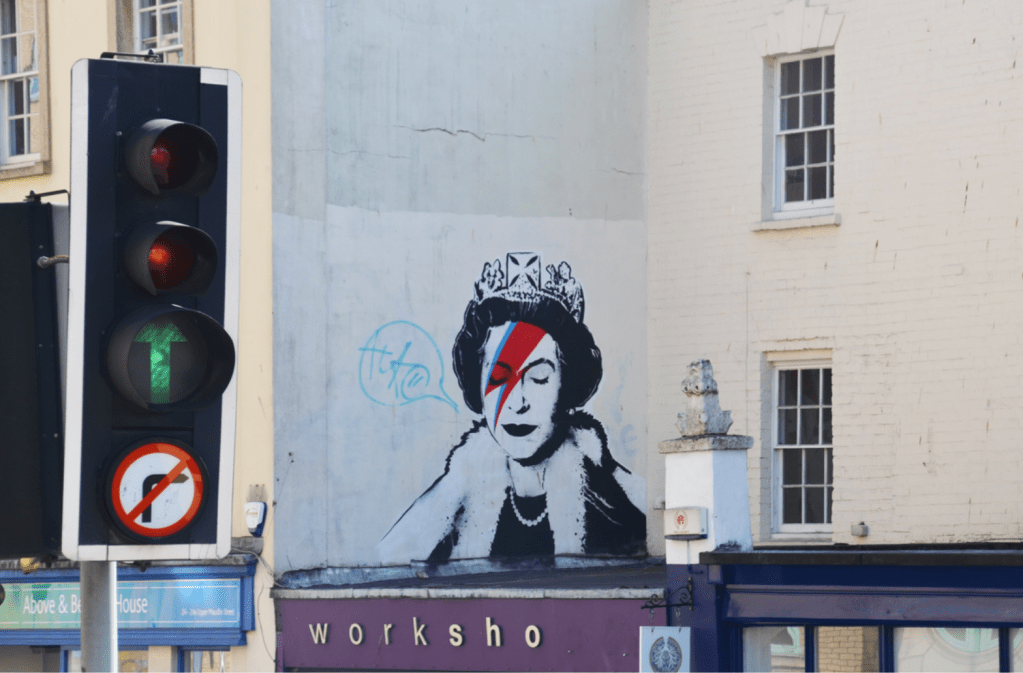
Queen Elizabeth by Inc Wel. Bristol, 2012.
Fake news:
As a result of the Reuters article, many low-quality media outlets are circulating the following photos (Reuters are not to blame) as recent photos of Banksy:
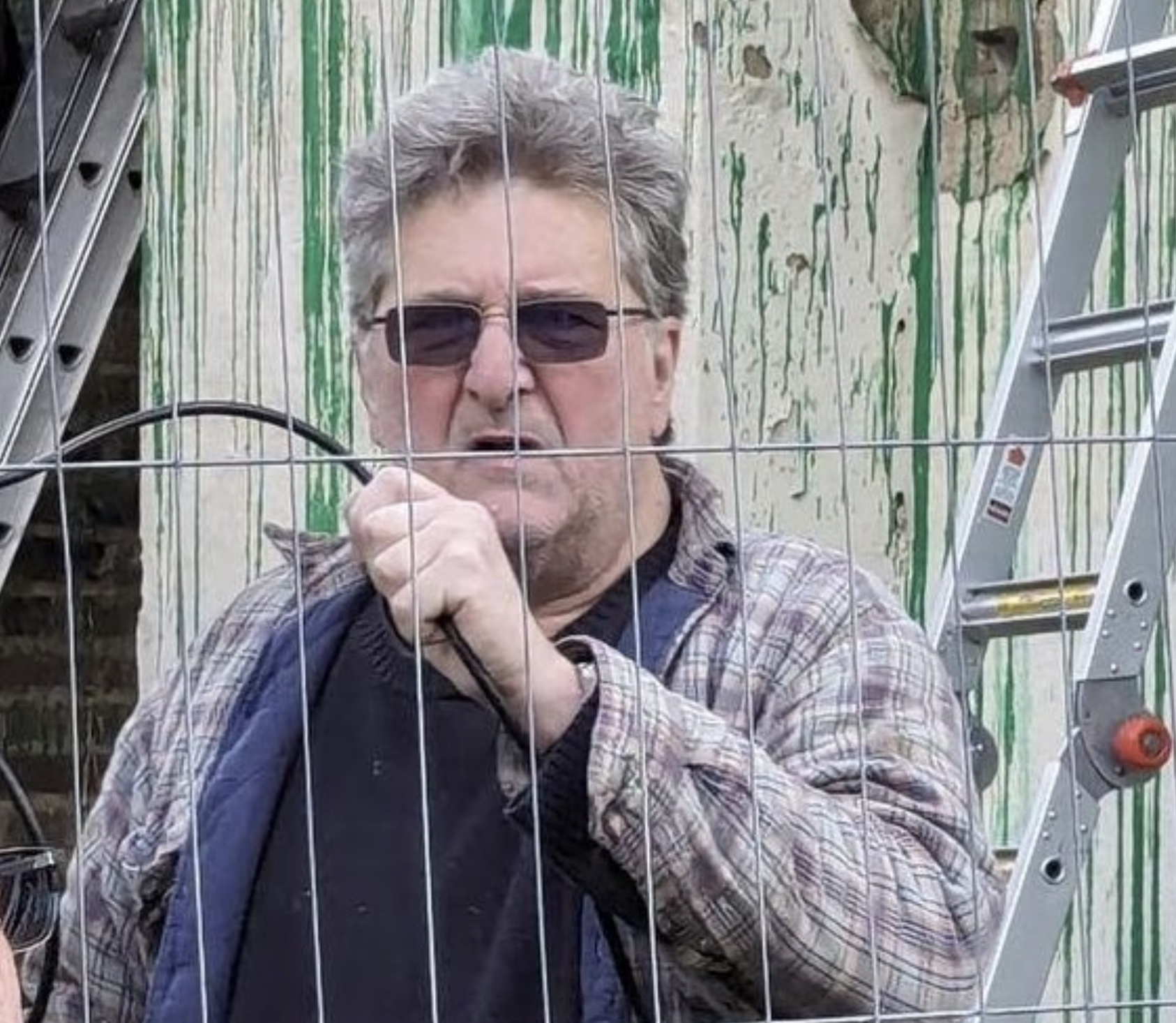
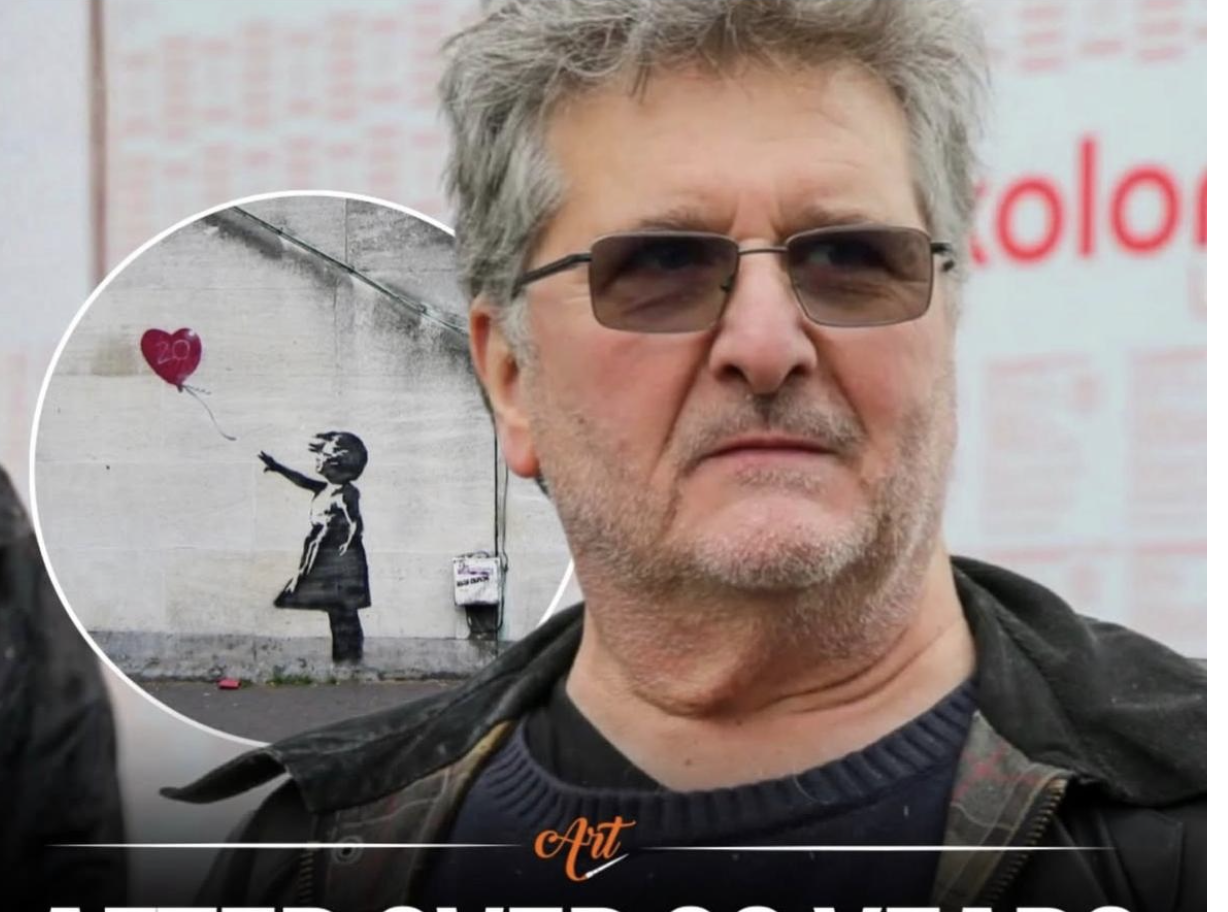
The person is 100% NOT Robin / David. The guy in the photo is George G., a proud 67-year-old from a Greek-Cypriot family, living in northern London. He happens to be the father of the owner of the building in Finsbury Park, where Banksy painted a pruned tree in March 2024. His photo was taken while he was putting up protection on the recently painted street art.
A few days later, Reuters published a short note on the misidentification: https://www.reuters.com/fact-check/london-man-misidentified-street-artist-banksy-2026-03-19/
 Banksy unofficial