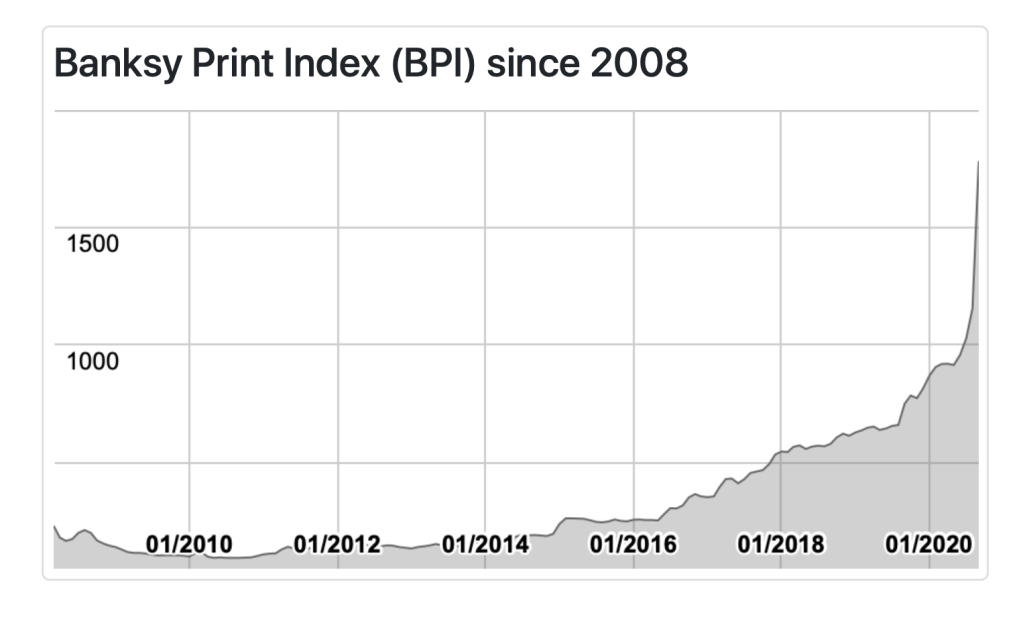
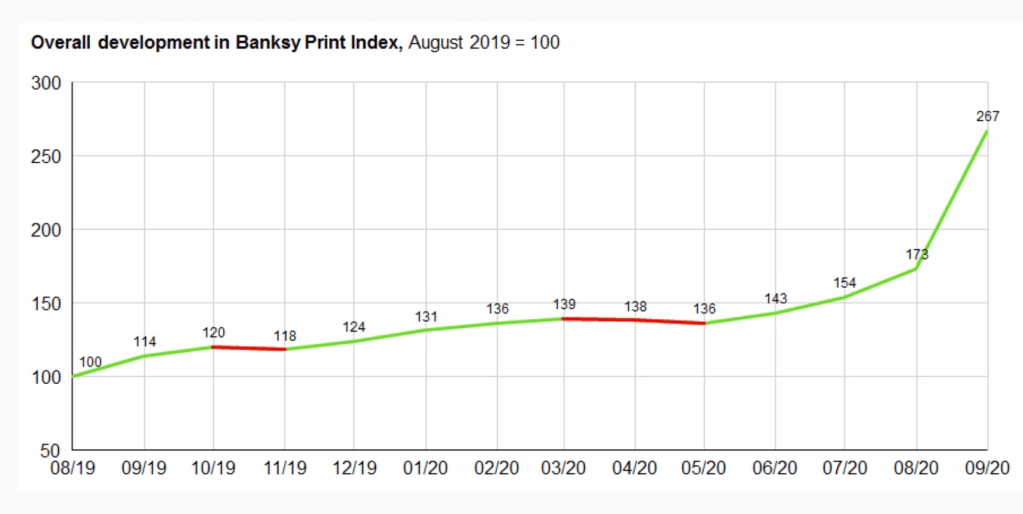
The market for Banksy’s prints and multiples has been dynamic over the last decade, with prices increasing 25% annually on average. Not this year. According to the website https://www.banksy-value.com, prices for Banksy’s prints have increased by 104% since the beginning of 2020. The estimate is based on real results from the auctions in London and elsewhere. In 2020, well over 250 prints were bought and sold between collectors at big auction houses. Of particular interest are the upcoming auctions at Christie’s, I can’t believe you morons actually buy this sh*t, and Sotheby’s Banksy, with several iconic prints up for sale, such as Girl with Balloon, Christ with Shopping Bags, and Love is in the Air.
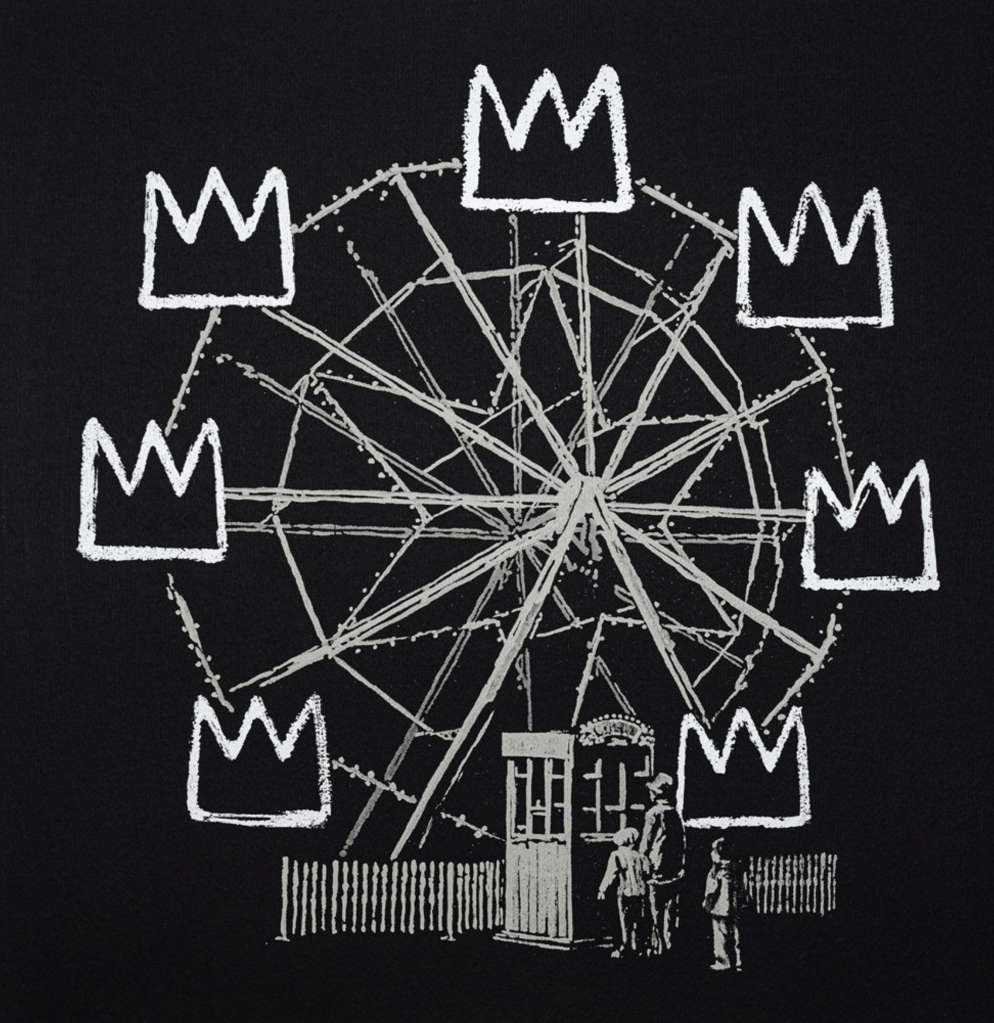
Another interesting example is the print Banksquiat, from a signed edition of 300, released at the Gross Domestic Product exhibition in October 2019. It was Banky’s first regular print release since 2010. One of the Banksquiat prints was put up for sale by a collector at Tate Ward Auctions in London in August, and it sold for £118,750, including Buyer’s Premium.
How can a print by Banksy sell for £ 100,000 when a print by Picasso goes for £ 2,000? Possible explanations:
First, the prints have been an essential part of Banksy’s “oeuvre”. The prints are more than reproductions of a motive; they are handprinted art pieces in their own right. The idea behind making prints is to provide affordable artwork for the broader public. The irony is that the same print Banksy sold for £50 at the initial release in the early 2000s is now selling for more than £50,000 on the secondary market.
The trust factor: The Picasso Foundation doesn’t certify Picasso’s prints; they only care about the unique pieces. Banksy’s handling service, Pest Control Office, has created an almost fake-proof certification system for the prints, which has led to high trust in the secondary market.
It’s also a question of limited supply and increasing demand. Picasso was enormously prolific, producing thousands upon thousands of prints in various techniques and large editions. Banksy has only printed 50 motives. If we count the different colourways for some of these motives, such as the Soup Cans, the total is somewhere around 130 different motives, all printed in small editions. The total supply of certified Banksy prints is relatively small compared to other established artists; if we sum all editions across the 130 different motives, we arrive at approximately 9,800 signed prints and 19,000 unsigned prints, all of which are authentic if they have a Certificate of Authenticity.
The increasing demand comes from Banksy being perceived as the most influential artist of our time. His printed motives are among the most iconic images and are therefore highly coveted by a growing collector base. You not only get a piece of paper for your money, but you also get a part of an artistic narrative unprecedented in the art world.
One factor that especially influences demand and supply: long-term collectors finally understand that they can buy a Banksy. According to sources, major art foundations are now beginning to buy Banksy. When long-term collectors buy on the secondary market, they not only increase demand but also cause the pieces to “disappear” from the market, further limiting supply.
 Banksy unofficial